DEIR AL-BALAH, Gaza Strip (AP) — Bissan Younis looked dejected as she stood outside a cluster of tents surrounded by rubble and debris, a wasteland that is a common sight across the Gaza Strip. The tiny encampment was yet another makeshift school that has no room for her teenage son Kareem.
“Most of the schools are destroyed," she told The Associated Press. "Every school I go to tells me there is no room.”
Click to Gallery
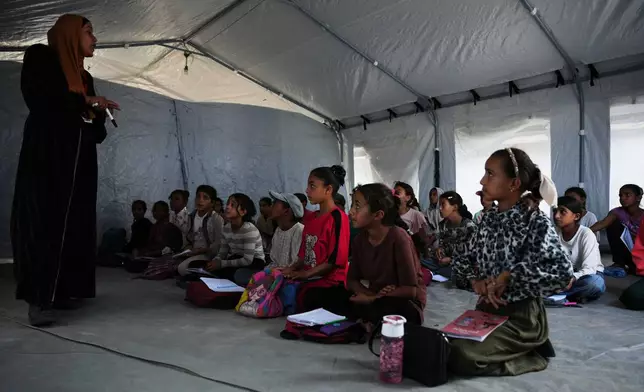
Palestinian students attend class inside a tent set up on the beach in Khan Younis, Gaza Strip, Wednesday, Nov. 12, 2025. (AP Photo/Abdel Kareem Hana)
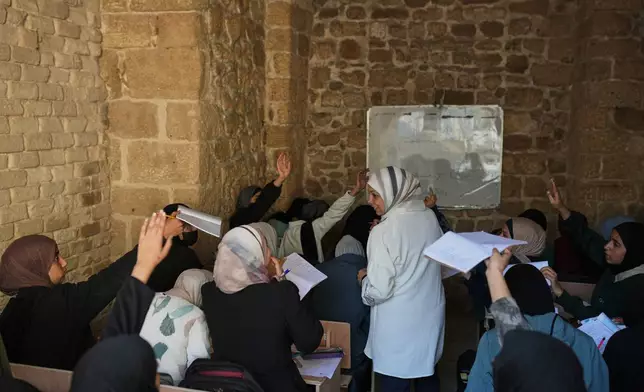
Palestinian high school students return to class weeks after a ceasefire was announced between Israel and Hamas, at the Kamilia School in the Old City of Gaza City, Wednesday, Nov. 12, 2025. (AP Photo/Jehand Alshrafi)
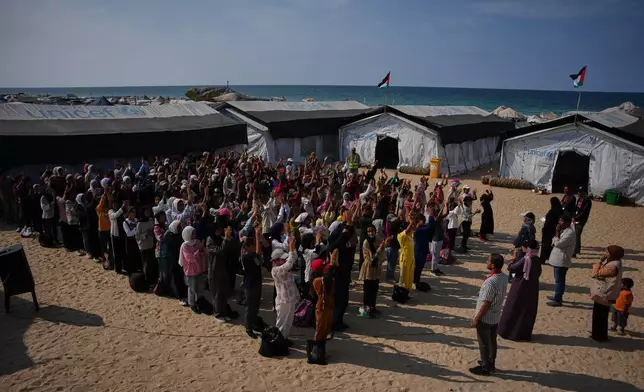
Students attend a morning assembly at a school set up on the beach in Khan Younis, southern Gaza Strip, Wednesday, Nov. 12, 2025. (AP Photo/Abdel Kareem Hana)
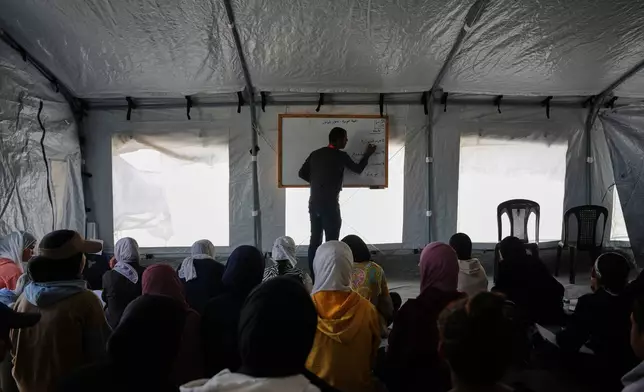
Palestinian students attend class inside a tent set up on the beach in Khan Younis, Gaza Strip, Wednesday, Nov. 12, 2025. (AP Photo/Abdel Kareem Hana)
More than 600,000 Palestinian children in Gaza have missed the past two years of school because of the war between Israel and the militant Hamas group. Instead of studying and socializing, they have been repeatedly displaced, fled airstrikes and shelling and often spent their days scouring for water and food for their families.
With a ceasefire reached last month largely holding, humanitarian officials are now working frantically to reopen dozens of makeshift schools.
John Crickx, a spokesman for the U.N. children’s agency UNICEF, said it's critical for children to return to classes as soon as possible, not just because of basic education but also for their mental health.
“In the weeks to come, if we don’t offer education,” he said, there could be “terrible consequences for an entire generation.”
UNICEF estimates that over 630,000 Palestinian children missed out on school during the war. Crickx says that so far, only about 100,000 children have been able to return.
Separately, UNRWA, the UN agency for Palestinian refugees, is providing some education through their contracted teachers — for about 40,000 students. Most of the UNRWA-run schools, which catered to half of the Gaza children before the war, have since turned into shelters for displaced people.
Lack of space is a key obstacle: Dozens of schools were badly damaged or completely destroyed. Many are still being used as shelters for Palestinians who have been repeatedly displaced during the enclave's intense bombardment.
“It’s basically tents among the displaced people’s tents or it is some prefabs or shelters, said Crickx. “It’s very much ... the most basic learning.”
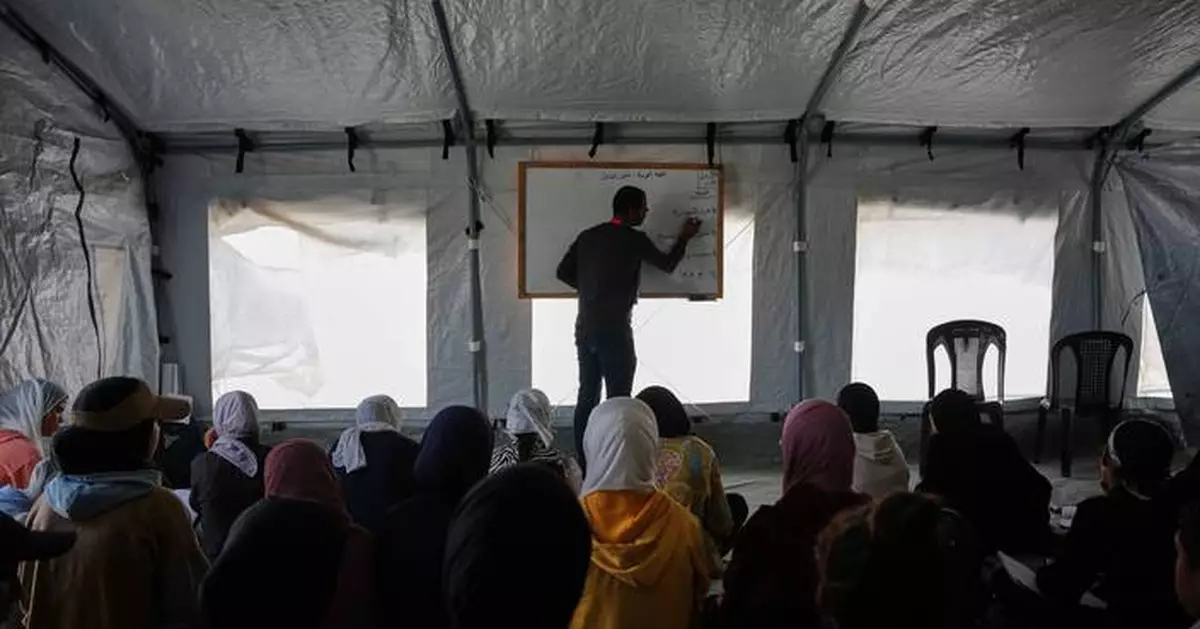
At one school — a cluster of tents with the UNICEF logo erected on a patch of land amid bombed-out buildings in the southern city of Khan Younis — children huddled closely in one classroom, eagerly listening to their teacher.
Crickx said that finding a location to put up the tents has been tricky. Another challenge is getting supplies into Gaza, whether concrete to fix damaged schools or simple pencils, erasers and other basic supplies.
Since the Oct. 7, 2023 start of the war with the Hamas-led attack on southern Israel, these items have not been allowed into Gaza. Israel, which controls the flow of goods into the territory, considers them “non-critical, non-life saving,” Crickx said.
COGAT, the Israeli military body that coordinates aid to Gaza, had no immediate comment on allowing in school supplies to Gaza.
Even the children who return to makeshift schools were able to enroll carry the psychological burdens that come with war and displacement.
“The level of trauma among the people of Gaza, including children, is horrific,” said UNRWA communications director Juliette Touma.
U.N. agencies say they are struggling to asses the damages and figure out the costs — with the ceasefire still in its early stages, reconstruction of Gaza has not yet begun and U.N. experts say the process could take years and cost some $70 billion.
Displaced families continue to live in the ruins of damaged schools. UNRWA's Touma says about 75,000 people still shelter in the agency's schools.
One of the displaced, Tahreer al-Oweini says she feels guilty but that she had no choice.
“I live in a classroom that should be in session with a teacher, students, and a blackboard,” said al-Oweini. Around her, damaged walls and ceilings are covered with tarp.
Al-Oweini said she is struggling to secure spots for her three daughters and a son who are in elementary and middle school. She even told one school principal that she will search for a chair and desk for her daughter but was still rejected.
“The children forgot everything they learned," she said. "Their life over the past two years has been getting water, running after aid vehicles, war, Hamas, shelling, destruction.”
“They have lived in fear or horror,” she added.
Even during the most intense fighting, there have been some efforts in displacement camps and communities to keep children from falling behind in school, even as everyone struggled with bombardment, power cuts, and shortages of food, water, and medicine.
But lessons were sporadic, and some families say they kept their children close and couldn't risk letting them attend classes, fearing for their lives.
It's a race against time and UNRWA's Touma warns of a “lost generation” — the longer the children stay out of school, the tougher it will be to someday catch up with their peers elsewhere.
Touma is worried that if children miss out on education, the more likely they are to fall "prey to exploitation, including child marriage, child labor, and recruitment into armed groups.”
Al-Oweini, like other families desperate to get their children back to school, is still hopeful.
“I want my children to be like their father who finished university," she said, adding that her daughters want to become doctors or engineers.
“They have ambition,” she said. “But if they don’t go to school, they will have no future.”
Chehayeb reported from Beirut. Associated Press videographers Mohammed Jahjouh and Abdel Kareem Hanna in Khan Younis, Gaza Strip, and writer Julia Frankel in Jerusalem contributed to this report.
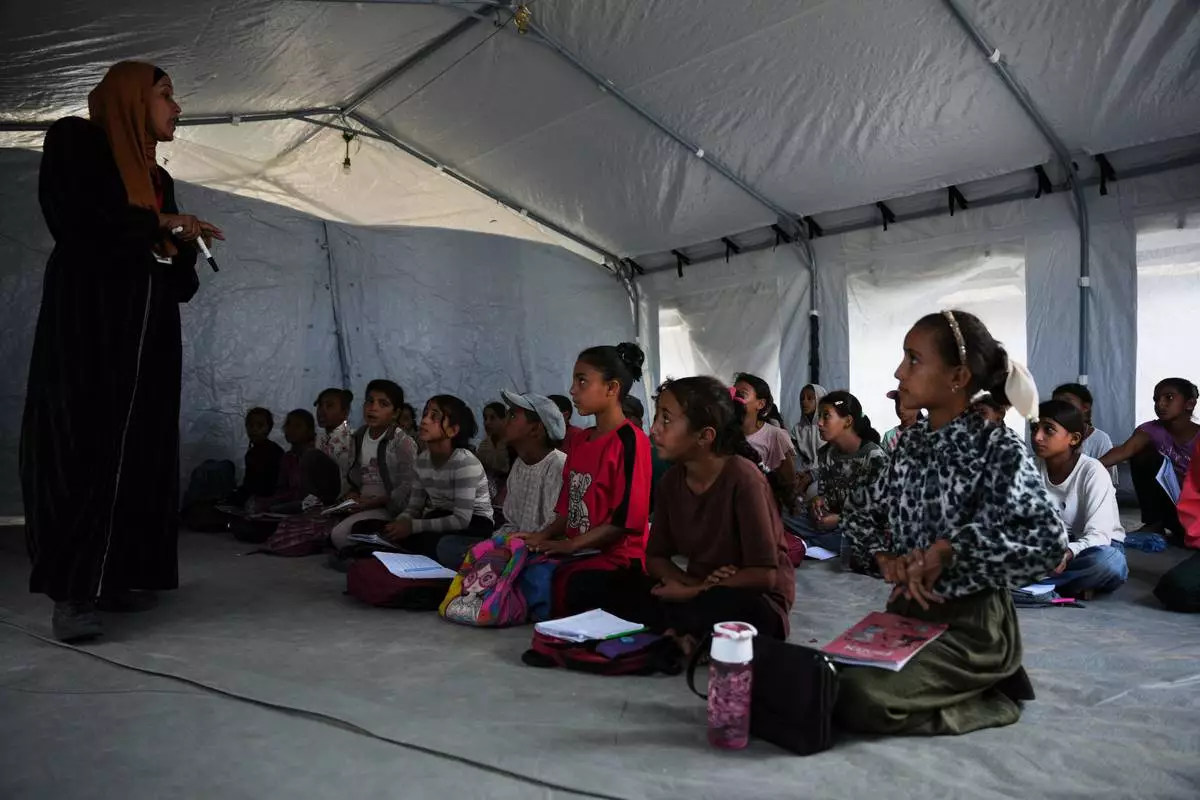
Palestinian students attend class inside a tent set up on the beach in Khan Younis, Gaza Strip, Wednesday, Nov. 12, 2025. (AP Photo/Abdel Kareem Hana)
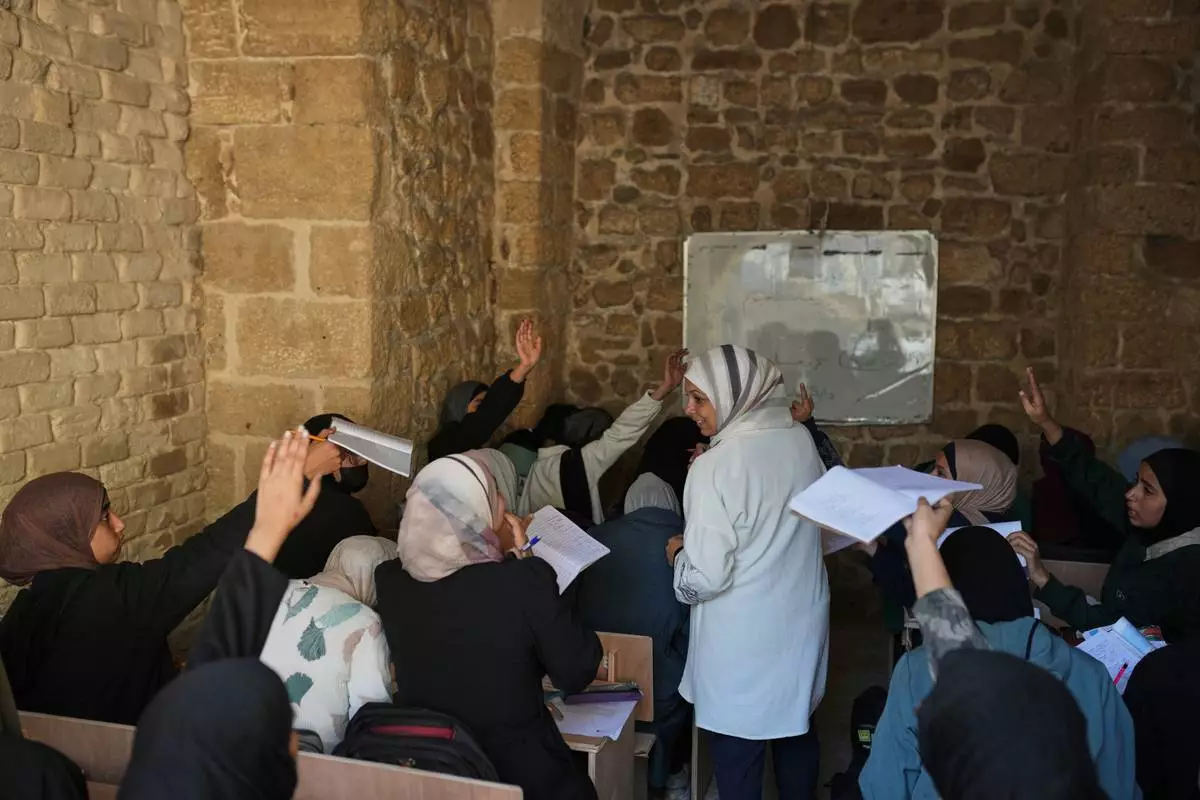
Palestinian high school students return to class weeks after a ceasefire was announced between Israel and Hamas, at the Kamilia School in the Old City of Gaza City, Wednesday, Nov. 12, 2025. (AP Photo/Jehand Alshrafi)
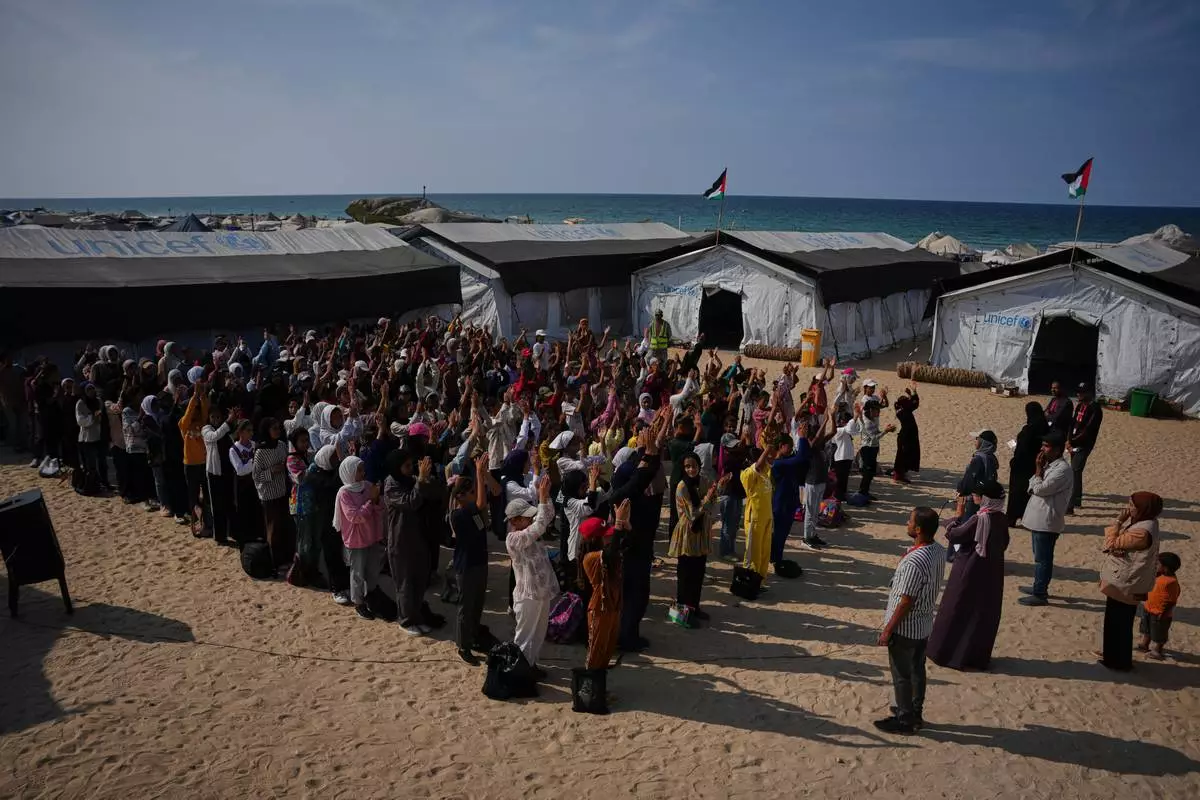
Students attend a morning assembly at a school set up on the beach in Khan Younis, southern Gaza Strip, Wednesday, Nov. 12, 2025. (AP Photo/Abdel Kareem Hana)
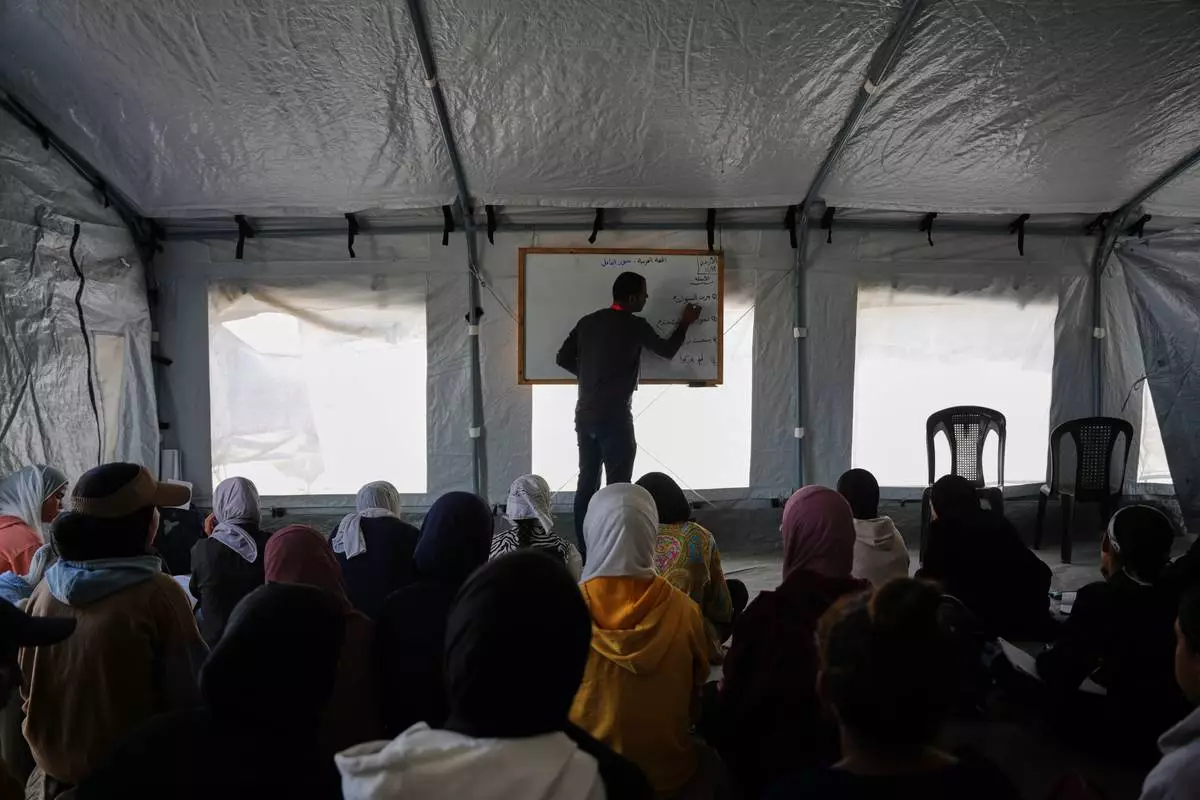
Palestinian students attend class inside a tent set up on the beach in Khan Younis, Gaza Strip, Wednesday, Nov. 12, 2025. (AP Photo/Abdel Kareem Hana)