
TEL AVIV, Israel (AP) — The number of Palestinians dying in Israeli custody surged to nearly 100 people since the start of the war in Gaza, according to a report published Monday by a human rights group that says systematic violence and denial of medical care at prisons and detention centers contributed to many of the deaths it examined.
The picture that emerges from the report by Physicians for Human Rights-Israel is consistent with findings by The Associated Press, which interviewed more than a dozen people about prison abuses, medical neglect and deaths, analyzed available data, and reviewed reports of autopsies. AP spoke with a former guard and a former nurse at one prison, an Israeli doctor who treated malnourished prisoners brought to his hospital, former detainees and their relatives, and lawyers representing them and rights groups.
The former guard at a military prison notorious for its harsh treatment of Palestinians told the AP detainees were routinely shackled with chains and kicked and hit with batons, and that the facility had been dubbed a “graveyard” because so many prisoners were dying there. He agreed to talk to AP to raise awareness of violence in Israeli prisons and spoke on condition of anonymity due to fear of reprisal.
Israel’s Prison Service said it operates in accordance with the law. It declined to comment on the death count and directed any inquiries to Israel’s army.
The army said it is aware some detainees have died, including people with preexisting illnesses or combat-related injuries. But army spokesperson Nadav Shoshani said the death count in the PHRI report is inflated, while declining to say what the army believes the real number to be.
The army also said allegations of abuse or inadequate conditions are assessed, and that those who violate the army’s code of conduct are punished and sometimes subject to criminal investigations.
Here are some key takeaways:
Of the 98 prisoner deaths PHRI documented since the Oct. 7, 2023, attack that ignited the war, 27 occurred in 2023, 50 in 2024 and 21 this year, the most recent on Nov. 2. PHRI says the actual death toll over this timeframe is “likely significantly higher,” noting that Israel has refused to provide information about hundreds of Palestinians detained during the war.
Fewer than 30 Palestinians died in Israeli custody in the 10 years preceding the war, PHRI says. But since the war, the prison population more than doubled to 11,000 as people were rounded up, mainly from Gaza and the West Bank. The number of prisoners dying grew at an even faster rate over that period, PHRI data shows.
PHRI documented deaths by interviewing former detainees and prison medical staff, examining reports prepared by doctors who observed autopsies at the behest of dead prisoners’ families, and confirming dozens of fatalities through freedom of information requests.
One morning, early in Israel’s war against Hamas, the former guard at the Sde Teiman military prison in southern Israel arrived at work to see a motionless Palestinian lying on his side in the yard, yet no guards rushed to see what had happened to the man, who was dead.
“It was sort of business as usual with the dead guy,” said the guard, who didn’t know the cause of death.
Prisoners’ arms and legs were always in chains, and they were beaten if they moved or spoke, the guard said.
The former nurse at Sde Teiman said chains used to restrain many prisoners’ arms and legs caused such severe wounds that some needed their limbs to be amputated. She spoke on condition of anonymity for fear of reprisal. She said the staff at times talked about prisoner deaths but that she didn’t see anyone die while working there for several weeks early last year. She left the job because she didn’t like the abusive treatment of the prisoners, she said.
The army said prolonged handcuffing is implemented only in exceptional cases when there are “significant security considerations.” Even then, detainees’ medical condition is taken into account, it said. Only a few detainees from Gaza are currently being handled this way, it added.
Guards were told by their commanders — who also participated in the beatings -- that they needed to reduce the deaths, according to the Sde Teiman guard, who spent several months there.
Eventually cameras were installed, which helped mitigate the abuse, he said. Twenty-nine prisoners have died at Sde Teiman since the war began, according to PHRI.
Earlier this year, an Israeli soldier was convicted of abusing Palestinians in Sde Teiman and sentenced to seven months in prison, according to the army, which said this shows there is accountability.
But lawyers for prisoners say Israel rarely conducts serious investigations into alleged violence and that this fuels the problem.
It is difficult to pinpoint with certainty the cause of death for most prisoners. Sometimes, at the behest of prisoners’ families, doctors were granted permission by Israel to attend autopsies and provided reports to the families on what they saw.
Eight reports seen by the AP showed a pattern of physical abuse and medical neglect.
In one, a 45-year-old man who died in Kishon detention center, Mohammad Husein Ali, showed multiple signs of physical assault, likely causing brain bleed, according to the report. The potential use of excessive restraints was also noted. His family said he was healthy before he was detained from his home in the West Bank. He died within a week of being imprisoned.
Husein Ali had previously served time in an Israeli prison after being convicted of association with militancy, according to his family. But they said he had no ties with militants when he was arrested last year.
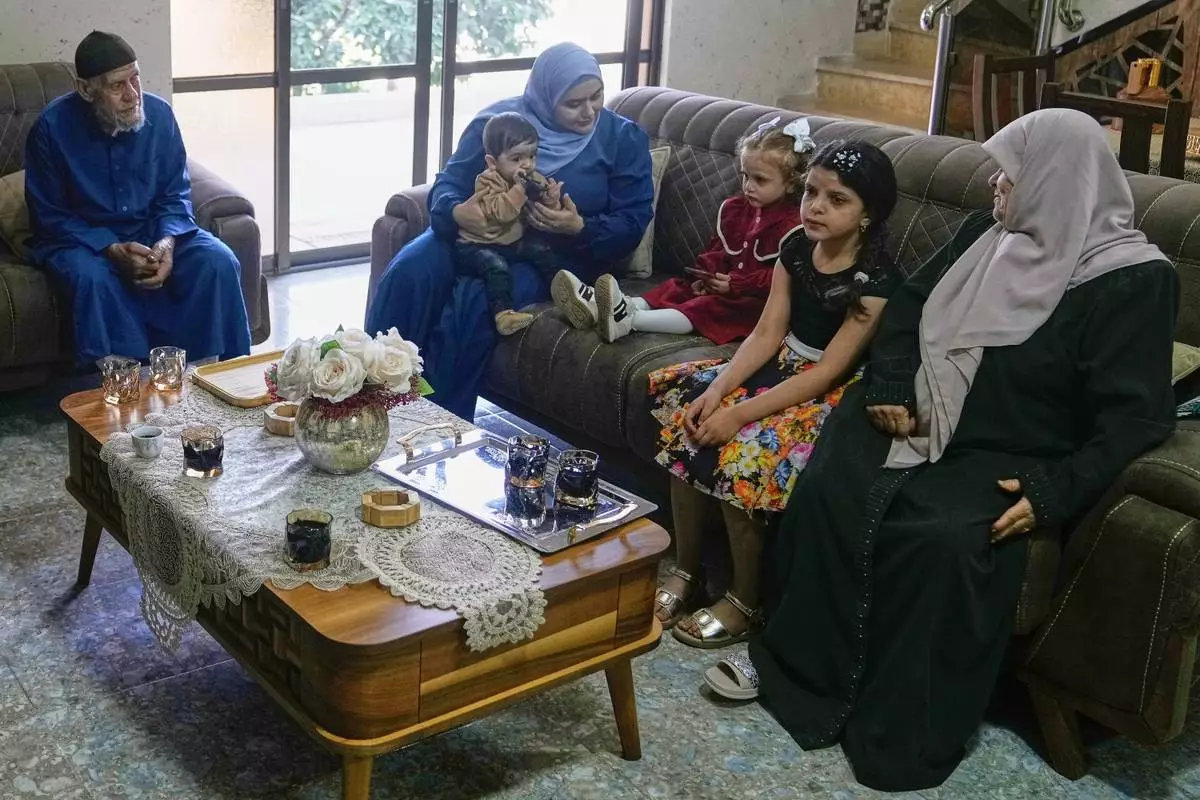
Relatives of Mohammad Husein Ali, 45, who died in the Israeli Kishon detention center, sit in their living room in the Nur Shams refugee camp near the West Bank town of Tulkarem, Thursday, Oct. 23, 2025. From left are Mohammad’s father Waleed Husein Ali, wife Hadeel, son Bara’, daughter Misk, an unidentified relative, and Mohammad’s mother Sobheya Husein Ali. (AP Photo/Majdi Mohammed)
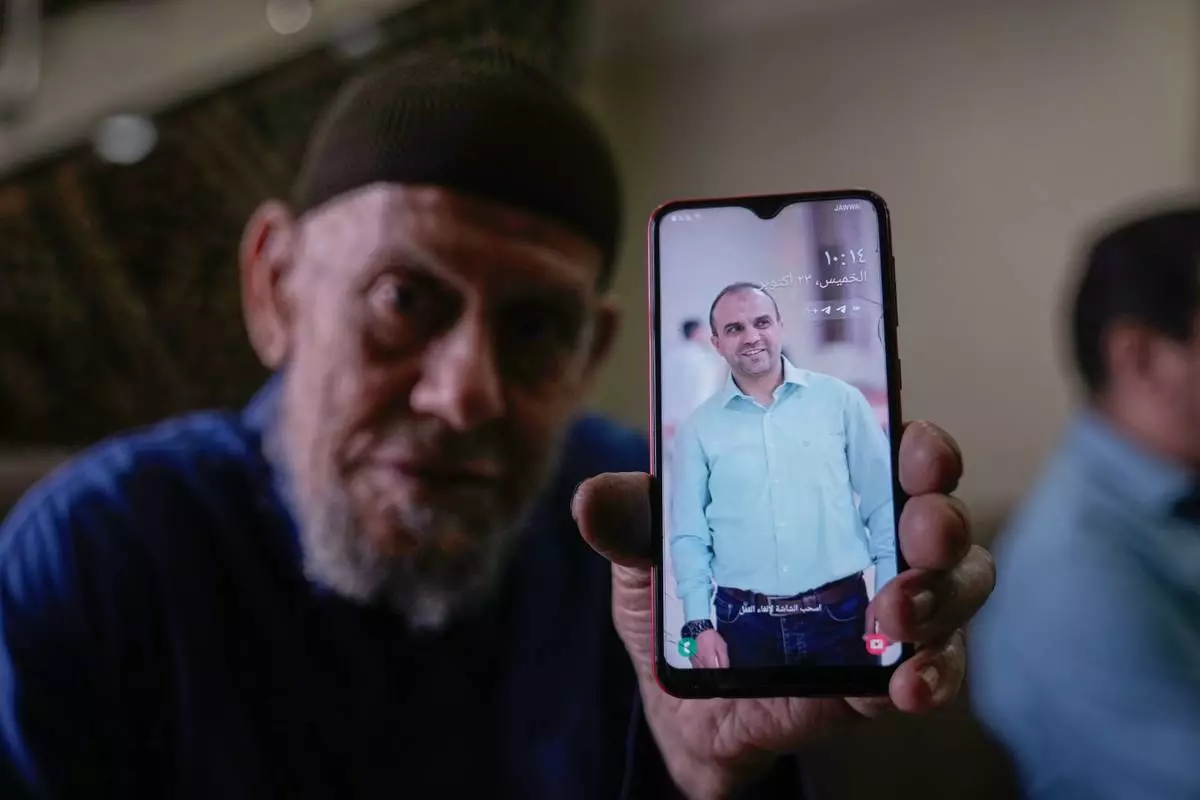
Waleed Husein Ali, shows a picture on a phone of his son, Mohammad, 45, who died in Israeli custody at the Kishon detention center, as he sits in the family's living room in the Nur Shams refugee camp near the West Bank town of Tulkarem, Thursday, Oct. 23, 2025. (AP Photo/Majdi Mohammed)