TYSONS CORNER, Va.--(BUSINESS WIRE)--Nov 17, 2025--
Integrated Data Services (IDS), part of the Arlington Capital Partners portfolio, announces the release of Comprehensive Cost and Requirement (CCaR™) v2025.4.0, marking a major milestone in mission-driven decision support. The newest version introduces the CCaR™ Prioritization Tool, designed to help leaders cut through complexity and make confident, transparent funding decisions that drive measurable impact.
This press release features multimedia. View the full release here: https://www.businesswire.com/news/home/20251117701252/en/
Built with feedback from federal and defense partners, the CCaR™ Prioritization Tool enables organizations to define what matters with mission-aligned criteria; weigh and score with confidence using consistent, repeatable logic; compare trade-offs across requirements and budgets with auditable results; and unify stakeholders by visualizing outcomes and driving consensus
“Now more than ever, government agencies need to eliminate guesswork and increase efficiency,” said Tammer Olibah, CEO and President at IDS. “With CCaR™ v2025.4.0, decision-makers can bring structure, transparency, and speed to resource allocation, ensuring investments flow where they deliver the greatest mission impact.”
Already trusted across the Department of Defense and federal civilian agencies, CCaR™ continues evolving to meet tomorrow’s mission challenges. The new prioritization capabilities make it easier than ever to connect strategy, resources, and results within one unified platform.
The future of portfolio prioritization is here. Contact info@get-integrated.com to see the CCaR™ Prioritization Tool in action.
About Integrated Data Services
For over 28 years, IDS been a leading provider of custom software products and government financial management services. We provide our customers with fast, efficient and reliable information systems and support services.
Learn more at www.get-integrated.com and connect with us on LinkedIn.

Key features of the latest CCaR release
Gulf countries reported new attacks Sunday morning, a day after Iran called for the evacuation of three major ports in the United Arab Emirates, threatening for the first time a neighboring country’s non-U.S. assets.
Tehran accused the United States of using “ports, docks and hideouts” in the UAE to launch strikes on Kharg Island, home to the main terminal handling Iran’s oil exports, without providing evidence, as the war showed no signs of ending.
U.S. President Donald Trump said he hoped allies would send warships to secure the vital Strait of Hormuz.
Meanwhile, Israeli strikes have deepened Lebanon's humanitarian crisis, with more than 800 people killed and over 850,000 displaced.
Here is the latest:
Iran’s Health Ministry says U.S. and Israeli strikes have killed 223 women and 202 children since the start of the war on Feb. 28, according to Mizan, the official Iranian judiciary news agency.
The Iranian Red Crescent has said that more than 1,300 people have been killed.
A U.S.-Israeli attack early Sunday morning targeted an impoverished residential neighborhood in the southern city of Shiraz, Iran’s state-run news agency IRNA said.
The strike, which occurred southeast of the city, destroyed several housing units belonging to workers and people supported by the state welfare organization, the report said. It said a number of homes were destroyed and several people were injured. There were no reports of fatalities.
There was no immediate comment from Israel or the U.S. On Friday, Israel said it targeted a missile facility in Shiraz. It also has gone after what it says are checkpoints erected by Iran’s paramilitary Basij force.
Neutral Switzerland says it refused permission for two overflights by U.S. reconnaissance planes “in the context of the war in Iran.”
The government said late Saturday that Switzerland’s neutrality law forbids overflights by parties to a conflict that have a military purpose in connection with that conflict. But it does allow humanitarian and medical transit, as well as flights unconnected with the conflict.
Switzerland said it did give clearance for two U.S. transport aircraft to fly over the country on Sunday and for a newly serviced plane to transit on Tuesday.
Iran’s Revolutionary Guard vowed Sunday to hunt down Israeli Prime Minister Benjamin Netanyahu, according to the state-run IRNA news agency.
“If the criminal Zionist prime minister is still alive, we will continue to pursue and kill him with full force,” the IRGC said in a statement.
The Israeli military says Iran has launched a new barrage of missiles toward Israel.
It says sirens are alerting residents in areas under attack and air defenses have been activated.
“This reflects a confused policy that missed the point, lost its direction, and lacked wisdom,” Anwar Gargash, adviser to the president of the United Arab Emirates, wrote on social media late Saturday.
Gargash was referring to Iranian Foreign Minister Abbas Araghchi’s comments in which he accused the U.S. of using the UAE as a base for its attacks on Iran's Kharg Island.
Sirens sounded in Bahrain ahead of an assault on Sunday, while the United Arab Emirates reported a missile attack, urging residents to shelter in safe locations.
Saudi Arabia’s Defense Ministry said its systems intercepted and destroyed 10 drones over the capital, Riyadh, and the kingdom’s eastern region.
Iran’s joint military command accused in a statement Sunday "the enemy” of using copycat Iranian drones to attack neighboring countries and pin the blame on Tehran, state media reported.
Tehran usually uses “the enemy” as a reference to the United States and Israel.
The statement said copies of Iran's Shahed-136 drone, known as LUCAS, were used to hit “irrelevant targets in the regional states," including attacks on Turkey, Iraq and Kuwait. No evidence was provided.
The military command also said Iran openly shares its targets, which it describes as U.S. and Israeli interests, and urged trust and cooperation from regional countries.
The United Arab Emirates reported a missile attack Sunday morning.
Authorities urged residents to remain in safe locations.
The U.S. Department of Defense on Saturday identified six service members who died when the military refueling aircraft they were aboard crashed Thursday while supporting operations against Iran.
The service members were Maj. John A. Klinner, 33; Capt. Ariana G. Savino, 31; Tech. Sgt. Ashley B. Pruitt, 34; Capt. Seth R. Koval, 38; Capt. Curtis J. Angst, 30; and Tech. Sgt. Tyler H. Simmons, 28, according to U.S. officials.
The crash in western Iraq followed an unspecified incident involving two aircraft in “friendly airspace,” according to U.S. Central Command. The other plane landed safely.
Israel’s military said early Sunday that Iran launched another round of missiles toward Israel.
Sirens sounded in Tel Aviv and loud booms were heard.
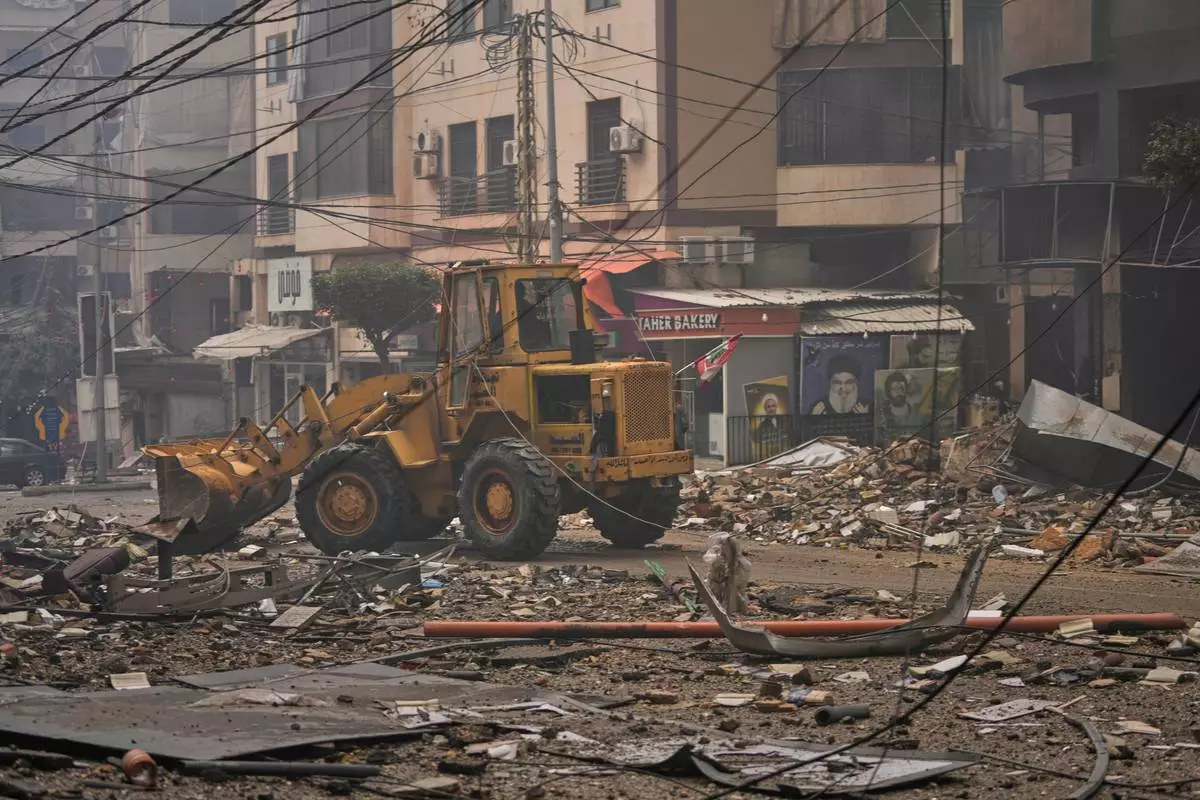
A bulldozer clears debris from the rubble of buildings destroyed in an Israeli airstrike in Dahiyeh, Beirut's southern suburbs, Lebanon, Sunday, March 15, 2026. (AP Photo/Hassan Ammar)
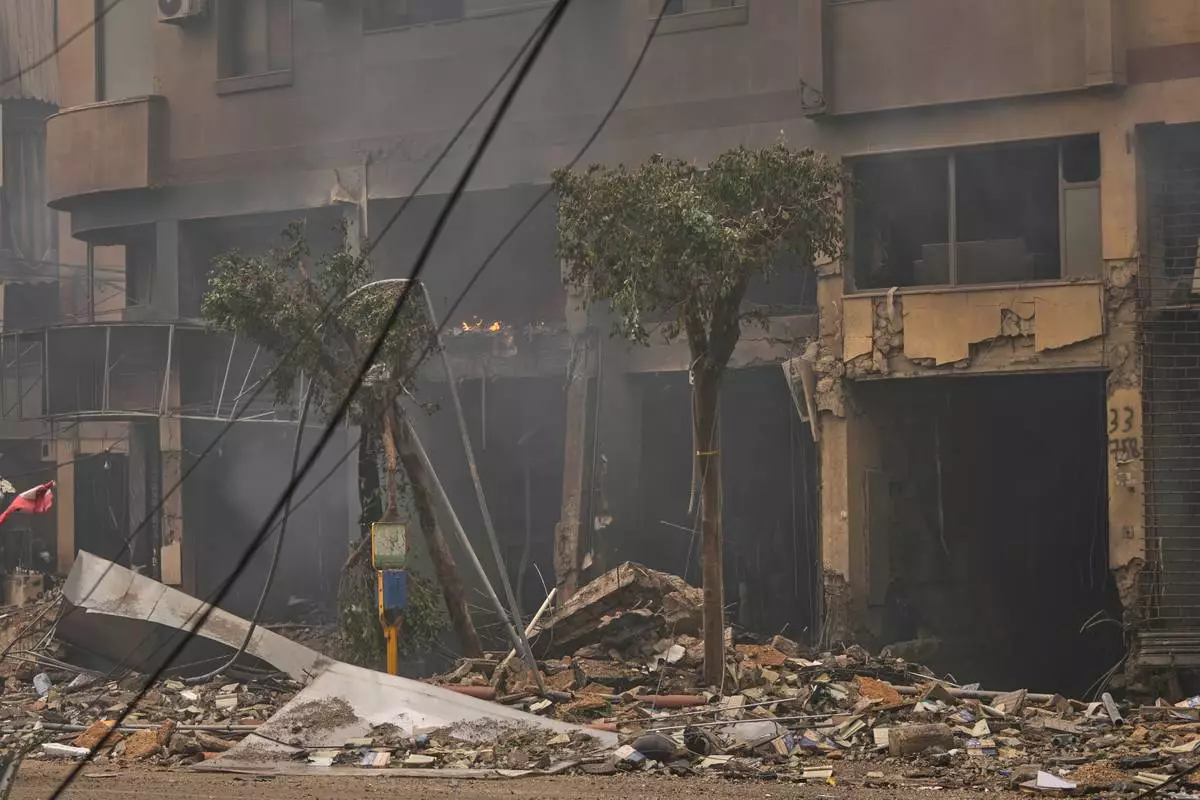
Debris litters the street as smoke rises from buildings damaged in an Israeli airstrike in Dahiyeh, Beirut's southern suburbs, Lebanon, Sunday, March 15, 2026. (AP Photo/Hassan Ammar)
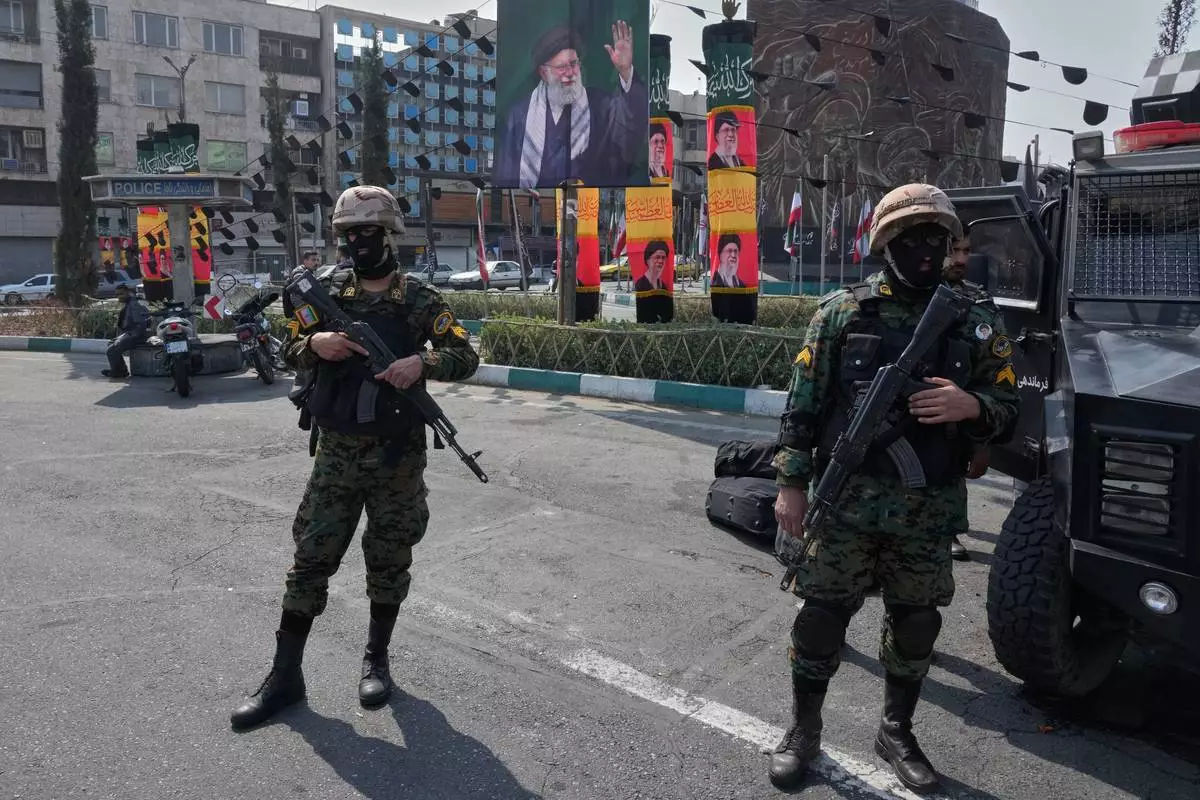
Policemen stand guard next to the banners showing portraits of the late Iranian Supreme Leader Ayatollah Ali Khamenei at the Enqelab-e-Eslami, or Islamic Revolution, square in downtown Tehran, Iran, Saturday, March 14, 2026. (AP Photo/Vahid Salemi)
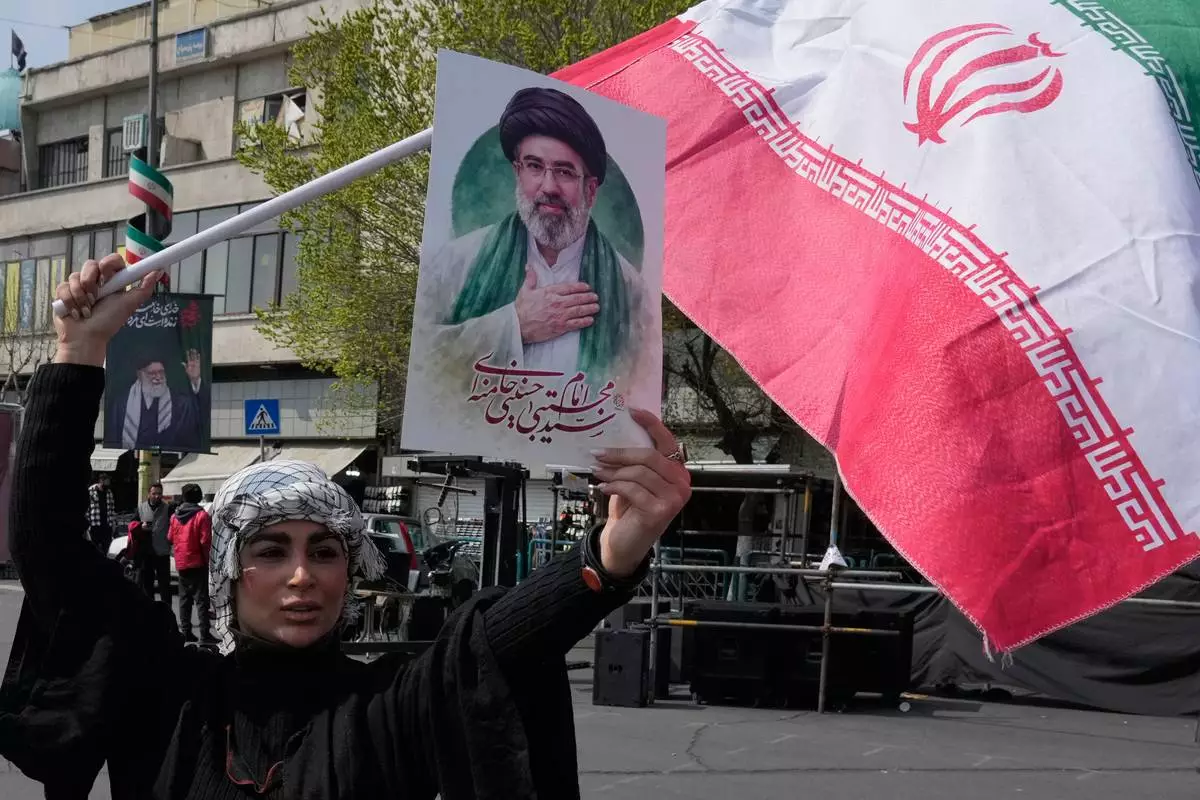
A woman displays a poster of the Iranian Supreme Leader Ayatollah Mojtaba Khamenei as she waves her country's flag during a campaign in support of the government at the Enqelab-e-Eslami, or Islamic Revolution, square in downtown Tehran, Iran, Saturday, March 14, 2026. (AP Photo/Vahid Salemi)

Israeli security forces inspect damage at the site of an Iranian missile strike in Holon, central Israel, Sunday, March 15, 2026. (AP Photo/Ohad Zwigenberg)
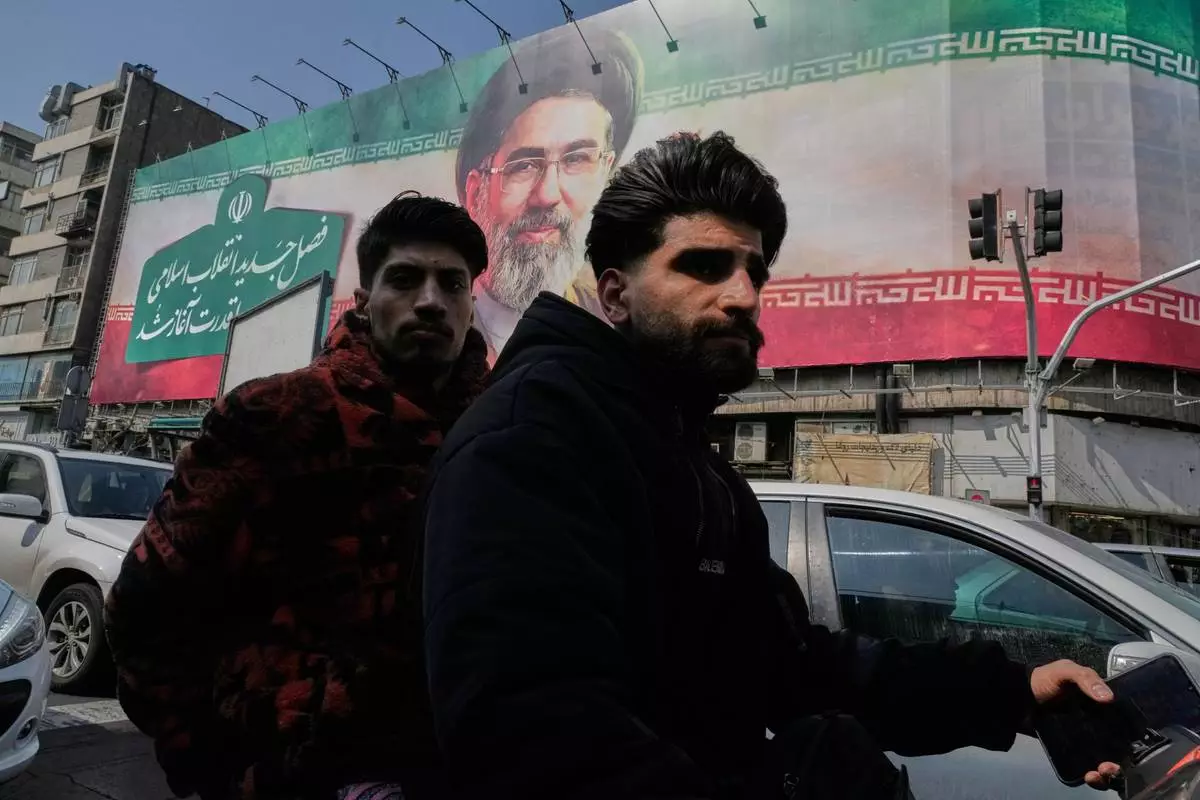
Two men ride their motorbike past a billboard of the Iranian Supreme Leader Ayatollah Mojtaba Khamenei in downtown Tehran, Iran, Saturday, March 14, 2026. (AP Photo/Vahid Salemi)
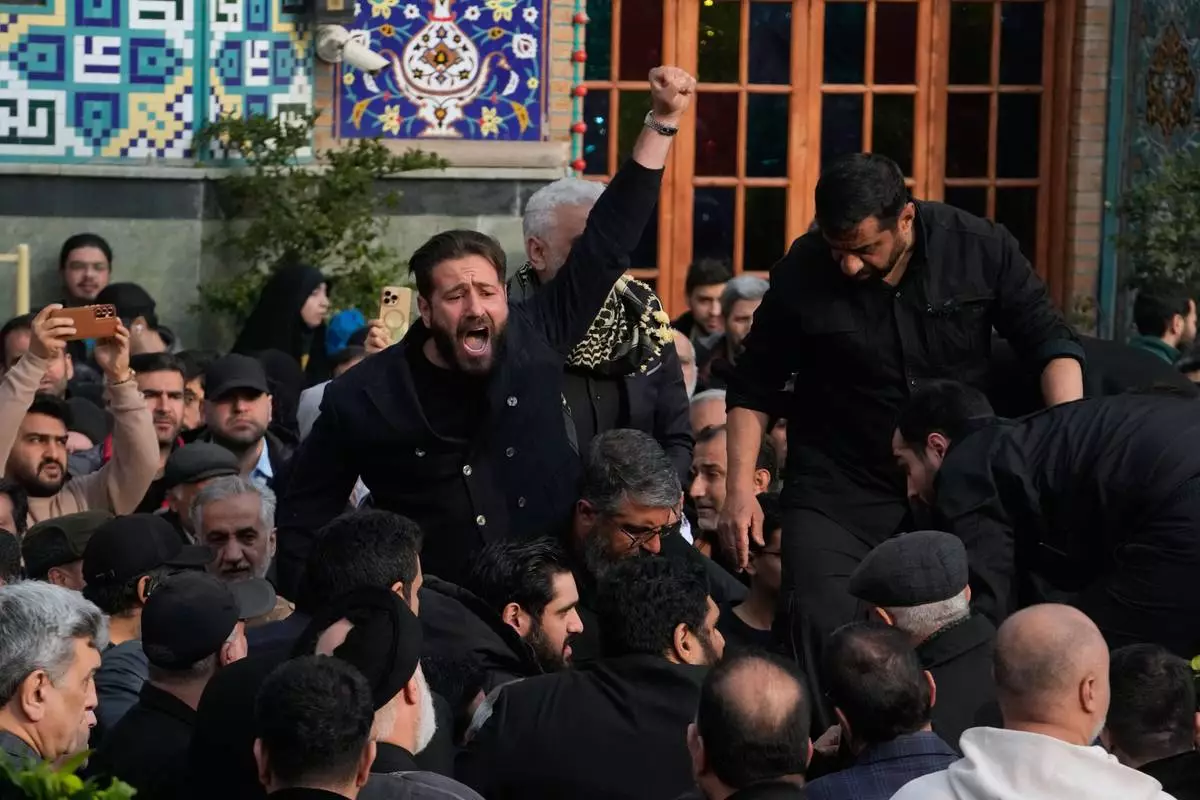
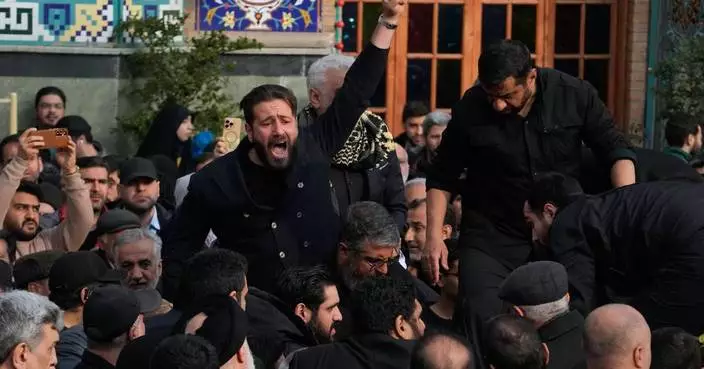
A man chants slogan while the body of Gen. Ali Shamkhani, secretary of Iran's Defense Council and a senior adviser to the Supreme Leader who was killed in a strike, is being buried at the courtyard of the Imamzadeh Saleh shrine in Tehran, Iran, Saturday, March 14, 2026. (AP Photo/Vahid Salemi)
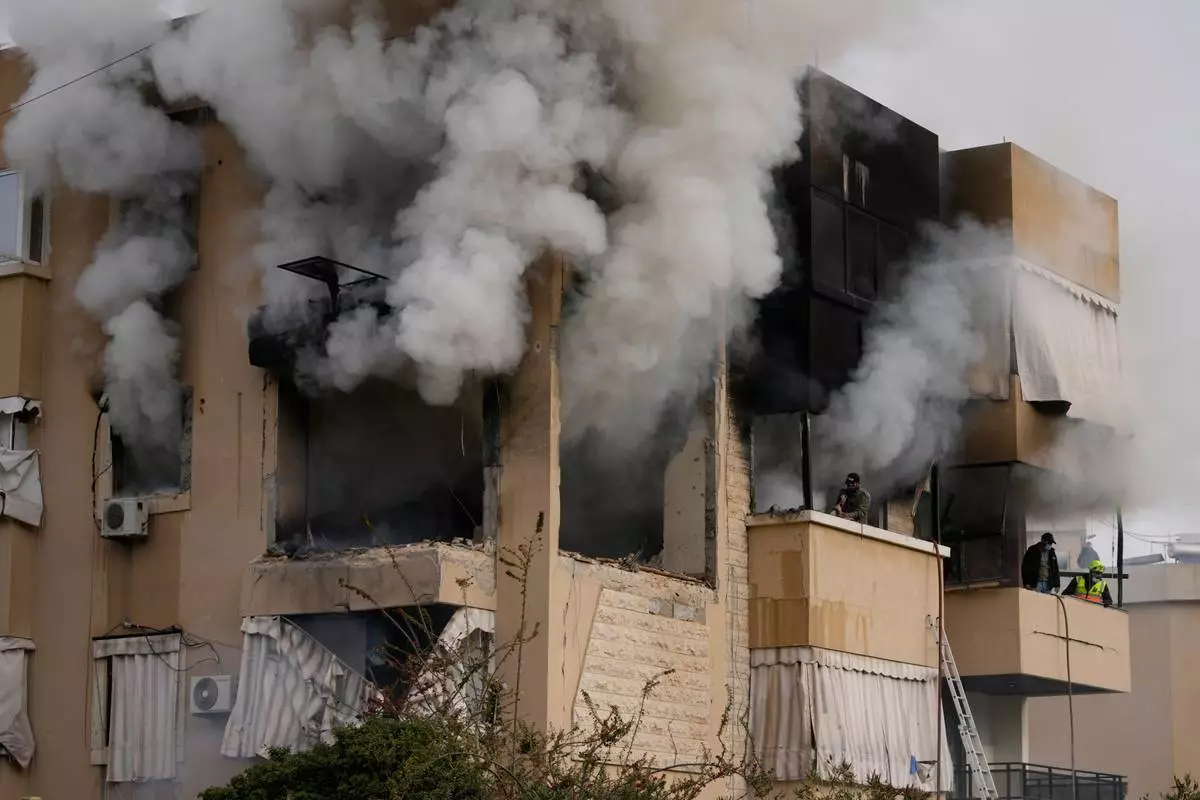
Rescue workers inspect an apartment damaged in an Israeli airstrike as thick smoke fills the building in the southern port city of Sidon, Lebanon, Saturday, March 14, 2026. (AP Photo/Mohammad Zaatari)
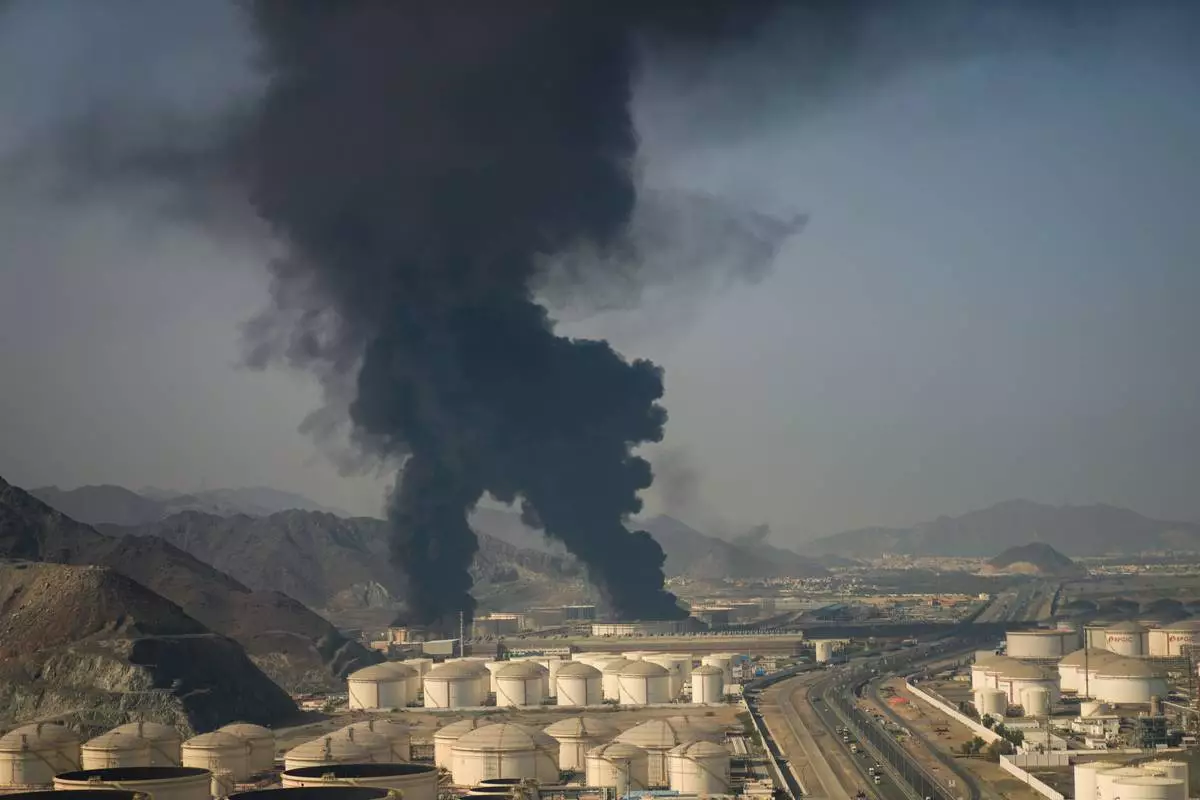
Fire and plumes of smoke rise from an oil facility in Fujairah, United Arab Emirates, Saturday, March 14, 2026. (AP Photo/Altaf Qadri)