Skip to Content Facebook Feature Image

Hong Kong, Japanese stocks slip amid battery sell-off, trade tensions: analyst

China

China

China

Hong Kong, Japanese stocks slip amid battery sell-off, trade tensions: analyst

2025-11-17 21:36 Last Updated At:22:07

Asian markets slipped Monday as battery stock sell-offs, China-Japan tensions, and fresh U.S. tariffs rattled investor confidence, dragging Hong Kong’s Hang Seng down 0.71 percent and Japan’s Nikkei 0.1 percent, analysts said.

Hong Kong stock market ended lower on Monday with the benchmark Hang Seng Index down 0.71 percent to close at 26,384.28 points.

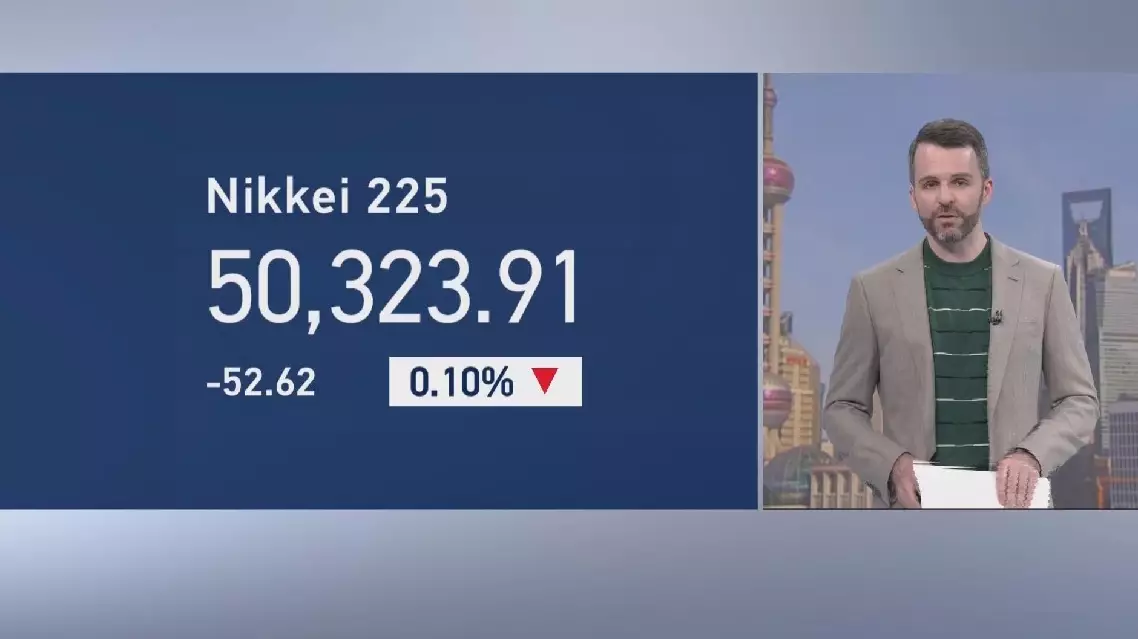
Japan's benchmark Nikkei stock index, the 225-issue Nikkei Stock Average, dropped 0.10 percent to end at 50,323.91points.

Timothy Pope, a market analyst for China Global Television Network (CGTN), recapped stock market performances in Hong Kong and Japan on Monday.

"Hong Kong's Hang Seng ended 0.7 percent lower. Even as we saw the EV sector gaining ground, one of the key companies that underpins that sector - the battery giant CATL - was in decline today, both in Shenzhen and in Hong Kong - it's got a dual listing. That was after one of its key shareholders, the company's billionaire vice chairman Huang Shilin, decided to unwind a 1 percent stake in the company now that pushed its Hong Kong stock down by more than 4 percent at one stage but it managed to close 3 percent lower," he said.

"Japanese stocks were off today, the diplomatic tension with China was being felt there -- tourism stocks took a hit, as did those with exposure to China like cosmetics makers. But the Nikkei 225 sank just 0.1 percent. The big losers were department stores like Mitsu-Koshi Holdings that was down 11 percent and the makeup chain Shiseido down 9 percent. The overall market was supported by dip-buying of the big chip sector firms like Tokyo Electron and some data center tech providers which been coming down a little bit," said Pope.

"We also saw the latest Japanese economic data out today that showed the impact of U.S. tariffs. The economy contracted for the first time in six quarters in Q3, shrinking 1.8 percent year on year. Although the markets had priced in a predicted decline of 2.5 percent. So that really did limit the market impact of that data. Obviously Japan is an export heavy economy, so tariffs were always going to be a big deal. And we've seen that with car shipments to the U.S. in particular going off a cliff after the automakers' moves to front load a lot of those shipments earlier in the year before the tariffs came into full effect," he added.
Hong Kong, Japanese stocks slip amid battery sell-off, trade tensions: analyst


Hong Kong, Japanese stocks slip amid battery sell-off, trade tensions: analyst

The two-day 2025 Brain-Computer Interface (BCI) Conference concluded on Friday in Shanghai, where multiple globally leading "China solutions" took center stage.

Under the theme "Brain connects the world, wisdom gathers in Shanghai," the event gathered research teams from major universities, leading industry developers, and experts across the BCI sector to strengthen the connection between research, application, and policy.

As part of the event, the first BCI competition featured four categories—fatigue detection, emotion recognition, brain-controlled robotic cars, and brain-controlled robotic arms - with 40 out of nearly 100 teams from across China received prizes.

In the BCI Industry Innovation Exhibition Zone, more than a dozen frontier-tech companies presented cutting-edge technologies ranging from key components to comprehensive system-level solutions.

Exhibits spanned the entire technology chain, from underlying hardware to clinical applications, covering fields such as sleep intervention, mental illness treatment, and rehabilitation for degenerative diseases—highlighting the latest trends in BCI development.

"We completed the first domestic clinical trial this March, and next year we will launch large-scale clinical trials," said an exhibitor named Chen Yaoxu.

Shanghai has established China's first future industry cluster dedicated to BCI technologies. During the conference, several new innovation platforms—including a BCI service platform and a joint laboratory for digital neuromedicine - were inaugurated.

"We are guided by clinical needs and clinical scenarios. At the same time, we are opening high-quality EEG datasets for enterprises to support their algorithm research and guide them in developing concrete products that truly address real-world needs," said Wang Zhuoyao, BCI Project manager of Shanghai Municipal Science and Technology Commission.

Shanghai conference highlights China's cutting-edge brain-computer interface innovations

Shanghai conference highlights China's cutting-edge brain-computer interface innovations

Recommended Articles