TALLAHASSEE, Fla. (AP) — At 100 years old, Lee Grant knows the cost of McCarthyism better than almost anyone else on the planet.
One of the last surviving actors to be blacklisted during the anti-communist Red Scare, the Academy Award-winning performer is speaking out against Florida's new social studies teaching standards, which critics have warned are aimed at rewriting one of the most repressive chapters in American history.
“It’s a lie and a distortion of the truth of history,” Grant said in an interview with The Associated Press.
In 1951, Grant's star was on the rise. But just as her career was taking off, it was derailed and she was blacklisted, barred from working in film or television for the next 12 years after she refused to name names in front of the congressional committee that investigated so-called “un-American activities.”
“Me? Turn in friends?” she said, adding “That's not the way I am raised.”
Reflecting on how political persecution changed her own life, Grant said she sees echoes of McCarthyism in today’s politics, pointing to President Donald Trump’s fights with the media and wondering how long his critics will be able to continue speaking out.
“As an old blacklisted actor, director,” Grant said, “I keep worrying.”
The teaching standards approved last week for middle- and high school students by the Florida Board of Education include instruction on the use of “‘McCarthyism’ as an insult” and how using the terms “red-baiter and Red Scare” amounts to “slander against anti-communists.”
Florida's standards soften decades of criticism of former U.S. Sen. Joseph McCarthy, who led a political movement to root out what he labeled as communism in government, the Civil Rights Movement and artistic communities in the late 1940s and early 1950s. McCarthy and others tried to silence political opponents by accusing them of being communists or socialists, using fear and public accusations to suppress basic free speech rights.
The public inquisitions, ideological loyalty tests and firings of that period are seen now as a shameful period that upended the lives and careers of scores of actors, writers, activists and public servants. The term “McCarthyism” became synonymous with baseless attacks on free expression, and the U.S. Supreme Court has referred to the phenomena in several First Amendment-related rulings.
Born Lyova Rosenthal and raised in Manhattan, Grant made her Hollywood debut playing the shoplifter in the film “Detective Story” alongside Kirk Douglas, a role that earned Grant an Academy Award nomination for best supporting actress.
Grant was not herself a member of the Communist Party, a point of contention in her first marriage to screenwriter Arnold Manoff, who was a communist. But Grant spoke out at the memorial service of an actor friend who died of a heart attack six months after being questioned by the congressional committee, saying that “being blacklisted killed him.”
“That was how I was blacklisted. That was the act,” she recalled.
Soon after, Grant's name appeared on a list, alongside artists like Orson Welles, Leonard Bernstein, Arthur Miller and Lena Horne.
“We live in a democracy that was being used as a fascist tool to stop people from thinking,” Grant said of the time.
Despite her yearslong ban in Hollywood, Grant was able to work in theater, which provided a haven for some blacklisted actors, and she continued fighting against the purge.
By 1954, public opinion and McCarthy's fellow senators turned on him, and in the 1960s, the blacklist's hold on Hollywood loosened.
Grant ultimately went on to have a storied career, despite the years lost to being blacklisted. She made a comeback in the 1967 film “In the Heat of the Night" alongside Sidney Poitier, channeling her anger as a distraught woman outraged by the prejudice of local authorities investigating her husband's murder.
She went on to win an Academy Award for best supporting actress for her role in the 1975 film “Shampoo” alongside Warren Beatty. She later became a documentary filmmaker, directing “Down and Out in America," which won the Oscar for best feature-length documentary in 1987.
Florida’s new teaching benchmarks, which will go into effect in the 2026-2027 school year, were prompted by a law signed by Republican Gov. Ron DeSantis last year requiring instruction on communism and the “threat” it's posed to the U.S.
The move followed the Republican-controlled Legislature’s designation of Nov. 7 as Victims of Communism Day in Florida’s public schools, to include at least 45 minutes of instruction on figures such as former Chinese leader Mao Zedong and Cuban dictator Fidel Castro.
Under the new standards, Florida teachers should give instruction on efforts by “anti-communist politicians,” such as McCarthy, and the late Presidents Harry Truman and Richard Nixon.
Teachers are also instructed to identify “propaganda and defamation” used to “delegitimize” anti-communists.
“Instruction includes using ‘McCarthyism’ as an insult and shorthand for all anti-communism,” the new standards said. “Instruction includes slander against anti-communists, such as red-baiter and Red Scare.”
Kate Payne is a corps member for The Associated Press/Report for America Statehouse News Initiative. Report for America is a nonprofit national service program that places journalists in local newsrooms to report on undercovered issues.
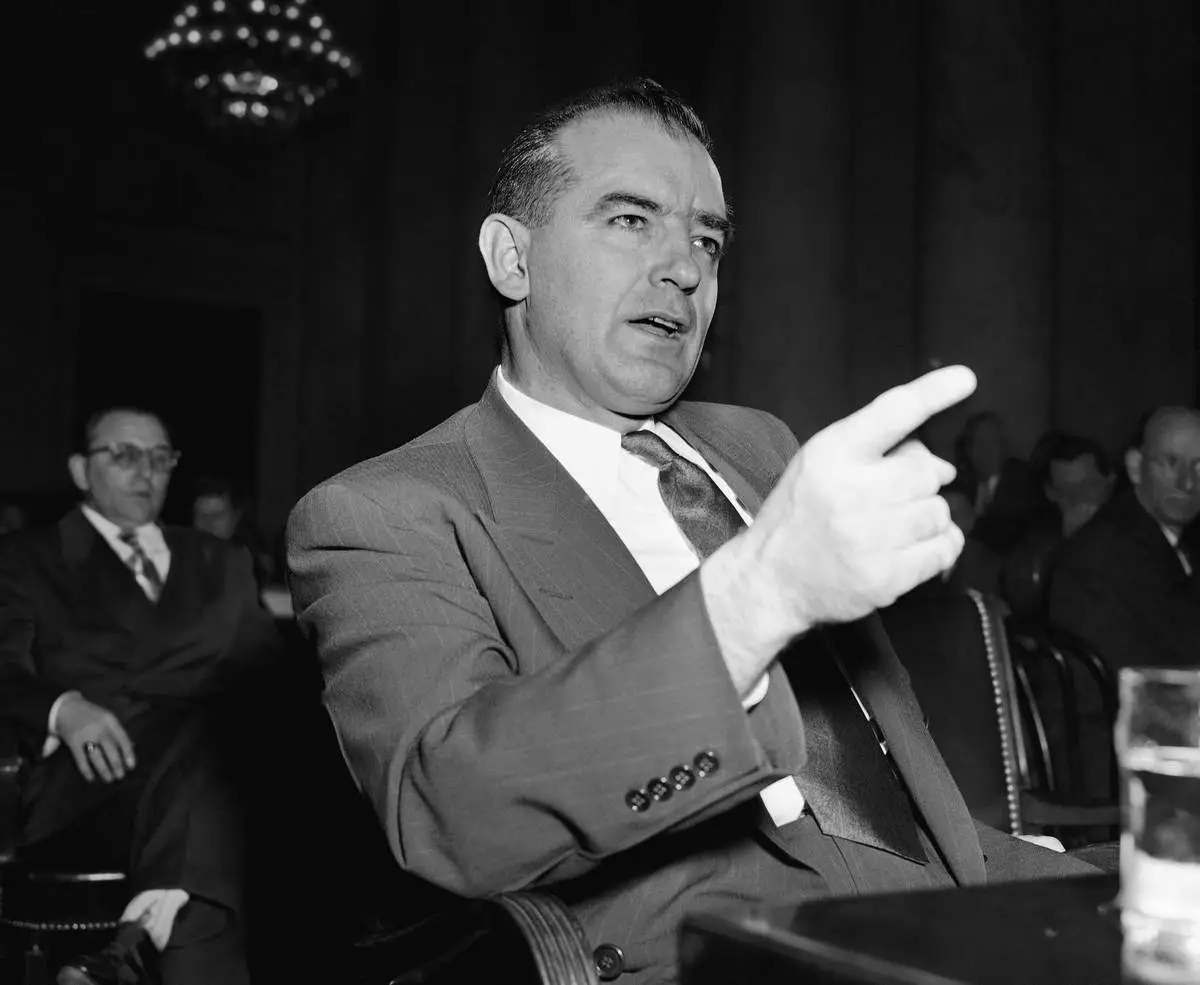
FILE - Sen. Joseph McCarthy gestures during a Senate subcommittee hearing in Washington, D.C., on McCarthy's charges of communist infiltration of the U.S. State Department, March 9, 1950. (AP Photo/Herbert K. White, File)
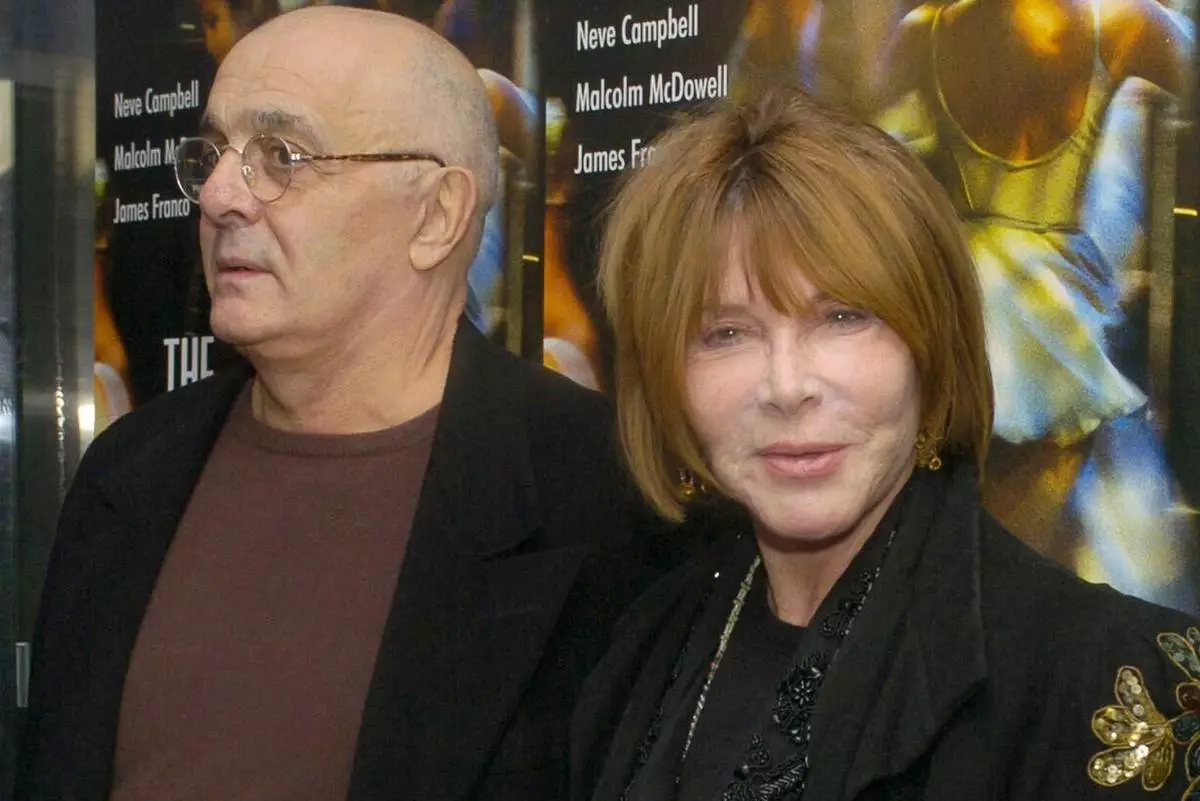
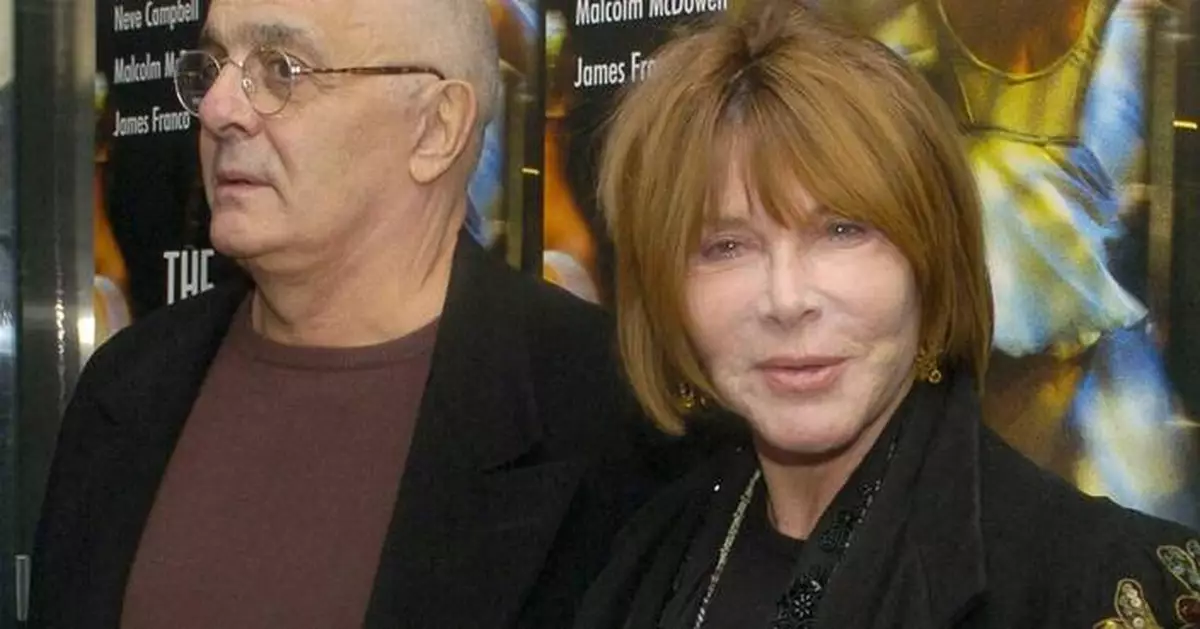
FILE - Actress Lee Grant arrives with her husband Joe Feury to a screening of "The Company" at the Paris Theater in New York, Dec. 16, 2003. (AP Photo/Louis Lanzano, File)
WASHINGTON (AP) — Secretary of State Marco Rubio is on his latest mission to assuage nervous U.S. allies in Europe about the Trump administration’s intentions with NATO or at least put a friendlier face on whipsawing changes and uncertainty about American troop reductions.
Rubio will attend a NATO foreign ministers’ meeting in Sweden on Friday — the same day senior Pentagon officials are expected to brief the 32-nation alliance on plans for the U.S. military’s commitment to European defense at the alliance’s headquarters in Brussels.
The meeting of diplomats, which precedes a NATO leaders’ summit in Turkey in July, comes amid great uncertainty over how the war in Iran will play out and whether stalled U.S. efforts to broker an end to the Russia-Ukraine conflict will resume. Resentment also still simmers on the continent over President Donald Trump’s criticism of allies and his interest in taking over Greenland, a territory of NATO ally Denmark.
Rubio has often been called on to offer a calmer, less antagonistic presence from the Trump administration at meetings like these. He has been dispatched on several such missions this year, including the Munich Security Conference in February and, more recently, to Italy, where he met with Italian officials and Pope Leo XIV after Trump criticized the American pontiff for his stances on crime and the Iran war.
On his departure to the meeting in Helsingborg, Sweden, Rubio declined to discuss any further changes to the American military presence in Europe, including a possible reduction in the number of troops that the U.S. will commit under the NATO Force Model, which is a contingency plan for European defense in the event of serious security concerns.
The Trump administration had decided to cancel the deployment of thousands of U.S. troops to Poland and Germany, but then the president posted on social media Thursday that “the United States will be sending an additional 5,000 Troops to Poland.”
It was not clear whether that meant the brigade that had been stopped from going to Poland would be back on its way, whether additional troops beyond that rotational deployment could be added, or whether there would still be a drawdown of U.S. troops in Europe, but from a different country. The Pentagon referred requests for comment to the White House, which did not immediately respond to messages seeking clarity.
Earlier, Rubio did repeat that Trump and others in the administration, including him, are “very disappointed” in NATO, especially in its response to the Iran war.
“I don’t think anyone is shocked to know that the United States, and the president in particular, is very disappointed at NATO right now,” he told reporters in Miami before boarding his plane.
Rubio said he was a “strong supporter” of the transatlantic military alliance and called it important. But he reiterated complaints that some NATO allies, notably Spain, had refused to allow access to U.S. bases for the Iran conflict and others had been reluctant, if not resistant, to join a coalition to reopen and protect the Strait of Hormuz, a crucial oil shipping route that Iran largely has closed.
“I know why NATO is good for Europe, but why is NATO good for America?” Rubio asked rhetorically, answering his own question by referring to bases that allow the U.S. and others to project power globally. “So, when that is the key rationale for why you’re in NATO, and then you have countries like Spain denying us the use of these bases, well, then, why are you in NATO?”
Rubio noted that nearly all NATO allies agree that Iran should not be allowed to develop nuclear weapons, but few, if any, stepped up when Trump said he would take action to prevent it.
“He’s not asking them to commit troops. He’s not asking them to send their fighter jets in. But they refuse to do anything, and so I think the president looks at that and says, ‘Hold on a second,’” Rubio said. “I think we were very upset about that. The president has made that very clear.”
NATO officials have downplayed the changes to U.S. troop levels in Europe, saying they have been long planned and do not come as a surprise.
Yet the announcements have blindsided some allies and came despite U.S. promises to coordinate military moves to avoid creating security gaps. Similarly, Trump's apparent change on Poland came as another surprise.
NATO Secretary-General Mark Rutte said Wednesday that U.S. allies have known for a year that the Trump administration would be withdrawing some troops from Europe, and it expects “rightly, for Europe and Canada to take a bigger responsibility for the conventional defense of NATO and particularly, of course, the European part of NATO.”
Rutte said the U.S. “will stay involved” but over time could pivot resources elsewhere in the world. U.S. Gen. Alexus Grynkewich, commander of both American and NATO forces in Europe, said this week that security in Europe would not be compromised but warned that allies should expect more drawdowns in the coming years.
The Trump administration has warned that Europe would have to look after its own security, including Ukraine’s, in the future.
Associated Press writer Lorne Cook in Brussels contributed to this report.
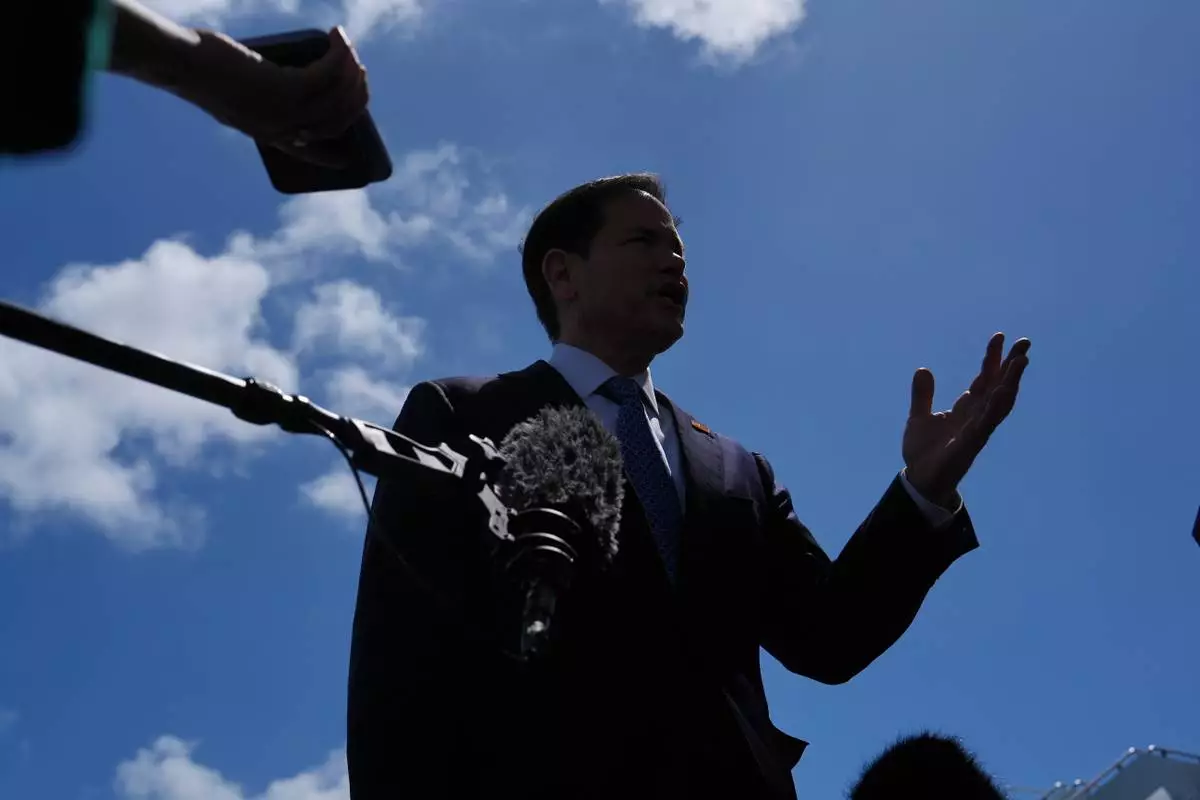
Secretary of State Marco Rubio speaks to the press before boarding his plane at Homestead Air Reserve Base, Thursday, May 21, 2026. Rubio is traveling to a NATO foreign ministers meeting in Sweden. (AP Photo/Julia Demaree Nikhinson, Pool)
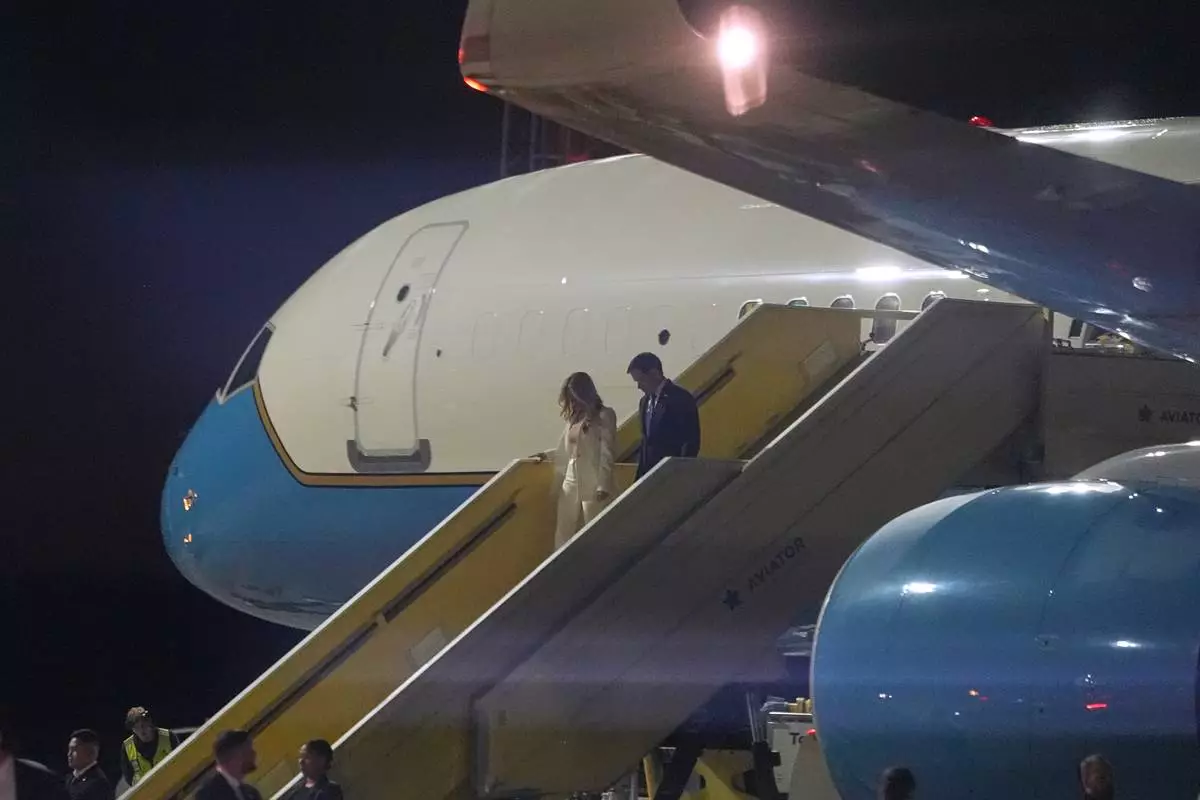
Secretary of State Marco Rubio arrives with his wife Jeanette at Malmo Airport, Friday, May 22, 2026, in Malmo-Sturup, Sweden, ahead of a NATO foreign ministers meeting. (AP Photo/Julia Demaree Nikhinson, Pool)
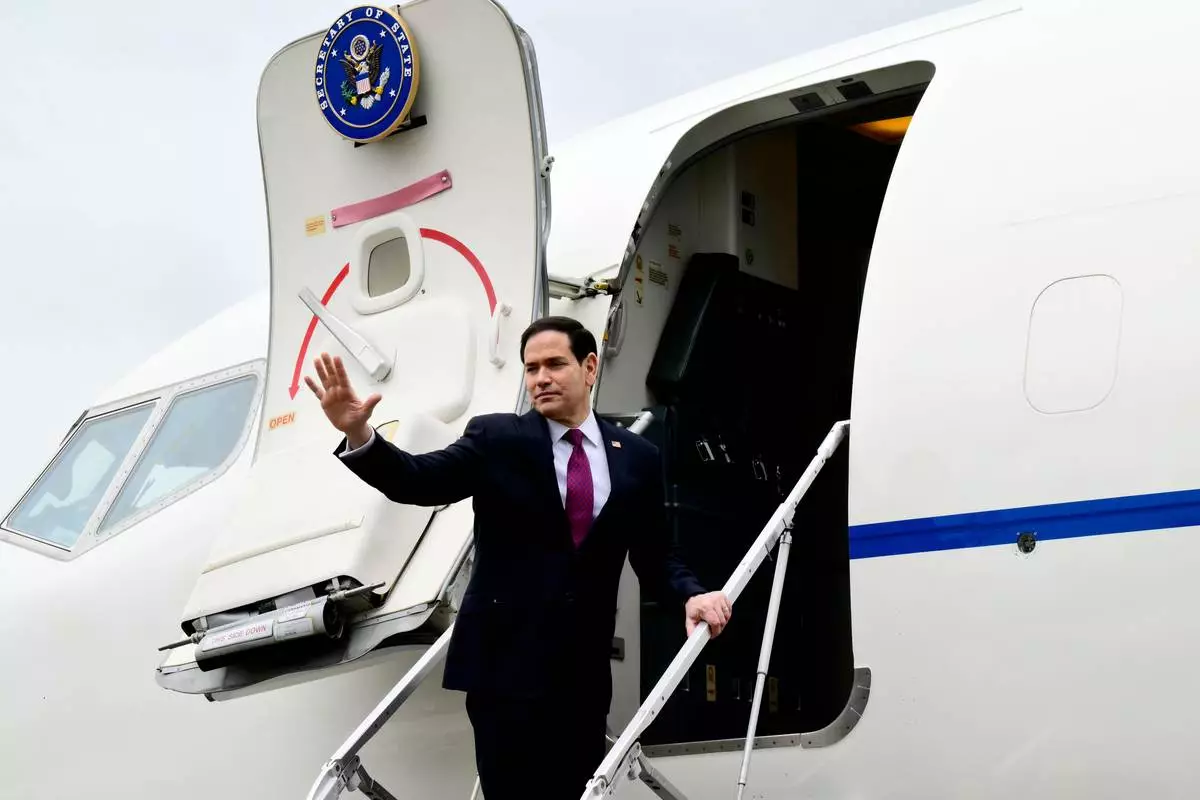
US Secretary of State Marco Rubio waves as he boards a US government aircraft after concluding his two-day visit to Italy and the Vatican, at Ciampino airport in Rome, Friday, May 8, 2026. (Stefano Rellandini/Pool Photo via AP)
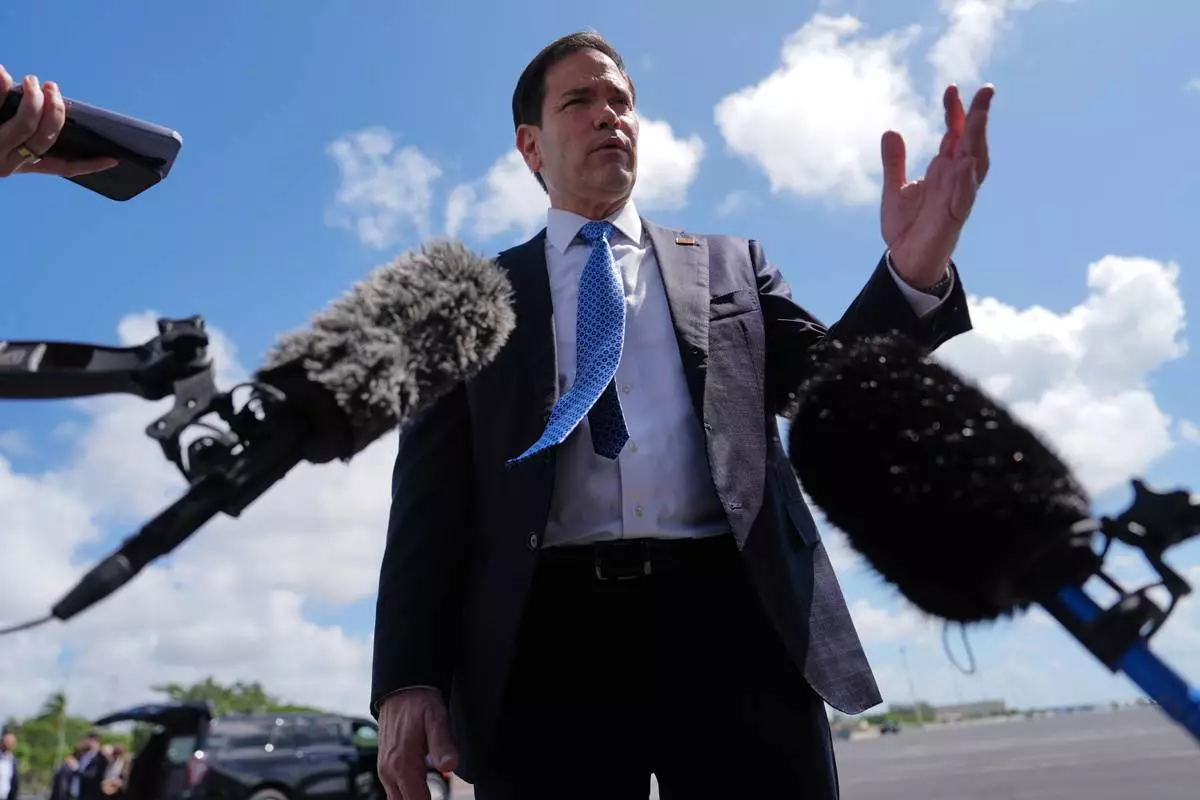
Secretary of State Marco Rubio speaks to the press before boarding his plane at Homestead Air Reserve Base, Thursday, May 21, 2026. Rubio is traveling to a NATO foreign ministers meeting in Sweden. (AP Photo/Julia Demaree Nikhinson, Pool)
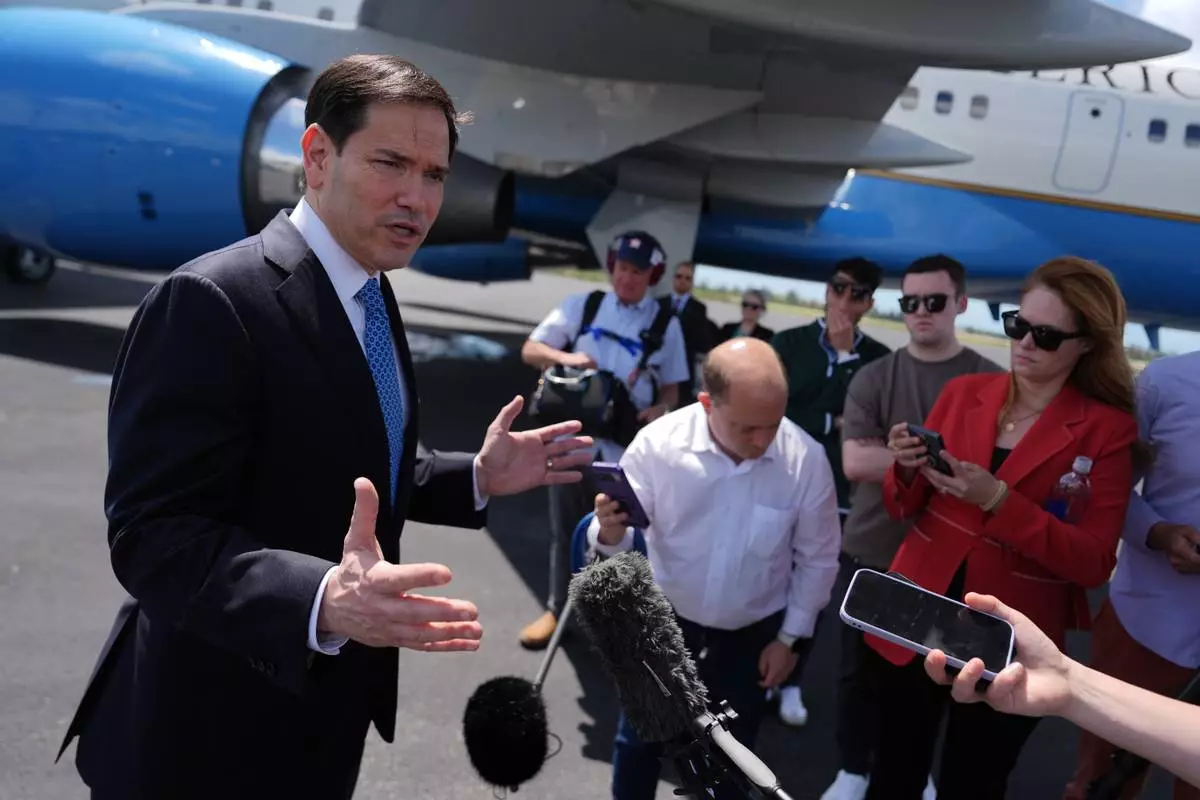
Secretary of State Marco Rubio speaks to the press before boarding his plane at Homestead Air Reserve Base, Thursday, May 21, 2026. Rubio is traveling to a NATO foreign ministers meeting in Sweden. (AP Photo/Julia Demaree Nikhinson, Pool)
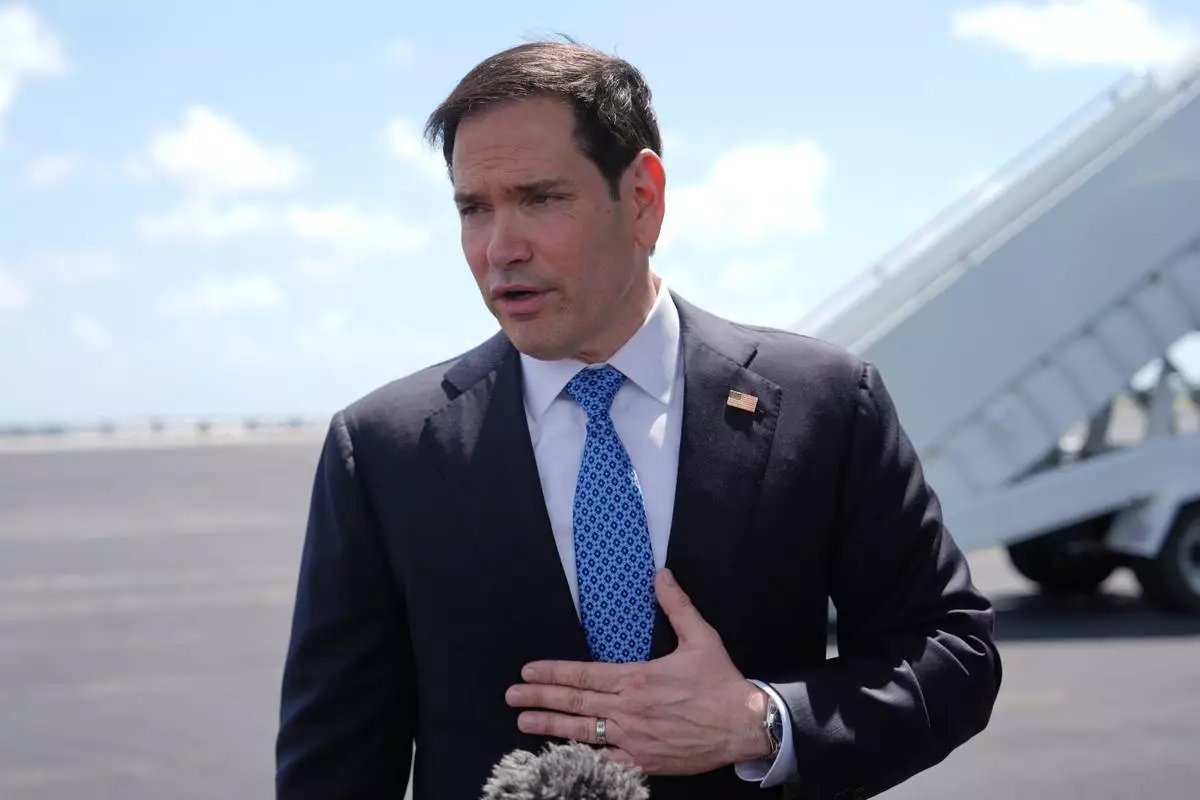
Secretary of State Marco Rubio speaks to the press before boarding his plane at Homestead Air Reserve Base, Thursday, May 21, 2026. Rubio is traveling to a NATO foreign ministers meeting in Sweden. (AP Photo/Julia Demaree Nikhinson, Pool)
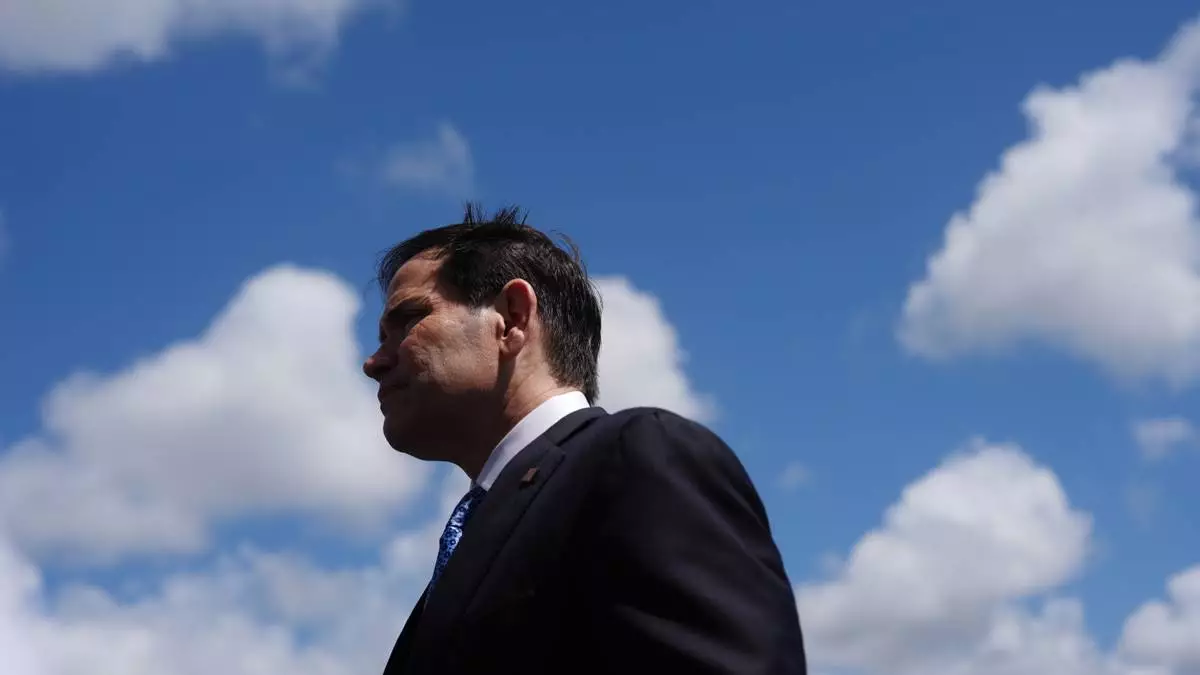
Secretary of State Marco Rubio speaks to the press before boarding his plane at Homestead Air Reserve Base, Thursday, May 21, 2026. Rubio is traveling to a NATO foreign ministers meeting in Sweden. (AP Photo/Julia Demaree Nikhinson, Pool)