The future of urban air mobility and advanced aerial transportation is on display at the ongoing Dubai Airshow in the United Arab Emirates, as the latest vertical take-off and landing (VTOL) aircraft offer visitors a captivating preview of how the skies above cities could soon change.
Held fittingly under the theme "The Future is Here," the five-day airshow opened at Dubai World Central on Monday and has drawn more than 1,500 exhibitors, including 440 first-time participants.
Over 200 aircraft are on display, from commercial, military, and private jets to unmanned aerial vehicles (UAVs) and next-generation aviation technologies.
One of the most eye-catching sections at the airshow is the VTOL aircraft exhibition area. Exhibitors say these aircraft are poised to serve as flying taxis in the near future, helping alleviate urban traffic congestion by fully utilizing available airspace.
Joby Aviation, a company from the United States, delivered the first VTOL aircraft performance on the event's opening day, wowing spectators with crewed vertical taking off and landing procedures.
Oliver Walker-Jones, head of marketing and communications for the firm, emphasized that safety is very much a priority, noting that extensive testing is being carried out on the aircraft.
"We've had our aircraft here in Dubai for about six months now and we've been performing flight tests out in the desert. We have six different propellers. They're all powered separately. There are four different packs. In other words, there's a lot of redundancy, so it'll be regulated. We've done 50,000 miles of flight testing already and we're going to do a lot more. And the aircraft by design is very, very safe." he said.
Meanwhile, several exhibitors have been showcasing the latest advancements made in the development of hybrid power systems which are designed to significantly extend the range and endurance of aircraft.
Auto-maker Honda has been developing its first all-electric VTOL prototype, and is especially focused on advancing the range and performance of its new flying vehicle concept.
"We have a hybrid electric power system and the maximum viable range is now 400 kilometers," said Akihiro Mizutani, a representative from Honda's research and development team involved in the project.
Chinese-made eVTOL aircraft have also garnered significant attention at the airshow.
One exhibitor from Aerospace Times Feipeng, a company based in east China's Jiangsu Province, noted their aircraft could serve key functions beyond basic transportation, including in emergency situations.
"It is primarily designed for civilian logistics, as well as emergency search and rescue missions. For example, if we want to check for an oil spill in the Arabian Gulf or the Red Sea, we can deploy this aircraft right away. The takeoff and landing of the aircraft are fully electric, while the engine runs on regular automotive gasoline, which is cheap and widely available. We are confident to say that we will achieve the first flight very soon in the Middle East region," said Cao Yongmin, a representative for the company.
The 19th edition of the Dubai Airshow has attracted some 148,000 trade visitors and is expected to be the largest in the biennial event's history.
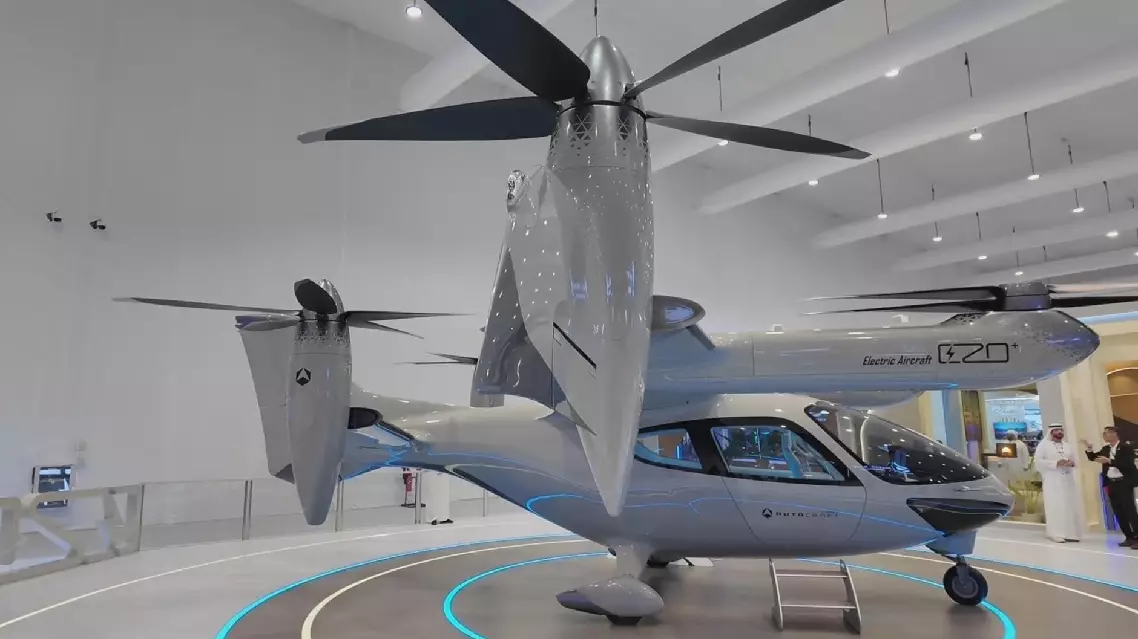
'Flying taxi' offers glimpse of future aerial transportation at Dubai Airshow
Chinese Foreign Minister Wang Yi said on Tuesday that mediation efforts of the Pakistani side regarding the Middle East tensions are in the common interests of all parties.
Wang, also a member of the Political Bureau of the Communist Party of China Central Committee, made the remarks in his talks with Pakistani Deputy Prime Minister and Foreign Minister Mohammad Ishaq Dar in Beijing.
During their talks, the two sides exchanged views on current international issues and regional conflicts.
Wang welcomed the visit of the Pakistani side to Beijing for discussion on easing tensions in the Middle East, just after its holding of a quadrilateral foreign ministers' meeting in Islamabad.
He said China supports and looks forward to Pakistan playing a unique and important role in easing the situation and resuming peace talks. This process is no easy task, and Pakistan's mediation efforts are in line with the common interests of all parties, Wang added.
He noted China is willing to make joint efforts with Pakistan to end the hostilities as soon as possible, create opportunities for peace and open the window for peace talks.
On bilateral ties, Wang said this year marks the 75th anniversary of the establishment of diplomatic relations between China and Pakistan, calling on both sides to implement the important consensus reached by the leaders of the two countries and constantly advance the building of a China-Pakistan community with a shared future.
For his part, Dar said the Pakistan-China friendship is precious and deeply rooted in people's hearts, adding that Pakistan is willing to work with China to promote the continuous development of the all-weather strategic cooperative partnership between the two countries.
Dar thanked China for supporting Pakistan's mediation of the situation in Iran, adding that the current conflict has disrupted international energy supplies and caused heavy damage to developing countries.
Noting that solutions can only be found through negotiation, Dar said Pakistan is willing to strengthen communication and coordination with China to push all parties to start peace talks as soon as possible and restore regional peace.
The two sides also put forward a five-point initiative for restoring peace and stability in the Gulf and the Middle East region:
I. Immediate cessation of hostilities: China and Pakistan call for immediate cessation of hostilities and utmost efforts to prevent the conflict from spreading. Humanitarian assistance must be allowed to all war-affected areas.
II. Start of peace talks as soon as possible. Sovereignty, territorial integrity, national independence and security of Iran and the Gulf states should be safeguarded. Dialogue and diplomacy is the only viable option to resolve conflicts. China and Pakistan support the relevant parties in initiating talks, with all parties committing to peaceful resolution of disputes, and refraining from the use or the threat of use of force during peace talks.
III. Security of nonmilitary targets. The principle of protecting civilians in military conflict should be observed. China and Pakistan call on parties to the conflict to immediately stop attacks on civilians and nonmilitary targets, and fully adhere to International Humanitarian Law, and stop attacking important infrastructure, including energy, desalination and power facilities, and peaceful nuclear infrastructure, such as nuclear power plants.
IV. Security of shipping lanes. The Strait of Hormuz, together with its adjacent waters, is an important global shipping route for goods and energy. China and Pakistan call on the parties to protect the security of ships and crew members stranded in the Strait of Hormuz, allow the early and safe passage of civilian and commercial ships, and restore normal passage through the Strait as soon as possible.
V. Primacy of the United Nations Charter. China and Pakistan call for efforts to practice true multilateralism, to jointly strengthen the primacy of the United Nations, and to support the conclusion of an agreement for establishing a comprehensive peace framework and realizing lasting peace based on the purposes and principles of the UN Charter and international law.
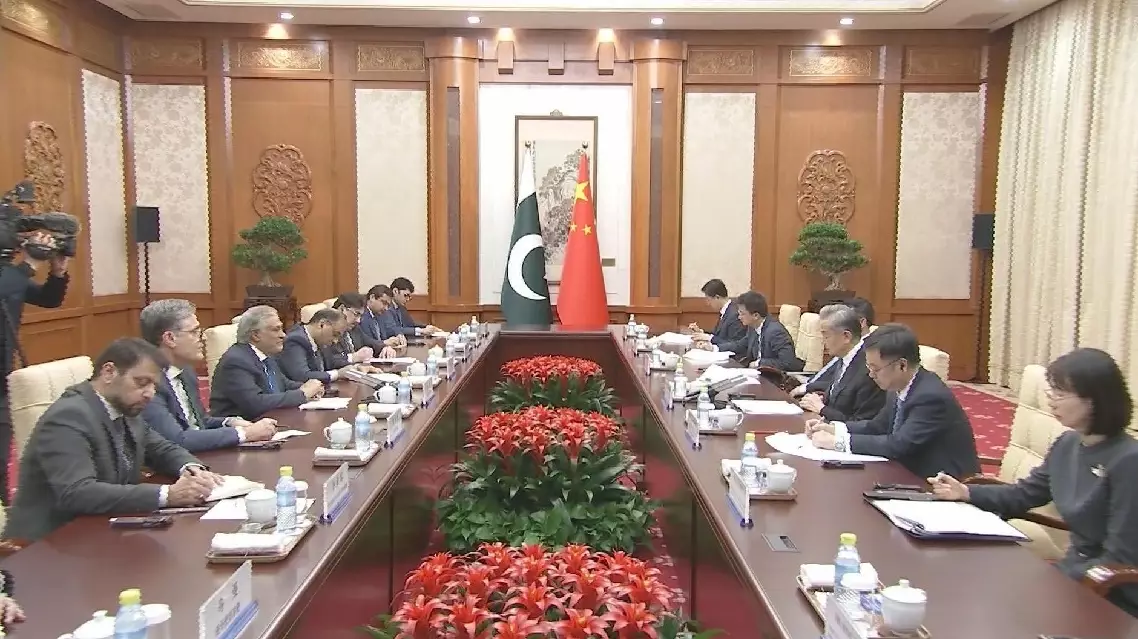
Pakistan's mediation efforts in common interests of all parties: Chinese FM