JERUSALEM (AP) — Israel plans to seize parts of a major West Bank historic site, according to a government document, and settlers put up a new outpost overnight, even as the country faces pressure to crack down on settler violence in the Palestinian territory.
Israel's Civil Administration announced its intention to expropriate large swaths of Sebastia, a major archaeological site in the West Bank, in the document obtained by The Associated Press on Thursday. Peace Now, an anti-settlement watchdog group, said the site is around 1,800 dunams (450 acres) — Israel's largest seizure of archeologically important land.
Click to Gallery
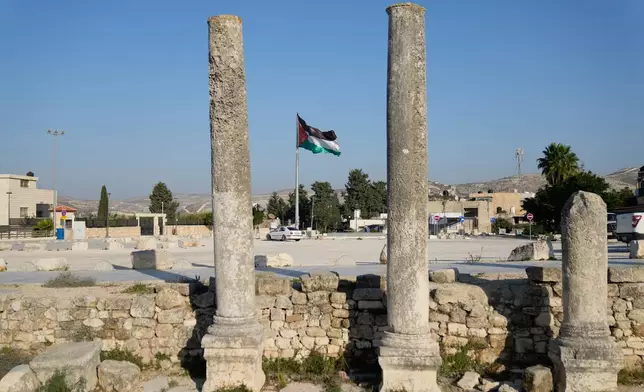
A Palestinian flag flies over the Roman historical site in the West Bank town of Sebastia Thursday, Nov. 20, 2025. (AP Photo/Nasser Nasser)
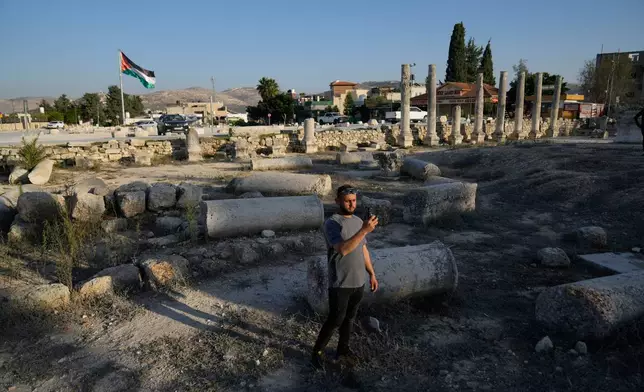
A Palestinian visitor takes a photo at the Roman historical site in the West Bank town of Sebastia Thursday, Nov. 20, 2025. (AP Photo/Nasser Nasser)
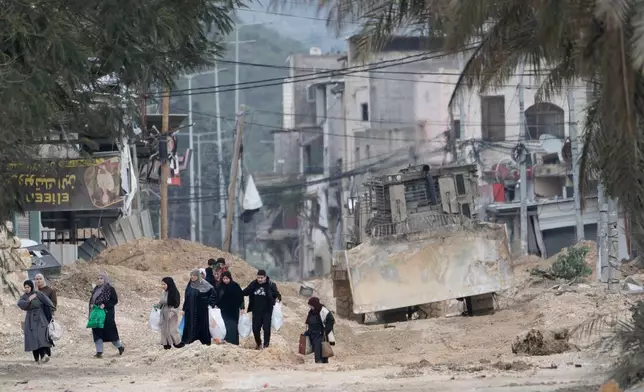
FILE -Residents of the West Bank refugee camp of Nur Shams, near Tulkarem, evacuate their homes as the Israeli military continues its operation in the area on Feb. 11, 2025. (AP Photo/Majdi Mohammed, File)
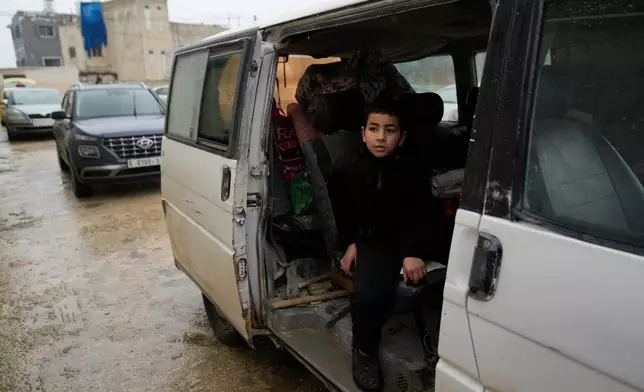
FILE -Palestinians who fled the Israeli military operation in the Nur Shams refugee camp arrive at a temporary shelter for displaced people in the West Bank town of Anabta, near Tulkarem, Feb. 10, 2025. (AP Photo/Nasser Nasser), File)
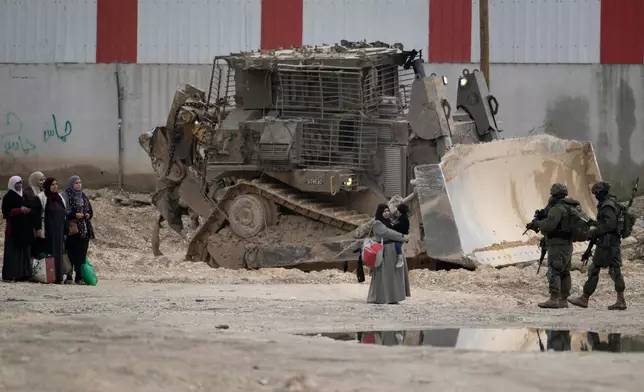
FILE -Israeli soldiers check the identification cards of Palestinians while they evacuate their homes in the West Bank refugee camp of Nur Shams, near Tulkarem, while the Israeli military operation continues in the area on, Feb. 11, 2025. (AP Photo/Majdi Mohammed, File)
The move came as Israeli settlers celebrated the creation of a new, unauthorized settlement near Bethlehem, and a Palestinian lawyer said a West Bank activist has been detained and hospitalized.
Meanwhile, Human Rights Watch said Israel may have committed war crimes when it forcibly expelled 32,000 Palestinians from three West Bank refugee camps this year.
The Israeli order released Nov. 12 lists parcels of land it intends to seize in the Sebastia area. Peace Now, which provided the document to AP, said the popular archeological site, where thousands of olive trees grow, belongs to the Palestinians.
The capital of the ancient Israelite kingdom Samaria is thought to be beneath the ruins of Sebastia, and Christians and Muslims believe it's where John the Baptist was buried.
Israel announced plans to develop the site into a tourist attraction in 2023. Excavations have already begun and the government has allocated more than 30 million shekels ($9.24 million) to develop the site, according to Peace Now and another rights group.
The order gives Palestinians 14 days to object to the declaration.
The largest parcel of historical land previously seized by Israel was 286 dunams (70 acres) in Susya, a village in the south of the West Bank, Peace Now said.
Israeli settlers said they established a new unauthorized outpost close to Bethlehem. The chairman of the local Etzion settler council, Yaron Rosenthal, welcomed the settlement as a “return to the city of our matriarch Rachel, of King David.” Rosenthal said the new community would “strengthen the connection" between Etzion and Jerusalem.
The new outpost could be a response to the latest Palestinian attack on Israelis in the West Bank. It's close to the busy junction where on Tuesday Palestinian attackers stabbed one Israeli to death and wounded three more.
Rosenthal demanded that Israel respond forcefully and better support the settlements.
“Terrorism is fueled by the hope of a state,” he said, connecting the violence to the Palestinian Authority and a renewed push to advance efforts to secure Palestinian statehood.
Hamas did not claim responsibility for the attack, but in a statement called it “a normal response to the occupation’s attempts to liquidate the Palestinian cause,” vowing that Israeli aggression wouldn’t go unchallenged.
Hagit Ofran, the director of Peace Now’s settlement watch program, said the outpost is on land that used to be an Israeli military base. Photos that settlers shared online show temporary homes at the site and bulldozers at work.
Israel captured the West Bank, east Jerusalem and Gaza — areas claimed by the Palestinians for a future state — in the 1967 war. It has settled over 500,000 Jews in the West Bank, largely on unauthorized settlements, in addition to over 200,000 more in contested east Jerusalem.
Israel’s government is dominated by far-right proponents of the settler movement including Finance Minister Bezalel Smotrich, who formulates settlement policy, and Cabinet minister Itamar Ben-Gvir, who oversees the nation’s police force.
Israel's president and high-ranking military officials have condemned a recent wave of settler violence in the West Bank.
A Palestinian activist who documented settler violence in the West Bank has been detained and hospitalized, his lawyer told the AP Thursday. Riham Nasra said the activist, Ayman Ghrayeb Odeh, was hospitalized after his detention at a military base in the Jordan Valley.
“Israeli authorities refuse to reveal where he is, what his condition is or why he has been hospitalized,” she said.
Shin Bet, Israel's security agency, confirmed the activist has been detained on incitement charges. Odeh could face indefinite administrative detention, a punishment without charge or a trial based on secret evidence.
His brother, Bilal Ghrayeb, told AP he spoke briefly with Odeh shortly after his detention while he was visiting a Palestinian family in the Jordan Valley. His brother said the military confiscated Odeh's phone and that he has not heard from him since.
“He is an activist who posts photos and writes on social media about what is happening. He is not inciting. He is not hiding anything, nothing is secret. He is only saying and posting what he sees about the lives of people in the Jordan Valley," Ghrayeb said.
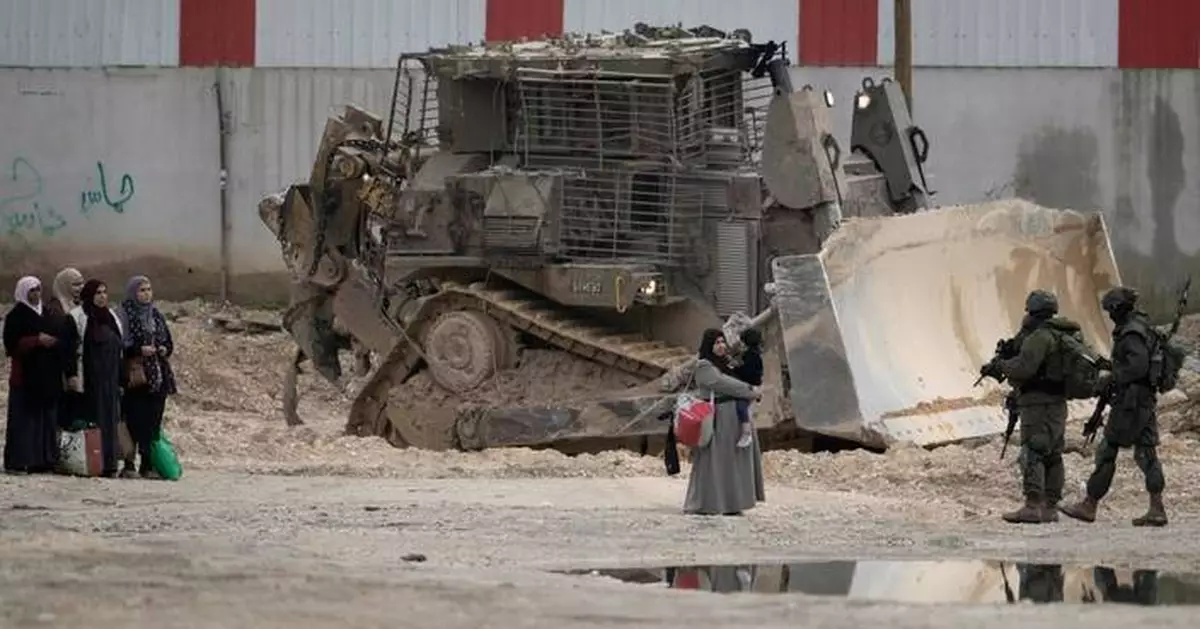
Human Rights Watch said top Israeli officials including Prime Minister Benjamin Netanyahu, Finance Minister Bezalel Smotrich and Defense Minister Israel Katz should be investigated for war crimes. In a report published Thursday, the group said the Israeli military forcibly expelled 32,000 Palestinians from three West Bank refugee camps this year.
Israel’s military raids on refugee camps in the north of the West Bank in January and February amounted to the largest displacement in the territory since Israel captured it in 1967, Human Rights Watch said.
Israel has said its troops will stay in some camps for a year, and its unclear when, if ever, Palestinians will be able to return. Thousands of displaced Palestinians are living with relatives cramming into rental apartments, or living in public buildings.
Human Rights Watch said it analyzed satellite images and concluded that more than 850 homes and buildings were destroyed or heavily damaged. The Israeli military has said it was attacking militant infrastructure and clearing space for troop movement.
Israel said the “Operation Iron Wall” raids were necessary to stamp out militancy in the West Bank after the Hamas-led Oct. 7, 2023, attack ignited the war in Gaza. It said Thursday that troops dismantled explosive labs and exchanged fire with militants during the raids. It said in a statement that militant attacks have since decreased by 70% in the West Bank, but provided no evidence.
Human Rights Watch said Israeli authorities didn’t explain why they had to remove everyone from the camps nor why they haven’t been allowed to return. The report said the military shot at residents who attempted to reenter the camps, and that it has not provided shelter or humanitarian assistance to the displaced.
“With global attention focused on Gaza, Israeli forces have carried out war crimes, crimes against humanity, and ethnic cleansing in the West Bank that should be investigated and prosecuted,” said Nadia Hardman, senior refugee and migrant rights researcher at Human Rights Watch.
The report was based on interviews with 31 Palestinians displaced from Tulkarem, Nur Shams and Jenin refugee camps.
The camps resemble dense, urban slums and are home to millions of Palestinians. Human Rights Watch said it analyzed satellite imagery of the camps and found more than 850 homes and buildings have been destroyed or heavily damaged.
The Israeli military has told the AP that some of the damage was to strike militant infrastructure, while some was to clear space for easier troop movement around the camps.
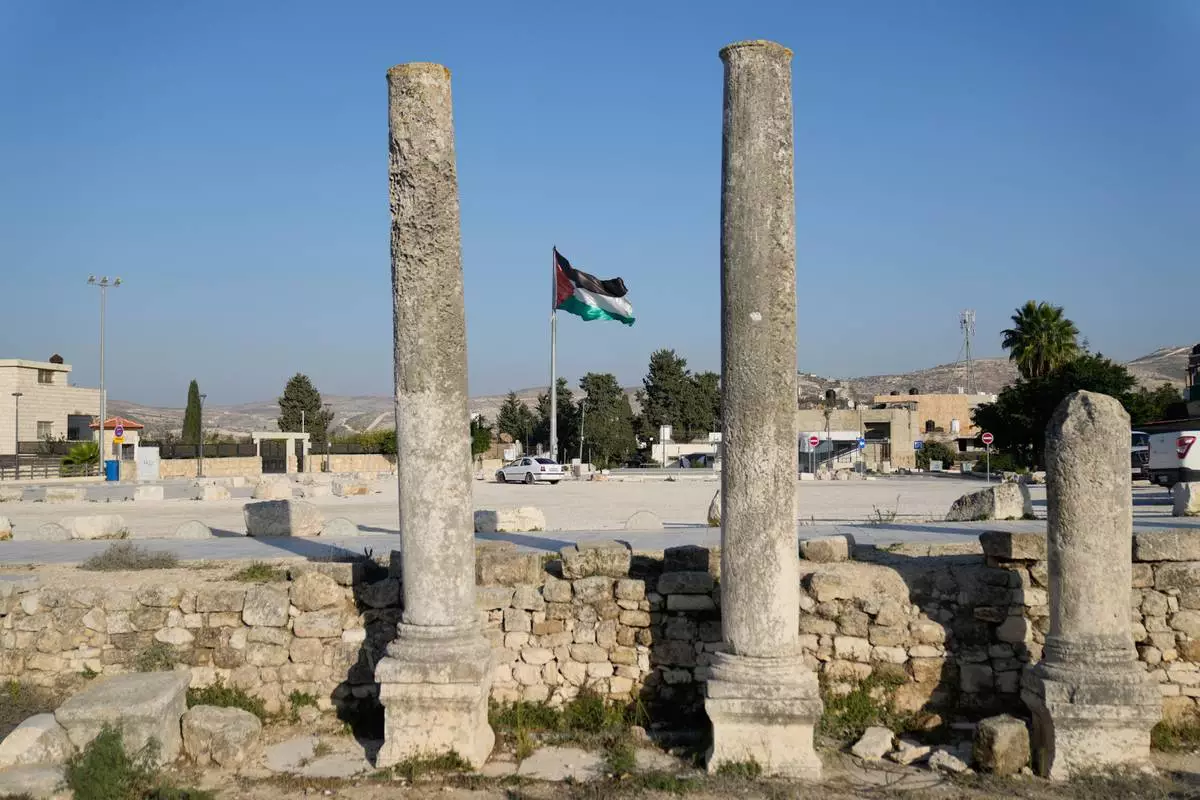
A Palestinian flag flies over the Roman historical site in the West Bank town of Sebastia Thursday, Nov. 20, 2025. (AP Photo/Nasser Nasser)
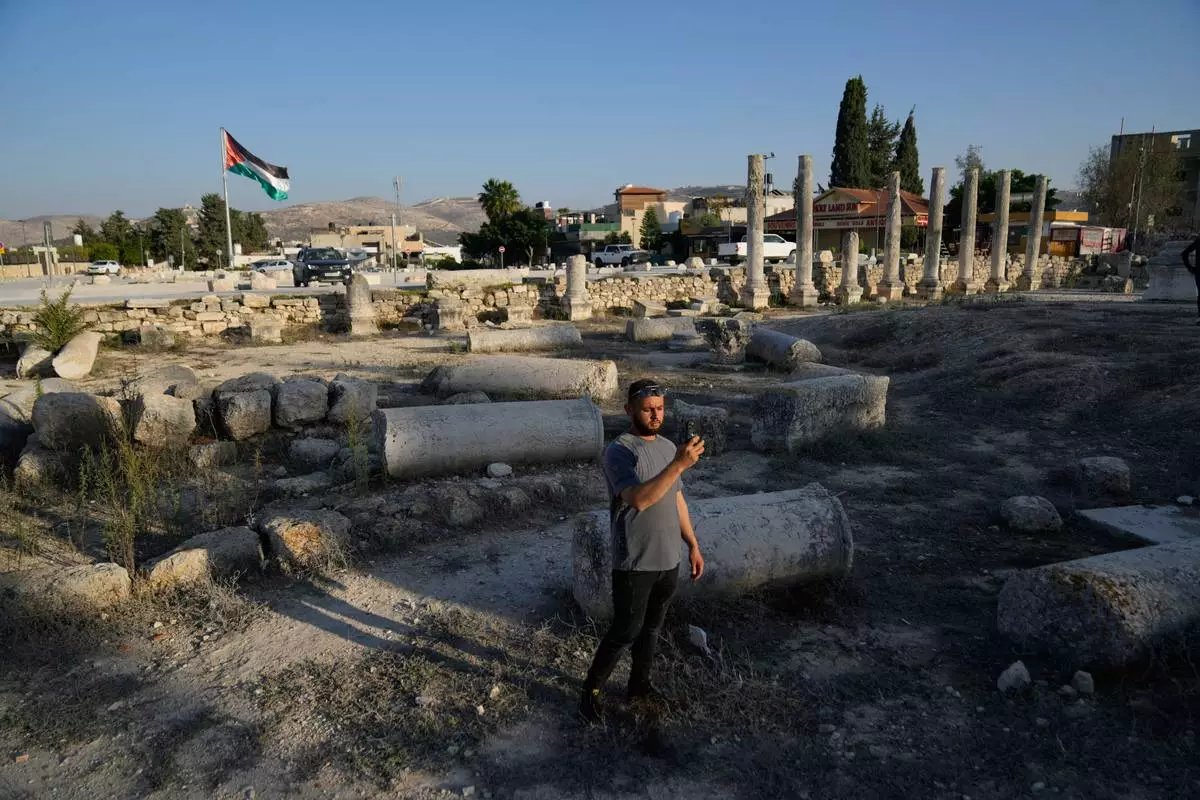
A Palestinian visitor takes a photo at the Roman historical site in the West Bank town of Sebastia Thursday, Nov. 20, 2025. (AP Photo/Nasser Nasser)
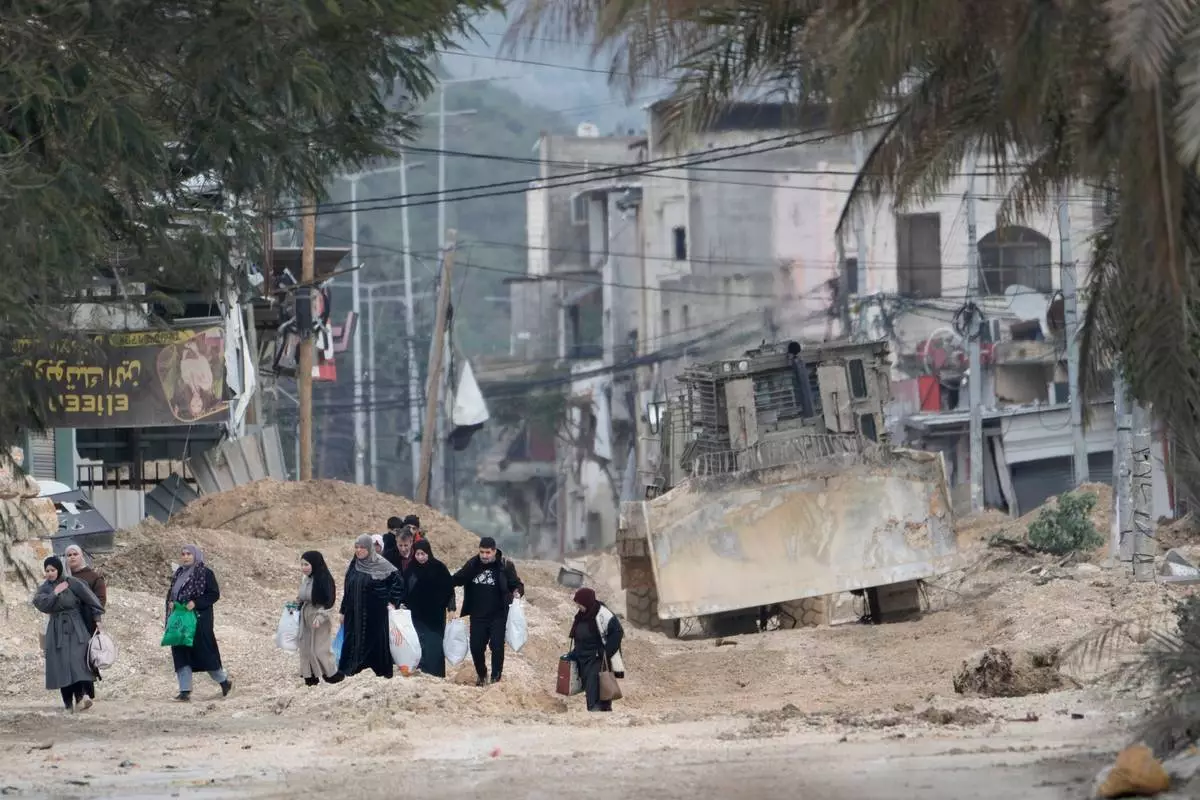
FILE -Residents of the West Bank refugee camp of Nur Shams, near Tulkarem, evacuate their homes as the Israeli military continues its operation in the area on Feb. 11, 2025. (AP Photo/Majdi Mohammed, File)
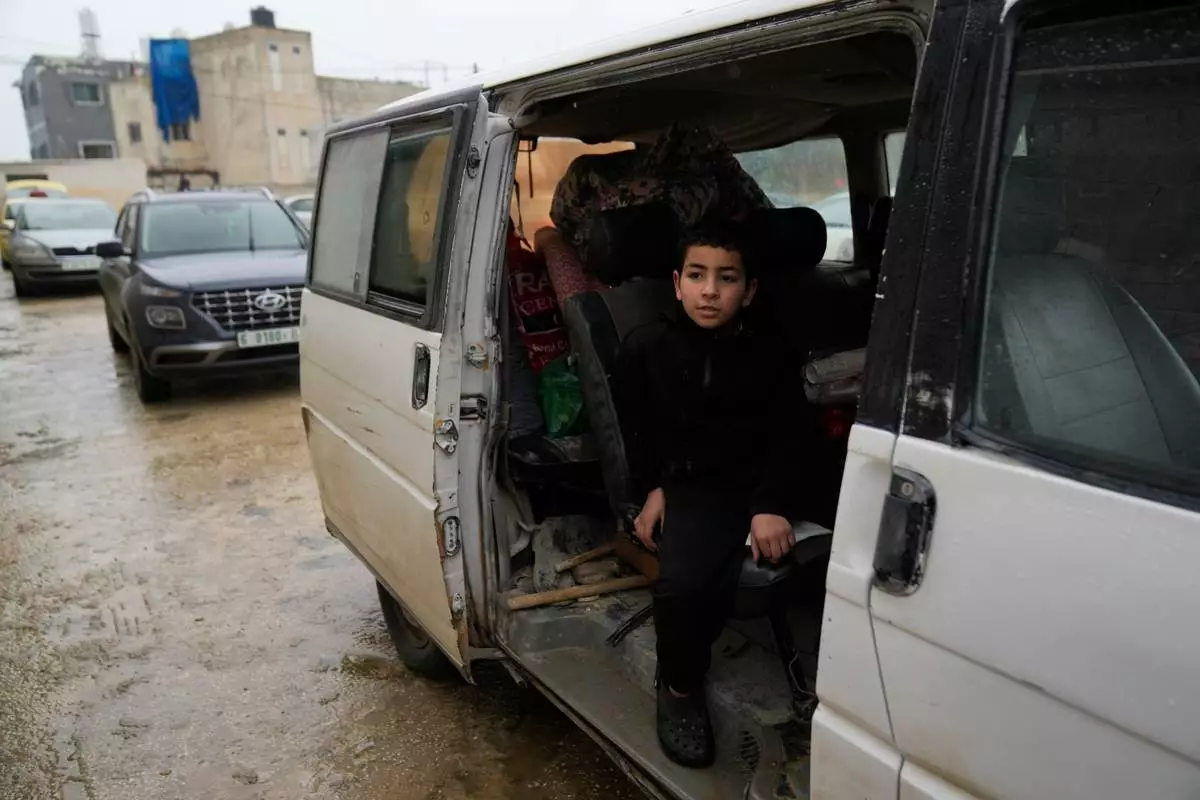
FILE -Palestinians who fled the Israeli military operation in the Nur Shams refugee camp arrive at a temporary shelter for displaced people in the West Bank town of Anabta, near Tulkarem, Feb. 10, 2025. (AP Photo/Nasser Nasser), File)
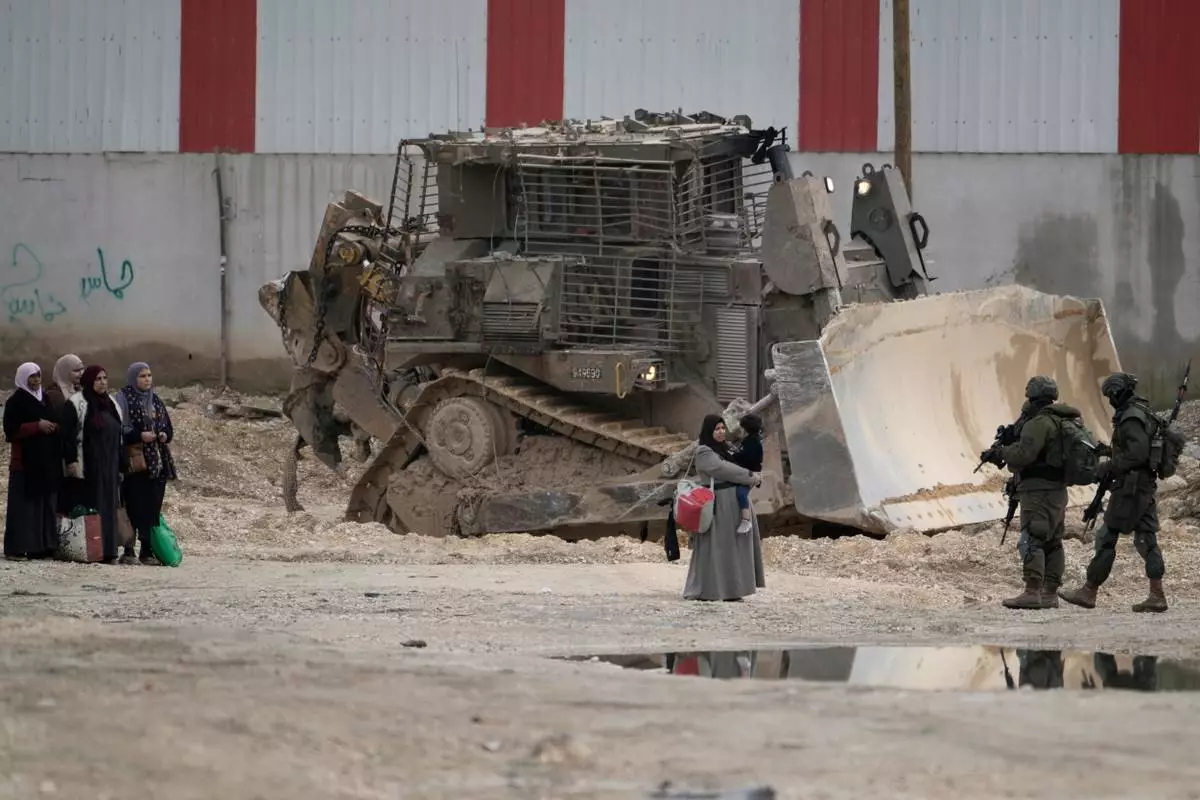
FILE -Israeli soldiers check the identification cards of Palestinians while they evacuate their homes in the West Bank refugee camp of Nur Shams, near Tulkarem, while the Israeli military operation continues in the area on, Feb. 11, 2025. (AP Photo/Majdi Mohammed, File)