Skip to Content Facebook Feature Image

Chinese premier holds talks with Zambian president on bilateral ties

China

China

China

Chinese premier holds talks with Zambian president on bilateral ties

2025-11-20 20:41 Last Updated At:23:37

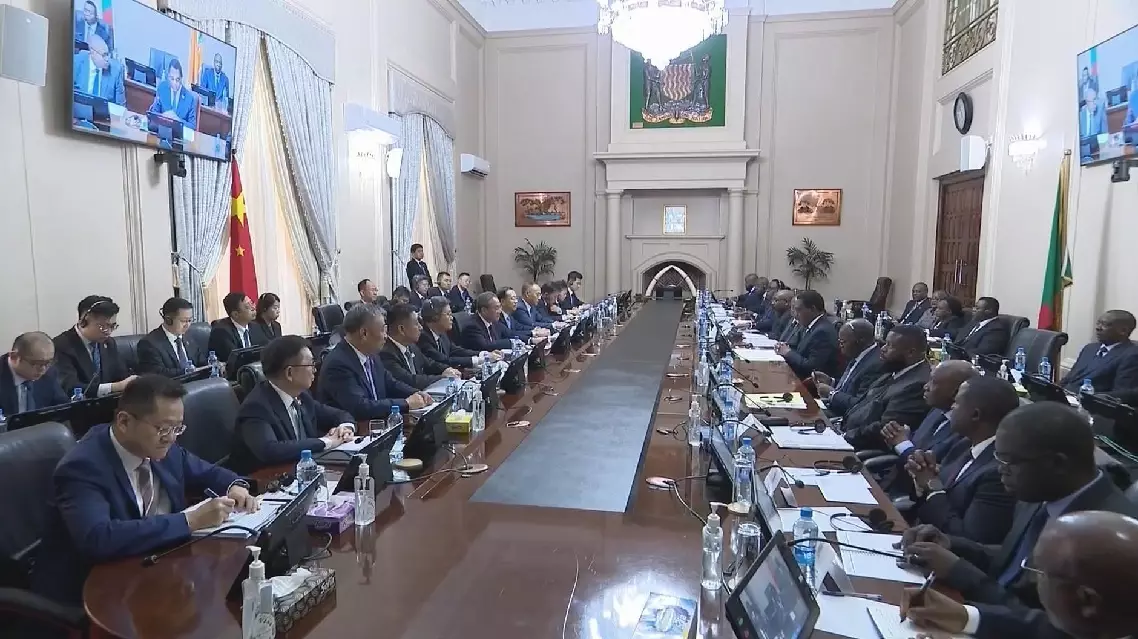
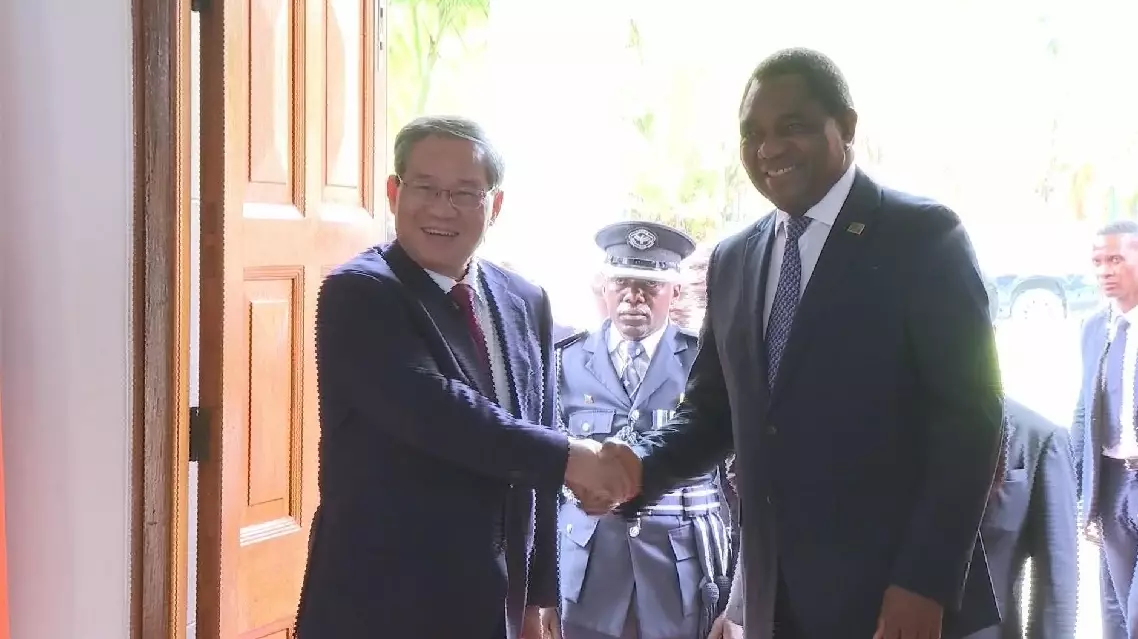
Chinese Premier Li Qiang on Thursday held talks with President of the Republic of Zambia Hakainde Hichilema in Lusaka, Zambia's capital, with both sides pledging to deepen cooperation in multiple areas.

Li arrived in Lusaka on Wednesday for an official visit to the African country.

During the talks, Li conveyed Chinese President Xi Jinping's cordial greetings and best wishes to President Hichilema.

Li noted that China and Zambia are good brothers, good friends, and good partners. Last year, President Xi met with President Hichilema during the Beijing Summit of the Forum on China-Africa Cooperation (FOCAC), providing new guidance for deepening bilateral relations, he said.

China is willing to work with Zambia to further consolidate political mutual trust, firmly support each other's core interests and major concerns, continuously enrich the comprehensive strategic cooperative partnership between the two countries, jointly advance the cause of modernization, and build an even closer China-Zambia community with a shared future, Li said.

Li said that China stands ready to work with Zambia to seize the opportunity presented by the implementation of zero-tariff measures in Zambia to expand bilateral trade, explore cooperation potential in mining, new energy vehicles, and artificial intelligence, and strengthen cooperation in areas benefiting people's livelihoods, such as healthcare and agriculture. He also called on both sides to deepen exchanges and cooperation in culture, education, tourism, and other fields.

Describing the revitalization of the Tanzania-Zambia Railway as a common aspiration of the people of the three countries, Li called on the three sides to strengthen policy coordination, and jointly carry out subsequent comprehensive development to drive better development of the countries and regions along the route.

China and Zambia should strengthen multilateral coordination and cooperation, and work with other countries in the Global South to oppose hegemonism and bloc confrontation, and to defend their common interests, said the Chinese premier.

While asking Li to convey his cordial greetings and best wishes to President Xi, Hichilema said Zambia will firmly uphold the one-China principle and is willing to expand cooperation with China in economy, trade, culture and other fields.

The Zambian side will do a good job in the follow-up work of activating the Tanzania-Zambia Railway, implement the outcomes of the FOCAC Beijing Summit, and promote the building of a Zambia-China community with a shared future, he said.

Following the talks, Li and Hichilema jointly witnessed the signing of cooperation documents on the Belt and Road Initiative, people-to-people exchanges, green minerals, media and other fields.
Chinese premier holds talks with Zambian president on bilateral ties
Chinese premier holds talks with Zambian president on bilateral ties
Chinese premier holds talks with Zambian president on bilateral ties
Chinese premier holds talks with Zambian president on bilateral ties

The price of aluminum, a key industrial metal used in automotive manufacturing, construction and packaging, has been climbing as production cuts in the Gulf region, logistical constraints and Iranian attacks on two regional producers over the weekend tightened supply.

On March 31, the benchmark London Metal Exchange (LME) three-month price for aluminum rose to 3,535 U.S. dollars per metric ton, a year-on-year increase of around 40 percent.

Iran's Islamic Revolutionary Guard Corps (IRGC) said on Sunday that they launched missile and drone strikes on aluminum plants in Bahrain and the UAE that are linked to the U.S. military and aerospace industries, in retaliation for U.S.-Israeli attacks on Iranian steel factories.

Emirates Global Aluminium issued a statement saying that its Al Taweela site in the Khalifa Economic Zone in Abu Dhabi was severely damaged after Iranian strikes, with some employees injured.

Aluminum Bahrain confirmed in a statement on Sunday that some of its facilities were struck by Iranian attacks, resulting in injuries to two employees.

The two aluminum plants have a combined annual output of 3.2 million tons, more than half of the approximately 6 million tons of aluminum produced every year by Gulf Cooperation Council (GCC) member states.

The region is a key source of aluminum supply, accounting for about 9 percent of global production.

Goldman Sachs on Tuesday raised its LME aluminum price forecast from 3,200 U.S. dollars to 3,450 U.S. dollars per ton for the second quarter of 2026 after the attacks on the facilities.

Goldman Sachs also predicted a global primary aluminum market supply deficit of 570,000 tons in 2026, a sharp turnaround from its previous forecast of a 550,000-ton surplus.

Analysts point out that the aluminum market is currently facing multiple shocks, with shipping in the Strait of Hormuz disrupted, aluminum production facilities in the Gulf damaged or even shut down, and production in other parts of the world currently limited.

The impact will also spread to downstream enterprises in the coming months, with higher-cost aluminum alloys, primarily used in the aerospace, automotive, and construction industries, facing the most constrained supply, analysts said.

The Gulf region has long been a significant source of these high-end products, particularly for the European market, and also supplies manufacturers in the United States.

Aluminum prices climb as effects of Middle East tensions spread through global economy

Aluminum prices climb as effects of Middle East tensions spread through global economy

Recommended Articles