China's C-919 passenger jet has made its Middle East debut this week at the 2025 Dubai Airshow, one of the world's most influential aviation gatherings, with two units on display alongside a C-909 aircraft.
The Dubai Airshow, running from Monday to Friday, attracted over 1,500 exhibitors and more than 148,000 industry professionals from 98 countries taking part this year.
For China, the airshow is becoming a crucial platform to demonstrate the country's aviation and defense capabilities, and potentially forge multi-billion-dollar partnerships.
From commercial jets and drones to space technology and green-energy engines, this year's event has seen the debut of numerous Chinese exhibitors and products.
"This year actually is the first-time presence of AECC (Aero Engine Corporation of China) at Dubai Airshow and also the largest, most comprehensive and diverse overseas exhibition of China's domestically-developed engines. We showcase a lot of products, and many of them are towards the sustainable aviation development trend," said Zhou Leimin, a project manager of AECC.
A C919 brought by its manufacturer, the Commercial Aircraft Corporation of China (COMAC), performed flying demonstrations during the show. A second one, operated by China Southern Airlines, is on static display, drawing representatives from airlines, leasing companies, and engineering firms.
The C919 is China's first domestically-manufactured commercial aircraft. Designed to rival the Airbus 320s and Boeing 737 series, it features significant competitive advantages, including a sound safety record, fuel efficiencies, and sustainable use of aviation fuel.
With supply-chain delays impacting both major Western manufacturers, industry insiders see an opportunity for COMAC and other Chinese aviation companies to gain market share in the Middle East.
"We have invested heavily building our robotic and integrated supply chain. This allows us to offer our partners some incredible value, predictably and reliably, while others are facing delays. We can provide at scale, deliver timelines and consistent support, which is very important for the airlines in the Middle East as they look to expand and modernize their fleets," said Li Xiaoliang, general manager of United Aircraft Group, a Chinese leader in Unmanned aerial vehicle production.
China's presence in the Dubai Airshow also reflects its growing partnerships across the Middle East, especially in civil aviation, defense, aerospace and space cooperation. From passenger and military jets to tiny drones, there is a distinct buzz around Chinese aviation products.
"This is the smallest drone on the airshow. So, it can do surveillance. And we are the first one to develop this kind of system, and the second one around the world to develop such a nano UAV system. It's for surveillance," said Chen Hongqiang, CEO of Huaqing Innovation Shenzhen Co. Ltd.
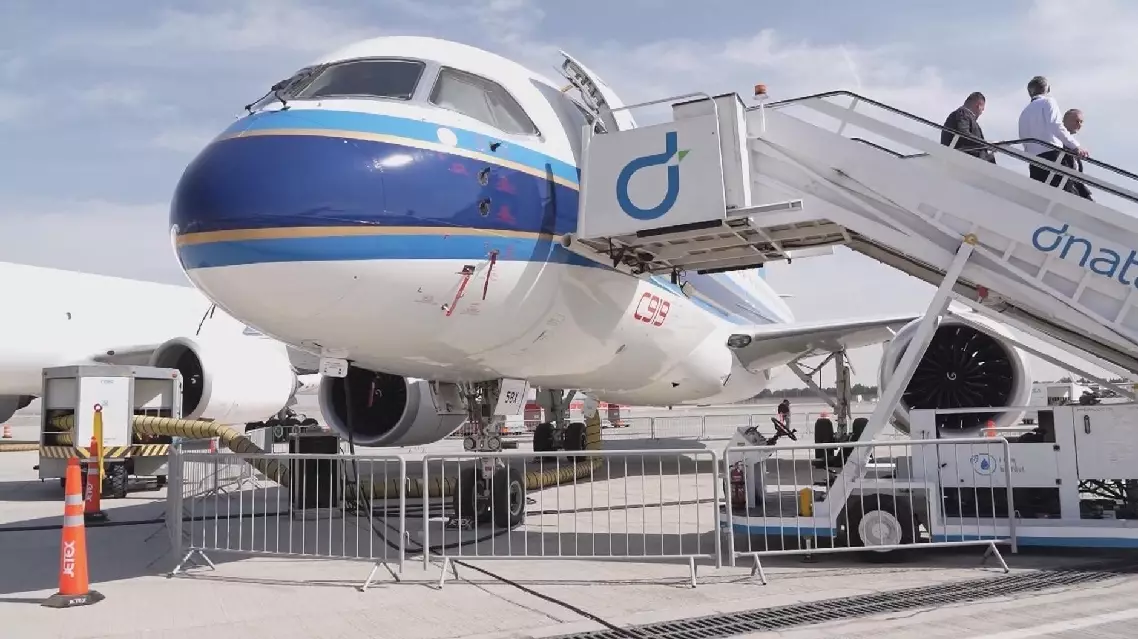
China's homegrown C919 jet makes Middle East debut at Dubai Airshow
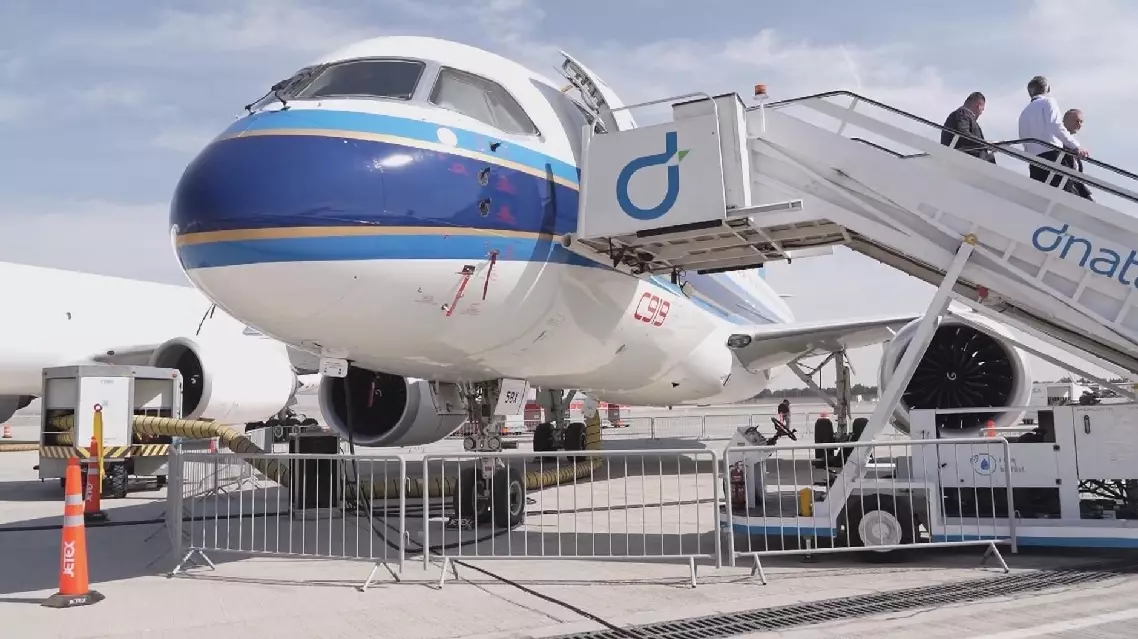
China's homegrown C919 jet makes Middle East debut at Dubai Airshow