Japanese Prime Minister Sanae Takaichi's provocative remarks about China's Taiwan region have raised concerns in Japan over losing the Chinese market.
In an interview with China Global Television Network (CGTN), Toshiyuki Yamamoto, vice director of the Institute of Materials and Systems for Sustainability (IMaSS) at Nagoya University, expressed deep concern over how strained ties between Japan and China will hamper key economic sectors.
"In this situation, many Chinese tourists are stopping to come to Japan, and then it also causes the damage to the tourism industry in Japan. The automotive industry, as you mentioned, we have a good market in China so far. But we are afraid of losing this very large market from the Japanese side, but also China is exporting materials. So we are really concerned about it," said Yamamoto.
This comes as China sharply criticizes Takaichi’s comments on Taiwan, with the Chinese Ministry of Commerce warning that the remarks are severely damaging the political foundation of China-Japan relations and harming bilateral trade and cooperation.
Takaichi's blatant suggestion of possible Japanese military involvement in the Taiwan Strait has also drawn strong international backlash, with critics accusing her of reviving militarist rhetoric and escalating regional tensions.

Japan PM’s provocative remarks raise fears over losing Chinese market: scholar

Japan PM’s provocative remarks raise fears over losing Chinese market: scholar
Iran said Monday nationwide aviation operations had returned to normal after lifting flight restrictions imposed during military escalation with Israel.
Earlier in the day, Iran's Airports and Air Navigation Company announced all flights at airports across the country had been canceled until further notice, according to the official IRNA news agency.
The Israeli military the same day released footage of airstrikes on air defense systems in western and central Iran. The Israel Defense Forces said the strikes were aimed at enhancing air superiority in Iranian airspace and eliminating potential threats to Israel.
The escalation came amid U.S.-Iran talks and followed Israeli airstrikes in Beirut, Lebanon, on Sunday that killed at least two people. Iran responded with a barrage of missiles, and Israel retaliated early Monday with strikes targeting sites in western and central Iran.
Also on Monday, U.S. forces disabled an unladen oil tanker in the Gulf of Oman, the U.S. Central Command said, claiming the vessel violated the ongoing U.S. naval blockade against Iran by attempting to sail to an Iranian port.
U.S. Central Command (CENTCOM) disabled Palau-flagged M/T Marivex as it transited international waters in the Gulf of Oman toward Iran, the command said on X, adding that the vessel's crew failed to comply with directions from U.S. forces.
Marivex is no longer sailing to Iran after an F/A-18 Super Hornet from USS Abraham Lincoln fired a precision munition into the ship's engineering and steering spaces, said the command.
Since the blockade was initiated on April 13, the U.S. military has disabled seven "non-compliant vessels," redirected 134 ships that complied, and allowed 42 vessels supporting humanitarian aid to pass, according to the command.
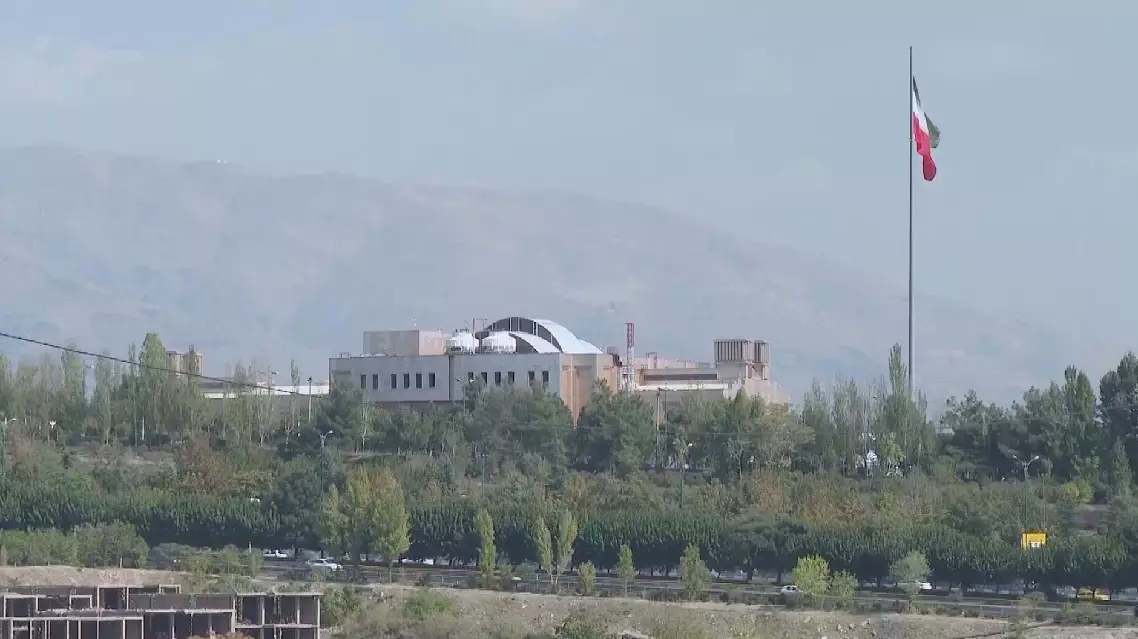
Middle East tensions rise as Iran reopens skies, Israel hits defenses