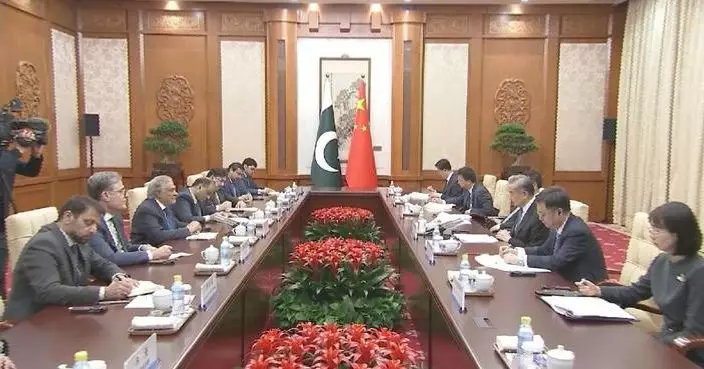
Serbian Prime Minister Djuro Macut said small and trade-dependent economies are facing limited resilience to external shocks as uncertainty has dampened the world economy but expressed his optimism about the global economic outlook in an interview with China Media Group (CMG) in Shanghai which was aired Friday.
Macut was in China earlier this month to attend the eighth China International Import Expo. In the interview with CMG, he said it's strong economic foundations that help China withstand global uncertainties.
According to the World Openness Report 2025 released on Nov 5 during the 8th Hongqiao International Economic Forum in Shanghai, the World Openness Index has been declining for several years and it is currently about 5-6 percent lower than the 2008 level, and has not yet recovered to the 2019 level.
"If you have a strong basis, then you can easily get out from the crisis that you fall inside not by yourself, but by the global situation approach or the global actions that are suddenly happening. As we know, we have lots of places in the world that are influencing heavily the economies. And the economy is always very sensitive to the global movements and global political changes," he said.
The Serbian prime minister offered insight into the future of the world economy, saying his experience as a doctor taught him to stay positive when solving problems.
"I'm always the optimist, but let's say the sustained optimist. I'm not the excited about something too much, because I know that after the huge excitement, it could be something going down. We have to be positive in the way of how to solve the problem. And this is the reason. This is my approach, my personal, this is actually coming from my profession as a doctor," he said.
Macut, a 62-year-old endocrinologist, became Serbia's new prime minister in April this year.

Serbian PM optimistic about global economic outlook
The price of aluminum, a key industrial metal used in automotive manufacturing, construction and packaging, has been climbing as production cuts in the Gulf region, logistical constraints and Iranian attacks on two regional producers over the weekend tightened supply.
On March 31, the benchmark London Metal Exchange (LME) three-month price for aluminum rose to 3,535 U.S. dollars per metric ton, a year-on-year increase of around 40 percent.
Iran's Islamic Revolutionary Guard Corps (IRGC) said on Sunday that they launched missile and drone strikes on aluminum plants in Bahrain and the UAE that are linked to the U.S. military and aerospace industries, in retaliation for U.S.-Israeli attacks on Iranian steel factories.
Emirates Global Aluminium issued a statement saying that its Al Taweela site in the Khalifa Economic Zone in Abu Dhabi was severely damaged after Iranian strikes, with some employees injured.
Aluminum Bahrain confirmed in a statement on Sunday that some of its facilities were struck by Iranian attacks, resulting in injuries to two employees.
The two aluminum plants have a combined annual output of 3.2 million tons, more than half of the approximately 6 million tons of aluminum produced every year by Gulf Cooperation Council (GCC) member states.
The region is a key source of aluminum supply, accounting for about 9 percent of global production.
Goldman Sachs on Tuesday raised its LME aluminum price forecast from 3,200 U.S. dollars to 3,450 U.S. dollars per ton for the second quarter of 2026 after the attacks on the facilities.
Goldman Sachs also predicted a global primary aluminum market supply deficit of 570,000 tons in 2026, a sharp turnaround from its previous forecast of a 550,000-ton surplus.
Analysts point out that the aluminum market is currently facing multiple shocks, with shipping in the Strait of Hormuz disrupted, aluminum production facilities in the Gulf damaged or even shut down, and production in other parts of the world currently limited.
The impact will also spread to downstream enterprises in the coming months, with higher-cost aluminum alloys, primarily used in the aerospace, automotive, and construction industries, facing the most constrained supply, analysts said.
The Gulf region has long been a significant source of these high-end products, particularly for the European market, and also supplies manufacturers in the United States.
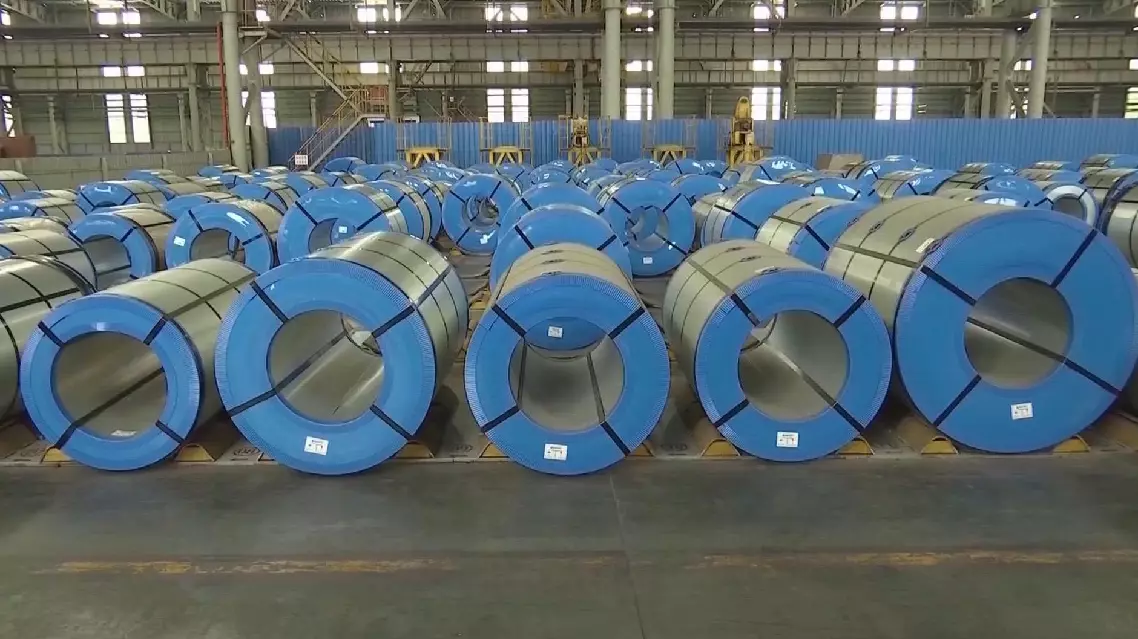
Aluminum prices climb as effects of Middle East tensions spread through global economy