As Japanese Prime Minister Sanae Takaichi’s remarks on the Taiwan question drew widespread opposition, experts from Japan and around the world warned that her comments have heightened regional tensions and signaled a shift toward a more confrontational posture.
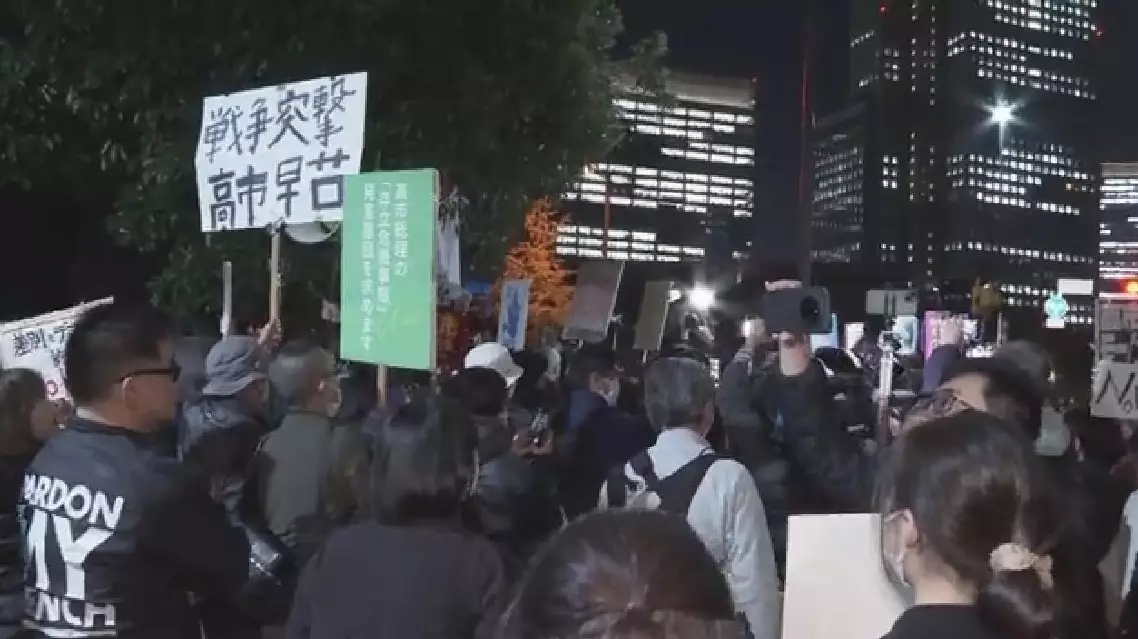
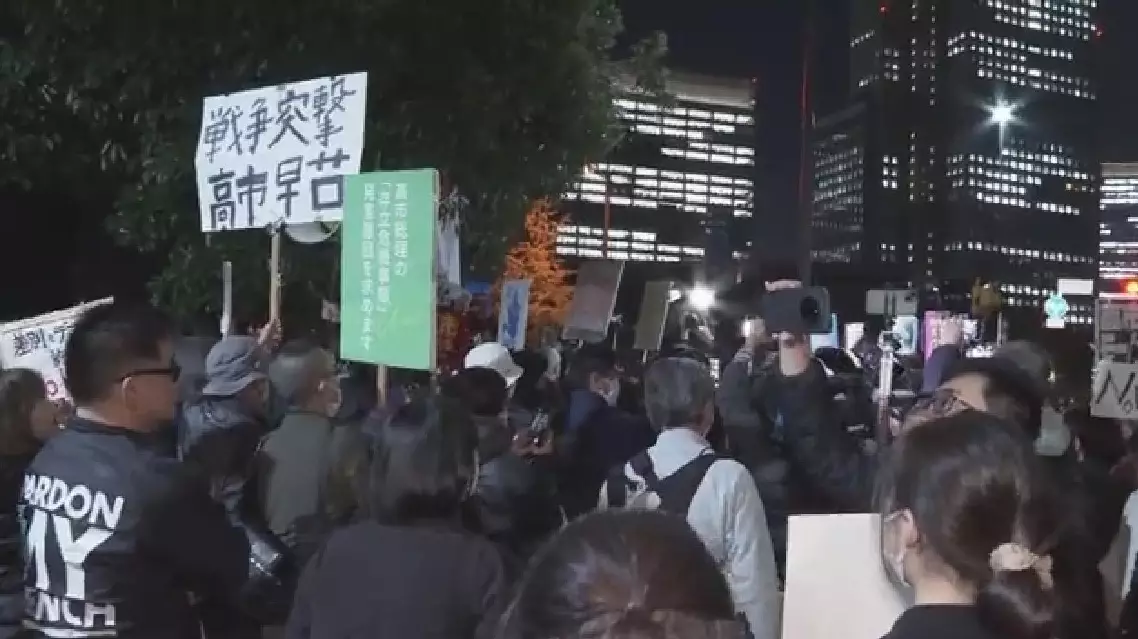
Thousands of Japanese residents gathered outside the Prime Minister’s Office on Friday night to demand that Prime Minister Sanae Takaichi retract her provocative remarks concerning China’s Taiwan region.
Among those attending was Mizuho Fukushima, leader of the Social Democratic Party of Japan.
"The 'survival-threatening situation' mentioned in Takaichi's statement and her so-called 'war-preparation cabinet' are both major concerns. We sincerely hope that there will be no expansion of the military or arms exports," she said.
Takaichi said on Nov. 7 during a Diet hearing that the Chinese mainland's "use of force on Taiwan" could constitute a "survival-threatening situation" for Japan and implied the possibility of armed intervention in the Taiwan Strait.
Referring to her remarks as dangerous and provocative, German media observer Thomas Kiefer warned that Takaichi’s comments reflect a troubling tilt toward militarism.
"[Takaichi's] remarks are extremely dangerous as they represent not peace, but a policy of war. We must take into account the background and historical context of her remarks. Japan had committed atrocities not only in China but also in many parts of Asia, including the Korean Peninsula. The resurgence of such militaristic traditions would bring tremendous suffering not only to China but to the entire region," he said.
Julio Cesar, director of Mexico’s Channel 6 TV, said Takaichi’s comments imply a willingness to consider military intervention in the Taiwan question.
"Takaichi implied that Japan could resort to force in the Taiwan Strait. Despite warnings from China, Takaichi had refused to change her stance or withdraw her words. Her remarks had dramatically heightened regional tensions and fueled distrust among nations. The danger of her comments should not be underestimated," he said.
Pedro Monzon, a researcher at Cuba’s Center for International Policy, warned that the new Japanese prime minister’s stance could spark an arms race in the region.
"The entire international community, including the United Nations, recognizes that Taiwan is part of China, with Japan making statements before most Western countries. Takaichi's remarks are highly dangerous and provocative, and should never have been made. They could spark an arms race and create serious security risks for the region," he said.
Japanese, global experts warn Takaichi’s remarks fueling regional tensions
Japanese, global experts warn Takaichi’s remarks fueling regional tensions
Japanese, global experts warn Takaichi’s remarks fueling regional tensions