Japanese Prime Minister Sanae Takaichi's provocative remarks related to China's Taiwan have sparked strong criticism from international figures who said such rhetoric is challenging post-war international order and posing a serious threat to regional peace.
Takaichi said on Nov 7 during a Diet hearing that the Chinese mainland's "use of force on Taiwan" could constitute a "survival-threatening situation" for Japan and implied the possibility of armed intervention in the Taiwan Strait. Commenting on Takaichi's remarks, Nguyen Minh Hoan, a standing member of the executive committee of the Vietnam-China Friendship Association expressed deep concern about Japan's right-wing revisionism and resurgent militarism.
"The Cairo Declaration and Potsdam Proclamation during World War Two both affirmed that Taiwan belongs to China. Japan recognized the One-China principle in 1972, but recent remarks by Japanese Prime Minister Sanae Takaichi violate this principle. If Japan fails to confront its history of aggression in World War Two, it will continue to fuel historical revisionism. Despite efforts by Japan's right-wing to whitewash its war crimes, historical truth cannot be distorted," said Nguyen Minh Hoan.
In interviews with China Media Group, global scholars also criticized Takaichi for framing diplomatic matters as part of internal political struggles.
"Talking about the Prime Minister of the country, you were talking about the head of state essentially saying that she is unsure whether or not she wants to support what has been stated fact across the globe for the better part of four or five decades. That is the real problem here, is that she is acknowledging what is now to be accepted as Japanese foreign policy and that comes with all sorts of risks. There's all sort of escalation issues that could come into play here. And that's why I go back to the smartest decision is to essentially say: 'look, a mistake is made here and I'm sorry,'" said Anthony Moretti, an associate professor at Robert Morris University.
"Statements by Sanae Takaichi are highly dangerous, full of interference and provocation, posing serious security risks to the region. Currently, there are forces in Japan seeking to break free from the constraints of the constitution and revive militarism. History has shown that this is an extremely perilous path," Pedro Monzon, a researcher at Cuba's Center for International Policy, warned.
Japanese experts also stressed that Takaichi's erroneous remarks crossed a red line, seriously damaging the political foundation of bilateral relations and impacting the Japanese economy.
"When we look far back at Japan's relations with other Asian countries, none of the previous Japanese prime ministers or their administrations ever crossed this red line, but she did it deliberately. I believe she sees this as an 'excellent' opportunity to enhance her political status and gain support from certain groups. Such words and deeds might win the favor of those people, but from the perspective of both Japan and the Japan-China relationship as a whole, this is by no means of positive significance. Instead, it has had a huge negative impact," stated Kazuyuki Hamada, a Japanese political economist.
"In this situation, many Chinese tourists are stopping to come to Japan, and then it also causes the damage to the tourism industry in Japan. The automotive industry, as you mentioned, we have a good market in China so far. But we are afraid of losing this very large market from the Japanese side, but also China is exporting materials. So we are really concerned about it," said Toshiyuki Yamamoto, vice director of the Institute of Materials and Systems for Sustainability at Nagoya University.
"If the tension between China and Japan continues for more than a year, it will result in a reduction of over 2 trillion yen in spending by Chinese tourists, to less than 2.6 trillion yen. This will have a significant impact on Japan's tourism industry, particularly on local economies," said Hideo Kumano, a chief economist at Economic Research Department under Dai-ichi Life Research Institute.
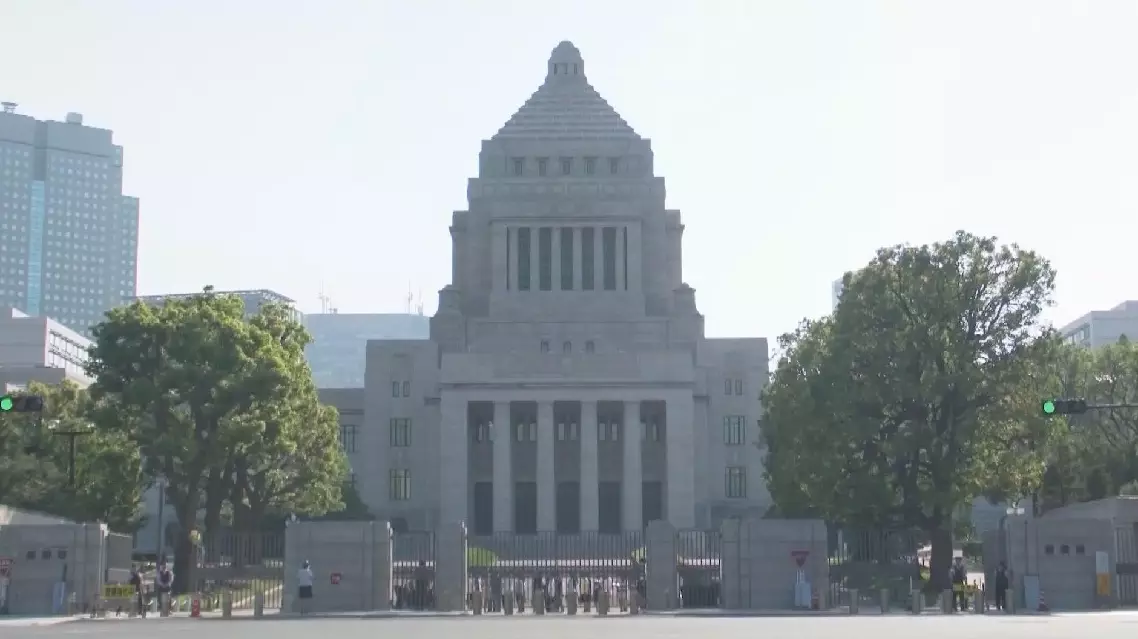
Takaichi's statements pose serious threat to regional peace: scholars
Chinese Foreign Minister Wang Yi said on Tuesday that mediation efforts of the Pakistani side regarding the Middle East tensions are in the common interests of all parties.
Wang, also a member of the Political Bureau of the Communist Party of China Central Committee, made the remarks in his talks with Pakistani Deputy Prime Minister and Foreign Minister Mohammad Ishaq Dar in Beijing.
During their talks, the two sides exchanged views on current international issues and regional conflicts.
Wang welcomed the visit of the Pakistani side to Beijing for discussion on easing tensions in the Middle East, just after its holding of a quadrilateral foreign ministers' meeting in Islamabad.
He said China supports and looks forward to Pakistan playing a unique and important role in easing the situation and resuming peace talks. This process is no easy task, and Pakistan's mediation efforts are in line with the common interests of all parties, Wang added.
He noted China is willing to make joint efforts with Pakistan to end the hostilities as soon as possible, create opportunities for peace and open the window for peace talks.
On bilateral ties, Wang said this year marks the 75th anniversary of the establishment of diplomatic relations between China and Pakistan, calling on both sides to implement the important consensus reached by the leaders of the two countries and constantly advance the building of a China-Pakistan community with a shared future.
For his part, Dar said the Pakistan-China friendship is precious and deeply rooted in people's hearts, adding that Pakistan is willing to work with China to promote the continuous development of the all-weather strategic cooperative partnership between the two countries.
Dar thanked China for supporting Pakistan's mediation of the situation in Iran, adding that the current conflict has disrupted international energy supplies and caused heavy damage to developing countries.
Noting that solutions can only be found through negotiation, Dar said Pakistan is willing to strengthen communication and coordination with China to push all parties to start peace talks as soon as possible and restore regional peace.
The two sides also put forward a five-point initiative for restoring peace and stability in the Gulf and the Middle East region:
I. Immediate cessation of hostilities: China and Pakistan call for immediate cessation of hostilities and utmost efforts to prevent the conflict from spreading. Humanitarian assistance must be allowed to all war-affected areas.
II. Start of peace talks as soon as possible. Sovereignty, territorial integrity, national independence and security of Iran and the Gulf states should be safeguarded. Dialogue and diplomacy is the only viable option to resolve conflicts. China and Pakistan support the relevant parties in initiating talks, with all parties committing to peaceful resolution of disputes, and refraining from the use or the threat of use of force during peace talks.
III. Security of nonmilitary targets. The principle of protecting civilians in military conflict should be observed. China and Pakistan call on parties to the conflict to immediately stop attacks on civilians and nonmilitary targets, and fully adhere to International Humanitarian Law, and stop attacking important infrastructure, including energy, desalination and power facilities, and peaceful nuclear infrastructure, such as nuclear power plants.
IV. Security of shipping lanes. The Strait of Hormuz, together with its adjacent waters, is an important global shipping route for goods and energy. China and Pakistan call on the parties to protect the security of ships and crew members stranded in the Strait of Hormuz, allow the early and safe passage of civilian and commercial ships, and restore normal passage through the Strait as soon as possible.
V. Primacy of the United Nations Charter. China and Pakistan call for efforts to practice true multilateralism, to jointly strengthen the primacy of the United Nations, and to support the conclusion of an agreement for establishing a comprehensive peace framework and realizing lasting peace based on the purposes and principles of the UN Charter and international law.
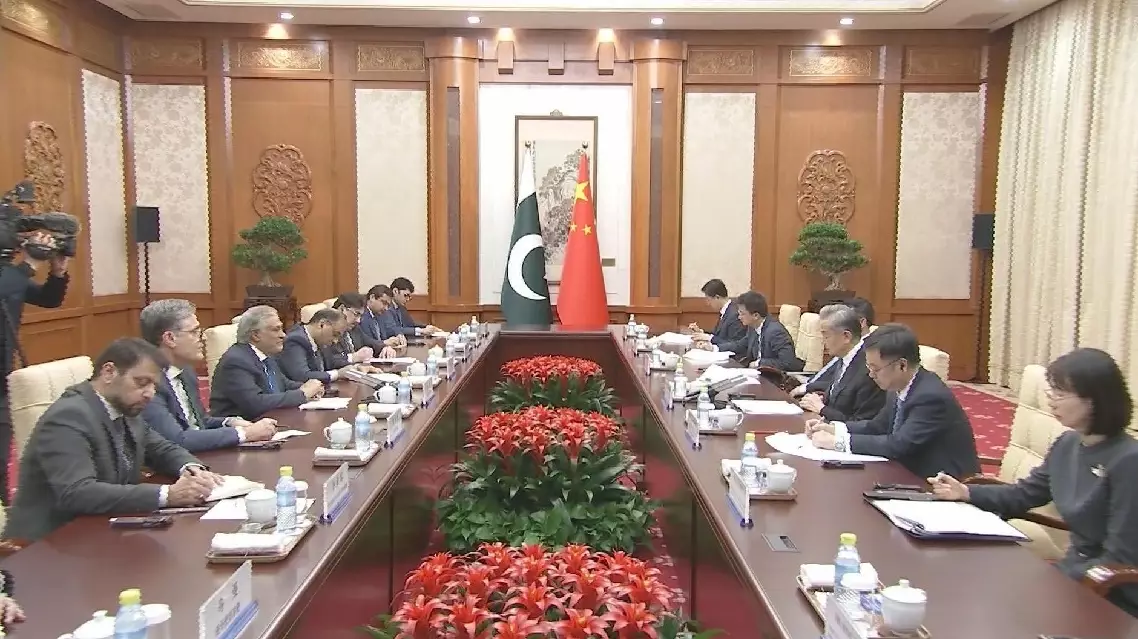
Pakistan's mediation efforts in common interests of all parties: Chinese FM