The 20th Group of Twenty (G20) Summit, which spanned two days, concluded on Sunday in Johannesburg with world leaders reaching consensus on a wide-ranging declaration.
At the closing ceremony, South African President Cyril Ramaphosa highlighted the successful adoption of G20 South Africa Summit: Leaders' Declaration which demonstrates that world leaders' "shared goals outweigh our differences."
The 122-point declaration underscores the need to address global challenges through multilateral cooperation and calls for stronger support for developing countries to advance inclusive growth and sustainable development.
Ramaphosa emphasized that this was the first G20 summit ever held on the African continent and that South Africa has seized the opportunity of its presidency to ensure the priorities of Africa and the Global South were placed at the heart of the G20 agenda.
South Africa assumed the rotating G20 presidency on Dec 1, 2024, becoming the first African nation to hold the position. The United States is scheduled to take over the presidency on Dec. 1, 2025.
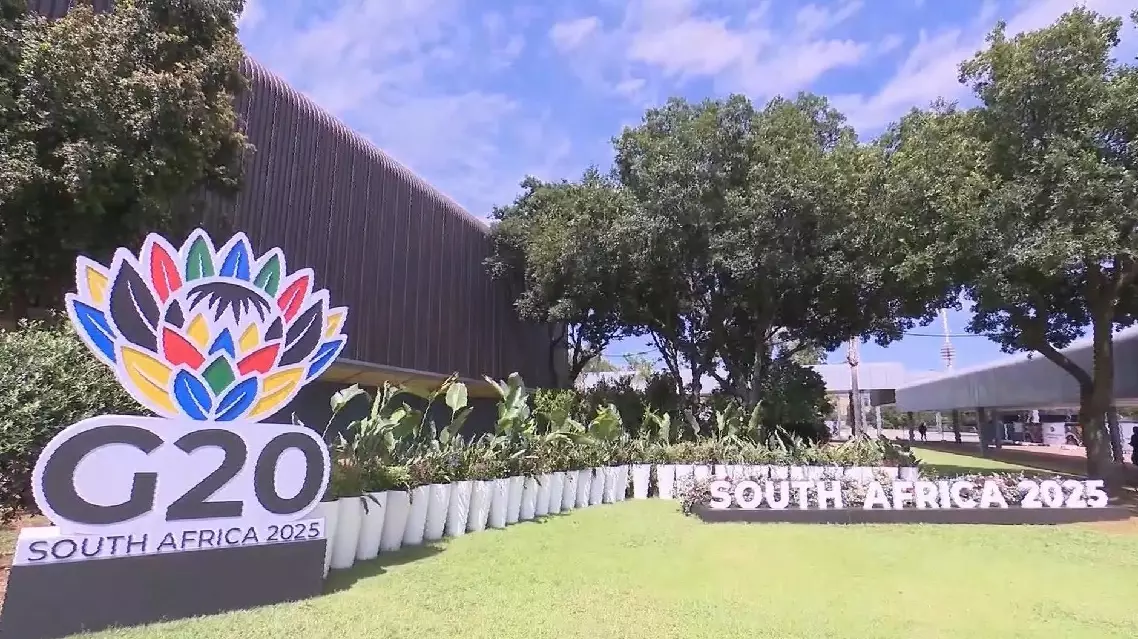
G20 summit ends with commitment to multilateralism
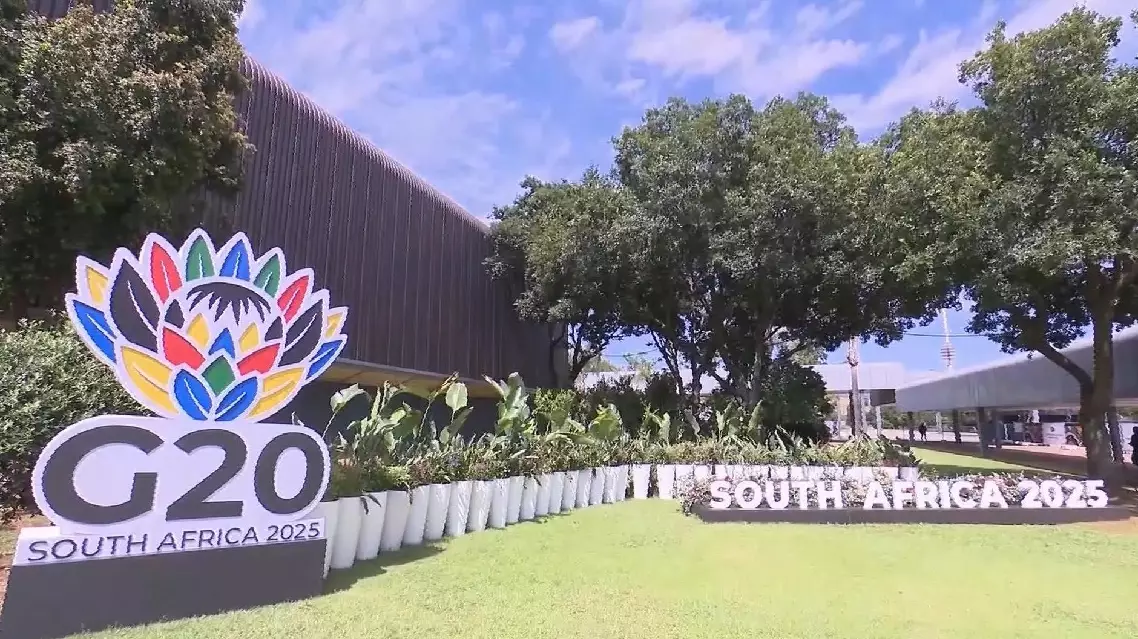
G20 summit ends with commitment to multilateralism
A super El Nino event officially formed in September 2026, monitoring data from China's National Climate Center showed on Friday.
Zhao Junhu, chief forecaster at the center, said that the equatorial central and eastern Pacific entered an El Nino state in May this year, with sea surface temperatures in the key monitoring region rising rapidly and continuously from May to September.
The three-month running mean of the sea surface temperature (SST) index in the monitoring region has remained above 0.5 degrees Celsius for five consecutive months. The index exceeded 2.5 degrees Celsius for the July-September period, meeting the threshold for a super El Nino event.
The event is classified as an eastern Pacific-type El Nino, in which the warmest sea surface temperatures are concentrated in the equatorial eastern Pacific.
Monitoring data showed that sea surface temperatures across most of the equatorial Pacific in September were above average of the same period, with temperatures in the warm pool of the eastern Pacific exceeding the climatological average by more than 3 degrees Celsius.
The SST index for the monitoring region reached 2.94 degrees Celsius in September, up 0.35 degrees Celsius from August. The average index for the July-September period stood at 2.54 degrees Celsius.
Based on a combination of domestic and international dynamical climate models and statistical forecasting methods, the center expects sea surface temperatures in the equatorial central and eastern Pacific to continue rising over the next three months, peaking in late autumn or early winter, Zhao said.
The event is expected to become the strongest El Nino on record since systematic monitoring began, he added.
Super El Nino event formed in September: China's National Climate Center