Chinese Premier Li Qiang said on Sunday that the governments of China and Germany should make joint efforts to strengthen dialogue and communication, and properly handle their respective concerns.
Li made the remarks when meeting with German Chancellor Friedrich Merz in Johannesburg, South Africa on the sidelines of the 20th Group of 20 (G20) Summit.
Noting that China and Germany are each other's important economic and trade partners, Li said that since the establishment of diplomatic ties 53 years ago, China and Germany have continuously strengthened dialogue and cooperation, which effectively promoted both sides' common development.
Noting that in May, Chinese President Xi Jinping had a phone call with Merz, charting the course for further deepening bilateral relations, Li said mutual respect is the principle guiding China-Germany relations, and win-win cooperation is their defining feature.
Developing a stable, sustainable and high-quality all-round strategic partnership is in line with the fundamental interests of the two peoples, he said.
China is willing to enhance strategic communication with Germany, adhere to respecting each other's core interests and major concerns, and cement the political foundation for the development of the bilateral relations, Li said.
Li said he also expects the two sides to expand pragmatic cooperation in all fields, and continuously enrich the content of China-Germany relations.
It is hoped that the German side will practice a rational and pragmatic China policy, Li said, expressing expectations for Germany's efforts to overcome obstacles and pressure when promoting bilateral ties, and focus on common interests and consolidate the foundation of cooperation.
China is willing to work with Germany to seize development opportunities and exploit innovative cooperation with an open attitude, said the Chinese premier, envisaging cooperation progress in emerging fields such as new energy, intelligent manufacturing, biomedicine, hydrogen energy technology and intelligent driving, in order to promote industrial transformation and upgrades, and activate new cooperation impetus.
Noting that this year marks the 50th anniversary of the establishment of diplomatic relations between China and the European Union (EU), Li said he expects Germany to help the EU to view China-EU ties from a longer-term perspective, with a broader vision and a more open mindset.
Li said he also hopes to see Germany's efforts to promote the EU to uphold the positioning of China as a partner, enhance dialogue and cooperation between the two sides, and jointly advance the common development and prosperity.
China stands ready to work with Germany to enhance communication and coordination in mechanisms such as the United Nations and the G20, promote the improvement of global governance, safeguard multilateralism and free trade, and be a constructive and certain force for promoting peace and development, Li said.
For his part, Merz noted that since the establishment of diplomatic ties, Germany-China relations have seen sound development, with increasingly close economic and trade links and fruitful cooperation across various fields.
Germany and China have long been important economic and trade partners, with highly complementary economies, he said, noting that the German side attaches great importance to developing relations with China and believes that China's 15th Five-Year Plan will bring opportunities to Germany and the EU.
Germany remains committed to openness, deepening bilateral political, economic and trade relations, enhancing dialogue and exchanges, strengthening the bonds of cooperation, and tapping into the potential for future-oriented collaboration in emerging areas such as science and technology, he said.
Germany is also ready to play a constructive role in promoting EU-China dialogue, he said.
Merz also stressed that both Germany and China are beneficiaries and supporters of economic globalization, and Germany stands ready to strengthen communication and coordination with China in international affairs, safeguard free trade and the multilateral trading system with the WTO at its core, and promote global peace, stability and development.
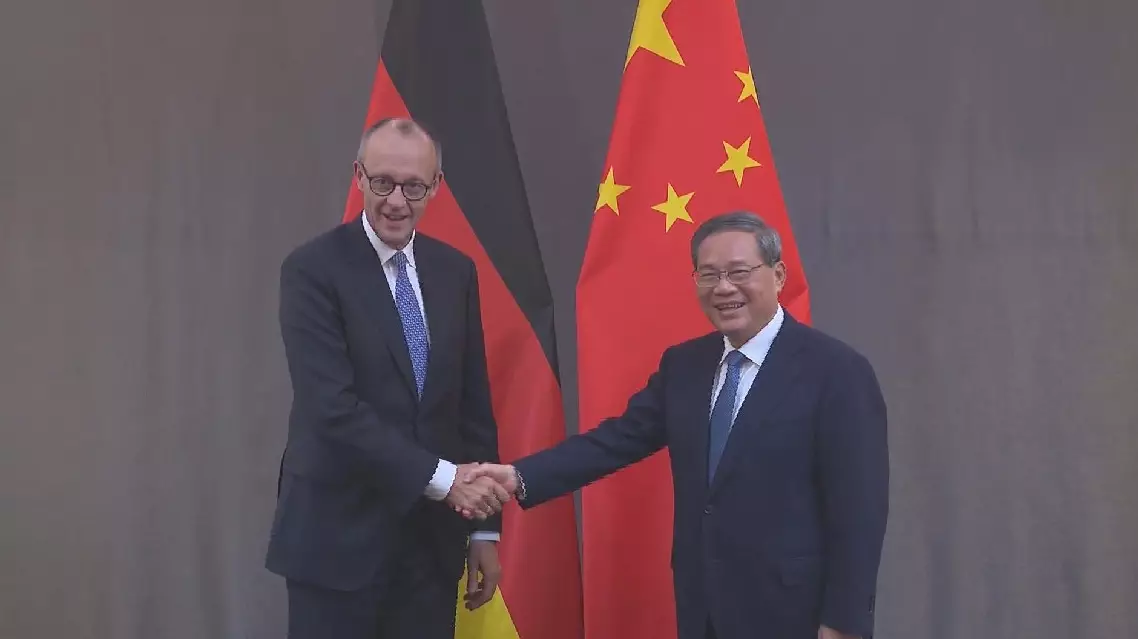
Chinese premier urges China, Germany to strengthen dialogue, address concerns
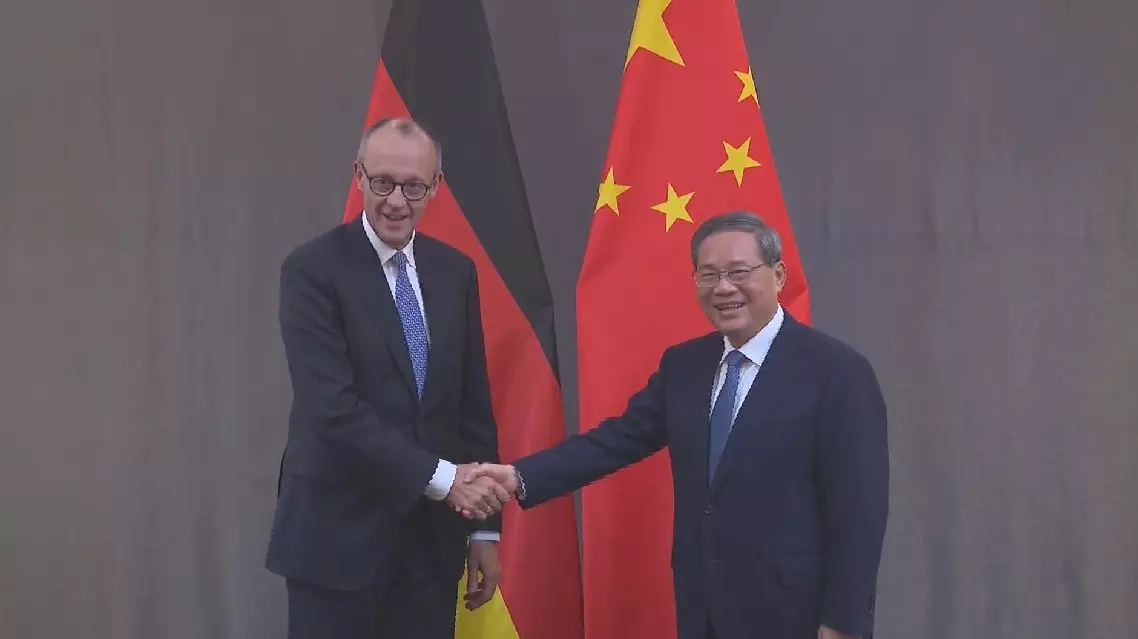
Chinese premier urges China, Germany to strengthen dialogue, address concerns