WASHINGTON (AP) — The Pentagon announced Monday it is investigating Democratic Sen. Mark Kelly of Arizona over possible breaches of military law after the former Navy pilot joined a handful of other lawmakers in a video that called for troops to defy “illegal orders.”
The Pentagon’s statement, posted on social media, cited a federal law that allows retired service members to be recalled to active duty on orders of the defense secretary for possible court martial or other measures.
Click to Gallery
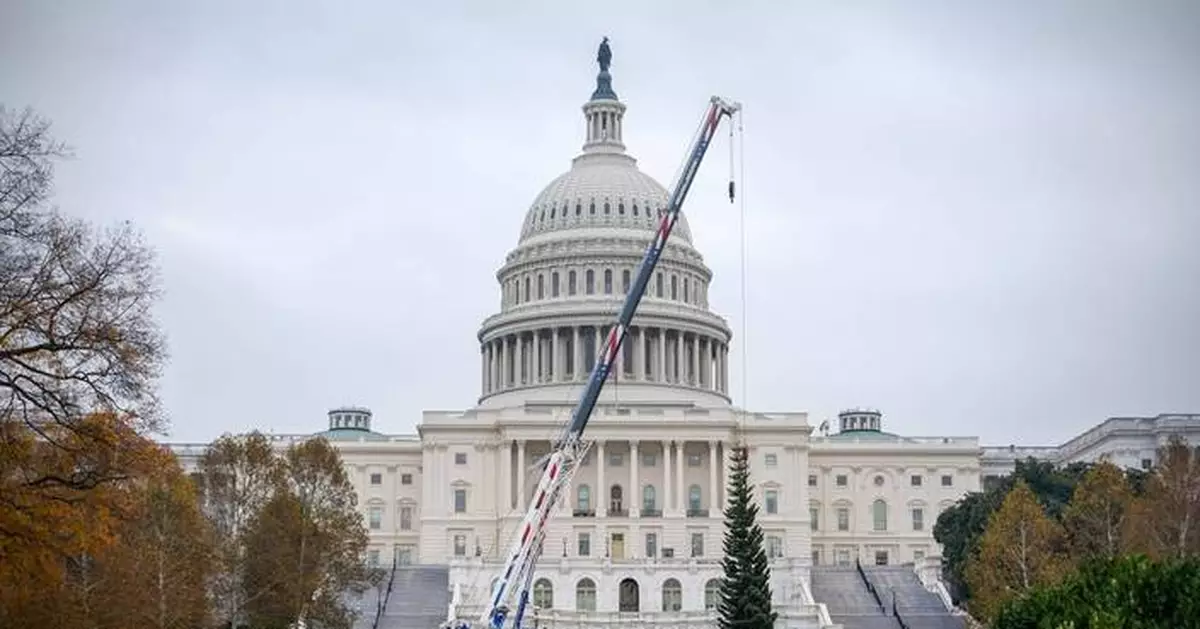
FILE - The Pentagon is seen on Sunday, Aug. 27, 2023, in Washington. (AP Photo/Carolyn Kaster, File)
FILE - Sen. Mark Kelly, D-Ariz., speaks during a Senate Intelligence Committee hearing, at the Capitol in Washington, Jan. 15, 2025. (AP Photo/John McDonnell, File)
FILE - Sen. Mark Kelly, D-Ariz., speaks during the Senate Armed Services Committee confirmation hearing for Pete Hegseth, President-elect Donald Trump's choice to be Defense secretary, at the Capitol in Washington, Tuesday, Jan. 14, 2025. (AP Photo/Ben Curtis, file)
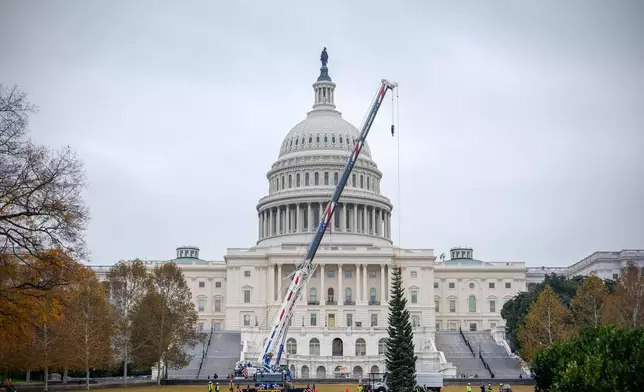
The Capitol Christmas Tree, a 53-foot red fir, arrives to the U.S. Capitol from the Humboldt-Toiyabe National Forest in Nevada, Friday, Nov. 21, 2025, in Washington. (AP Photo/Julia Demaree Nikhinson)
It is extraordinary for the Pentagon, which until President Donald Trump's second term had usually gone out of its way to act and appear apolitical, to directly threaten a sitting member of Congress with investigation. It comes after Trump ramped up the rhetoric by accusing the lawmakers of sedition “punishable by DEATH” in a social media post days after the video was released last week.
In its statement Monday, the Pentagon suggested that Kelly’s statements in the video interfered with the “loyalty, morale, or good order and discipline of the armed forces” by citing the federal law that prohibits such actions.
“A thorough review of these allegations has been initiated to determine further actions, which may include recall to active duty for court-martial proceedings or administrative measures,” the statement said.
Kelly said he upheld his oath to the Constitution and dismissed the Pentagon investigation as the work of “bullies.”
“If this is meant to intimidate me and other members of Congress from doing our jobs and holding this administration accountable, it won’t work,” Kelly said in a statement.
Kelly was one of six Democratic lawmakers who have served in the military or intelligence community to speak “directly to members of the military.” The other lawmakers are Sen. Elissa Slotkin and Reps. Jason Crow, Chris Deluzio, Maggie Goodlander and Chrissy Houlahan, who are seen as possible future aspirants for higher office and elevated their political profiles with the video's wide exposure.
Kelly, who was a fighter pilot before becoming an astronaut and then retiring at the rank of captain, told troops that “you can refuse illegal orders,” while other lawmakers in the video said they needed troops to “stand up for our laws ... our Constitution.”
Defense Secretary Pete Hegseth said Kelly was facing investigation because he is the only one of the lawmakers who formally retired from the military and is still under the Pentagon’s jurisdiction.
“Kelly’s conduct brings discredit upon the armed forces and will be addressed appropriately,” Hegseth said on his personal X account. Of the wider group, he added that “their foolish screed sows doubt and confusion — which only puts our warriors in danger.”
Kelly and the other lawmakers didn’t mention specific circumstances in the video, but its release comes as the Trump administration has ordered the military to blow up small boats in the Caribbean Sea and eastern Pacific Ocean accused of ferrying drugs and continues its attempts at deploying National Guard troops into U.S. cities despite some legal setbacks.
Chief Pentagon spokesman Sean Parnell said last week that “our military follows orders, and our civilians give legal orders.”
Other Senate Democrats came to Kelly’s defense, with Democratic leader Chuck Schumer accusing Trump of using the Pentagon “as his personal attack dog” and saying “this is what dictators do.”
His fellow Democratic Arizona senator, Ruben Gallego, said “Mark told the truth — in America, we swear an oath to the Constitution, not wannabe kings.”
In the past decade, there has been “a quiet but significant uptick in courts-martial of retired servicemembers, even for post-retirement offenses,” Stephen Vladeck, a Georgetown University law professor, said in an email. He said there has been debate in the courts about their constitutionality but the practice is currently allowed.
But Kelly’s status as a U.S. senator could complicate the Pentagon’s investigation because the Constitution explicitly shields members of Congress from White House overreach, said Anthony Michael Kreis, a constitutional law professor at Georgia State University.
“Having a United States senator subject to discipline at the behest of the secretary of defense and the president — that violates a core principle of legislative independence,” Kreis said in a phone interview.
Kreis said such protections were a reaction to the British monarchy, which had arbitrarily punished members of Parliament.
”Any way you cut it, the Constitution is fundamentally structurally designed to prevent this kind of abuse from happening,” Kreis said.
Troops, especially uniformed commanders, do have specific obligations to reject orders that are unlawful, if they make that determination.
While commanders have military lawyers on their staffs to consult with in making such a determination, rank-and-file troops who are tasked with carrying out those orders are rarely in a similar position and often have to rely on their superiors.
Broad legal precedence also holds that just following orders — colloquially known as the “Nuremberg defense,” as it was used unsuccessfully by senior Nazi officials to justify their actions under Adolf Hitler — doesn’t absolve troops.
Yet, there has been little reaction online from troops to the lawmakers' video.
A former service member who helps run an online military forum and spoke on condition of anonymity to avoid retaliation said the lawmakers’ message is unlikely even to reach troops because the video was posted only on X and was far too long to be reposted on platforms like TikTok where troops actually consume information.
Associated Press writer Matt Brown contributed to this report.

FILE - The Pentagon is seen on Sunday, Aug. 27, 2023, in Washington. (AP Photo/Carolyn Kaster, File)

FILE - Sen. Mark Kelly, D-Ariz., speaks during a Senate Intelligence Committee hearing, at the Capitol in Washington, Jan. 15, 2025. (AP Photo/John McDonnell, File)

FILE - Sen. Mark Kelly, D-Ariz., speaks during the Senate Armed Services Committee confirmation hearing for Pete Hegseth, President-elect Donald Trump's choice to be Defense secretary, at the Capitol in Washington, Tuesday, Jan. 14, 2025. (AP Photo/Ben Curtis, file)
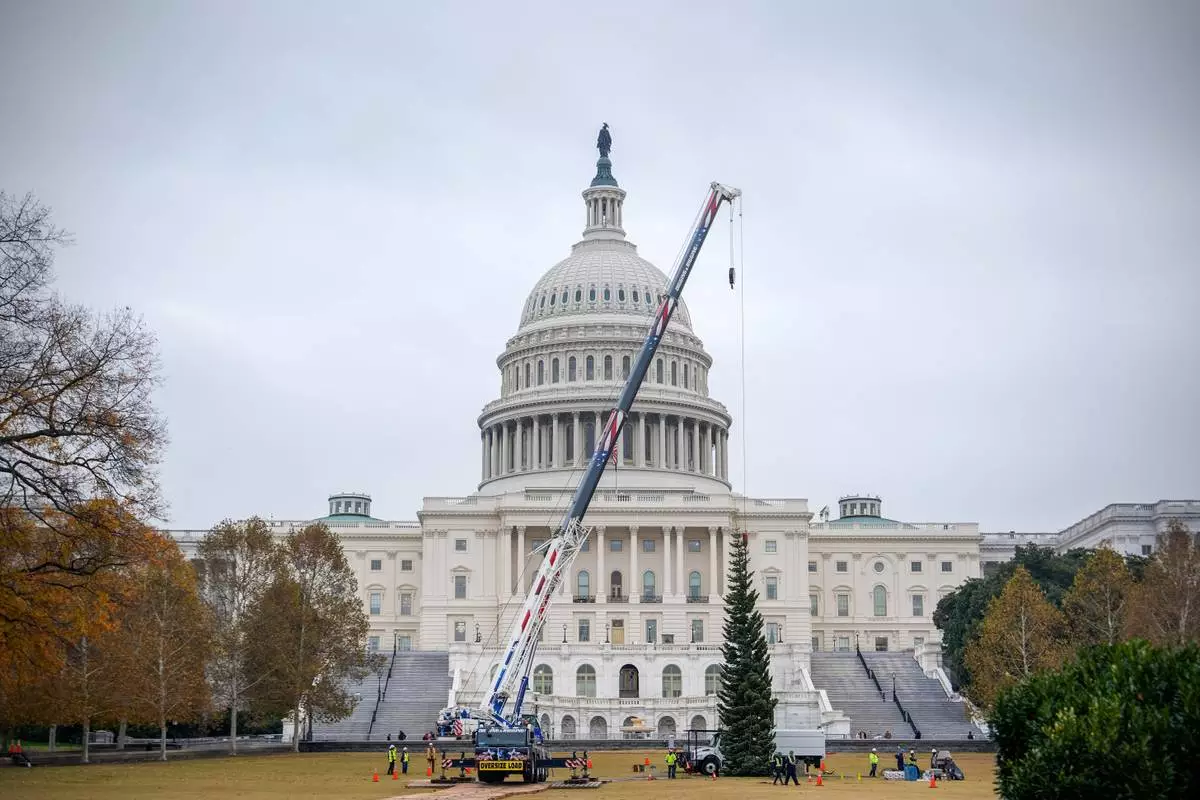
The Capitol Christmas Tree, a 53-foot red fir, arrives to the U.S. Capitol from the Humboldt-Toiyabe National Forest in Nevada, Friday, Nov. 21, 2025, in Washington. (AP Photo/Julia Demaree Nikhinson)
WASHINGTON (AP) — The U.S. Supreme Court has finished hearing arguments over the constitutionality of President Donald Trump’s order to end birthright citizenship for children born in the United States to someone in the country illegally or temporarily.
The birthright citizenship order, which Trump signed on Jan. 20, 2025, the first day of his second term, is part of his Republican administration’s broad immigration crackdown.
Trump attended but left after one hour; he is the first sitting president to attend oral arguments at the nation’s highest court.
Every lower court to have considered the issue has found the order illegal and prevented it from taking effect. A definitive ruling by the nation’s highest court is expected by early summer.
Here’s the latest:
Covering an oral argument in front of the Supreme Court poses logistical challenges for reporters, who are used to feeding information to the wire in real time.
But phones and recording devices are not allowed into the courtroom — not even an Oura ring.
For that reason, dispatches from the court are delayed until the press is released from the courtroom, which may take hours.
Today, the President entered the courtroom around 9:45 a.m. and left 13 minutes into ACLU attorney Cecillia Wang’s arguments.
This was really an unprecedented moment for the Trump administration.
Justices Gorsuch, Kavanaugh and Barrett were questioning some of the president’s immigration policies while the president was actually in the audience to listen to them.
That’s especially significant because it was Trump who nominated all of those justices to the Supreme Court during his first term.
President Trump wasn’t the only celebrity there in attendance.
Actor and activist Robert De Niro was also in the crowd in the totally packed courtroom.
Security is usually tight at the Supreme Court. But with the president visiting, it was especially high on Wednesday.
After the hearing, De Niro told reporters that Trump, “turned up today because he wants to try to put his thumb on the scale. If you want to try to intimidate some of the justices, three of whom he appointed to rule in his favor, I dare say that did not work.”
The president showed up to the Supreme Court hearing just as the oral arguments were set to begin.
He sat in the front row of the public seating section of the courtroom, which made it hard for the press to be able to view him. But the media was able to see who accompanied the president — Attorney General Pam Bondi and Commerce Secretary Howard Lutnick.
As he sat down Trump scoped out the crowd but otherwise didn’t appear to be talking to anyone and sat quietly for the arguments.
Stephen Miller is weighing in on the Supreme Court arguments.
Miller is Trump’s deputy chief of staff for policy and homeland security advisor. He’s also the architect of many of the president’s immigration-related policies.
In posts on X during the arguments Miller said: “Birthright citizenship means the children of illegal aliens can vote to tax your children and seize their inheritance.”
Trump, who wants to see the practice eliminated, repeated his opposition to it in a social media post.
“We are the only Country in the World STUPID enough to allow “Birthright” Citizenship!” he posted from the White House.
During the arguments, the justices cast doubt on Trump’s bid to limit birthright citizenship.
While the concept is relatively are rare around the world, about three dozen countries guarantee citizenship to children born on their territory.
Only a couple dozen countries around the world have birthright citizenship, which Sauer said makes the U.S. “an outlier among modern nations.”
That comment was striking to Darrell A. H. Miller, a professor at the University of Chicago Law School and a scholar whose focus includes constitutional law and legal history.
The “argument about United States birthright citizenship being an outlier compared to other Western nations is peculiar, given the way this administration trumpets American exceptionalism in other contexts,” he said in an email.
Fatimah Hussein was one of few reporters allowed in the courtroom, where we witnessed the president enter the chambers. There was a lot of neck craning and whispering as Trump entered the court room through a side entrance, wearing a dark suit and his signature red tie.
He sat in the first row of the public seats and was joined by several cabinet members. The press in the room saw Attorney General Pam Bondi and Commerce Secretary Howard Lutnick join the president. Trump was initially seated in the far right side of the public seating, where he was scoping out the crowd, but after a few minutes of shuffling with Lutnick, he was moved further into the room.
Aside from a few glances in his direction, the justices did not acknowledge Trump’s presence.
Trump eventually left the room alone during the ACLU attorney’s arguments.
The justices heard arguments for more than two hours. Trump left just over an hour into the session, after his lawyer wrapped up.
The Fourteenth Amendment says people “born or naturalized in the United States and subject to the jurisdiction thereof, are citizens of the United States.”
The Trump administration has long focused on the phrase “subject to the jurisdiction thereof,” saying that excludes parents living illegally in the U.S.
But Wang went directly at that argument Wednesday, saying that the legal focus should be on the newborn: “The question that the 14th amendment asks is whether the U.S.-born child is subject to U.S. jurisdiction when they’re born.”
Rep. Grace Meng, chair of the Congressional Asian Pacific American Caucus, on Wednesday said the president’s executive order to end birthright citizenship is “plainly unconstitutional.”
“As the daughter of immigrants—like millions of Americans across the country—this is deeply personal to me,” Meng, a Democrat from New York, said in a statement. “Birthright citizenship is the bedrock of our belonging; it is how we have been able to build our lives and call this country home.”
Meng has led hundreds of Democratic colleagues in filing amici curiae (friends of the court) briefs for Trump v. Barbara arguing that Trump’s executive order violates not only the Constitution, past Supreme Court rulings but also laws passed by Congress that guarantee citizenship to children born in the United States.
Bigotry against Chinese people was widespread in the U.S. in the 19th century, Wang said, with “a common view that Chinese people were inherently temporary sojourners in the country.”
She argued that it was possible that Justice Gray, who wrote the Wong Kim Ark ruling, “was trying to dispel that notion.”
Justice Gorsuch is drilling down into the aftermath of the Wong Kim Ark decision and trying to get Wang to clarify.
“Trying to understand how the legal community understood what happened in Wong Kim Ark. It seems to me it’s a mess. Maybe you can persuade me otherwise,” he asked Wang.
Trump spent just over an hour inside the courtroom. He apparently was only interested in hearing the arguments by the government’s lawyer, Solicitor General D. John Sauer.
The president departed shortly after Sauer wrapped up and the plaintiff was invited to present her case.
Cecillia Wang, the American Civil Liberties Union legal director facing off against Sauer, often centered her arguments around American courts’ reliance on English common law, which provides for citizenship based on the legal concept of jus soli, or “right of soil.”
“When the government tried to strip Mr. Wong Kim Ark’s citizenship on largely the same grounds they raised today, this court said no,” she said, adding “this court held that the 14th Amendment embodies the English common law rule: Virtually everyone born on U.S. soil is subject to its jurisdiction and is a citizen.”
Justice Jackson is drilling down into exactly how the government would actually figure out who’s entitled to citizenship and who’s not.
“Are you suggesting that when a baby is born people have to have documents? Present documents? Is this happening in the delivery room? How are we determining when or whether a newborn child is a citizen of the United States under your rule?” she’s asking Sauer.
Sauer seems to be saying that it would fall to the computer systems that give out Social Security numbers, saying they would automatically check the citizenship of the parents.
Roberts says the word is used 20 times in the 1898 decision. “Isn’t it at least something to be concerned about?”
Wang says it’s true that the Chinese parents were domiciled in the U.S., but that the decision did not turn on that fact, but instead a long history of basing citizenship on where the child was born.
More than an hour in, it’s the opponents’ turn
The ACLU’s Wang has begun her presentation in defense of birthright citizenship.
Sauer noted that the government is “not asking you overrule Wong Kim Ark,” which extended citizenship to children born in the U.S. to foreign parents.
But he added that it was “totally unambiguous” that the 1898 ruling “relates to domiciled aliens,” and not what he called “sojourners,” or temporary visitors.
Judge Alito is asking Sauer about the humanitarian issue of people who have been in the U.S. for a long time and are “subject to removal” but in “their minds” have made a permanent home in America.
Alito also says that immigration laws in the U.S. have been “ineffectively and in some cases unenthusiastically” enforced over the years.
He’s asking Sauer to address the “humanitarian problem” that arises with how to deal with those people when it comes to birthright citizenship.
Sauer is saying that when it comes to birthright citizenship the U.S. is an “outlier among modern nations” and is pointing to places in Europe who don’t allow birthright citizenship and suggesting there doesn’t seem to have been any humanitarian fallout there.
Kavanaugh says Congress might have used different language in laws enacted in 1940 and 1952 if it wanted to make clear that children of people here illegally or temporarily were not entitled to citizenship.
Much of the early discussions revolved around the concepts of “domicile,” or a person’s permanent residence, and to which government that person owes “allegiance.”
Solicitor General D. John Sauer began his arguments by noting that the citizenship clause “was adopted just after the Civil War to grant citizenship to the newly freed slaves and their children, whose allegiance to the United States had been established by generations of domicile here.”
It did not, he said, “grant citizenship to the children of temporary visitors or illegal aliens who have no such allegiance.”
Sauer insists that Trump’s order would apply “only prospectively.”
But Justice Sonia Sotomayor says the logic of the administration’s argument would allow a future president to try to strip citizenship from U.S.-born children years from now.
Sauer was asked by Chief Justice John Roberts about how significant is the issue of “birth tourism.”
Critics of birthright citizenship have long said that it attracts people from other countries who come to the U.S. in order to give birth so that their children can become American citizens. Then they go back to their home country.
Sauer was asked by Roberts about any data on how many people come to the U.S. for this reason. “No one knows for sure,” Sauer said, and cited “media estimates” for various numbers.
Thomas recounts that the aim of the 14th amendment was to make citizens of the freed slaves. “How much of the debates around the 14 Amendment had anything to do with immigration?”
Conservative and liberal justices are questioning Sauer’s history of the debates that led to the adoption of the 14th Amendment. Justice Neil Gorsuch says there’s precious little discussion about domicile, a key part of Sauer’s argument.
Justice Elena Kagan says part of Sauer’s case rests “on some pretty obscure sources.”
Many of the arguments in today’s case go back to the Supreme Court’s 1898 ruling in the case of Wong Kim Ark, which said a U.S.-born child of Chinese nationals was a citizen.
In that ruling, Justice Horace Gray wrote that Fourteenth Amendment “affirms the ancient and fundamental rule of citizenship by birth within the territory. That, he wrote, is “including all children here born of resident aliens.”
Roberts says it’s not clear how the recognized exceptions to citizenship, children of ambassadors and foreign invaders, can be applied to “a whole class of illegal aliens.”
Roberts says he’s not sure “how you get to that big group from such tiny and idiosyncratic examples.”
Sauer, Trump’s top Supreme Court lawyer, is at the lectern, defending the president’s birthright citizenship order. Trump is in the courtroom.
On American Samoa, an island cluster in the South Pacific roughly halfway between Hawaii and New Zealand, native-born children are considered “U.S. nationals” — a distinction that gives them certain rights and obligations while denying them others.
American Samoans are entitled to U.S. passports and can serve in the military. Men must register for the Selective Service. They can vote in local elections in American Samoa but cannot hold public office in the U.S. or participate in most U.S. elections.
Those who wish to become citizens can do so, but the process costs hundreds of dollars and can be cumbersome. In 2022, the Supreme Court rejected an appeal seeking to extend birthright citizenship to American Samoa.
An Alaska appeals court is weighing whether to dismiss criminal charges against an Alaska resident born in American Samoa after she was elected to a local school board.
Crowds watched from the sidewalks as Trump’s motorcade drove along Constitution and Independence Avenues, passing the Washington Monument and the National Mall on the way to the court building.
Justice Felix Frankfurter, a native of Austria, was the last of six justices who were born abroad. The current court is American from birth.
Still, the citizenship issue hits close to home for some justices.
Thomas and Ketanji Brown Jackson are descended from enslaved people who eventually had their citizenship established by the 14th Amendment.
Justice Sonia Sotomayor’s parents were born in Puerto Rico, where residents became citizens under a 1917 law enacted by Congress. The justice most closely tied to an immigrant is Alito, whose father was born in Italy.
Way back in 1841, former President John Quincy Adams represented a shipload of African men and women who had been sold into slavery in the famous Amistad case.
Former President William Howard Taft became chief justice nearly eight years after leaving the White House in 1913. Charles Evans Hughes left the Supreme Court for a presidential run in 1912, which he nearly won, then returned to the court in 1930 as chief justice.
In 1966, Richard Nixon argued his only Supreme Court case, which he lost.
Twenty-four Democratic state attorneys general put out a statement Wednesday morning saying they’re “proud to lead the fight against this unlawful order.”
While Democratic attorneys general have sued the Trump administration scores of times, the plaintiffs in this case are represented by the American Civil Liberties Union and other civil rights groups.
The Democratic attorneys filed court papers supporting their position. Twenty-five of their Republican counterparts filed a friend-of-the-court brief backing the Trump administration.
The only state sitting this one out is New Hampshire.
More than 250,000 babies born in the U.S. each year would not be citizens, according to research from the Migration Policy Institute and Pennsylvania State University’s Population Research Institute.
The order would only apply going forward, the administration has said. But opponents have said a court ruling in Trump’s favor could pave the way for a later effort to take away citizenship from people who were born to parents who were not themselves U.S. citizens.
The president and first lady Melania Trump showed up for the court ritual marking the arrival of a new justice following the confirmations of Justice Neil Gorsuch in 2017 and Justice Brett Kavanaugh a year later.
The ceremony for Trump’s third appointee, Justice Amy Coney Barrett, was delayed a year because of the COVID-19 pandemic and Trump, who was no longer in office, did not attend.
Traditionally the president has avoided attending arguments to maintain distance between the government branches — since the executive officer’s presence is seen by many as a way to pressure the independent court to rule in their favor.
Given the unusual nature of it all — Trump’s presence in the courtroom spotlights how high the stakes are for him, as the court’s decision will have massive consequences on his longstanding promise to crack down on immigration.
Last year, Trump said that he badly wanted to attend a hearing on whether he overstepped federal law with his sweeping tariffs, but he decided against it, saying it would have been a distraction.
Adam Winkler, a constitutional law professor at UCLA, told the The Associated Press that Trump’s attending SCOTUS oral arguments signals how important the president views this case.
However, Trump’s presence “is unlikely to sway the justices,” Winkler said, adding that the SCOTUS justices “pride themselves in their independence, even if some agree with much of Trump’s agenda.”
The fanfare of Trump being in the courtroom will make for a different experience for the justices themselves, however, as “Trump’s presence will make the atmosphere a little bit more circus-like,” Winkler said.
Solicitor General D. John Sauer is making his ninth Supreme Court argument and second in as many weeks. Sauer’s biggest win to date was the presidential immunity decision that spared Trump from being tried for his effort to overturn the 2020 election.
Sauer was a Supreme Court law clerk to Justice Antonin Scalia early in his legal career.
ACLU legal director Cecillia Wang, the child of Chinese immigrants, is presenting her second argument to the Supreme Court. In the first Trump administration, a 5-4 conservative majority ruled against Wang’s clients in another immigration case.
It’s not an April Fool’s joke. Alito was born this day in 1950. Only Thomas, who turns 78 in June, is older than Alito among the nine justices.
In the post-pandemic era, the other justices allow the 77-year-old Thomas, the longest-serving member of the court, to pose a question or two before the free-for-all begins.
In a second round of questioning, the justices ask questions in order of seniority. Chief Justice John Roberts, whose center chair makes him the most senior, gets the first crack.
The justices have routinely gone beyond the allotted time since returning to the courtroom following the Covid-19 pandemic.
A buzzer and the court marshal’s cry, “All rise,” signal the justices’ entrance from behind red curtains. The livestream won’t kick in for several minutes, until after the ceremonial swearing-in of lawyers to the Supreme Court bar.
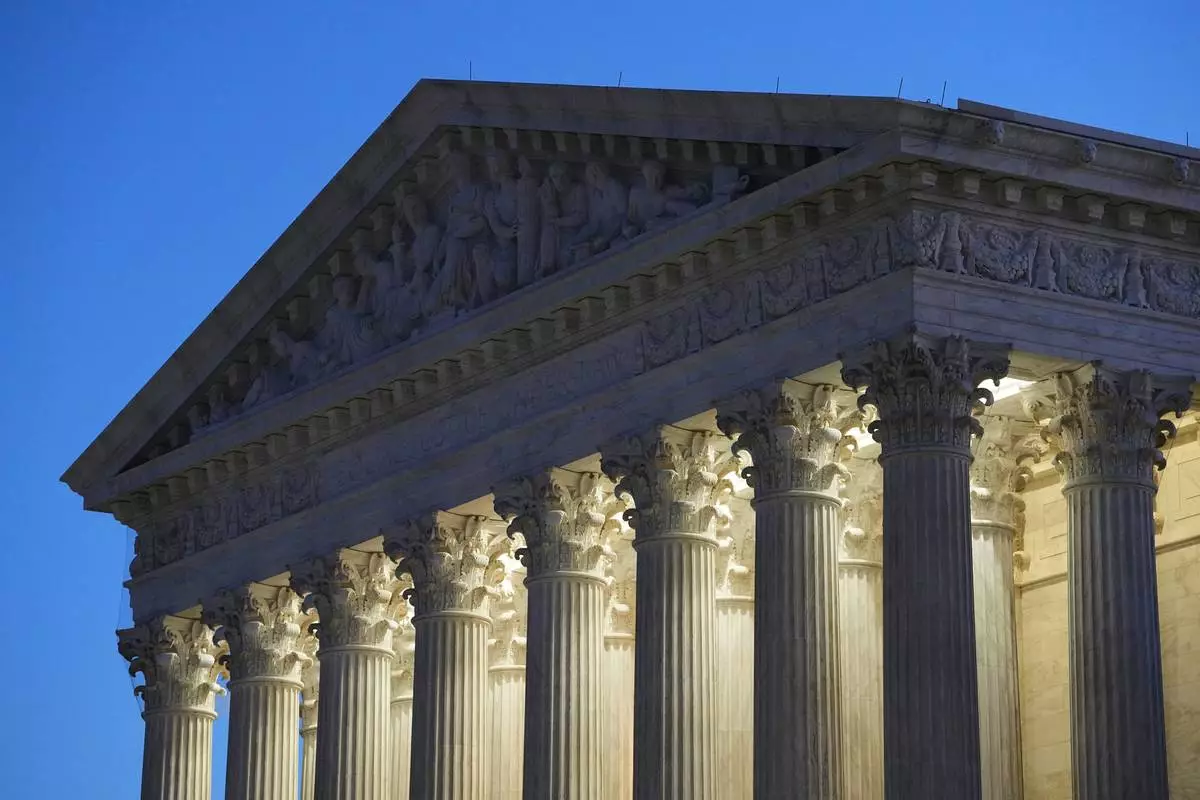
FILE - The U.S. Supreme Court is seen in Washington on Feb. 24, 2026. (AP Photo/Matt Rourke, File)
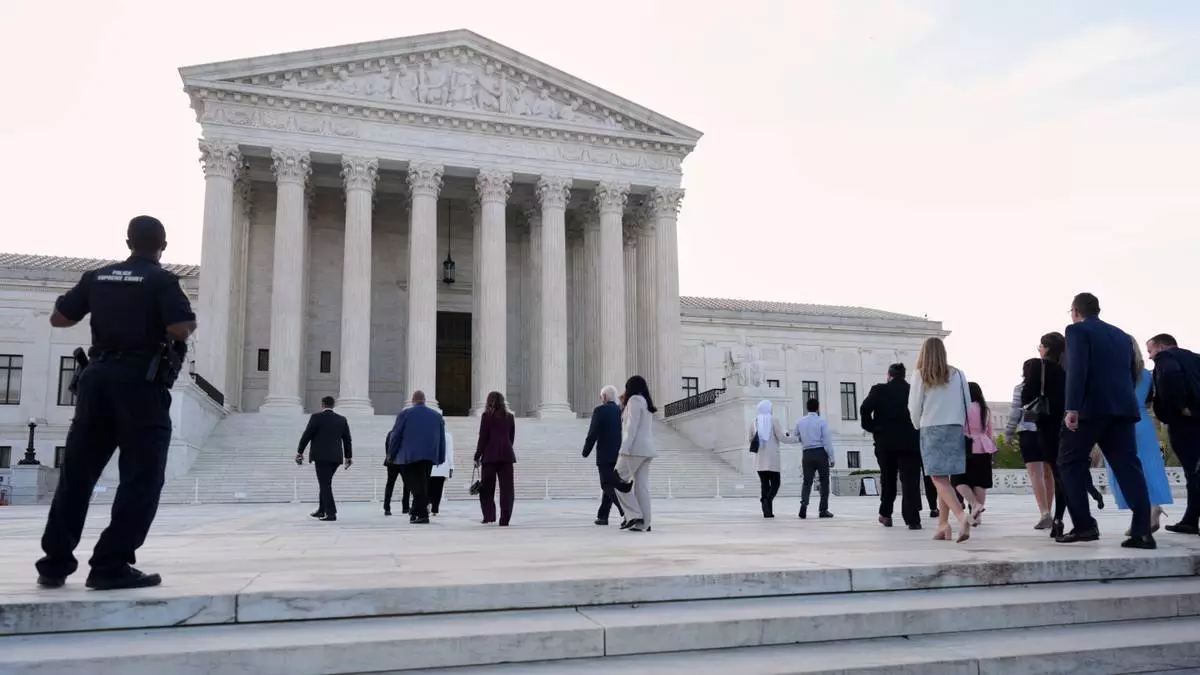
People arrive to walk inside the U.S. Supreme Court, on Capitol Hill in Washington, Wednesday, April 1, 2026. The Supreme Court justices will hear oral arguments today on whether President Donald Trump can deny citizenship to children born to parents who are in the United States illegally or temporarily. (AP Photo/J. Scott Applewhite)