LONDON--(BUSINESS WIRE)--Nov 24, 2025--
Routledge (Taylor & Francis Group) today announced the global release of MOVE™: AI-Enabled Strategy for a Fast World, a new book by international strategy advisor Tim Lewko, CEO of Thinking Dimensions Global. MOVE introduces a practical, end-to-end system built for leaders facing unprecedented speed, volatility, and technological disruption.
This press release features multimedia. View the full release here: https://www.businesswire.com/news/home/20251124767801/en/
“Most organizations don’t fail because of a lack of intelligence,” Lewko said. “They fail because decision-making is too slow, too fragmented, or too political. AI has erased the information advantage. The companies that win will be the ones that make disciplined decisions faster than their environment changes. MOVE gives leaders that system.”
With more than 25 years of experience advising CEOs across four continents – and with over $2 billion in enterprise value created – Lewko developed MOVE as a cohesive alternative to outdated, planning-centric strategy processes. The system combines visible thinking, practical tools, and AI-enabled insight to help executives align choices, resources, and execution.
WHY MOVE MATTERS NOW
Lewko argues that traditional strategy tools – built for predictable, slow-moving markets – no longer match today’s realities. Leaders now face constant pressure to interpret trends, manage complexity, and make consequential choices quickly. AI has accelerated this shift, raising the stakes on disciplined, unified decision-making.
“Strategy used to be a planning ritual,” Lewko said. “Today it is a speed problem. The winners will be the ones who can see what’s changing, make sharper choices, and execute through a rhythm that forces focus.”
THE MOVE SYSTEM (TOOLS 1–7)
MOVE™ brings together seven integrated tools that form a single operating spine for strategic thinking and execution:
1. Strategic Assumptions (SA): Surfaces the external and internal forces shaping tomorrow’s decisions.
2. Vision + Driving Force (VDF): Defines direction of travel and the competitive force behind it.
3A. Product-Market Matrix (PMM): Shows where value is created today and where it must be created next.
3B. Market Reality Check (MRC): Validates strategic bets using market size, growth, competition, customer demand, and emerging threats.
4. Advantage + Future Capabilities (AFC): Identifies the capabilities required to win through the eyes of the customer.
5. Strategic Numbers (SN): A short set of leading and lagging indicators tied to the P&L.
6. Strategic Project Portfolio (SPP): Translates strategy into funded, sequenced initiatives.
7. Quarterly Business Reviews (QBRs): A disciplined cadence that turns strategy into execution.
Together, these tools give leaders a visible, repeatable system linking assumptions, choices, capabilities, numbers, and actions.
EARLY PRAISE FROM EXECUTIVE LEADERS
Lewko’s work spans healthcare, manufacturing, private equity, insurance, logistics, and technology sectors. Early readers highlight MOVE’s clarity, practicality, and immediate applicability:
“As generative AI rewrites the rules of strategy, MOVE is the blueprint for how companies must rethink their approach to stay competitive. Tim Lewko’s deep expertise and global experience make this essential reading for any organization still using outdated strategy processes.”
— Michael Combs, President & CEO, CorVel Corporation
ABOUT THE BOOK
MOVE™: AI-Enabled Strategy for a Fast World
By Tim Lewko
Published by Routledge (Taylor & Francis Group)
Publication Date: November 21, 2025
Formats: Hardcover, Paperback, eBook, Kindle
Amazon Link: https://www.amazon.com/dp/B0FWBCVDGC
Routledge Link: https://www.routledge.com/9781041156086
ABOUT THE AUTHOR
Tim Lewko is CEO of Thinking Dimensions Global and a global strategy advisor who has helped organizations deliver more than $2B in EBITDA gains through practical, visible strategy execution. His work spans North America, Europe, Asia, and South America, with a focus on decision-making systems, leadership alignment, and AI-enabled strategic thinking. He is also the author of the bestselling Making Big Decisions Better.
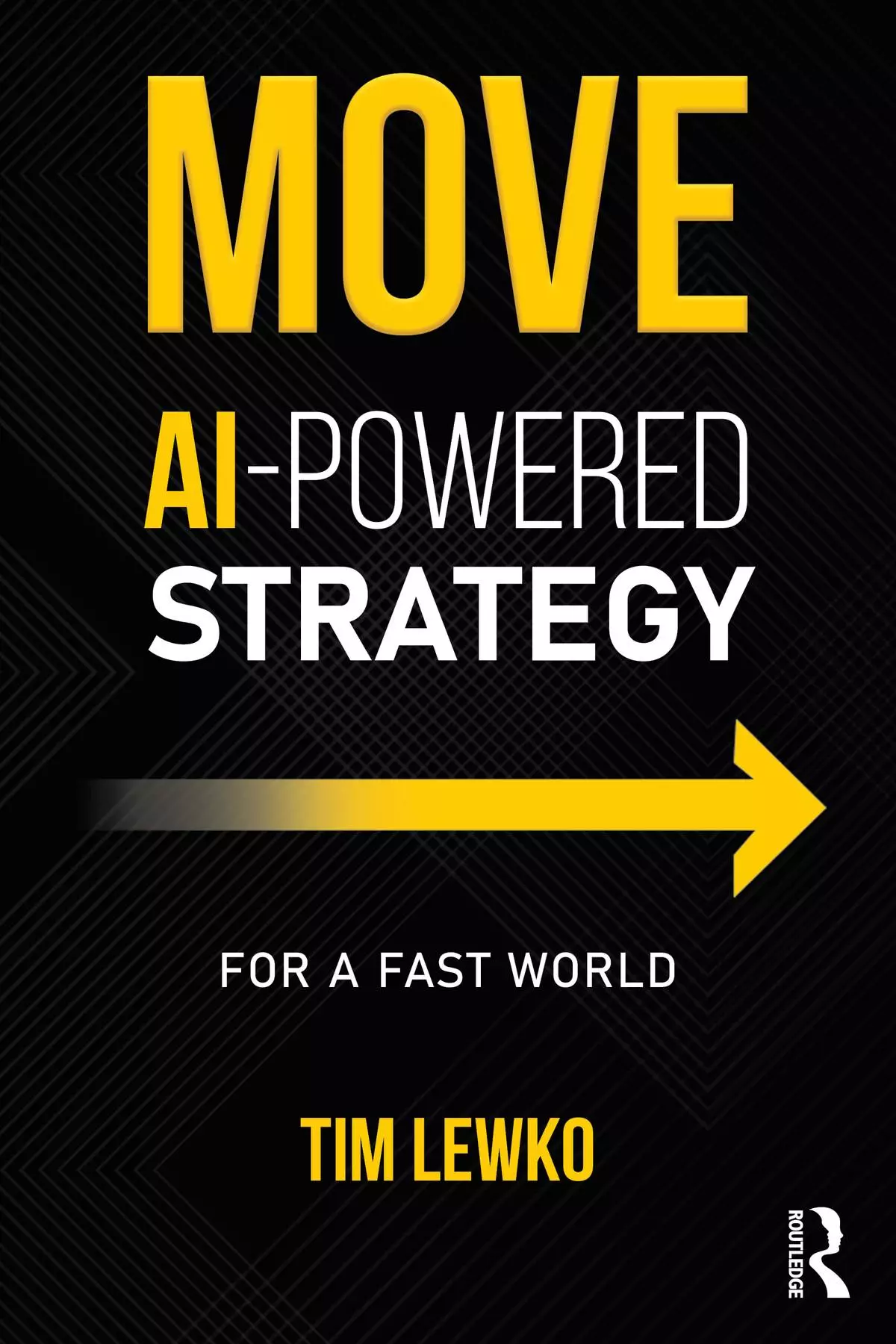
Cover of MOVE™: AI-Enabled Strategy for a Fast World, the new book by global strategy advisor Tim Lewko published by Routledge (Taylor & Francis Group).
CAIRO (AP) — Iranians began to regain internet access on Wednesday after authorities ended a monthslong shutdown. But users said service was slow and spotty in some areas, with apps like YouTube and Instagram heavily restricted, as they were before the cutoff began during nationwide protests in January.
Authorities justified the outage as a military imperative after the United States and Israel attacked Iran on Feb. 28. Their decision to lift some restrictions this week came as negotiators appeared to be closing in on a more permanent truce. But many Iranians feared access could be cut off again at a moment's notice.
Internet tracking company Netblocks said Iran’s connectivity, which measures the ability of devices to connect to the internet, is at around 86% of capacity from before the cutoff. Internet analysis firm Kentik said internet traffic, which measures the amount of data transferred and is a good illustration of usage, was at around 40%.
Amir Rashidi, an Iranian cybersecurity analyst, said there were still widespread disruptions. “It's too early to say the shutdown is over,” he wrote on X.
Iran’s roughly 90 million people have been cut off from the internet for most of 2026, one of the world’s longest and strictest national shutdowns. Young people with online careers saw their incomes evaporate. Job losses and the closure of online businesses added to the war's steep economic costs.
The cutoff made it difficult for Iranian families to communicate through months of unrest and war. At some points, phone lines were also cut off, though they were later restored.
A woman living in Tehran said that for months she was barely able to speak to her sons living abroad. She couldn't believe authorities had restored access, saying she had assumed they would find some justification to prolong the outage.
A taxi driver said service was restored but weak. He expressed hope it would improve so he could use messaging apps with family and friends. Both spoke on condition of anonymity for security reasons.
Prices spiked during the shutdown, with residents in Tehran at times paying around $7.50 per gigabyte. Prices are back down to around $2.25 for 30 gigabytes, roughly where they were before the protests.
Even then, Iran tightly controlled access to popular social media sites, leading many to rely on virtual private networks, or VPNs. The cost of those workarounds soared during the shutdown, making them unaffordable for many as the economy was battered.
Businesses have started reappearing online, announcing their return with posts on sites like Instagram and Telegram.
A gamer and tech influencer in the central city of Isfahan said the shutdown had caused him to lose a lot of his audience on YouTube and Instagram, where he had spent years building up a large following.
“All my views and interactions are way down. I’ve been erased from the algorithm,” he said in a voice note sent by WhatsApp, adding that his internet connection was still slower than before the shutdown.
“The situation is such that many content producers have had their income reduced to zero, have moved on to other jobs, or have been forced to sell their equipment to survive,” he said. He spoke on condition of anonymity for fear of reprisal.
Iranian authorities first shut down the internet in January during mass anti-government protests that were eventually stamped out in a violent crackdown. Thousands of people were killed and tens of thousands detained.
That cutoff was just starting to ease when the government imposed a complete internet blackout after the start of the war, when U.S. and Israeli strikes killed Iran's supreme leader and other top officials.
The government faced criticism for the prolonged shutdown, which caused even more harm to an economy devastated by inflation, strikes on key industries and a U.S. blockade on Iranian ports.
The internet cutoff cost an estimated $30-40 million daily, with indirect losses likely twice that much, a member of Iran’s Chamber of Commerce, Afshin Kolahi, told a local newspaper last month. About 10 million people have jobs that depend on internet connectivity, according to Communications Minister Sattar Hashemi.
Iranians still had access to a national net, but that has a far narrower reach, and users complained of poor service and heavy censorship. Senior government officials are given SIM cards granting them access to the global internet. Under pressure, the government expanded access to the SIM cards to some professions during the shutdown.

A woman checks her smartphone while sitting on a bench along a sidewalk in northern Tehran, Iran, Tuesday, May 26, 2026. (AP Photo/Vahid Salemi)