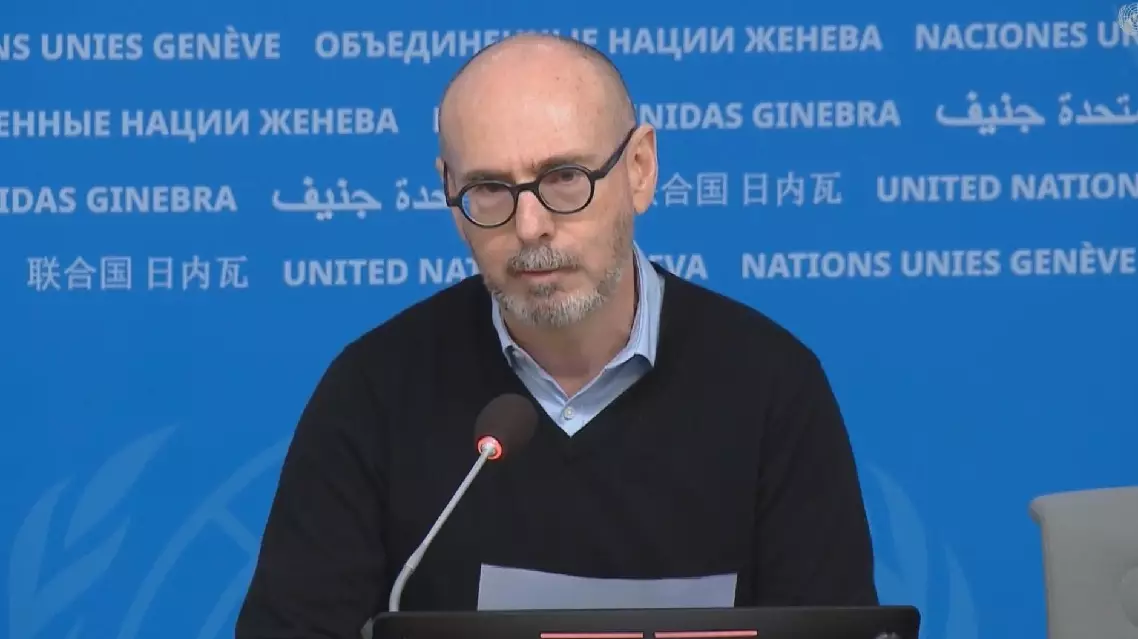
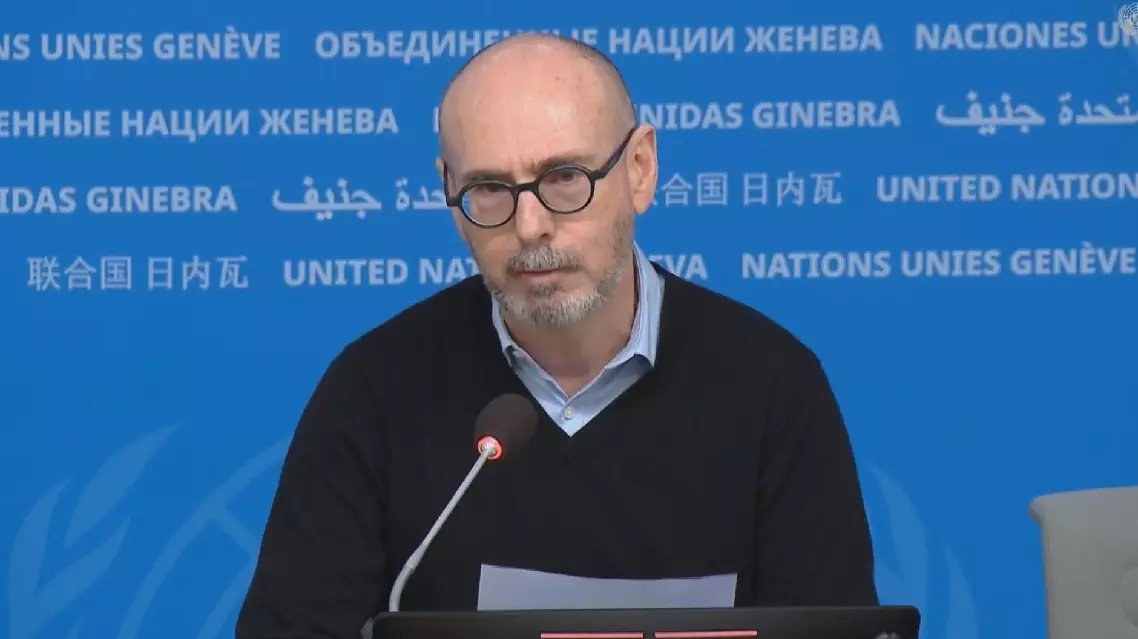
Violence by Israeli forces and settlers in the Israeli-occupied West Bank has surged over the past two years, leaving more than 1,000 Palestinians dead with almost no accountability, a spokesman for the United Nations (U.N.) Office of the High Commissioner for Human Rights (OHCHR) said at a U.N. press conference in Geneva, Switzerland on Friday.
Jeremy Laurence, spokesman for the OHCHR, said that he was appalled by a recent incident in Jenin, where Israeli personnel were seen on video shooting and killing two Palestinian men.
He noted that killings of Palestinians by Israeli security forces and settlers in the West Bank have been surging, with a persistent lack of accountability.
Impunity for Israel security forces' unlawful use of force, and ever-growing Israeli settler violence, must end, he said.
"Our office has verified that since Oct 7, 2023 and up until Nov 27 of this year, Israeli forces and settlers killed 1,030 Palestinians in the occupied West Bank, including East Jerusalem. Among these victims were 223 children," said the spokesman, referring to the period of time since October 7, 2023 when Israel started a large-scale offensive against Hamas in the Gaza Strip to retaliate against a Hamas rampage through the southern Israeli border, during which about 1,200 people were killed and more than 200 were taken hostage.
In the statement, Laurence said U.N. High Commissioner for Human Rights Volker Turk urged independent, prompt and effective investigations into the killings of Palestinians and called for those responsible for violations to be held fully accountable.
Over 1,000 Palestinians killed by Israeli forces, settlers in West Bank in 2 years: U.N.
Over 1,000 Palestinians killed by Israeli forces, settlers in West Bank in 2 years: U.N.
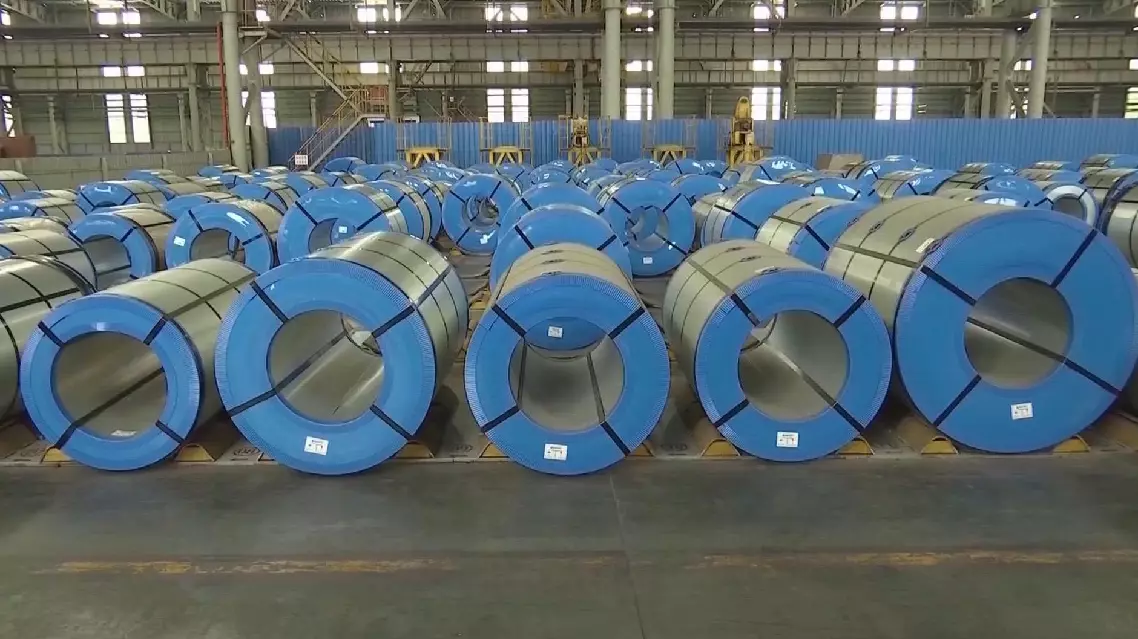
The price of aluminum, a key industrial metal used in automotive manufacturing, construction and packaging, has been climbing as production cuts in the Gulf region, logistical constraints and Iranian attacks on two regional producers over the weekend tightened supply.
On March 31, the benchmark London Metal Exchange (LME) three-month price for aluminum rose to 3,535 U.S. dollars per metric ton, a year-on-year increase of around 40 percent.
Iran's Islamic Revolutionary Guard Corps (IRGC) said on Sunday that they launched missile and drone strikes on aluminum plants in Bahrain and the UAE that are linked to the U.S. military and aerospace industries, in retaliation for U.S.-Israeli attacks on Iranian steel factories.
Emirates Global Aluminium issued a statement saying that its Al Taweela site in the Khalifa Economic Zone in Abu Dhabi was severely damaged after Iranian strikes, with some employees injured.
Aluminum Bahrain confirmed in a statement on Sunday that some of its facilities were struck by Iranian attacks, resulting in injuries to two employees.
The two aluminum plants have a combined annual output of 3.2 million tons, more than half of the approximately 6 million tons of aluminum produced every year by Gulf Cooperation Council (GCC) member states.
The region is a key source of aluminum supply, accounting for about 9 percent of global production.
Goldman Sachs on Tuesday raised its LME aluminum price forecast from 3,200 U.S. dollars to 3,450 U.S. dollars per ton for the second quarter of 2026 after the attacks on the facilities.
Goldman Sachs also predicted a global primary aluminum market supply deficit of 570,000 tons in 2026, a sharp turnaround from its previous forecast of a 550,000-ton surplus.
Analysts point out that the aluminum market is currently facing multiple shocks, with shipping in the Strait of Hormuz disrupted, aluminum production facilities in the Gulf damaged or even shut down, and production in other parts of the world currently limited.
The impact will also spread to downstream enterprises in the coming months, with higher-cost aluminum alloys, primarily used in the aerospace, automotive, and construction industries, facing the most constrained supply, analysts said.
The Gulf region has long been a significant source of these high-end products, particularly for the European market, and also supplies manufacturers in the United States.
Aluminum prices climb as effects of Middle East tensions spread through global economy