The Chinese People's Liberation Army (PLA) Navy Task Group 989 arrived at Port Klang in Malaysia on Saturday for a four-day goodwill visit to the country.
The task group includes amphibious dock landing ship Changbaishan, naval training vessel Zheng He and comprehensive training vessel Xiangqianjin-1.
The three Chinese navy vessels, flying the national flags of China and Malaysia, slowly sailed into Port Klang at around 10:00. They were warmly welcomed by staff from the Chinese embassy in Malaysia, Chinese students in Malaysia, representatives of local overseas Chinese, and officers and soldiers from the Malaysian Navy.
"I'm thrilled to take part in this exchange activity. After two years in Malaysia, stepping onto a Chinese warship for the first time is incredibly exciting. Seeing such a modern vessel makes me feel truly proud," said Liu Zhuo, a Chinese student.
The Chinese navy task group is on a far-sea comprehensive training mission, conducting courses including coastal pilotage, celestial navigation and marine meteorology to improve cadets' basic skills.
"With our naval ships providing good training resources, we turned hangars, vehicle decks and the flight deck into classrooms, answering cadets' questions on the spot. This let them pick up knowledge and skills quickly and efficiently, greatly boosting training effectiveness," said Zhang Yaoqing, a navy officer of task group 989. During the stopover, the Chinese sailors will visit Malaysia's National Hydrographic Center, conduct exchanges with Malaysian young naval officers and soldiers, and host a deck reception, ship tours and cultural activities.

Chinese navy task group arrives in Malaysia for goodwill visit
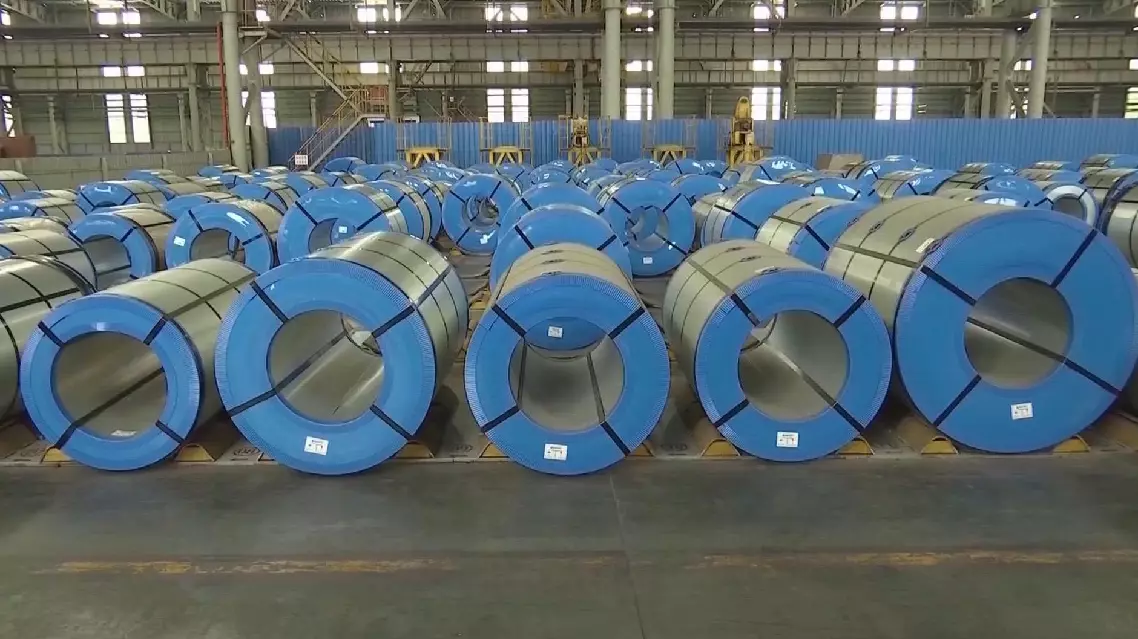
The price of aluminum, a key industrial metal used in automotive manufacturing, construction and packaging, has been climbing as production cuts in the Gulf region, logistical constraints and Iranian attacks on two regional producers over the weekend tightened supply.
On March 31, the benchmark London Metal Exchange (LME) three-month price for aluminum rose to 3,535 U.S. dollars per metric ton, a year-on-year increase of around 40 percent.
Iran's Islamic Revolutionary Guard Corps (IRGC) said on Sunday that they launched missile and drone strikes on aluminum plants in Bahrain and the UAE that are linked to the U.S. military and aerospace industries, in retaliation for U.S.-Israeli attacks on Iranian steel factories.
Emirates Global Aluminium issued a statement saying that its Al Taweela site in the Khalifa Economic Zone in Abu Dhabi was severely damaged after Iranian strikes, with some employees injured.
Aluminum Bahrain confirmed in a statement on Sunday that some of its facilities were struck by Iranian attacks, resulting in injuries to two employees.
The two aluminum plants have a combined annual output of 3.2 million tons, more than half of the approximately 6 million tons of aluminum produced every year by Gulf Cooperation Council (GCC) member states.
The region is a key source of aluminum supply, accounting for about 9 percent of global production.
Goldman Sachs on Tuesday raised its LME aluminum price forecast from 3,200 U.S. dollars to 3,450 U.S. dollars per ton for the second quarter of 2026 after the attacks on the facilities.
Goldman Sachs also predicted a global primary aluminum market supply deficit of 570,000 tons in 2026, a sharp turnaround from its previous forecast of a 550,000-ton surplus.
Analysts point out that the aluminum market is currently facing multiple shocks, with shipping in the Strait of Hormuz disrupted, aluminum production facilities in the Gulf damaged or even shut down, and production in other parts of the world currently limited.
The impact will also spread to downstream enterprises in the coming months, with higher-cost aluminum alloys, primarily used in the aerospace, automotive, and construction industries, facing the most constrained supply, analysts said.
The Gulf region has long been a significant source of these high-end products, particularly for the European market, and also supplies manufacturers in the United States.
Aluminum prices climb as effects of Middle East tensions spread through global economy