Shaolin kung fu, a fundamental traditional Chinese martial arts school rooted in Zen philosophy, also focuses on quickly delivering effective strikes in real combat while emphasizing peaceful mind and discipline, according to a Shaolin master.
In China Global Television Network's documentary "The Spirit of Shaolin," Shi Yanxuan, a kung fu master at the Shaolin Temple in central China, shares his insight on the essences of the ancient martial arts.
Located in central China's Henan Province, the Shaolin Temple is known as the cradle of the Chinese martial arts.
In Shaolin kung fu, the pre-arranged forms, known as Taolu, refer to a sequence of movements that simulate fighting techniques with an imaginary opponent. These forms, usually completed within a minute or less, help martial artists develop strength, balance, internal energy and technique.
"Shaolin boxing currently comprises more than 700 forms, emphasizing compact and powerful movements. Each form has its own name, such as 'Embracing the Moon Against the Chest' and 'White Clouds Over the Peak," said Shi.
Mastering these forms requires considerable time and practice, Shi noted.
"Forms have evolved over time. In the earliest days, there were no fixed forms at all. For example, on the battlefield, when facing enemy, how could one possibly follow a set routine? In ancient times, it was about subduing the opponent with a single move -- striking so fast the hand could not be seen. Where was there any routine then? It was individual techniques accumulated one by one that gradually accumulated. Just like learning a language today: first a single character, then combining them, forming sentences, and eventually developing complete forms," said Shi.
"It also embodies the Shaolin principles that 'a punch can be thrown even in the space where an ox lies down.' It means that Shaolin techniques can be fully demonstrated even in an area as small as the spot where a cow rests," said Shi.
At the Shaolin Temple, these forms or Taolu have been meticulously documented and preserved in the Pagoda of the Holy Scriptures, just as the temple safeguards its sacred Buddhist scriptures.

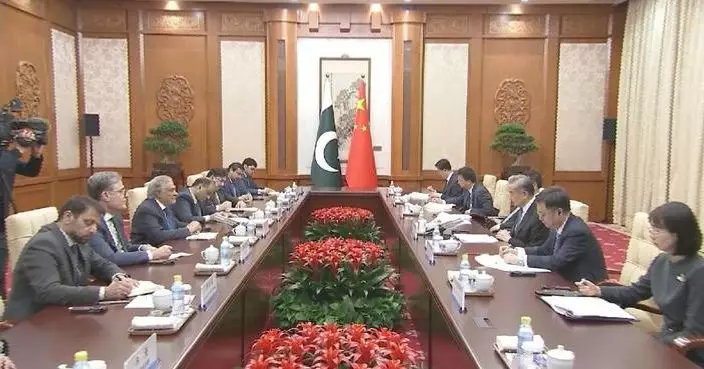
Shaolin master unlocks ancient wisdom of Chinese kung fu
The price of aluminum, a key industrial metal used in automotive manufacturing, construction and packaging, has been climbing as production cuts in the Gulf region, logistical constraints and Iranian attacks on two regional producers over the weekend tightened supply.
On March 31, the benchmark London Metal Exchange (LME) three-month price for aluminum rose to 3,535 U.S. dollars per metric ton, a year-on-year increase of around 40 percent.
Iran's Islamic Revolutionary Guard Corps (IRGC) said on Sunday that they launched missile and drone strikes on aluminum plants in Bahrain and the UAE that are linked to the U.S. military and aerospace industries, in retaliation for U.S.-Israeli attacks on Iranian steel factories.
Emirates Global Aluminium issued a statement saying that its Al Taweela site in the Khalifa Economic Zone in Abu Dhabi was severely damaged after Iranian strikes, with some employees injured.
Aluminum Bahrain confirmed in a statement on Sunday that some of its facilities were struck by Iranian attacks, resulting in injuries to two employees.
The two aluminum plants have a combined annual output of 3.2 million tons, more than half of the approximately 6 million tons of aluminum produced every year by Gulf Cooperation Council (GCC) member states.
The region is a key source of aluminum supply, accounting for about 9 percent of global production.
Goldman Sachs on Tuesday raised its LME aluminum price forecast from 3,200 U.S. dollars to 3,450 U.S. dollars per ton for the second quarter of 2026 after the attacks on the facilities.
Goldman Sachs also predicted a global primary aluminum market supply deficit of 570,000 tons in 2026, a sharp turnaround from its previous forecast of a 550,000-ton surplus.
Analysts point out that the aluminum market is currently facing multiple shocks, with shipping in the Strait of Hormuz disrupted, aluminum production facilities in the Gulf damaged or even shut down, and production in other parts of the world currently limited.
The impact will also spread to downstream enterprises in the coming months, with higher-cost aluminum alloys, primarily used in the aerospace, automotive, and construction industries, facing the most constrained supply, analysts said.
The Gulf region has long been a significant source of these high-end products, particularly for the European market, and also supplies manufacturers in the United States.
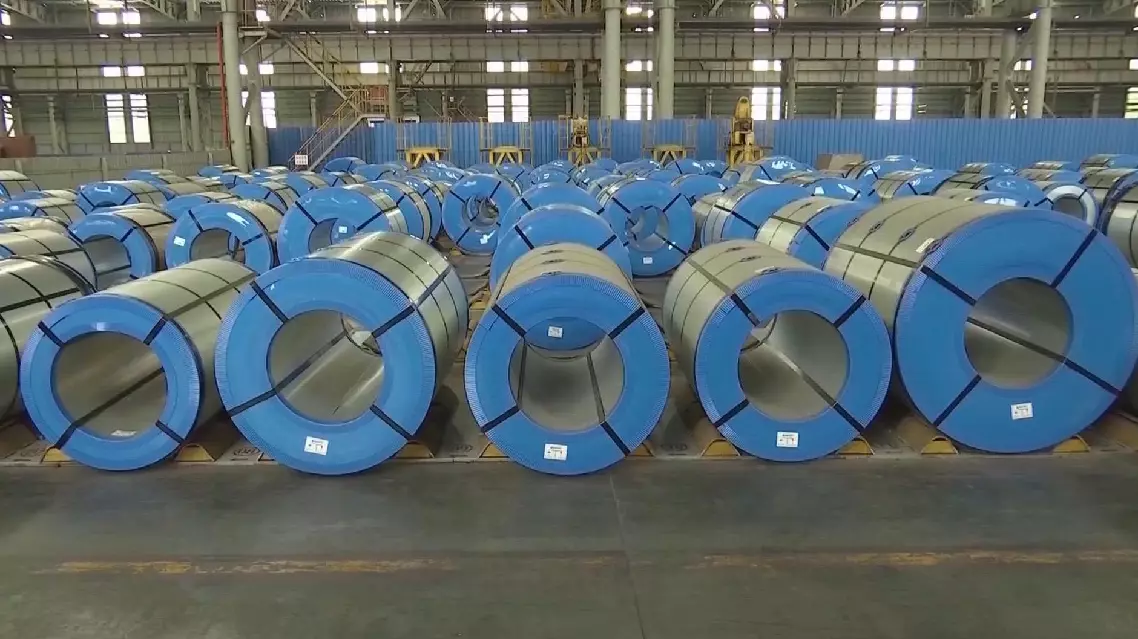
Aluminum prices climb as effects of Middle East tensions spread through global economy