Skip to Content Facebook Feature Image

AMINA Bank Integrates Paxos’ USDG Stablecoin, Joins Global Dollar Network Alongside Leading Financial Institutions

Business

AMINA Bank Integrates Paxos’ USDG Stablecoin, Joins Global Dollar Network Alongside Leading Financial Institutions
Business

Business

AMINA Bank Integrates Paxos’ USDG Stablecoin, Joins Global Dollar Network Alongside Leading Financial Institutions

2025-12-02 15:35 Last Updated At:12-08 15:57

ZUG, Switzerland--(BUSINESS WIRE)--Dec 2, 2025--

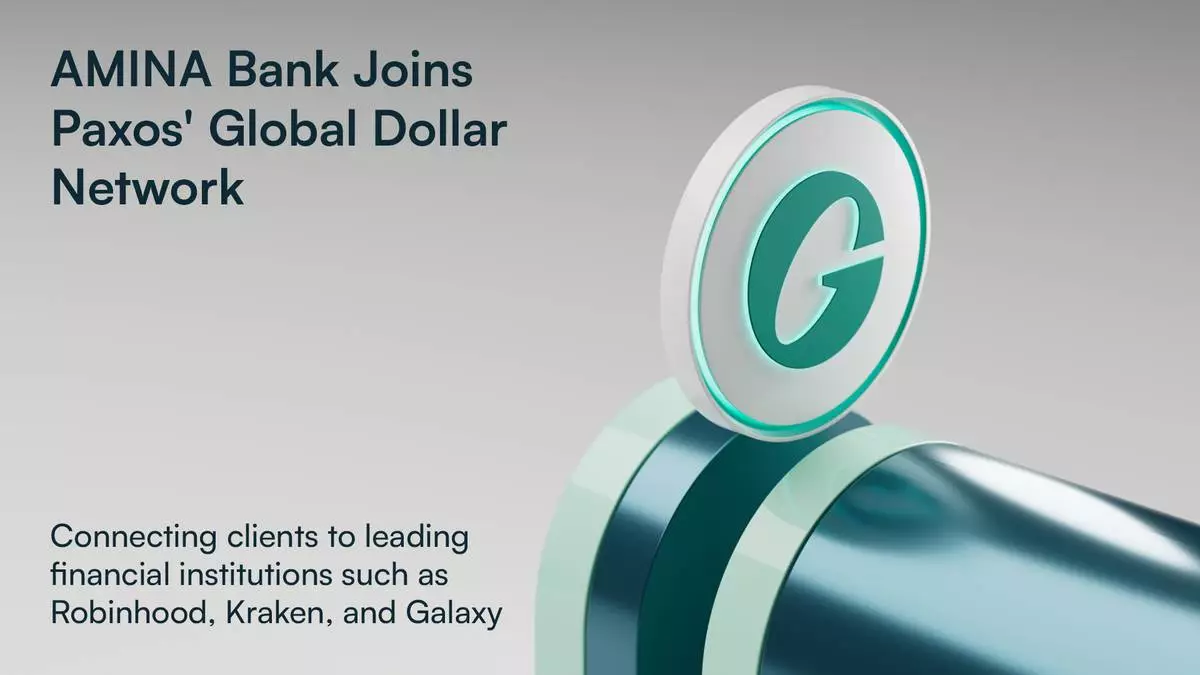
AMINA Bank AG ("AMINA Bank"), a Swiss Financial Market Supervisory Authority (FINMA)-regulated crypto bank with global reach, today announces the addition of Paxos’ USDG stablecoin to its custody, trading, and rewards offerings. As part of this expansion, AMINA Bank becomes a member of the Global Dollar Network (GDN), a network of leading enterprises working to advance digital dollar adoption worldwide.

This press release features multimedia. View the full release here: https://www.businesswire.com/news/home/20251201735324/en/

USDG is a U.S. dollar-backed stablecoin issued by Paxos Digital Singapore, an affiliate of Paxos. Paxos is the leading regulated global blockchain infrastructure provider, with deep experience in stablecoin issuance and operations. Paxos Digital Singapore is a Major Payments Institution supervised by the Monetary Authority of Singapore.

By joining the Global Dollar Network, AMINA Bank connects its professional and institutional client base to a global ecosystem of regulated financial institutions, enabling seamless interoperability and deeper liquidity across digital dollar infrastructure. The network includes major global platforms such as Robinhood, Kraken, OKX, Galaxy, Anchorage, and Bullish.

Myles Harrison, Chief Product Officer of AMINA Bank, said: "USDG custody, trading, and rewards represent the latest expansion of our regulated stablecoin offering, continuing our leadership in bringing institutional-grade digital dollar access to professional investors. Our stablecoin rewards programme enables clients to earn up to 4% annual rewards on USDG holdings, reflecting our commitment to delivering value through compliant innovation. Joining the Global Dollar Network connects AMINA to the financial institutions building the rails for stablecoin adoption at scale."

AMINA Bank's USDG integration reflects growing client demand for regulated stablecoin access within traditional banking frameworks. The bank currently supports multiple stablecoins including USDT, USDC, EURC, and RLUSD, providing clients with diversified access to digital dollar and euro infrastructure. USDG's transparent reserve backing — primarily U.S. government bonds held one-to-one against circulating supply — aligns with AMINA's institutional-grade risk management standards.

Nick Robnett, Head of Crypto Business Development at Paxos, commented on behalf of Global Dollar Network: "We’re excited to welcome AMINA Bank to the Global Dollar Network. We're building infrastructure that enables financial institutions to offer clients secure, compliant access to digital dollars, and AMINA's integration demonstrates the growing institutional demand for trusted stablecoin services."

Certain products and services may not be available to all clients based on legal and regulatory considerations.

About AMINA Bank – Crypto. Banking. Simplified.

Founded in April 2018 and established in Zug (Switzerland), AMINA Bank AG is a pioneer in the crypto banking industry. In August 2019, AMINA Bank AG received the Swiss Banking and Securities Dealer License from the Swiss Financial Market Supervisory Authority (“FINMA”). In February 2022, AMINA Bank AG, Abu Dhabi Global Markets (“ADGM”) Branch received Financial Services Permission from the Financial Services Regulatory Authority (“FSRA”) of ADGM to Advise on Investments or Credit, Arrange Deals in Investment, Arrange Credit and Arrange Custody for Professional Clients as defined in the Conduct of Business (“COBS”) Rulebook. In November 2023, AMINA (Hong Kong) Limited received its Type 1 (Dealing in Securities), Type 4 (Advising on Securities) and Type 9 (Asset Management) licenses from the Securities and Futures Commission (“SFC”). In October 2025, the firm’s Type 1 license was approved for uplift to include digital asset dealing services for Professional Investors under Hong Kong’s digital asset regulatory framework. In October 2025, AMINA (Austria) AG (“AMINA EU”) received its CASP license from Austria’s Financial Market Authority (“FMA”) under the Markets in Crypto-Assets (MiCAR) framework, authorising AMINA EU to provide: (i) custody of crypto assets, (ii) exchange of crypto assets for fiat currencies or other crypto assets, (iii) transfer services, and (iv) portfolio management of crypto assets.

CVVC Global Report and CB Insights named AMINA Bank AG as one of the Top 50 Companies within the blockchain ecosystem. In 2023, AMINA Bank AG won the European WealthBriefing Award in the Digital Assets Solution, Fund Manager category. AMINA Bank AG was recently recognised as Institutional Digital Asset Innovation of the Year at the Hedgeweek® Global Digital Assets Awards 2025.

To learn more about AMINA Bank AG, visit www.aminagroup.com.
AMINA Bank Joins Paxos' Global Dollar Network

AMINA Bank Joins Paxos' Global Dollar Network

CAIRO (AP) — Iranians began to regain internet access on Wednesday after authorities ended a monthslong shutdown. But users said service was slow and spotty in some areas, with apps like YouTube and Instagram heavily restricted, as they were before the cutoff began during nationwide protests in January.

Authorities justified the outage as a military imperative after the United States and Israel attacked Iran on Feb. 28. Their decision to lift some restrictions this week came as negotiators appeared to be closing in on a more permanent truce. But many Iranians feared access could be cut off again at a moment's notice.

Internet tracking company Netblocks said Iran’s connectivity, which measures the ability of devices to connect to the internet, is at around 86% of capacity from before the cutoff. Internet analysis firm Kentik said internet traffic, which measures the amount of data transferred and is a good illustration of usage, was at around 40%.

Amir Rashidi, an Iranian cybersecurity analyst, said there were still widespread disruptions. “It's too early to say the shutdown is over,” he wrote on X.

Iran’s roughly 90 million people have been cut off from the internet for most of 2026, one of the world’s longest and strictest national shutdowns. Young people with online careers saw their incomes evaporate. Job losses and the closure of online businesses added to the war's steep economic costs.

The cutoff made it difficult for Iranian families to communicate through months of unrest and war. At some points, phone lines were also cut off, though they were later restored.

A woman living in Tehran said that for months she was barely able to speak to her sons living abroad. She couldn't believe authorities had restored access, saying she had assumed they would find some justification to prolong the outage.

A taxi driver said service was restored but weak. He expressed hope it would improve so he could use messaging apps with family and friends. Both spoke on condition of anonymity for security reasons.

Prices spiked during the shutdown, with residents in Tehran at times paying around $7.50 per gigabyte. Prices are back down to around $2.25 for 30 gigabytes, roughly where they were before the protests.

Even then, Iran tightly controlled access to popular social media sites, leading many to rely on virtual private networks, or VPNs. The cost of those workarounds soared during the shutdown, making them unaffordable for many as the economy was battered.

Businesses have started reappearing online, announcing their return with posts on sites like Instagram and Telegram.

A gamer and tech influencer in the central city of Isfahan said the shutdown had caused him to lose a lot of his audience on YouTube and Instagram, where he had spent years building up a large following.

“All my views and interactions are way down. I’ve been erased from the algorithm,” he said in a voice note sent by WhatsApp, adding that his internet connection was still slower than before the shutdown.

“The situation is such that many content producers have had their income reduced to zero, have moved on to other jobs, or have been forced to sell their equipment to survive,” he said. He spoke on condition of anonymity for fear of reprisal.

Iranian authorities first shut down the internet in January during mass anti-government protests that were eventually stamped out in a violent crackdown. Thousands of people were killed and tens of thousands detained.

That cutoff was just starting to ease when the government imposed a complete internet blackout after the start of the war, when U.S. and Israeli strikes killed Iran's supreme leader and other top officials.

The government faced criticism for the prolonged shutdown, which caused even more harm to an economy devastated by inflation, strikes on key industries and a U.S. blockade on Iranian ports.

The internet cutoff cost an estimated $30-40 million daily, with indirect losses likely twice that much, a member of Iran’s Chamber of Commerce, Afshin Kolahi, told a local newspaper last month. About 10 million people have jobs that depend on internet connectivity, according to Communications Minister Sattar Hashemi.

Iranians still had access to a national net, but that has a far narrower reach, and users complained of poor service and heavy censorship. Senior government officials are given SIM cards granting them access to the global internet. Under pressure, the government expanded access to the SIM cards to some professions during the shutdown.

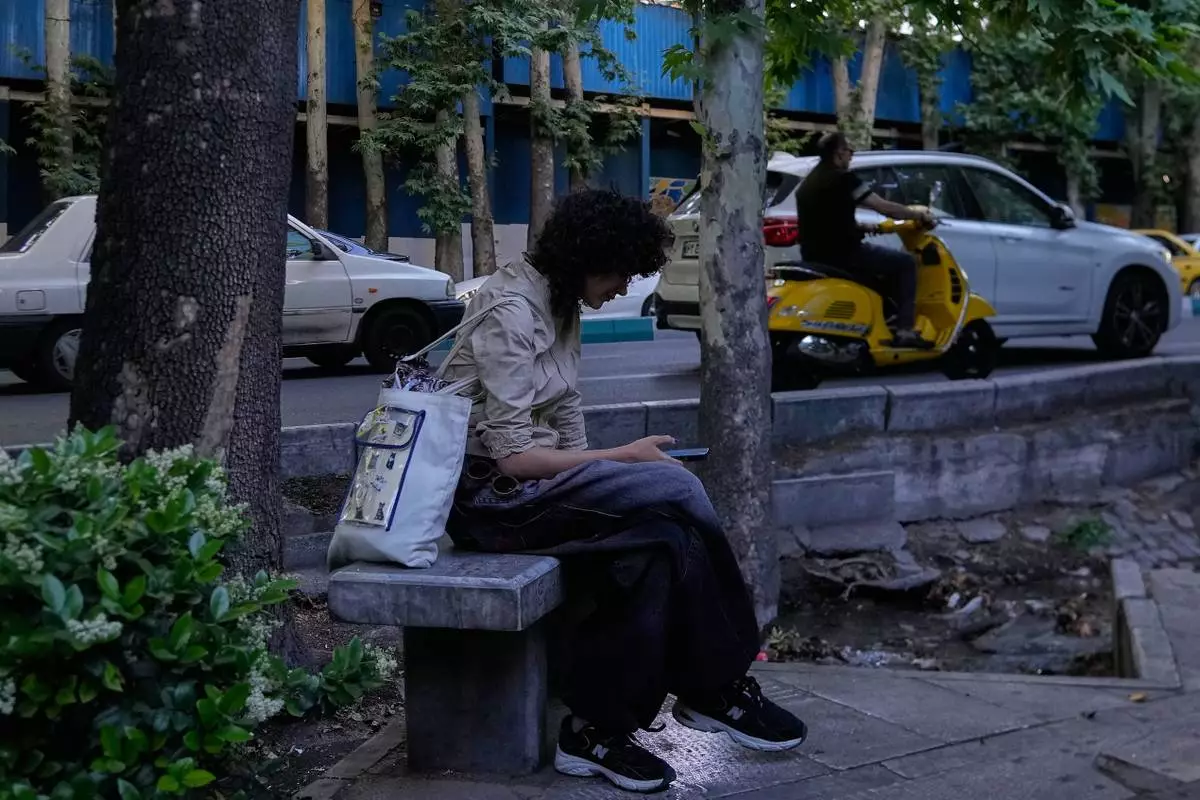
A woman checks her smartphone while sitting on a bench along a sidewalk in northern Tehran, Iran, Tuesday, May 26, 2026. (AP Photo/Vahid Salemi)

A woman checks her smartphone while sitting on a bench along a sidewalk in northern Tehran, Iran, Tuesday, May 26, 2026. (AP Photo/Vahid Salemi)

Recommended Articles