HAVANA (AP) — A blackout hit Havana and the rest of the western half of Cuba on Wednesday, leaving millions of people without power on an island struggling with chronic outages blamed on a crumbling electric grid.
Lázaro Guerra, general director of the Ministry of Energy and Mines, said the massive outage was caused by a failure on a transmission line that connects two major plants.
Click to Gallery
A man collects trash while tourists ride around in a classic American car during a power outage in Havana, Cuba, Wednesday, Dec. 3, 2025. (AP Photo/Ramon Espinosa)
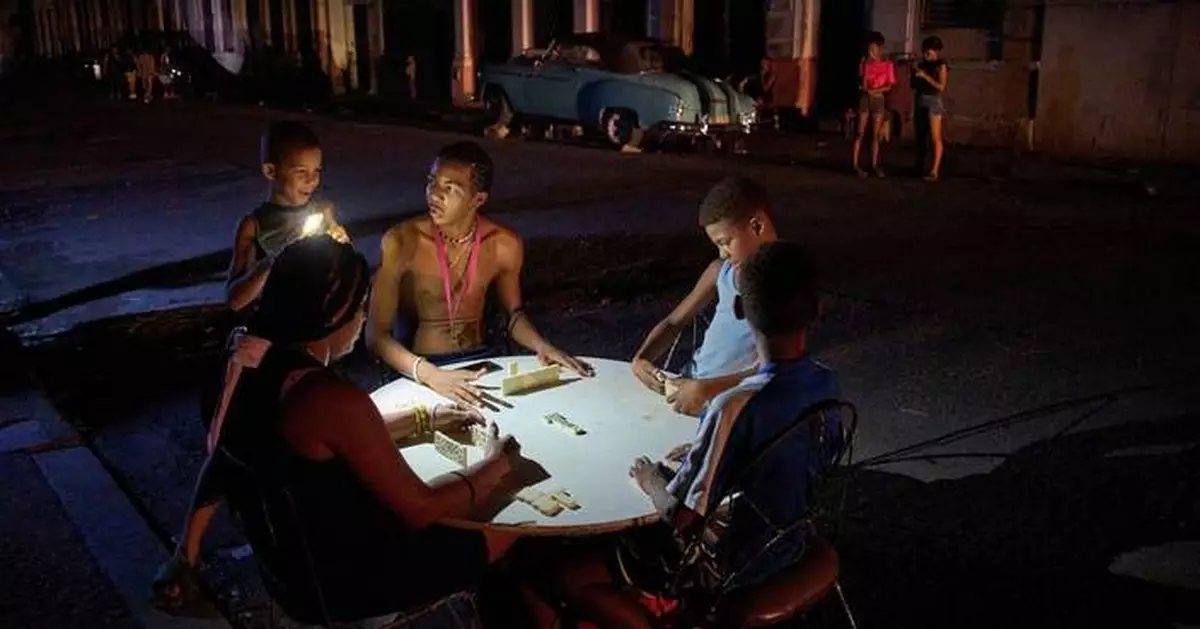
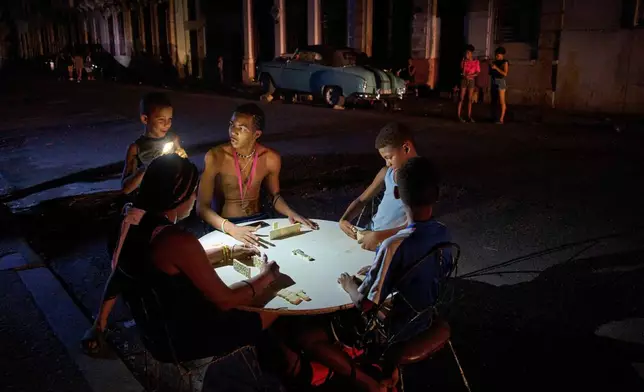
People play dominoes outdoors during a power outage in Havana, Cuba, Wednesday, Dec. 3, 2025. (AP Photo/Ramon Espinosa)
A National Police officer directs traffic due to a power outage in Havana, Cuba, Wednesday, Dec. 3, 2025. (AP Photo/Ramon Espinosa)
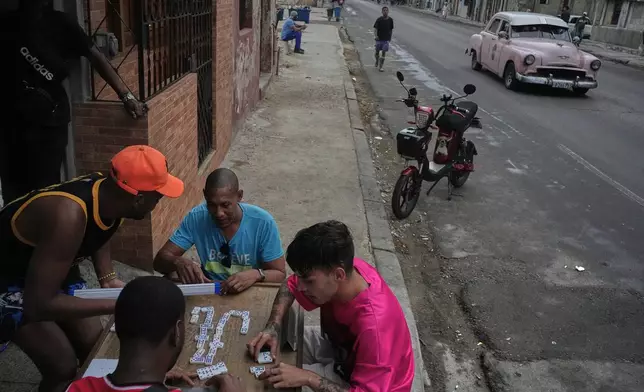
FILE - People play dominoes on the street during a blackout in Havana, Sept. 10, 2025. (AP Photo/Ramon Espinosa, File)
The power grid was operational once again by Wednesday afternoon, but the government warned that the restoration of electricity would not be immediate and that generation deficits persisted.
The nearly 12-hour blackout snarled activities in the capital and beyond.
In Havana, dozens of police officers tried to direct traffic while many students who were already in school were sent back home. Small businesses that have generators resumed their sales, especially of food. Some areas had intermittent internet service, so many residents were left wondering what had happened.
“There’s no connection. No one knows why the power is out. ... They’re not saying anything; it’s all silence,” grumbled Raúl Calderón, an 82-year-old retiree, as he waited to hear official reports on the radio.
The outage followed two days of peak-hour power shortages across the island.
A total blackout hit Cuba in September, with officials blaming aging infrastructure and fuel shortages at power plants. The ongoing outages also affect water service and impact the island’s fragile business sector.
“Things are bad. The power plants are breaking down a lot. I have two children, and food is hard to come by,” said Liubel Quintana, a 47-year-old cafe owner. “It’s very tough everywhere you look.”
Cuba is going through a severe economic crisis that deepened during the coronavirus pandemic, which paralyzed the key tourism sector, and was exacerbated by an increase in U.S. sanctions and a failed internal financial reform to unify the currency.
Meanwhile, thermal power plants have been operating for over 30 years and receive little maintenance, which is expensive for Cuban budgets. The lack of maintenance, coupled with fuel shortages due to either a lack of funds or the fact that ships are targeted by U.S. sanctions, threatens the country’s power generation. The government has implemented a solar park program with Chinese and Vietnamese support, but it is still in its early stages.
The eastern half of Cuba also has been struggling with power outages after Hurricane Melissa slammed into that region in late October. While no fatalities were reported on the island, thousands of Cubans in the eastern region remained without power, water or proper shelter for nearly a month after the storm hit.
Follow AP’s coverage of Latin America and the Caribbean at https://apnews.com/hub/latin-america
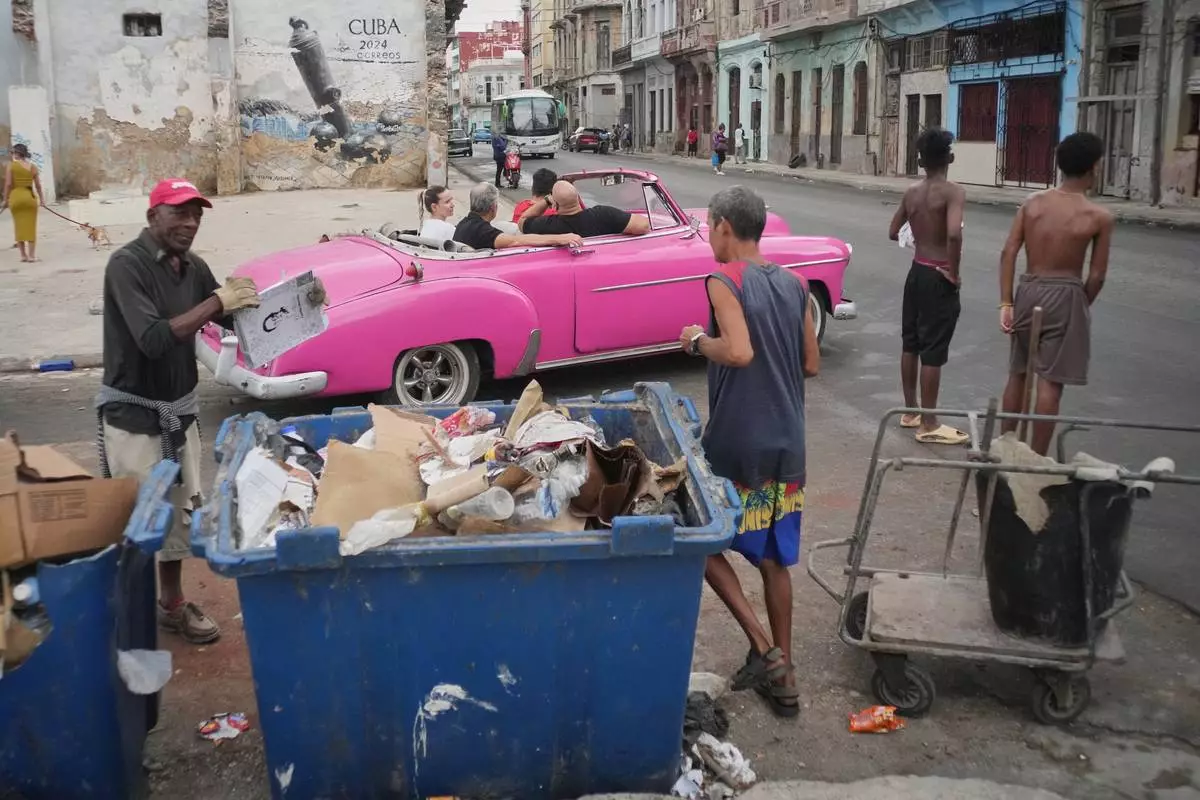
A man collects trash while tourists ride around in a classic American car during a power outage in Havana, Cuba, Wednesday, Dec. 3, 2025. (AP Photo/Ramon Espinosa)
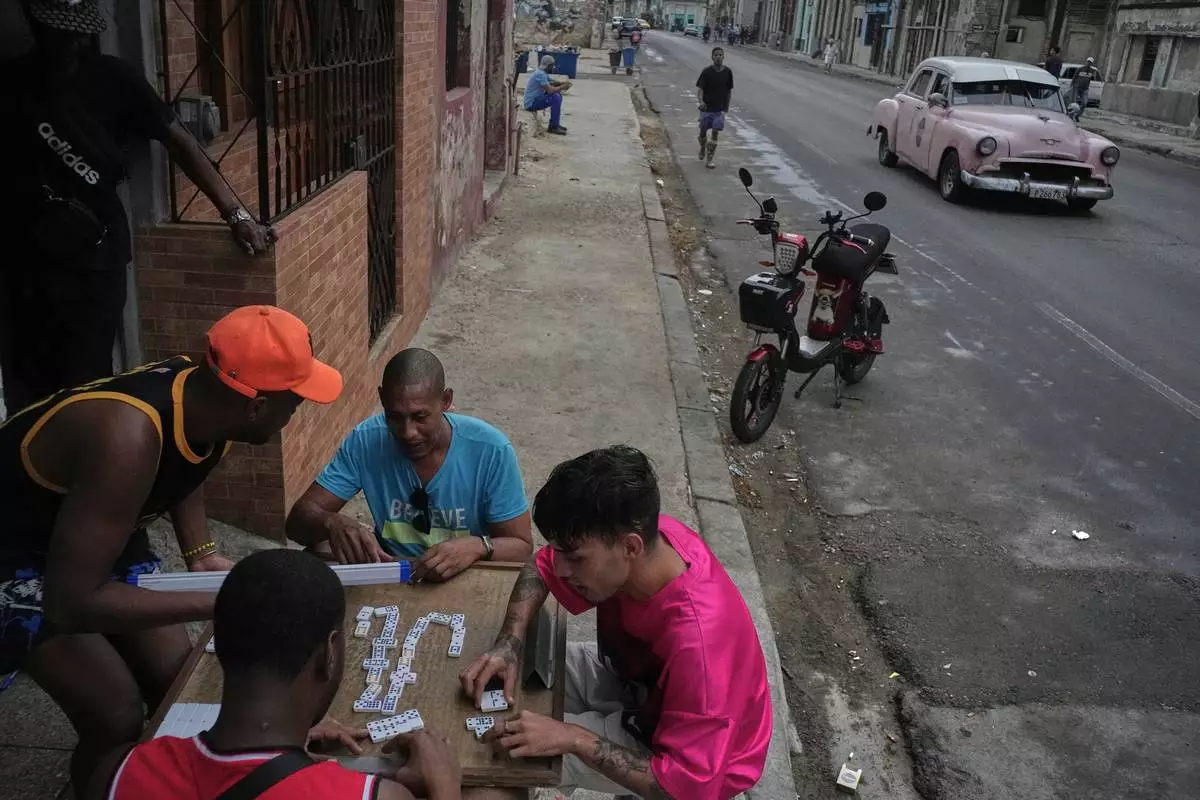
People play dominoes outdoors during a power outage in Havana, Cuba, Wednesday, Dec. 3, 2025. (AP Photo/Ramon Espinosa)

A National Police officer directs traffic due to a power outage in Havana, Cuba, Wednesday, Dec. 3, 2025. (AP Photo/Ramon Espinosa)
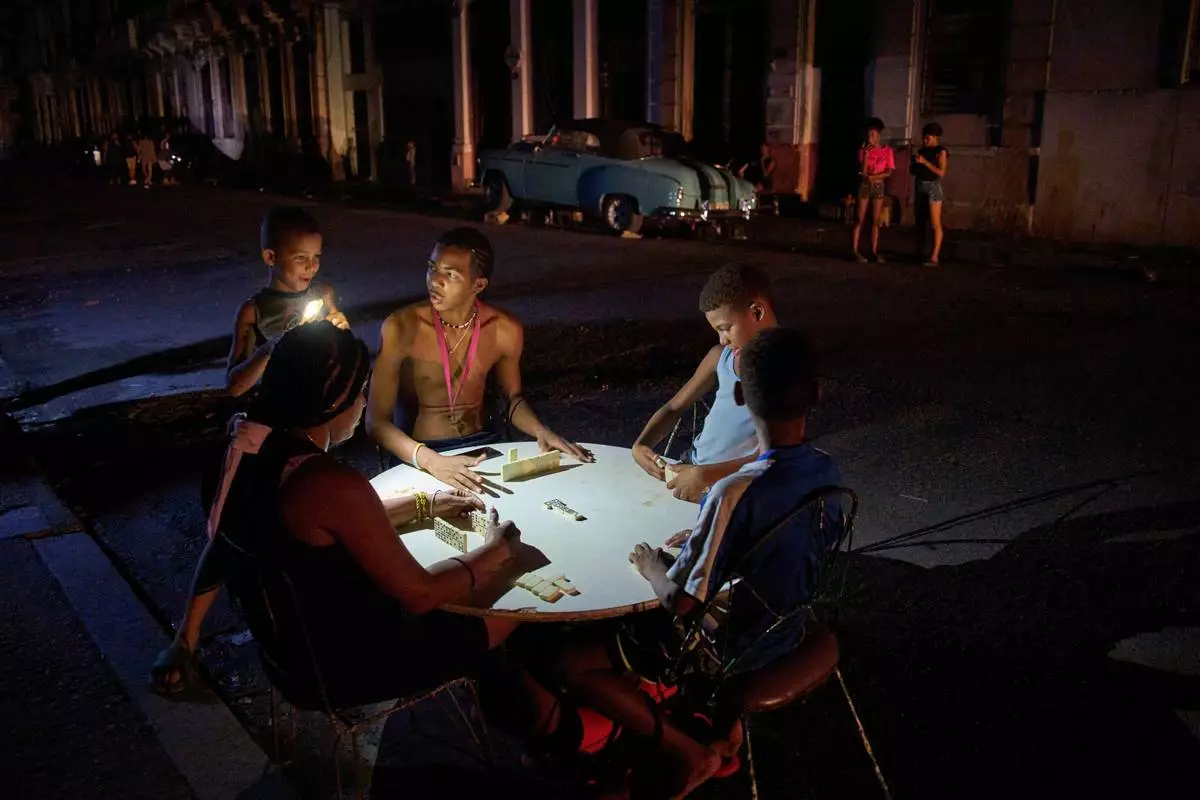
FILE - People play dominoes on the street during a blackout in Havana, Sept. 10, 2025. (AP Photo/Ramon Espinosa, File)
CAIRO (AP) — Iranians began to regain internet access on Wednesday after authorities ended a monthslong shutdown. But users said service was slow and spotty in some areas, with apps like YouTube and Instagram heavily restricted, as they were before the cutoff began during nationwide protests in January.
Authorities justified the outage as a military imperative after the United States and Israel attacked Iran on Feb. 28. Their decision to lift some restrictions this week came as negotiators appeared to be closing in on a more permanent truce. But many Iranians feared access could be cut off again at a moment's notice.
Internet tracking company Netblocks said Iran’s connectivity, which measures the ability of devices to connect to the internet, is at around 86% of capacity from before the cutoff. Internet analysis firm Kentik said internet traffic, which measures the amount of data transferred and is a good illustration of usage, was at around 40%.
Amir Rashidi, an Iranian cybersecurity analyst, said there were still widespread disruptions. “It's too early to say the shutdown is over,” he wrote on X.
Iran’s roughly 90 million people have been cut off from the internet for most of 2026, one of the world’s longest and strictest national shutdowns. Young people with online careers saw their incomes evaporate. Job losses and the closure of online businesses added to the war's steep economic costs.
The cutoff made it difficult for Iranian families to communicate through months of unrest and war. At some points, phone lines were also cut off, though they were later restored.
A woman living in Tehran said that for months she was barely able to speak to her sons living abroad. She couldn't believe authorities had restored access, saying she had assumed they would find some justification to prolong the outage.
A taxi driver said service was restored but weak. He expressed hope it would improve so he could use messaging apps with family and friends. Both spoke on condition of anonymity for security reasons.
Prices spiked during the shutdown, with residents in Tehran at times paying around $7.50 per gigabyte. Prices are back down to around $2.25 for 30 gigabytes, roughly where they were before the protests.
Even then, Iran tightly controlled access to popular social media sites, leading many to rely on virtual private networks, or VPNs. The cost of those workarounds soared during the shutdown, making them unaffordable for many as the economy was battered.
Businesses have started reappearing online, announcing their return with posts on sites like Instagram and Telegram.
A gamer and tech influencer in the central city of Isfahan said the shutdown had caused him to lose a lot of his audience on YouTube and Instagram, where he had spent years building up a large following.
“All my views and interactions are way down. I’ve been erased from the algorithm,” he said in a voice note sent by WhatsApp, adding that his internet connection was still slower than before the shutdown.
“The situation is such that many content producers have had their income reduced to zero, have moved on to other jobs, or have been forced to sell their equipment to survive,” he said. He spoke on condition of anonymity for fear of reprisal.
Iranian authorities first shut down the internet in January during mass anti-government protests that were eventually stamped out in a violent crackdown. Thousands of people were killed and tens of thousands detained.
That cutoff was just starting to ease when the government imposed a complete internet blackout after the start of the war, when U.S. and Israeli strikes killed Iran's supreme leader and other top officials.
The government faced criticism for the prolonged shutdown, which caused even more harm to an economy devastated by inflation, strikes on key industries and a U.S. blockade on Iranian ports.
The internet cutoff cost an estimated $30-40 million daily, with indirect losses likely twice that much, a member of Iran’s Chamber of Commerce, Afshin Kolahi, told a local newspaper last month. About 10 million people have jobs that depend on internet connectivity, according to Communications Minister Sattar Hashemi.
Iranians still had access to a national net, but that has a far narrower reach, and users complained of poor service and heavy censorship. Senior government officials are given SIM cards granting them access to the global internet. Under pressure, the government expanded access to the SIM cards to some professions during the shutdown.
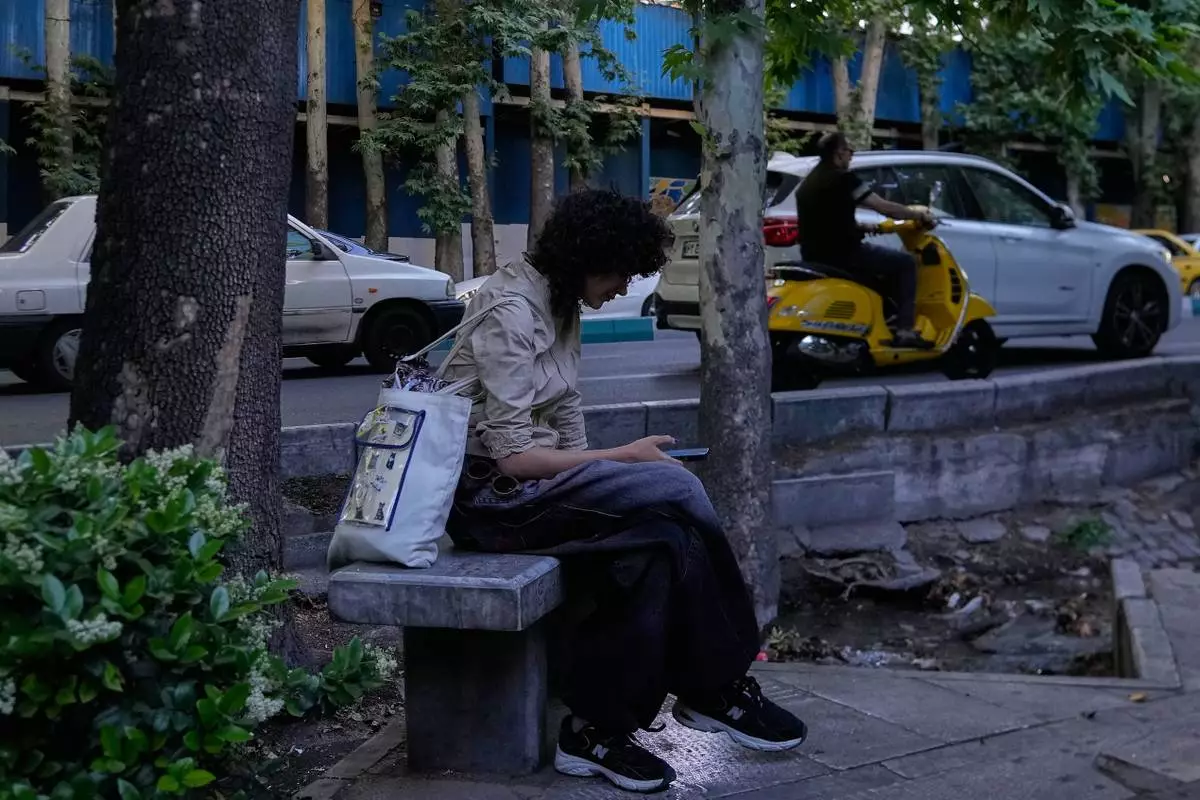
A woman checks her smartphone while sitting on a bench along a sidewalk in northern Tehran, Iran, Tuesday, May 26, 2026. (AP Photo/Vahid Salemi)