LONDON (AP) — European Union regulators on Friday fined X, Elon Musk’s social media platform, 120 million euros ($140 million) for breaches of the bloc’s digital regulations, in a move that risks rekindling tensions with Washington over free speech.
The European Commission issued its decision following an investigation it opened two years ago into X under the 27-nation bloc’s Digital Services Act, also known as the DSA.
It's the first time that the EU has issued a so-called non-compliance decision since rolling out the DSA. The sweeping rulebook requires platforms to take more responsibility for protecting European users and cleaning up harmful or illegal content and products on their sites, under threat of hefty fines.
The Commission, the bloc's executive arm, said it was punishing X because of three different breaches of the DSA’s transparency requirements. The decision could rile President Donald Trump, whose administration has lashed out at digital regulations, complained that Brussels was targeting U.S. tech companies and vowed to retaliate.
U.S. Secretary of State Marco Rubio posted on his X account that the Commission's fine was akin to an attack on the American people. Musk later agreed with Rubio's sentiment.
“The European Commission’s $140 million fine isn’t just an attack on @X, it’s an attack on all American tech platforms and the American people by foreign governments,” Rubio wrote. “The days of censoring Americans online are over.”
Vice President JD Vance, posting on X ahead of the decision, accused the Commission of seeking to fine X “for not engaging in censorship.”
“The EU should be supporting free speech not attacking American companies over garbage,” he wrote.
Officials denied the rules were intended to muzzle Big Tech companies. The Commission is “not targeting anyone, not targeting any company, not targeting any jurisdictions based on their color or their country of origin,” spokesman Thomas Regnier told a regular briefing in Brussels. “Absolutely not. This is based on a process, democratic process.”
X did not respond immediately to an email request for comment.
EU regulators had already outlined their accusations in mid-2024 when they released preliminary findings of their investigation into X.
Regulators said X’s blue checkmarks broke the rules because on “deceptive design practices” and could expose users to scams and manipulation.
Before Musk acquired X, when it was previously known as Twitter, the checkmarks mirrored verification badges common on social media and were largely reserved for celebrities, politicians and other influential accounts, such as Beyonce, Pope Francis, writer Neil Gaiman and rapper Lil Nas X.
After he bought it in 2022, the site started issuing the badges to anyone who wanted to pay $8 per month.
That means X does not meaningfully verify who's behind the account, “making it difficult for users to judge the authenticity of accounts and content they engage with,” the Commission said in its announcement.
X also fell short of the transparency requirements for its ad database, regulators said.
Platforms in the EU are required to provide a database of all the digital advertisements they have carried, with details such as who paid for them and the intended audience, to help researches detect scams, fake ads and coordinated influence campaigns. But X's database, the Commission said, is undermined by design features and access barriers such as "excessive delays in processing.”
Regulators also said X also puts up “unnecessary barriers” for researchers trying to access public data, which stymies research into systemic risks that European users face.
“Deceiving users with blue checkmarks, obscuring information on ads and shutting out researchers have no place online in the EU. The DSA protects users," Henna Virkkunen, the EU's executive vice-president for tech sovereignty, security and democracy, said in a prepared statement.
The Commission also wrapped up a separate DSA case Friday involving TikTok's ad database after the video-sharing platform promised to make changes to ensure full transparency.
AP Writer Lorne Cook in Brussels contributed to this report.

FILE - Workers install lighting on an "X" sign atop the company headquarters in downtown San Francisco, July 28, 2023. (AP Photo/Noah Berger, File)
President Donald Trump said U.S. forces on Friday “obliterated” targets on Iran’s Kharg Island, which is home to the primary terminal that handles the country’s oil exports. The speaker of the Iranian Parliament had warned that such strikes would provoke a new level of retaliation.
Meanwhile, an American official said 2,500 more Marines and an amphibious assault ship are being sent to the Middle East nearly two weeks into the war with the Islamic Republic.
Iran has continued to launch widespread missile and drone attacks on Israel and neighboring Gulf states, and has effectively closed the Strait of Hormuz, through which a fifth of the world’s traded oil passes, even as U.S. and Israeli warplanes pummel military and other targets across Iran.
The moves appear to signal the two-week-old war is not nearing an end.
Here is the latest:
An airstrike hit a house in Iraq’s capital, Baghdad, early Saturday, killing at least one person, according to a security official and another affiliated with the Iranian-backed armed groups in the country.
The strike in Baghdad’s Karrada district also wounded two people, they said, speaking on condition of anonymity because they weren’t authorized to speak to the press.
In a statement, the Iraqi military condemned the strike as “a blatant violation of all humanitarian values and a disregard for international conventions.”
The strike happened before a missile attack hit the U.S. Embassy compound in Baghdad.
—
By Qassim Abdul-Zahra
Iran’s semiofficial Fars news agency reported at least 15 explosions with thick smoke rising over Kharg Island, earlier hit by U.S. strikes.
It said the strikes targeted an air defense facility, a naval base, the airport control tower, and an offshore oil company’s helicopter hangar, adding no oil infrastructure was damaged in the attack.
Iran’s joint military command reiterated its threat to attack U.S.-linked oil and energy facilities in the region if the Islamic Republic’s oil infrastructure were hit.
Ebrahim Zolfaghari, spokesperson for the Khatam al-Anbiya Central Headquarters made the threat early Saturday, according to Iran’s state-run television.
He warned that Iran will target “all oil, economic, and energy infrastructures belonging to oil companies across the region that have American shares or cooperate with America” if energy and economic infrastructure in Iran is attacked.
There was no immediate comment from the U.S. Embassy in Baghdad after a strike hit it’s compound in the Iraqi capital.
On Friday, the embassy renewed its Level 4 security alert for Iraq, warning that Iran and Iran-aligned militia groups have previously carried out attacks against U.S. citizens, interests and infrastructure, and “may continue to target them.”
The sprawling embassy complex, one of the largest U.S. diplomatic facilities in the world, has been repeatedly targeted by rockets and drones in the past by Iran-aligned militias.
The groups have recently stepped up attacks on bases hosting U.S. and coalition troops.
A drone strike in northern Iraq on Thursday killed a French soldier and wounded several others stationed there as part of an international coalition.
A missile struck a helipad inside the U.S. Embassy in Baghdad, two security officials said.
The projectile landed within the embassy’s boundaries after the Green Zone, the heavily fortified district in central Baghdad that houses Iraqi government institutions and foreign embassies, added the security officials, who spoke on the condition of anonymity as they are not authorized to speak with the press.
Video obtained by The Associated Press showed smoke billowing from inside the compound.
—
By Qassim Abdul-Zahra
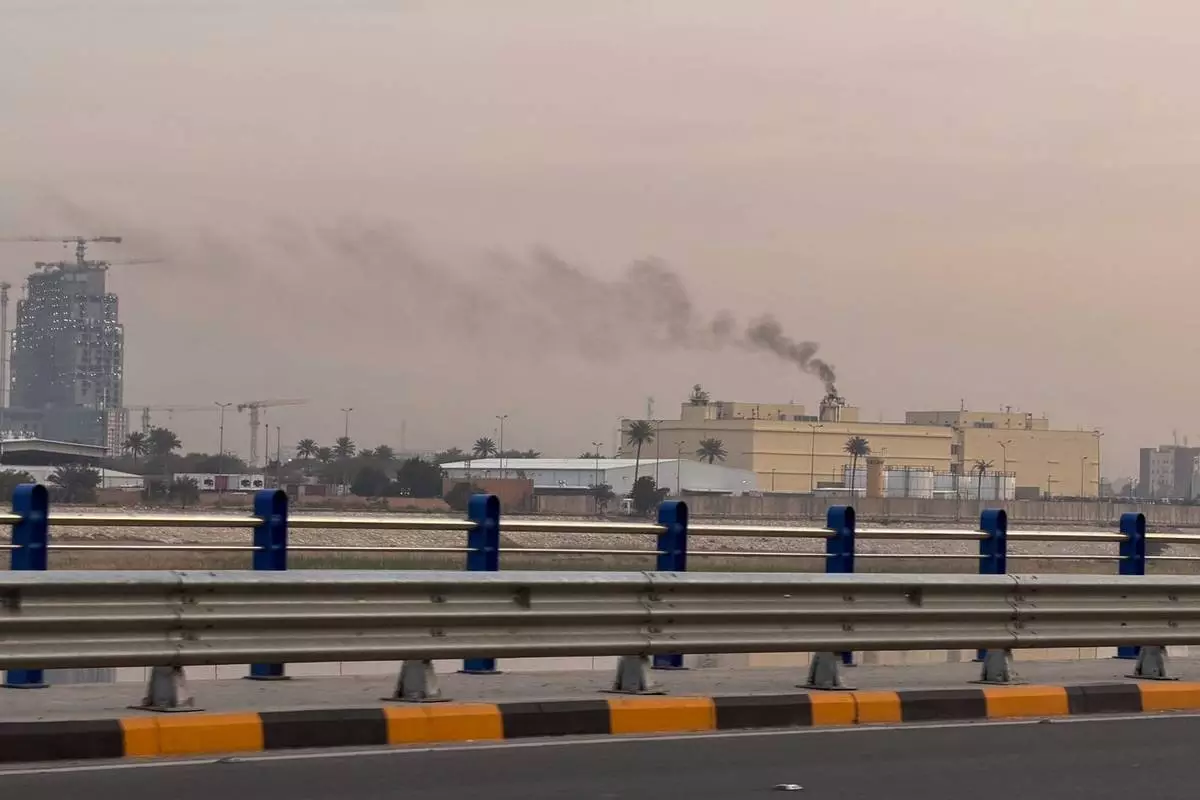
Smoke rises from the U.S. embassy building in Baghdad, Iraq, Saturday, March 14, 2026. (AP Photo/Ali Jabar)
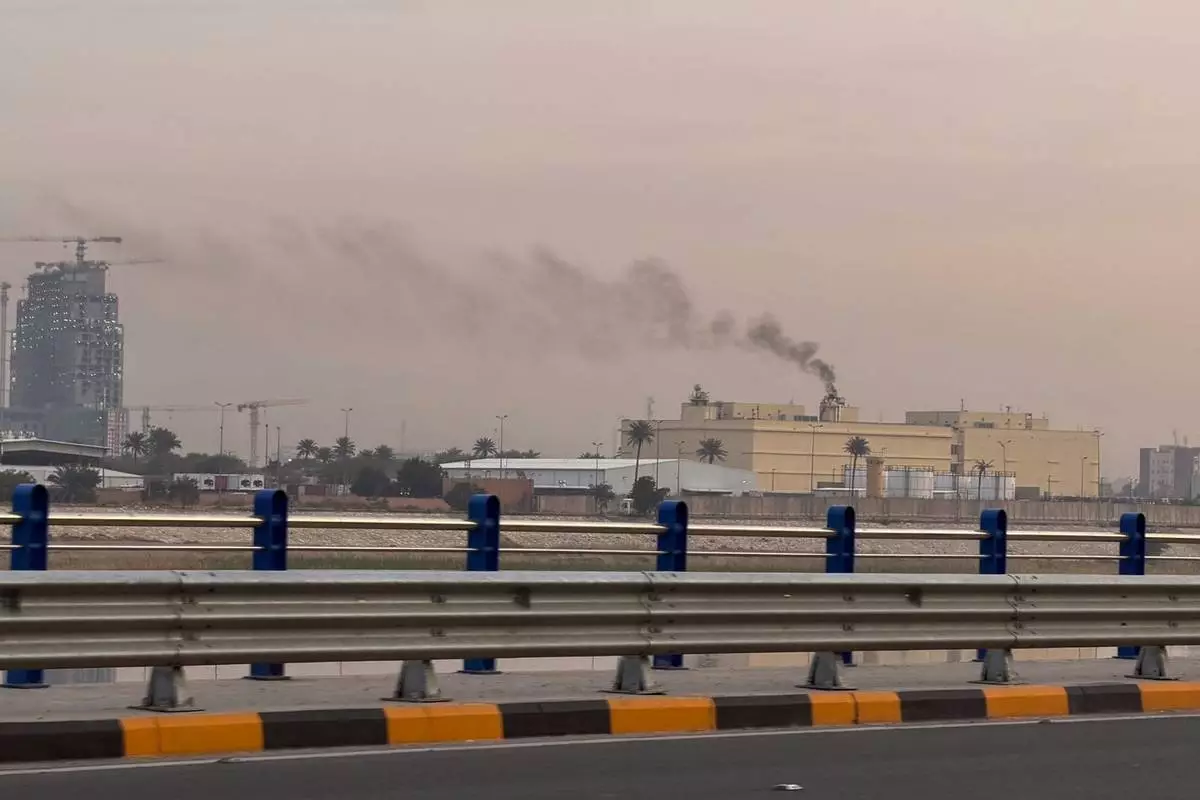
Smoke rises from the U.S. embassy building in Baghdad, Iraq, Saturday, March 14, 2026. (AP Photo/Ali Jabar)
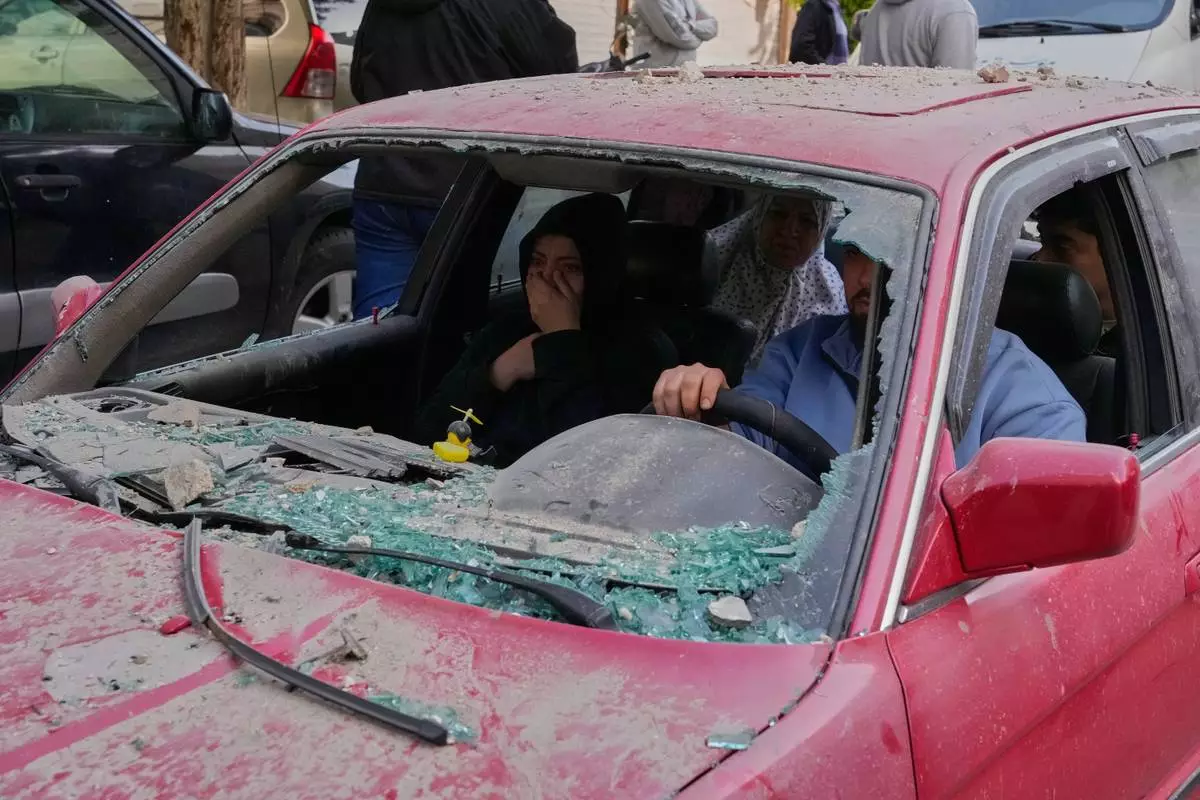
Family members ride in a damaged car, as they flee the site of an Israeli airstrike that hit an apartment building in the southern port city of Sidon, Lebanon, Friday, March 13, 2026. (AP Photo/Mohammed Zaatari)
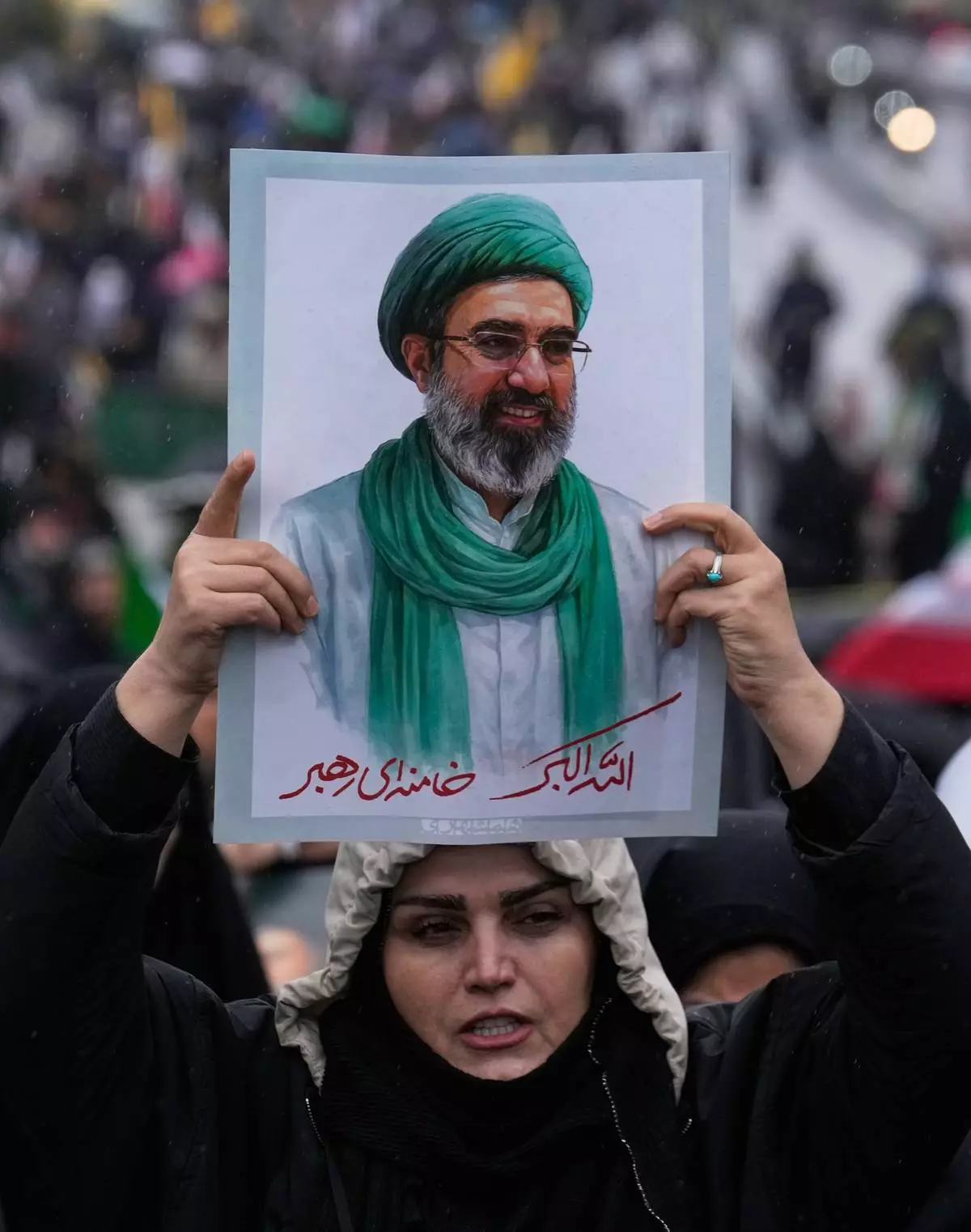
A woman holds up a poster of the Iranian Supreme Leader Ayatollah Mojtaba Khamenei during the annual anti-Israeli Quds Day, or Jerusalem Day, rally in support of Palestinians in Tehran, Iran, Friday, March 13, 2026. (AP Photo/Vahid Salemi)
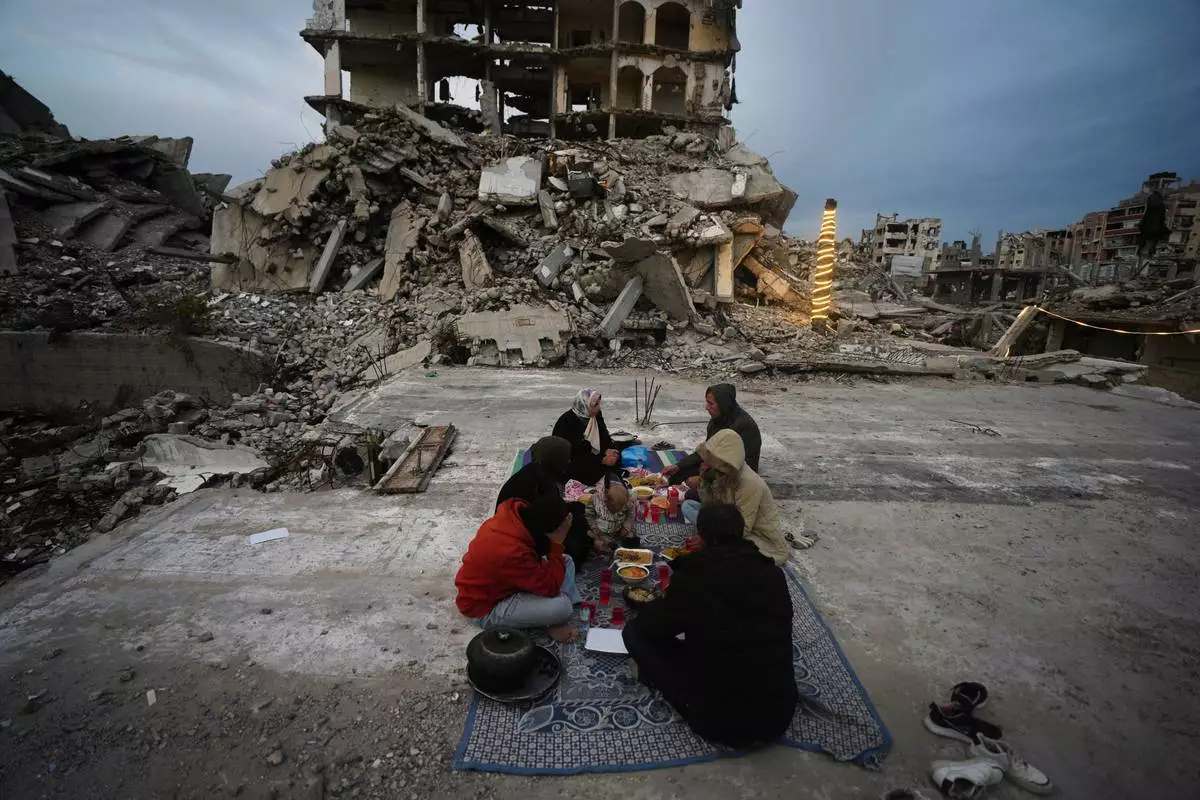
Members of the Al-Najar family break their fast during the Muslim holy month of Ramadan amid the rubble of destroyed buildings in Gaza City Friday, March 13, 2026. (AP Photo/Jehad Alshrafi)
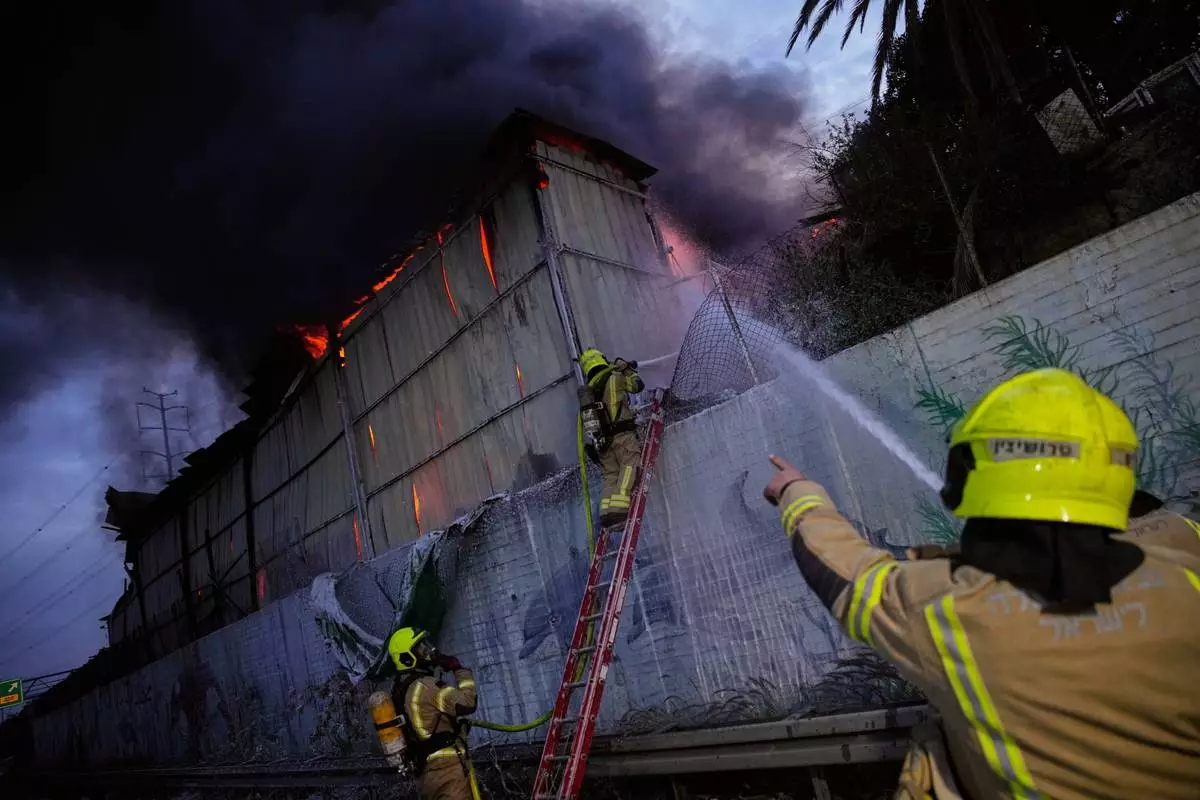
Firefighters try to extinguish flames at the site of a direct hit by an Iranian missile strike in Holon, central Israel, Friday, March 13, 2026. (AP Photo/Ohad Zwigenberg)
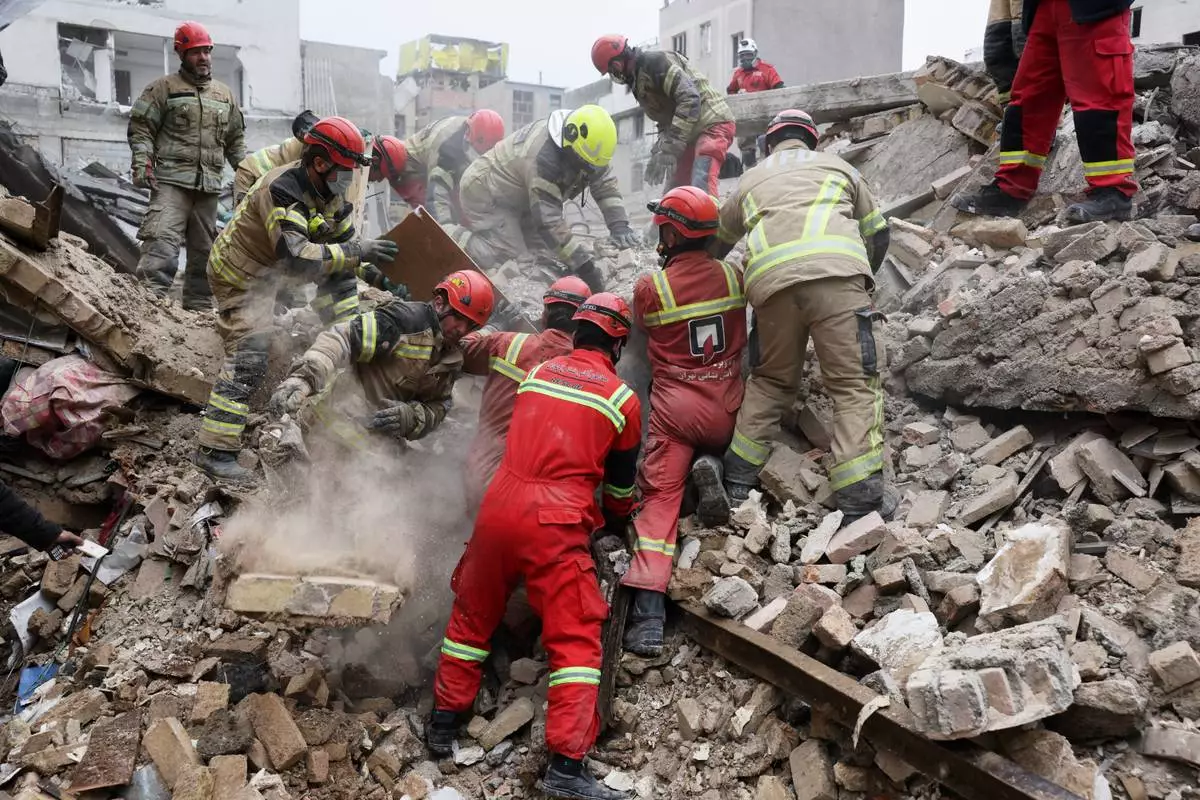
Rescue workers search for survivors in the rubble after a strike in southern Tehran, Iran, Friday, March 13, 2026. (AP Photo/Sajjad Safari)