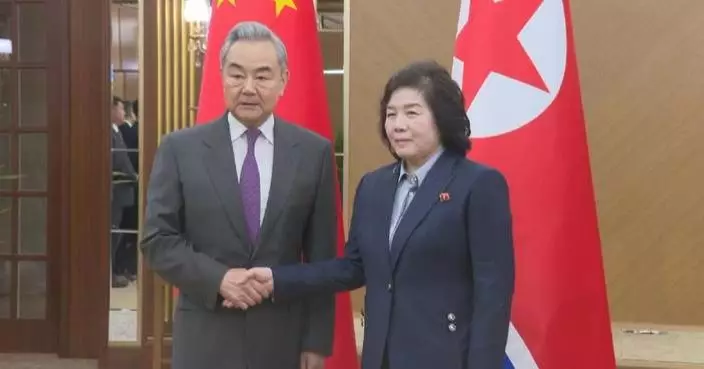
Fueled by facilitation policies, China's inbound tourism market is witnessing robust growth this year.
As it is easier for international visitors to combine immersive exploration of the country's landscapes and culture with convenient shopping experience, traveling in China and shopping in China have become key drivers to injecting fresh energy into the tourism economy.
Click to Gallery
Inbound tourism in China soars, fueled by more facilitation policies
Inbound tourism in China soars, fueled by more facilitation policies
Inbound tourism in China soars, fueled by more facilitation policies
Inbound tourism in China soars, fueled by more facilitation policies
Data from online travel platforms shows that since the beginning of this year, inbound tourist numbers to traditional hot destinations like Beijing, Shanghai, and Chengdu have all increased by over 90 percent.
Spurred by initiatives like "China Travel with Chinese Films", cultural experience tours and in-depth tours have become new trends, with international travelers venturing deeper into more Chinese cities and rural areas.
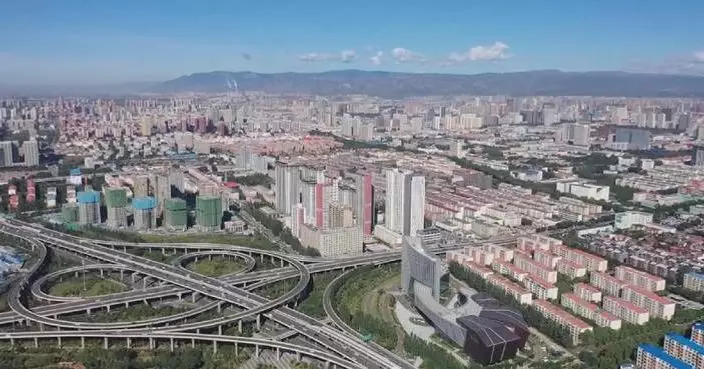
This winter season, cities including Harbin, Changchun in northeast China, and Yining in northwest China's Xinjiang Uygur Autonomous Region have emerged as popular inbound destinations.
Since its opening on November 17, China Snow Town, the most renowned ice-and-snow tourism destination in northeast China's Heilongjiang Province, has welcomed over 3,700 foreign visitors.
To meet the demand for deeper experiences, regions across the country are leveraging facilitative policies like transit visa exemptions to craft premium inbound tourism routes.
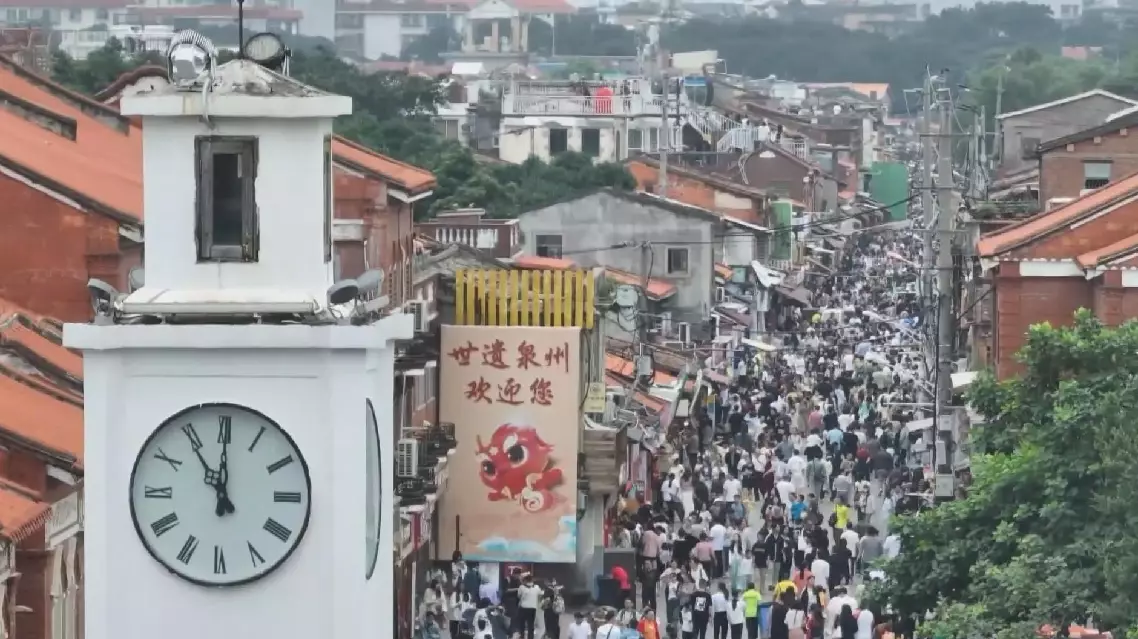
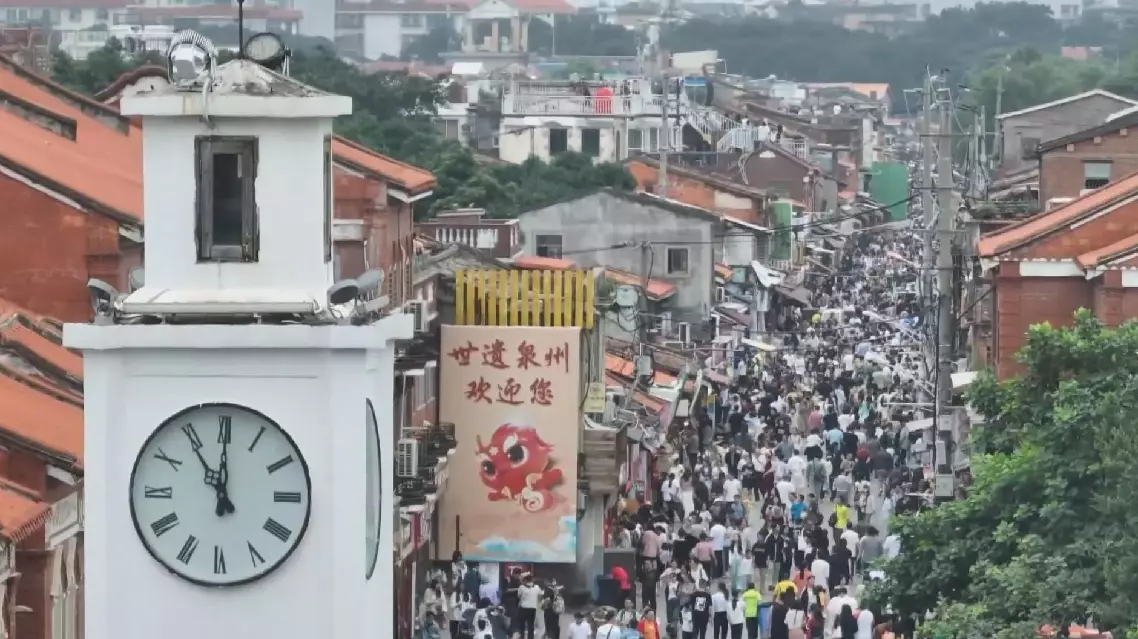
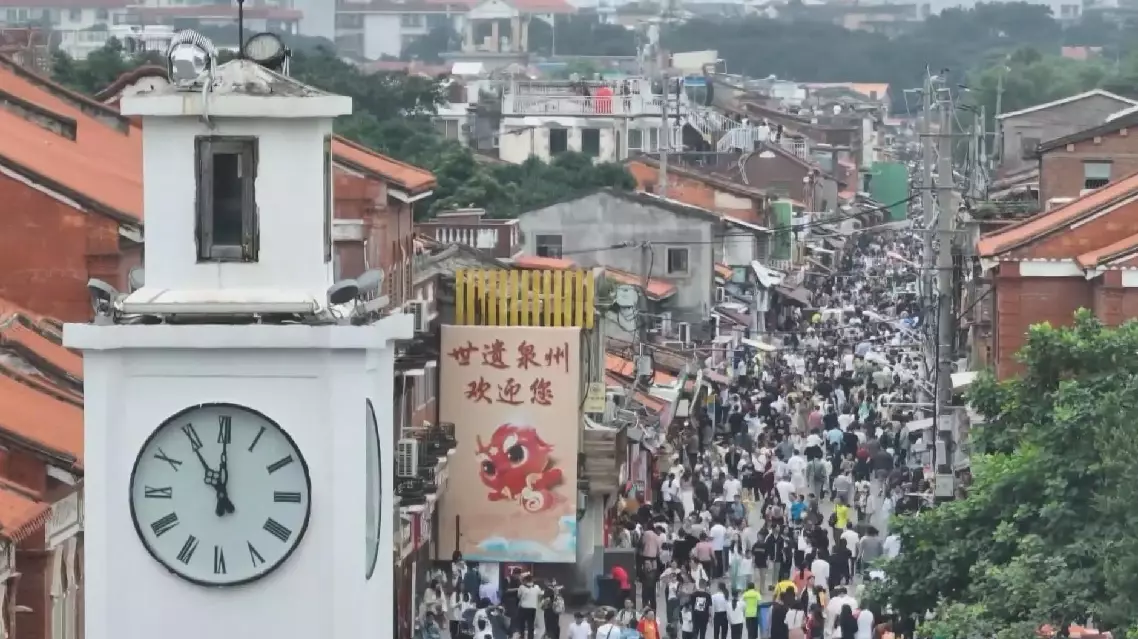
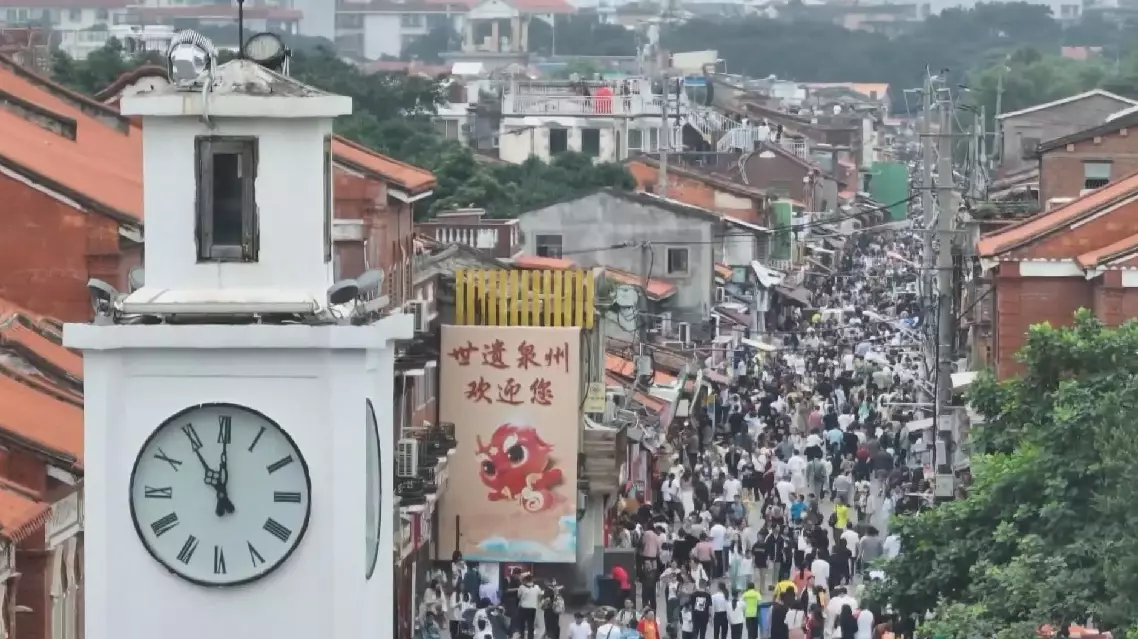
These routes include the multi-province "panda express" that covers attractions like the Sanxingdui Museum in southwest China's Sichuan Province and the thousand-household Miao village in the southwestern province of Guizhou. One of the routes also leads to themed World Heritage explorations across cities in east China's Fujian Province.
"This is my first time actually in the old town. (It) looks really nice. The old town looks really cute, really nice. I'm enjoying it a lot. Possibly the food is nice. I'm enjoying the area and the vibe. There's so many cities to check out in China, so it's not necessary (to rush). I'm going to come here again, because there's a lot to explore, to be honest," said a tourist from Poland.
As "traveling in China" remains popular, "shopping in China" is becoming a new surge for inbound tourism.
In Hangzhou City, east China's Zhejiang Province, the "one-click" tax refund service upon departure allows foreign tourists to complete their tax refund in as little as two minutes simply by tapping their phones.
This year, the facilitation of departure tax refunds has been comprehensively enhanced, with the "immediate tax refund upon purchase" service being promoted nationwide.
"Before, you need to go to the airport, but now we can just straight away do in the mall. I'm enjoying that shopping here. So I still continue to get my item, my shopping," said a tourist from Malaysia.
Statistics from the State Taxation Administration indicate that in the first nine months of this year, the number of overseas visitors processing departure tax refunds increased by 229.8 percent year on year.
Comprehensive facilitation measures covering payments, visas, and more are continuously stimulating market vitality.
"About one-third of the budget of international tourists is spent on shopping. Today, electronic products have emerged as popular choices among inbound tourist shoppers. The shift from 'traveling in China' to 'shopping in China' reflects a diversification of shopping options and a broader range of consumption levels. I believe the combined effect will lead to a new historical record for China's inbound tourism this year," said Dai Bin, president of the China Tourism Academy.
Inbound tourism in China soars, fueled by more facilitation policies
Inbound tourism in China soars, fueled by more facilitation policies
Inbound tourism in China soars, fueled by more facilitation policies
Inbound tourism in China soars, fueled by more facilitation policies