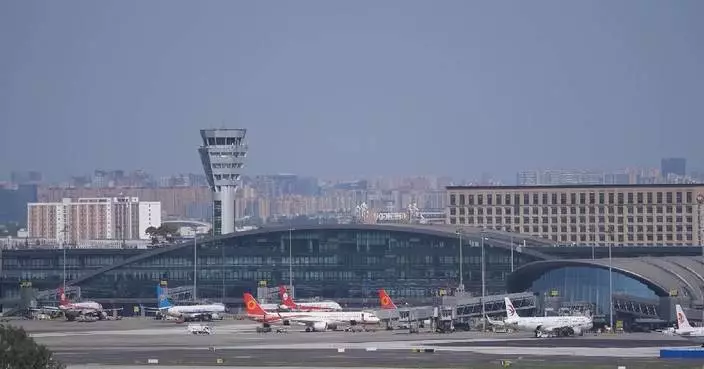
The overlapping Qingming Festival and public holiday in China's Hong Kong from April 3 to 7 brought a surge in cross-border traveling between the special administrative region and neighboring Shenzhen City in the southern Guangdong Province on the mainland.
Data released by Shenzhen's rail authorities showed that from April 3 to 7, the Guangzhou-Shenzhen-Hong Kong Express Rail Link saw 642,000 cross-border passenger trips, up 22.5 percent year on year. And on April 3, 86,000 mainland-bound passenger trips were made from Hong Kong via the rail link, a new single-day record.
During the five-day holiday period, Shenzhen government rolled out a wide range of cultural programs for tourists, including a Guangdong-Hong Kong-Macao Greater Bay Area flower show and special performances such as stand-up comedies and classical music concerts.
Hong Kong tourists enjoyed seamlessly connected experiences -- they can watch the performances right after border inspections, then begin shopping in Shenzhen's commercial areas soon after the shows, thanks to the "one-hour living circle" of the Greater Bay Area facilitated by convenient transportation, customs clearances and cross-border payments.
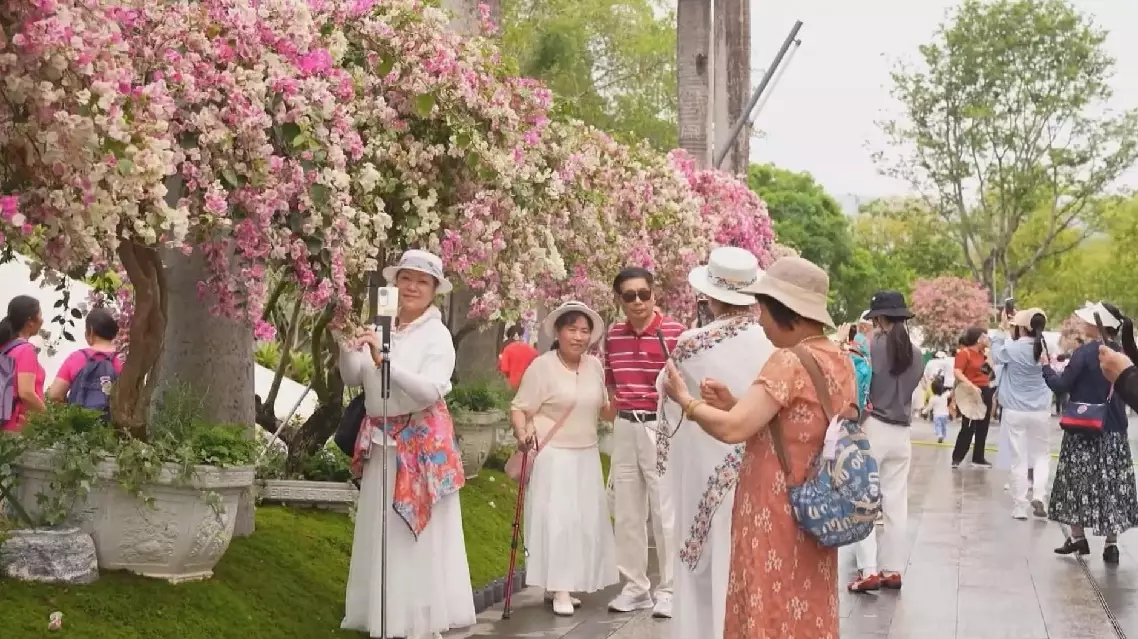
Overlapping holidays see travel surge between Shenzhen, Hong Kong
The 26th China International Fair for Investment and Trade (CIFIT) opened in the coastal city of Xiamen in east China's Fujian Province on Tuesday, drawing international exhibitors and delegations to connect global investors with key Chinese markets.
The four-day fair has brought together over 1,200 government agencies and business delegations from 129 countries and regions, which includes 48 of the world's top 50 economies by GDP, while 30 international organizations are also participating.
This year's event marks the biggest ever edition of the long-running trade fair, with the total exhibition space expanding to some 200,000 square meters. It also features 14 specialized exhibition zones, showcasing investment opportunities in various promising sectors including China's "new quality productive forces", an economic strategy which stresses high-tech innovation as a new growth driver, as well as the "Silk Road Maritime" initiative, which looks to resurrect ancient sea trading routes.
Addressing the opening ceremony, Zhou Zuyi, secretary of the Fujian Provincial Committee of the Communist Party of China, said Fujian will step up efforts to establish new mechanisms for a more open economy.
"We will keep expanding institutional opening-up and actively aligning with high-standard global trade rules. We're seizing the opportunity from the pilot program to expand services trade. We're also upgrading our free trade zones, focusing on tech innovation, green development, and digital economy. All to build a more open economy, faster," Zhou said.
This year's edition has also introduced a "dual guest countries of honor" mechanism for the first time, with Finland and Saudi Arabia jointly assuming the role. Two Chinese guest provinces have also been named, with the southern Guangdong and the northwestern Qinghai Province given the honor. The fair is structured around three core thematic sections, namely "Invest in China," "China's Outbound Investment," and "International Investment," and will also see more than 40 key investment promotion events, along with nearly 100 supporting activities being held.
Speaking at the opening ceremony, Pedro Manuel Moreno, the Acting Secretary General of the United Nations Conference on Trade and Development (UNCTAD), emphasized that increasing investment in key strategic fields is essential, saying the trade fair offers a valuable platform for exchanges.
"Strategic sectors, like AI, semiconductors, critical minerals, or clean energy now account for almost half of the value of all new investment projects. This is why I believe gatherings like CIFIT matter more than ever, because the central challenge today is no longer only to mobilize more capital. It is to connect capital to the right projects, in the right places," he said.
First launched in 1997, the CIFIT, organized by the Chinese Ministry of Commerce, has become an important platform for boosting investment and facilitating global development.
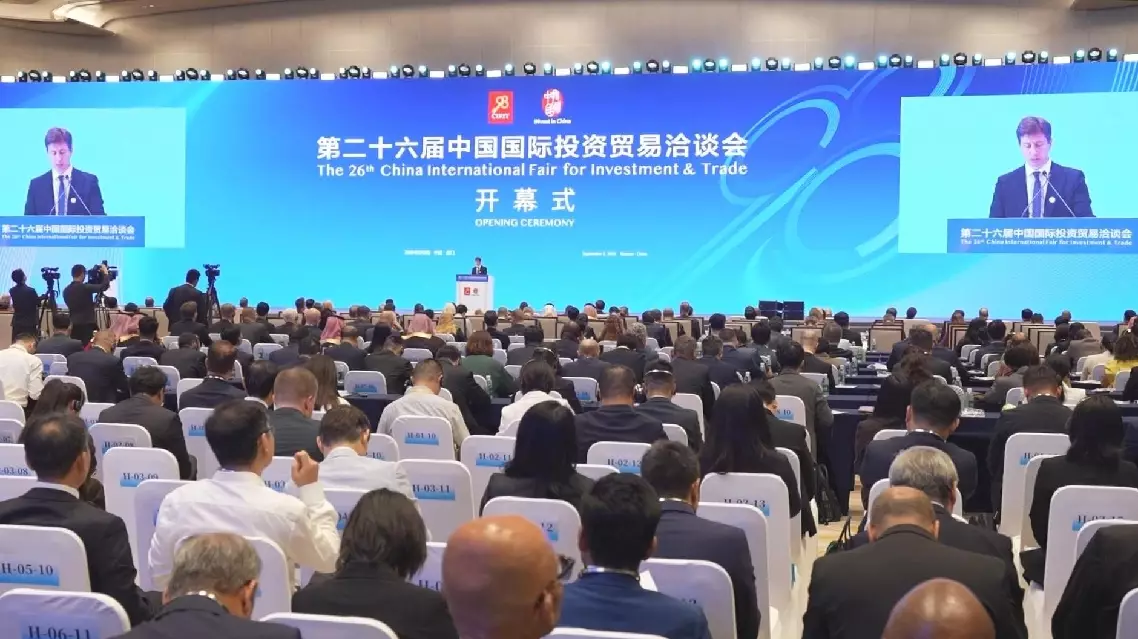
Global investors, business leaders gather in Xiamen for int'l investment, trade fair