CONCORD, N.H. (AP) — A Brazilian woman with family ties to White House press secretary Karoline Leavitt will be released from U.S. Immigration and Customs Enforcement custody while she fights potential deportation, an immigration judge ruled Monday.
Bruna Ferreira, 33, a longtime Massachusetts resident, was previously engaged to Leavitt’s brother, Michael. She was driving to pick up their 11-year-old son in New Hampshire when she was arrested by ICE agents in Revere, Massachusetts, on Nov. 12.
Ferreira later was moved to a detention facility in Louisiana, where an immigration judge ordered that she be released on $1,500 bond, her attorney Todd Pomerleau said.
“We argued that she wasn’t a danger or a flight risk,” he said in a text message. “The government stipulated to our argument and never once argued that she was criminal illegal alien and waived appeal.”
A Department of Homeland Security spokesperson in an email Monday called Ferreira a “criminal illegal alien” and said she had been arrested for battery, an allegation her attorney denied.
“She will have periodic mandatory check-ins with ICE law enforcement to ensure she is abiding by the terms of her release,” the spokesperson said. “The Department of Homeland Security will continue to work to remove all aliens illegally present in the country as quickly as possible.”
Pomerleau said his client came to the U.S. as a toddler and later enrolled in the Deferred Action for Childhood Arrivals program, the Obama-era policy that shields immigrants who were brought to the U.S. as children. He said she was in the process of applying for a green card.
Karoline Leavitt grew up in New Hampshire, and made an unsuccessful run for Congress from the state in 2022 before becoming Trump’s spokesperson for his 2024 campaign and later joining him at the White House.
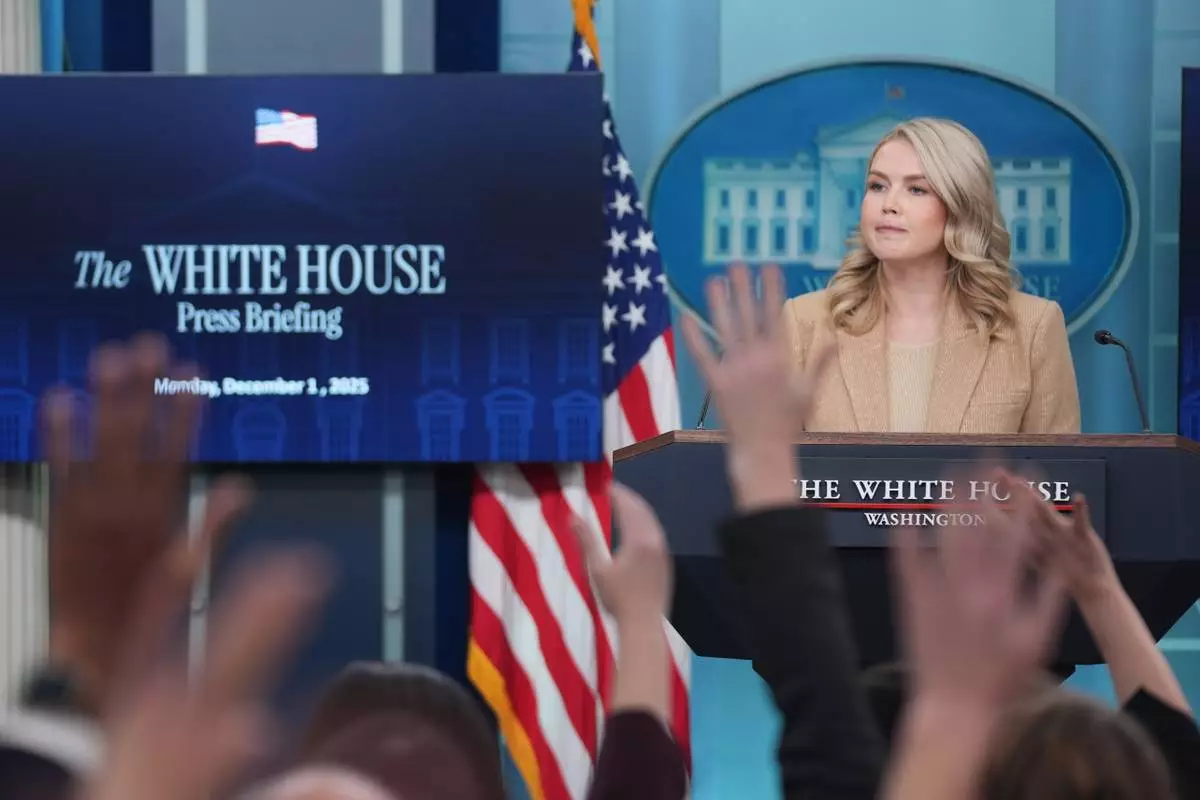
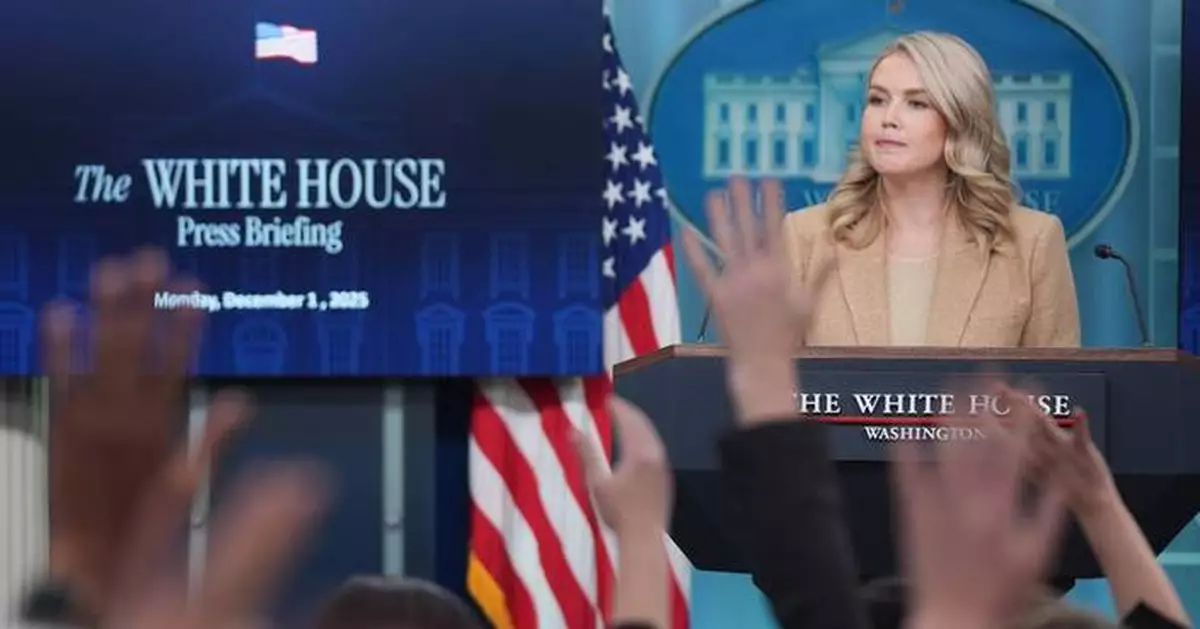
White House press secretary Karoline Leavitt speaks during a press briefing at the White House, Monday, Dec. 1, 2025, in Washington. (AP Photo/Evan Vucci)
UNITED NATIONS (AP) — U.S. first lady Melania Trump presided over a U.N. Security Council meeting on Monday focusing on children in conflict, one of her signature issues, and acknowledged she was doing so in “challenging times” as the United States has joined Israel in attacking Iran.
“The U.S. stands with all of the children throughout the world," she said, speaking generally and not specifically about the new war in the Middle East. "I hope soon peace will be yours.”
Hanging over Monday's meeting was what Iranian state media says was an airstrike that hit a girls' school in southern Iran, killing at least 165 people and wounding dozens more. The Israeli military said it was not aware of strikes in the area. The U.S. military said it was looking into the reports.
Shortly before Monday's session began, Iran's ambassador to the U.N., Amir Saeid Iravani, said it was “deeply shameful and hypocritical” for the U.S. to convene a meeting on protecting children during conflict while launching airstrikes on Iranian cities.
“For the United States, ‘protecting children’ and ‘maintaining international peace and security’ clearly mean something very different from what the U.N. Charter provides," he told reporters.
U.N. political chief Rosemary DiCarlo said the world body was aware of the reports of the deaths at the girls' school. She noted the impact the U.S.-Israeli strikes and the Iranian retaliatory strikes was having on children across the region.
“We have been reminded of this truth over the last two days," she told the Security Council. "Schools in Israel, the United Arab Emirates, Qatar, Bahrain and Oman have closed and moved to remote learning owing to the ongoing military operations in the region,” she said.
Melania Trump was the first spouse of a world leader to take the president’s seat at the United Nations’ most powerful body, which is charged with ensuring global peace and security, according to the U.N.
The wife of President Donald Trump was given the opportunity as the United States takes over the council presidency for the month of March. In the past, presidents, prime ministers and foreign ministers have often wielded the gavel.
Speaker after speaker on Monday said it was important to close the digital divide between developed and developing countries so all children have access to 21st century technology.
Melania Trump strongly advocated for all children to be connected to artificial intelligence to help them learn about the beliefs, customs and history of others. “AI is democratizing knowledge which was once confined to university libraries," she said.
Drawing a connection between knowledge and peace, she urged members of the Security Council to “safeguard learning."
“Enduring peace will be achieved when knowledge and understanding are fully valued within all our societies,” she said.
While the first lady spoke of a need to protect children and their access to education and technology in conflict, her husband's administration has cut funding for a number of U.N. agencies and other international organizations that address these issues.
Among them is the U.N. Office of the Special Representative of the Secretary General for Children in Armed Conflict, which provides detailed reporting on the impact that conflicts have on children around the world. This information can help trigger action to prevent rape and violence against women and children. President Trump withdrew U.S. support in January.
The U.S. has also dramatically cut funding for the U.N. children’s agency, UNICEF, and has withdrawn from the U.N. Educational, Scientific and Cultural Organization, UNESCO.
DiCarlo told the council the world is facing the highest number of armed conflicts since World War II. “The number of civilians killed in these conflicts is the highest in decades," she said. "Our reality is clear: When conflicts erupt, children are among those most severely affected.”
The first lady arrived at U.N. headquarters in a motorcade and was greeted by U.N. Secretary-General Antonio Guterres. She shook hands with each of the 15 Security Council members and posed for a group photo.
The rotating president of the council gets to choose the subject and participants for some meetings. Monday’s meeting was scheduled before the war began.
The council’s last meeting, on Saturday, was a contentious emergency session called in response to the start of the war. Guterres condemned the U.S. and Israeli airstrikes as violations of international law, including the U.N. Charter. He also condemned Iran’s retaliatory attacks for violating the sovereignty and territorial integrity of nations in the Mideast.
Melania Trump took the unusual step last summer of writing a letter to Russian President Vladimir Putin before his summit with her husband and later announced that the effort had led to a group of children displaced by the Russia-Ukraine war being reunited with their families.
Putin’s invasion of Ukraine in 2022 resulted in Russia taking Ukrainian children out of their country so they could be raised as Russian. Ukrainian President Volodymyr Zelenskyy has lobbied world leaders for help reuniting families.
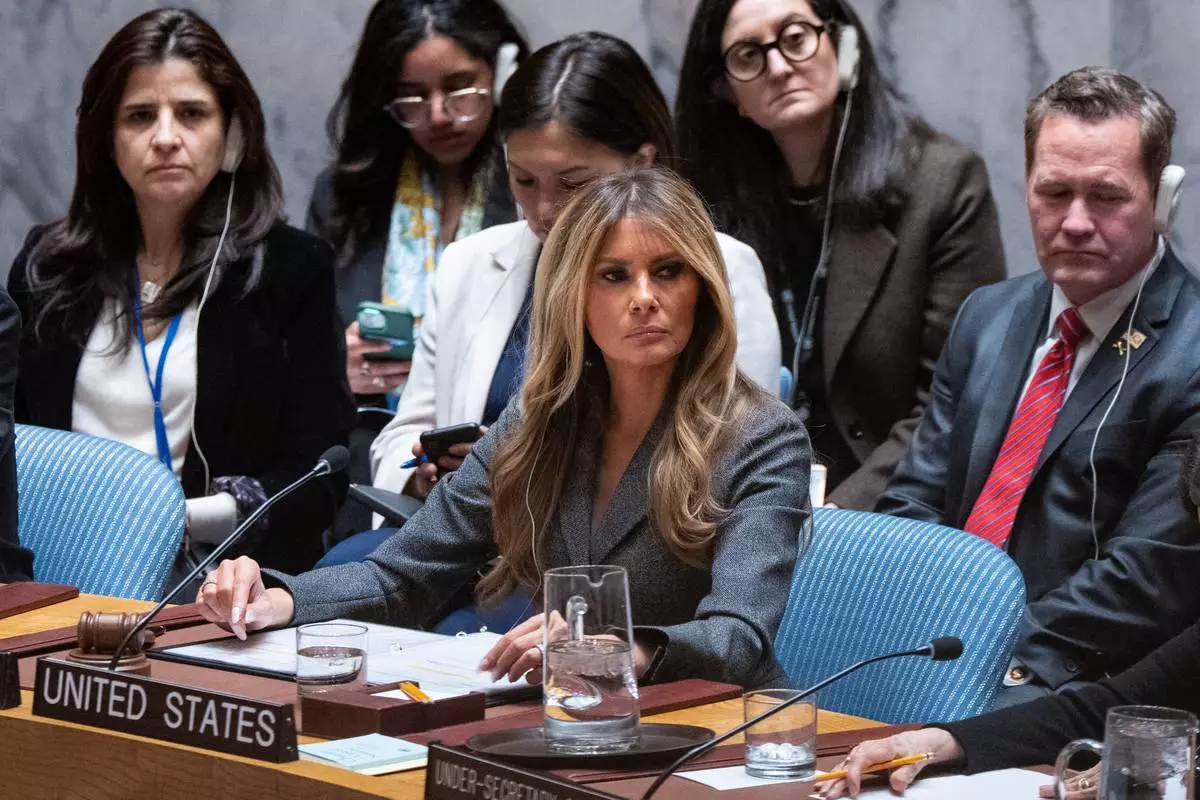
Melania Trump, first lady of the United States, presides over the United Nations Security Council at United Nations headquarters, Monday, March 2, 2026. (AP Photo/Angelina Katsanis)
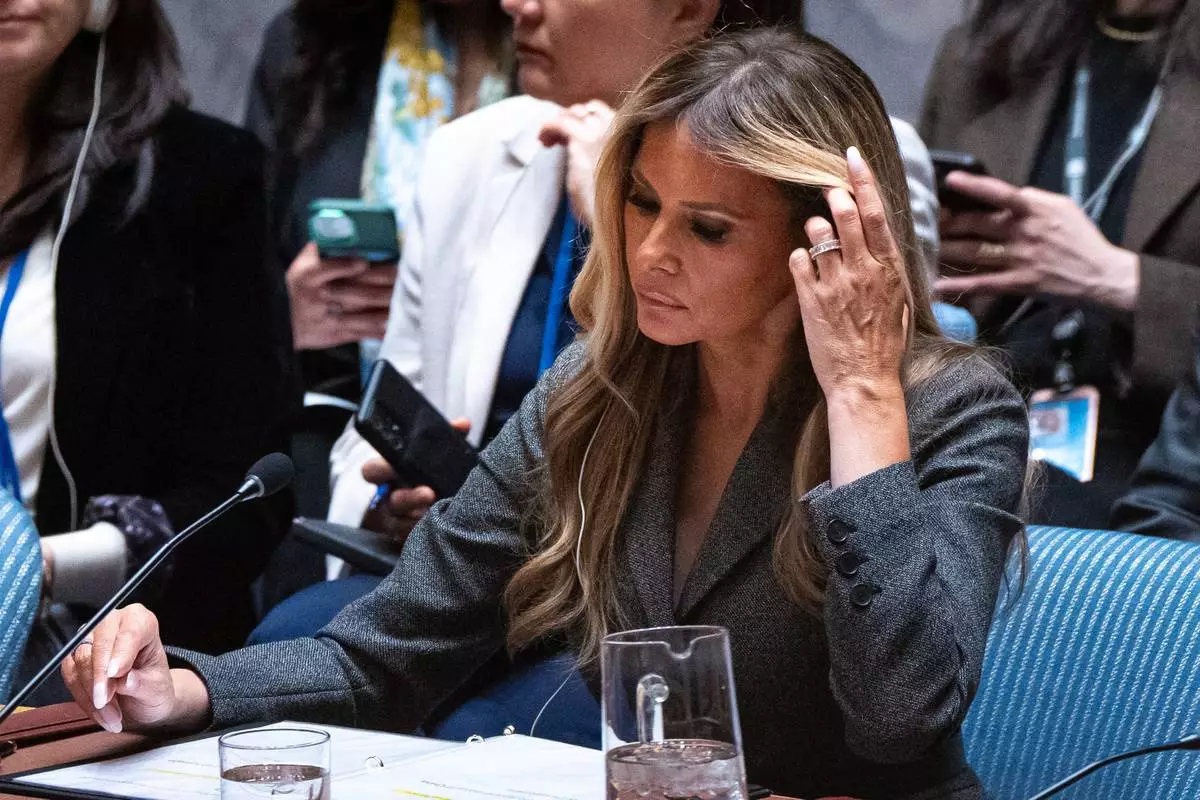
Melania Trump, first lady of the United States, presides over the United Nations Security Council at United Nations headquarters, Monday, March 2, 2026. (AP Photo/Angelina Katsanis)
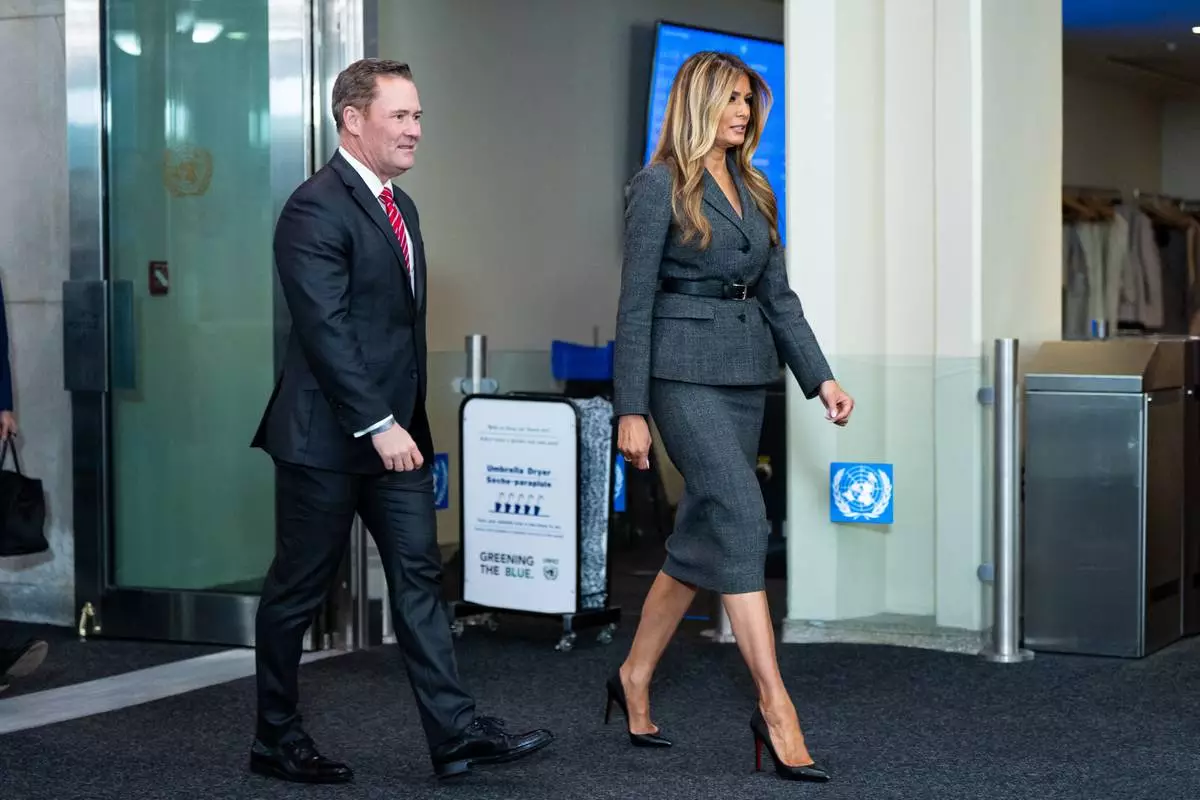
Melania Trump, first lady of the United States, arrives with U.S. Ambassador Mike Waltz, to preside over a United Nations Security Council meeting at United Nations headquarters, Monday, March 2, 2026. (AP Photo/Angelina Katsanis)
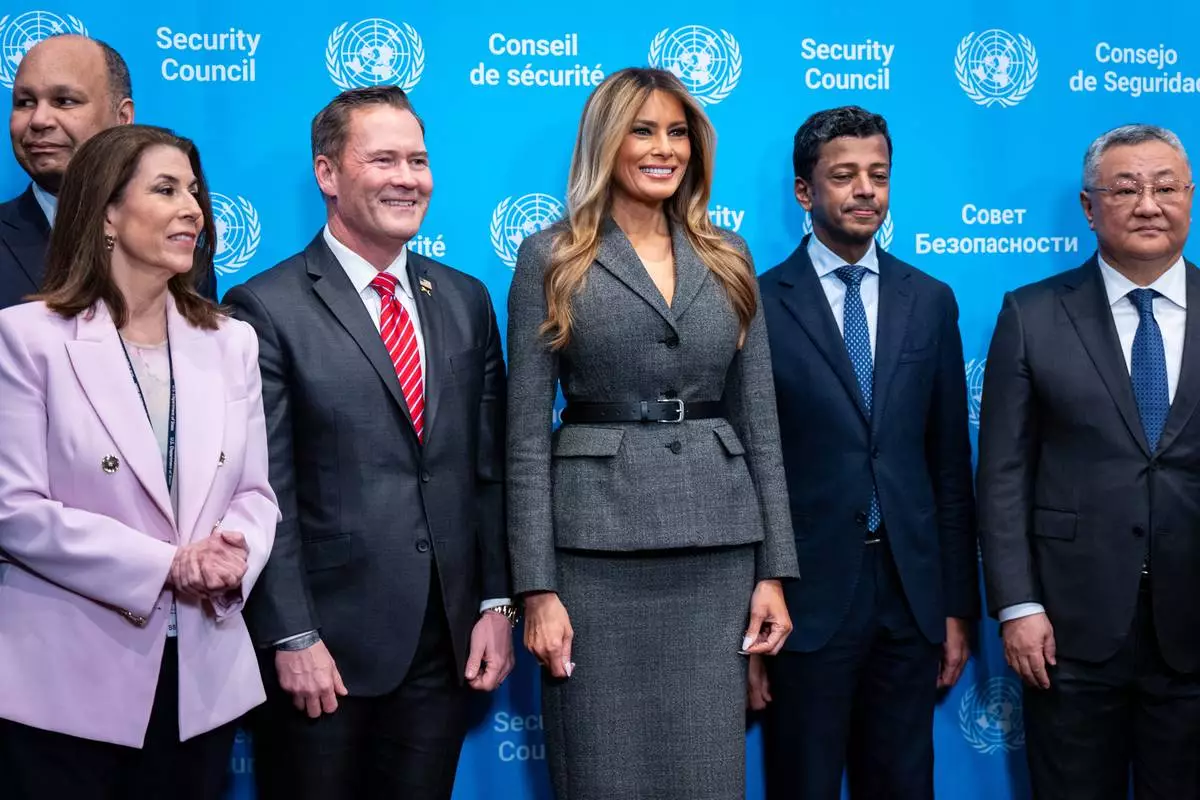
First lady Melania Trump takes a photo with a group of UN Diplomats before she presides over the United Nations Security Council on Iran and the recent attacks by U.S. and Israel at United Nations headquarters, Monday, March 2, 2026. (AP Photo/Angelina Katsanis)
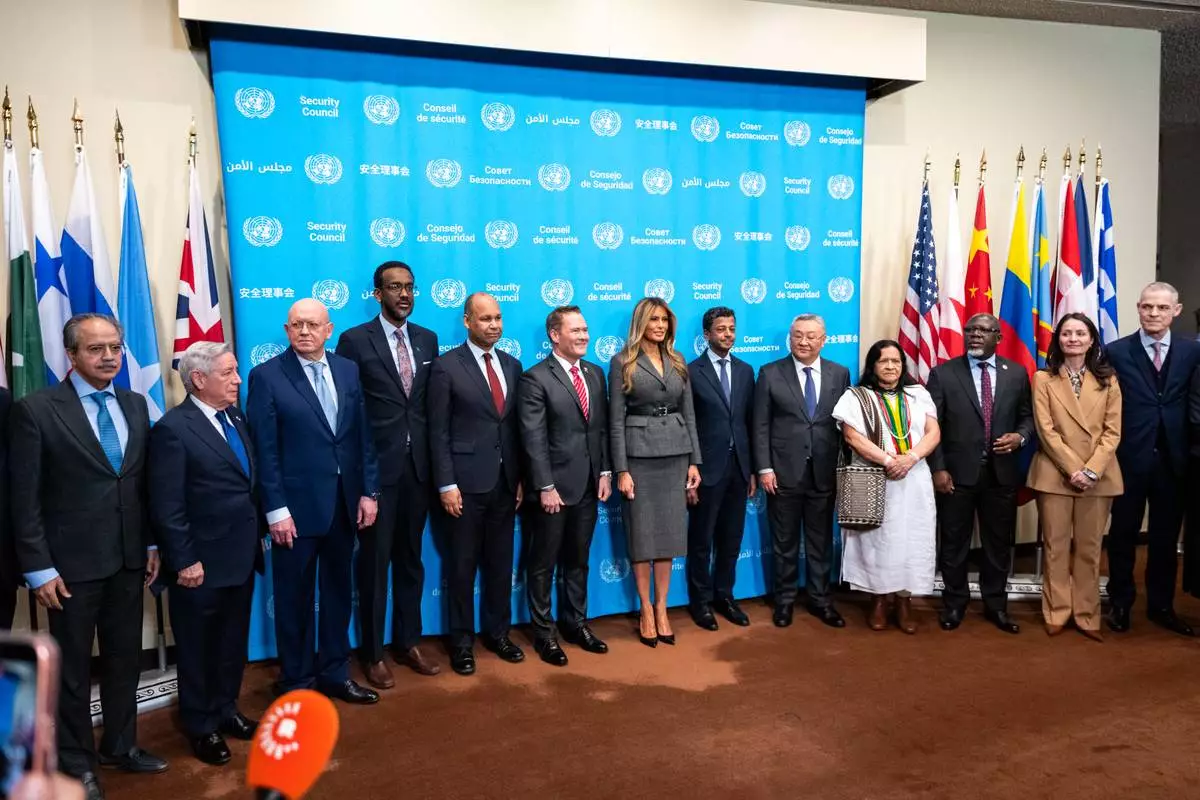
First lady Melania Trump takes a photo with a group of UN Diplomats before she presides over the United Nations Security Council on Iran and the recent attacks by U.S. and Israel at United Nations headquarters, Monday, March 2, 2026. (AP Photo/Angelina Katsanis)
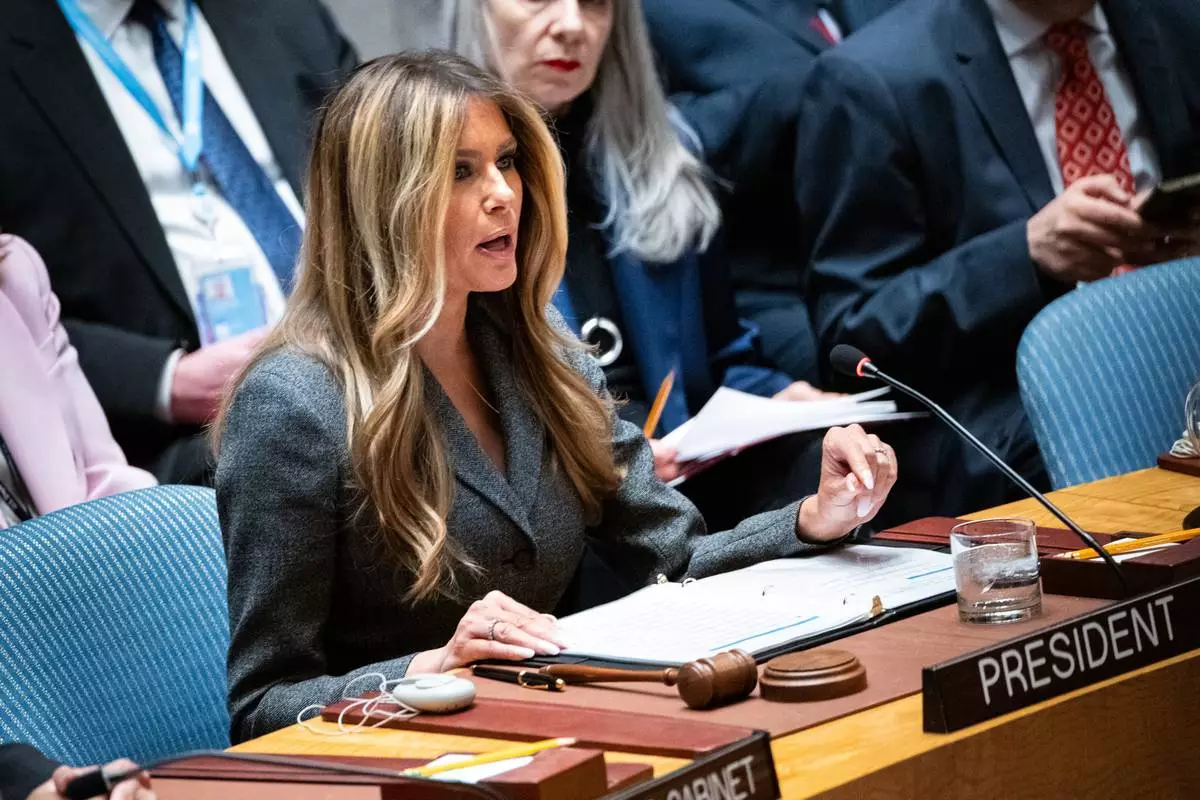
First lady Melania Trump presides over the United Nations Security Council at United Nations headquarters, Monday, March 2, 2026. (AP Photo/Angelina Katsanis)
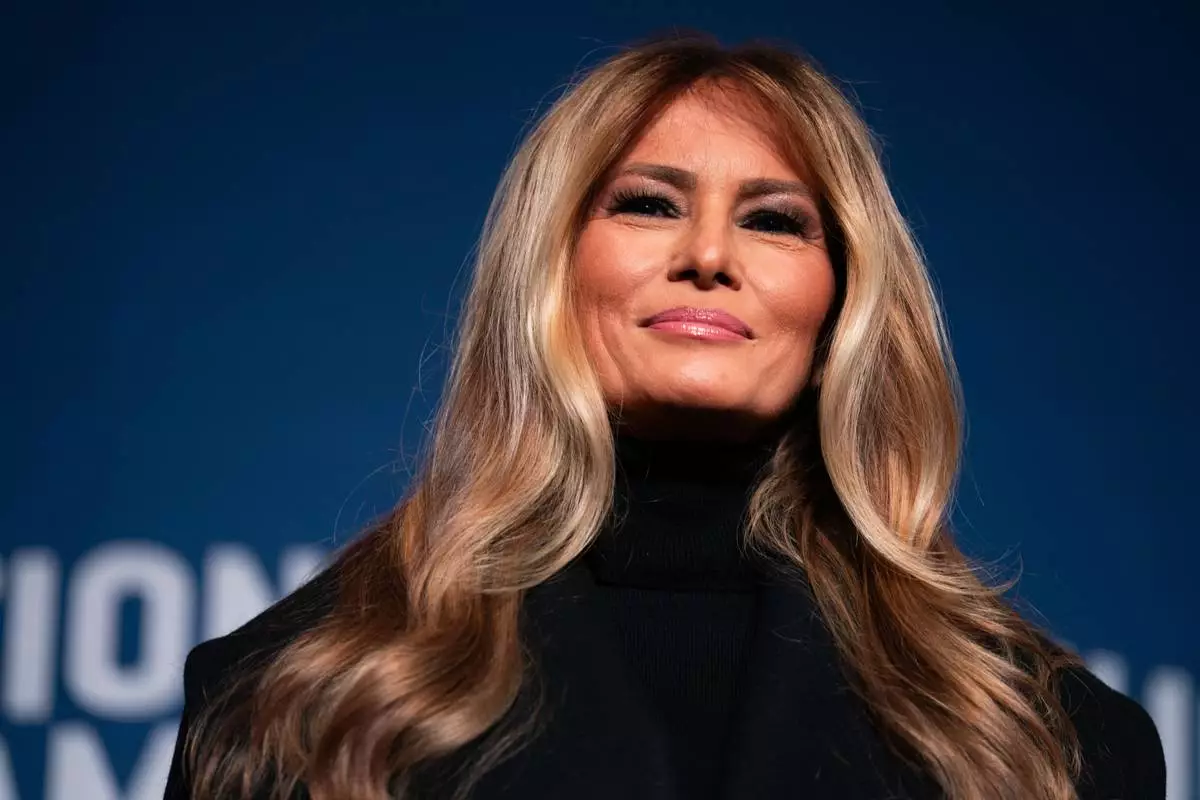
First lady Melania Trump speaks at an event to present her 2025 inaugural ball gown to the Smithsonian National Museum of American History, Friday, Feb. 20, 2026, in Washington. (AP Photo/Allison Robbert)