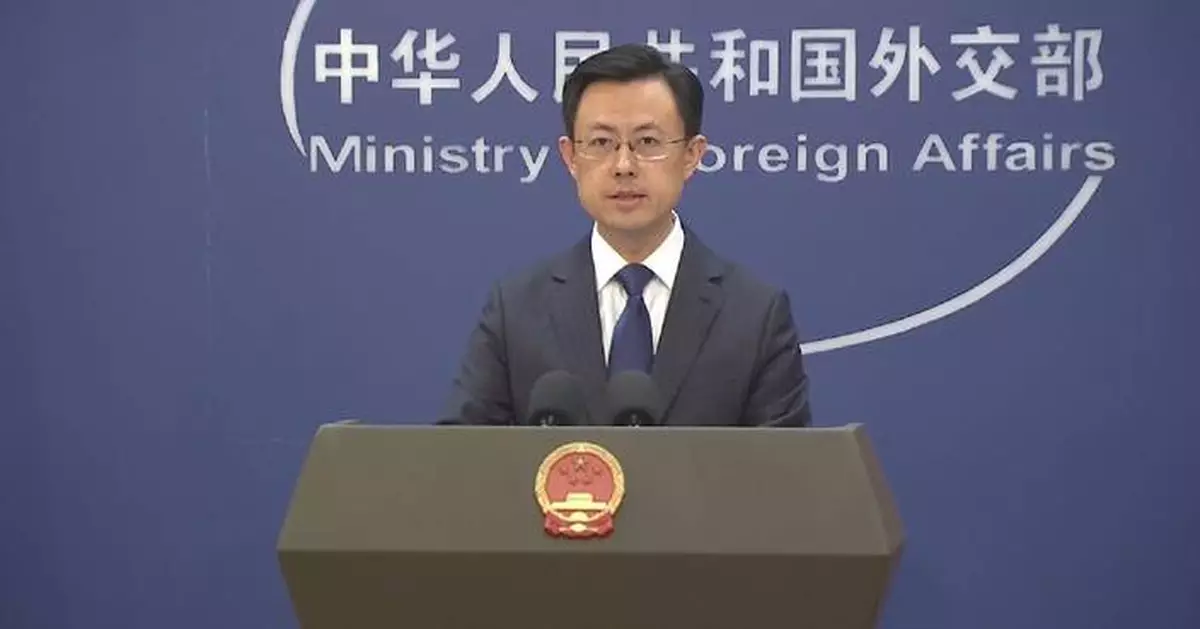
China’s exercise and training in relevant waters and airspace fully complies with international law and international practice, said Chinese foreign ministry spokesman Guo Jiakun at a press conference in Beijing on Tuesday.
Guo made the remarks in response to a question regarding Japan's hyping up the so-called issue of "radar illumination".
"The Chinese side has stated its serious position on the issue. The facts are very clear. China’s exercise and training in relevant waters and airspace fully complies with the international law and international practice. Our maneuvers are professional, standard, and beyond reproach. To activate search radar during flight training is commonly done by carrier-based aircraft of all countries. It’s also a normal measure to ensure flight safety. I’d suggest that you ask the Japanese side: Why did the Japanese Self Defense Force fighter jets come to those areas to create this dangerous incident which shouldn’t have happened? Are they deliberately harassing China’s normal exercise and training and creating tensions?" said Guo.
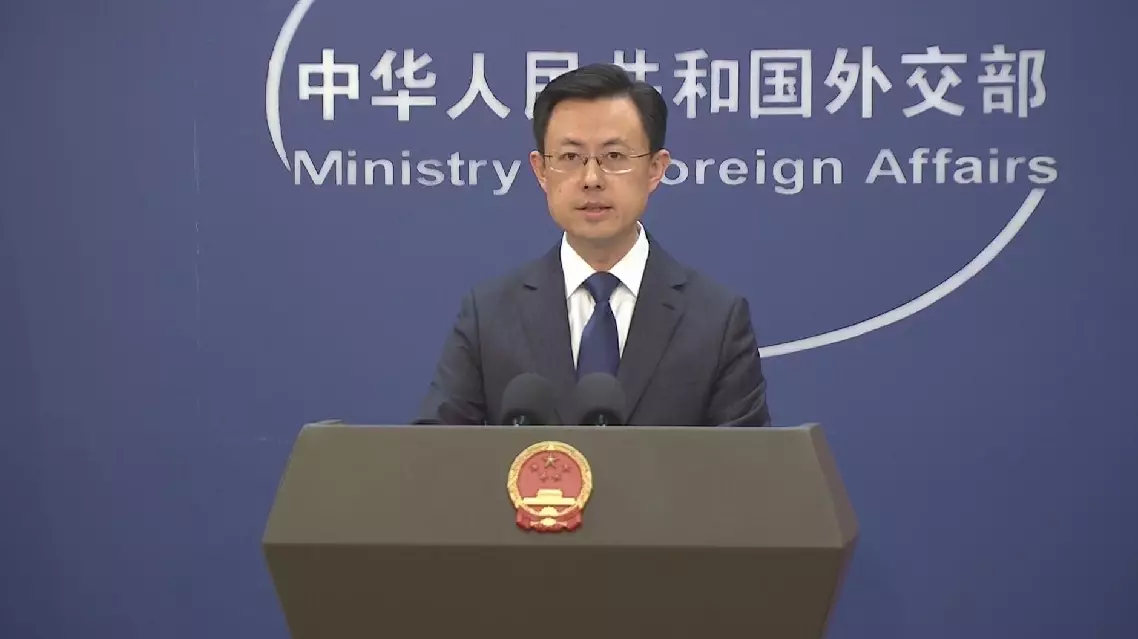
China's exercise, training in line with int’l law, practice: spokesman
China has released rare footage from the 15th expedition of the research vessel Haiyang Dizhi-6 (Ocean Geology 6), showcasing new scientific findings on deep-sea mineral deposits and marine biodiversity.
The second segment of the expedition set sail on Aug 29 and lasted 95 days, covering 12,673 nautical miles. Researchers have collected extensive data and samples covering deep-sea environmental metrics, deep-sea water, seabed sediments, polymetallic nodules, and deep-sea organisms. Many of them were recorded with deep-sea robots.
The first set of footage features polymetallic nodules scattered across deep-sea basins at depths of 4,000 to 6,500 meters. Typically spherical, ellipsoidal, or fragmental and measuring three to 10 centimeters in diameter, these black or dark-brown nodules are composed mainly of iron and manganese oxides and hydroxides, and enriched with key metals such as cobalt, nickel, copper, and manganese.
"These nodules represent the most widely distributed deep-sea mineral resource on the seabed, with enormous resource potential and the greatest prospects for commercial development. They serve as an important successor resource to China's onshore critical metal minerals and play a key strategic role in safeguarding the country's resource security. Each nodule acts as a natural archive of deep-sea environmental changes over the past 30 million years or more, recording oceanic conditions during its growth, and holding significant scientific value for studying seabed mineralization processes and environmental evolution," said Sun Zhen, a researcher from the Guangzhou Marine Geological Survey under the China Geological Survey.
Another clip shows researchers collecting samples of deep-water corals, which typically inhabit depths ranging from several tens of meters to over 1,000 meters below the sea surface. Thriving in the dark, cold depths of the ocean, these corals provide essential habitats for diverse marine species and serve as key indicators for studying ancient ocean climates and ecosystems.
The expedition also documented researchers using a robotic arm to harvest deep-sea sponges, a kind of organisms that, together with corals and sea anemones, form unique deep-sea ecosystems and hold significant potential in marine compound research and the biomedicine sector.
"As deep-sea exploration technologies and equipment continue to advance, scientists have successively discovered a series of deep-sea biological resources with exceptional scientific value and promising application potential. In-depth studies of their morphology, functions, and genetics will further enhance our understanding of the origin and evolution of deep-sea life, thus contributing to progress in life sciences," Sun added.

Chinese research vessel releases footages of deep-sea mineral, bio-resources