China has been stepping up efforts to create application scenarios to provide real-world testing grounds for new technologies, products and business models in the marine or the blue economy.
"Scenarios" refer to specific situations for the testing of new technologies, products and business models. They serve as a bridge connecting technologies and industries, and linking research and development with the market.
Recently, China released its first national list of application scenarios for the blue economy, outlining 48 marine economy projects with a combined investment exceeding 10 billion yuan (about 1.41 billion U.S. dollars).
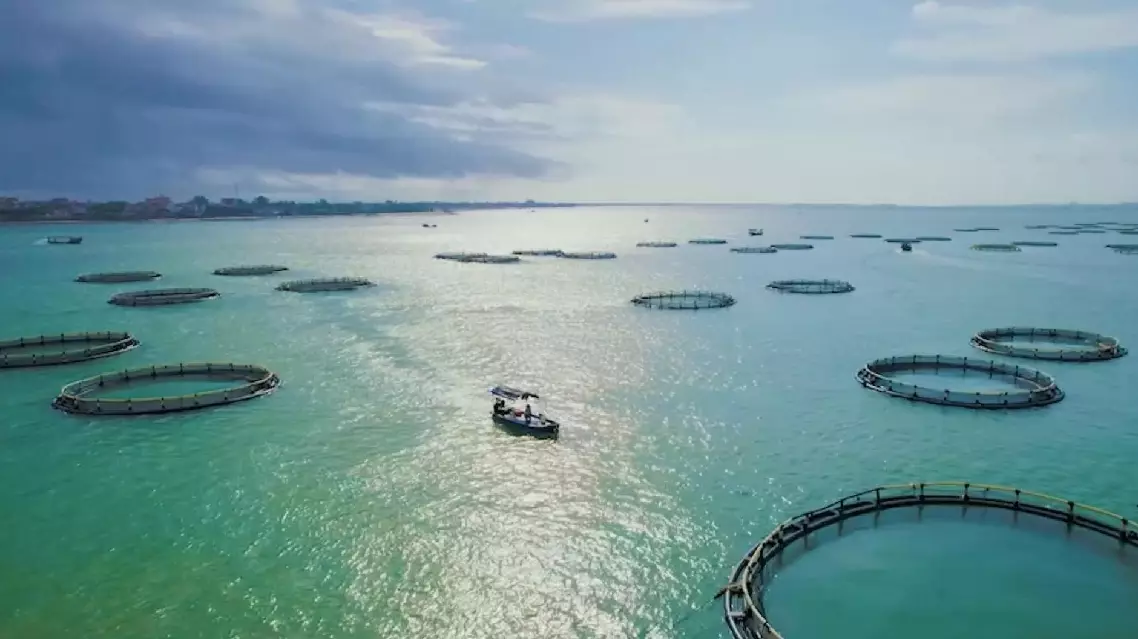
The list, designated to provide real-world testing grounds for new technologies, spans nine sectors, including deep-sea aquaculture, low-altitude economy in the blue economy, marine biomedicine, engineering, and low-carbon technologies. Of the scenarios, 13 involve deep-sea aquaculture, accounting for more than 27 percent of the total, offering testing grounds for advanced equipment and artificial intelligence applications.
Officials said this will shorten the time needed to turn research results into commercial products and lower costs for innovative firms.
"This comes from the needs of our products. Once those needs are addressed, research results can be immediately applied to industries, which greatly shortens the time required to turn scientific and technological achievements into practical use," said Hong Pengzhi, deputy director of the Zhanjiang Bay Laboratory.
"For innovative companies like ours, the barriers to using testing scenarios are very high. Testing costs are high, and the process of getting new products into use takes a long time. Giving us access to these scenarios will help us bring our new equipment and products into use much faster," said Zhou Changgen, founder of Chasing Innovation (Shenzhen) Technology Co., Ltd.
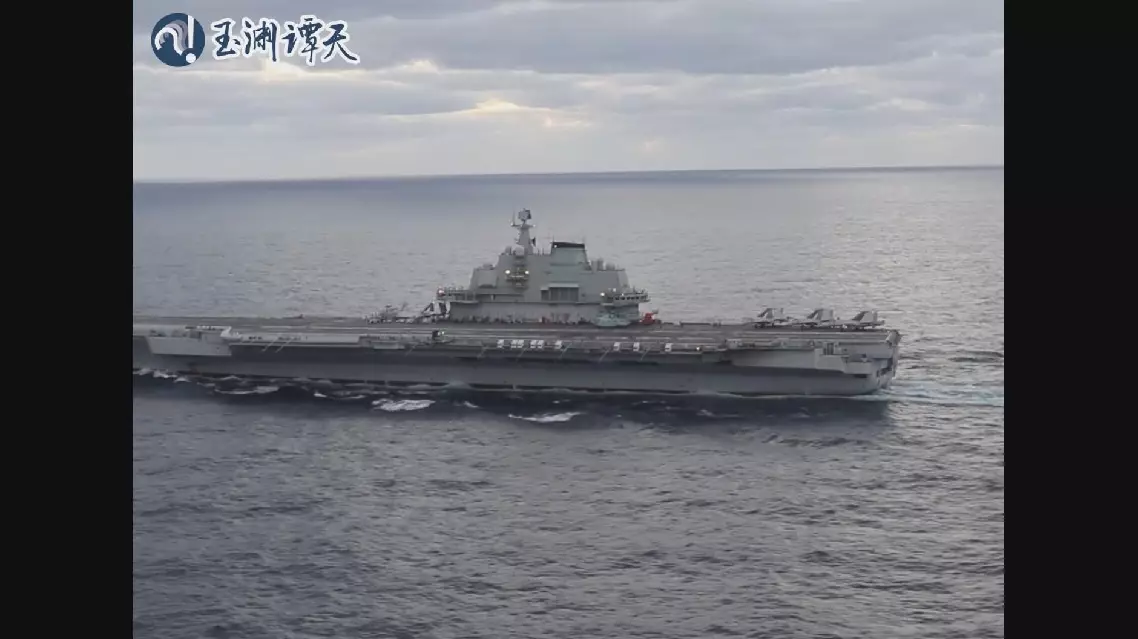
With 32,000 kilometers of coastline and about three million square kilometers of maritime territory, China has ramped up efforts to tap its blue economy.
In November this year, the country unveiled a guideline to accelerate the development of application scenarios for new technologies and products.
The guideline called for accelerated development and opening of new scenarios in deep-sea exploration, aquaculture, marine engineering equipment, electronic information and biomedicine, aiming to build hubs of deep-sea technological innovation.
At the moment, coastal Chinese cities are rolling out tailored projects to support the marine economy.
Fuqing, a city in east China's Fujian Province, hosts an integrated offshore wind power application scenario that combines turbine research, manufacturing, installation and operations. The city has set global records for turbine capacity, exported equipment to Belt and Road countries including Ethiopia and Sri Lanka, and built China’s first national offshore wind test base.
Zhanjiang, a city in south China's Guangdong Province, has established the country's first innovation center on marine-economy scenarios: the Guangdong (Guangzhou-Zhanjiang) Marine Economy Scenario Innovation Center. The center pioneers a cross-regional collaboration model, combining Guangzhou's digital technology with the local marine industry strengths, creating "super scenarios" such as offshore ranches.
"By creating integrated super scenarios such as offshore ranches, technologies of drone, robotics and large AI model can be tested and iterated in marine scenarios," said Kong Weiqiang, director of the Greatwall Bay Area Research Institute.
The Chinese northern port city of Dalian launched a three-year action plan for high-tech shipbuilding and offshore engineering, creating opportunities in deep-sea exploration, mining and underwater robotics to drive a shift toward greener, smarter manufacturing.
"We will drive the shipbuilding industry shift toward smart construction and green manufacturing, aiming to make Dalian a hub of independent innovation and original breakthroughs," said Duan Hongtao, deputy director of the city's industry and information technology bureau.
China accelerates rollout of marine economy application scenarios