SURIN, Thailand (AP) — Amnat Meephew had just enough time to pack up his clothes and flee his home in Thailand a couple of kilometers (miles) from the border with Cambodia, the second time in four months hundreds of thousands of people like him have had to escape fighting between the Southeast Asian neighbors.
“Sometimes when I think about it, I tear up. Why are Thais and Cambodians, who are like siblings, fighting?” the 73-year-old said. “Speaking about it makes me want to cry.”
Click to Gallery
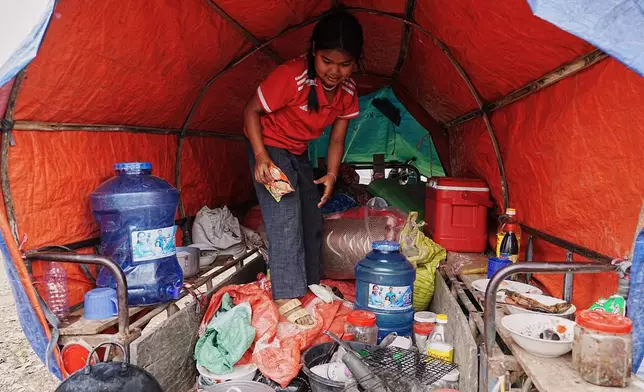
An evacuated young girl collects food in a tent as she takes refuge in Batthkoa primary school in Oddar Meanchey province, Cambodia, Wednesday, Dec. 10, 2025, after fleeing home following a fighting between Thailand and Cambodia over territorial claims. (AP Photo/Heng Sinith)
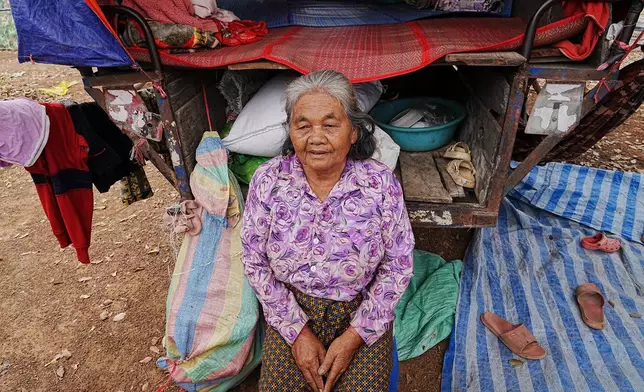
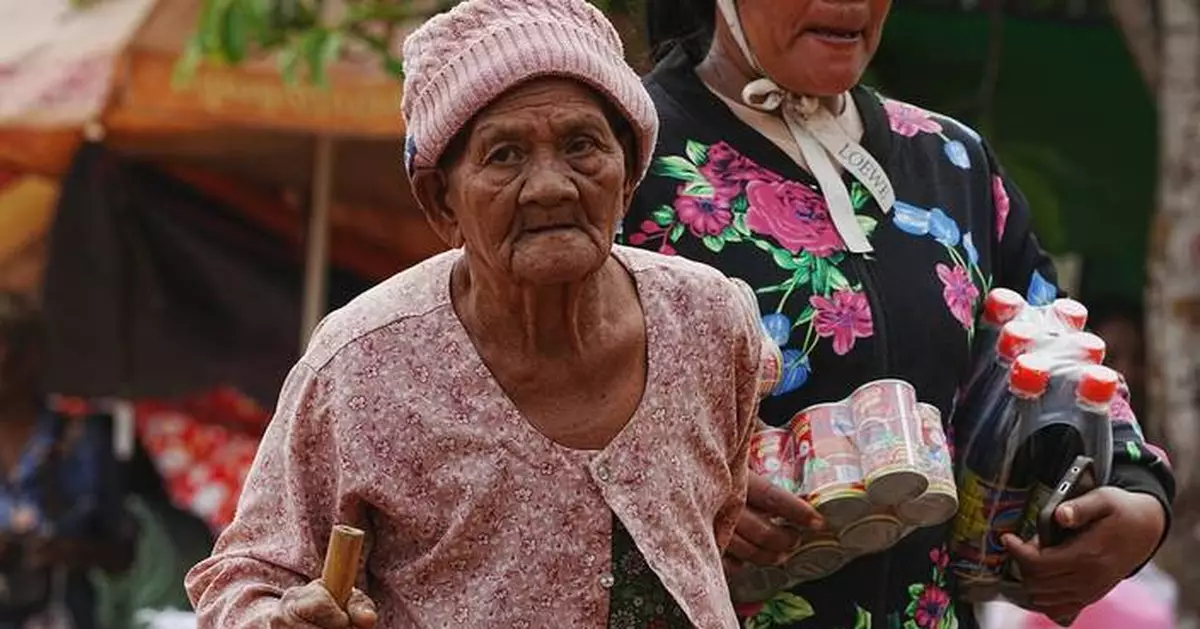
An evacuated elderly woman sits in a tent as she takes refuge in Batthkoa primary school in Oddar Meanchey province, Cambodia, Wednesday, Dec. 10, 2025, after fleeing home following a fighting between Thailand and Cambodia over territorial claims. (AP Photo/Heng Sinith)
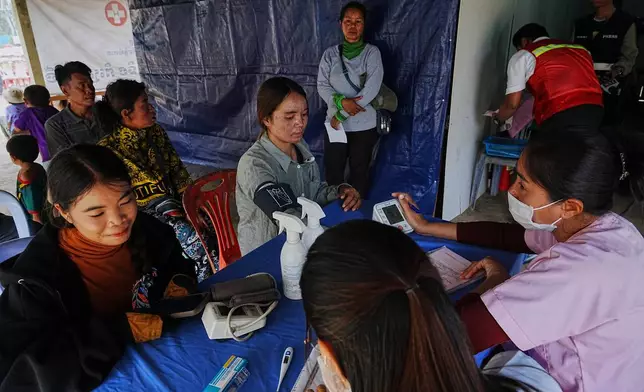
Evacuated people, left, receive medical check up as they take refuge at Batthkoa primary school in Oddar Meanchey province, Cambodia Wednesday, Dec. 10, 2025, after fleeing homes following a fighting between Thailand and Cambodia over territorial claims. (AP Photo/Heng Sinith)
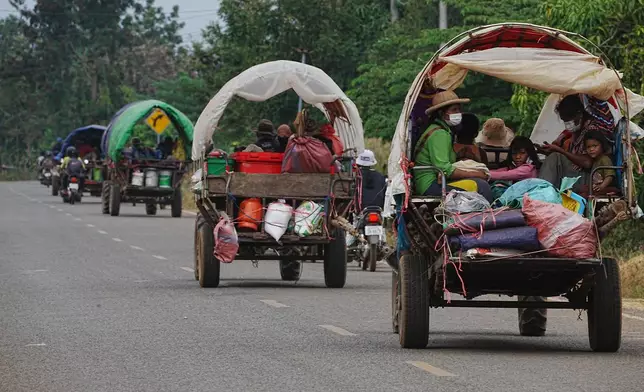
People flee from home following a fighting between Thailand and Cambodia over territorial claims in Oddar Meanchey province, Cambodia Wednesday, Dec. 10, 2025. (AP Photo/Heng Sinith)
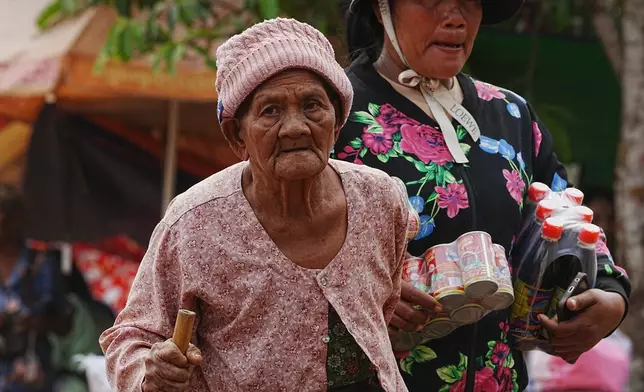
A woman, left, walks as she takes refuge at Batthkoa primary school in Oddar Meanchey province, Cambodia Wednesday, Dec. 10, 2025, after fleeing from home following a fighting between Thailand and Cambodia over territorial claims. (AP Photo/Heng Sinith)
The latest round of clashes along the disputed border erupted on Monday, derailing a ceasefire pushed by U.S. President Donald Trump that ended the previous clashes in July, which killed dozens in both countries.
Officials in Thailand said Wednesday that about 400,000 people have been evacuated, while Cambodia reported more than 127,000 displaced.
Unlike during the first round of fighting in July, many Thai evacuees in northeastern Surin province said they left before hearing the sound of fire following early evacuation warnings from local leaders, triggered by a brief skirmish at the Cambodian border on Sunday.
“I could only bring my clothes,” Amnat said. “I even forgot to lock my doors when I left.”
Many took shelter in university halls, sitting or lying on thin mats or in tents erected within their allotted space. Music played to help relieve stress. Health officials checked on evacuees, while volunteers organized activities to entertain children.
Thidarat Homhual also received a warning on Sunday to leave her home about 15 kilometers (9 miles) from the border. She teared up as she spoke about the pets she had to leave behind. Her stay in a gymnasium with more than 500 others has been far from comfortable, but she said meals are provided, and support from officials and volunteers helped her cope.
“Maybe because this isn’t the first time we’ve lived through something like this, I believe many of us can adapt. Although no one wants to adjust to living like this, I’ll just go with the flow. Otherwise, it would be too stressful,” she said.
Across the border in Cambodia, life for evacuees has taken on a rugged rhythm. Many said they left in a hurry after hearing shots on Monday, seeking refuge mostly in an open field.
They erected tents or improvised shelters stitched together with tarps, anchored to the backs of trucks to shield themselves from the wind. People huddled for conversation, meals or sleep. Smoke drifted from small coal stoves where families cooked simple dishes, while others went fishing in a nearby pond to supplement their food.
Loueng Soth arrived at a roadside area in the Cambodian town of Srei Snam with her seven family members. She said conditions have been difficult, and she was praying for the fighting to end as soon as possible.
“I don’t want to stay here and sleep on the ground as I do now,” she said. “I want the war to end so I can return to my home.”
With cool-season temperatures dropping, the chilling winds have made life in the same field even harder for Thai Chea, who on Monday fled his home just a few hundred meters (feet) from the battleground. At the shelter where he is staying, people donned sweaters and gathered around cooking stoves in the early morning to keep warm.
But there is still no sign of when evacuees can return home, as leaders on neither side appear willing to back down.
“I want the war to end as soon as possible, so that I can go back to my home to do my farming work and take care of my dogs and chickens. They are at home with no one looking after them,” Thai Chea said.
Sopheng Cheang reported from Srei Snam, Cambodia.
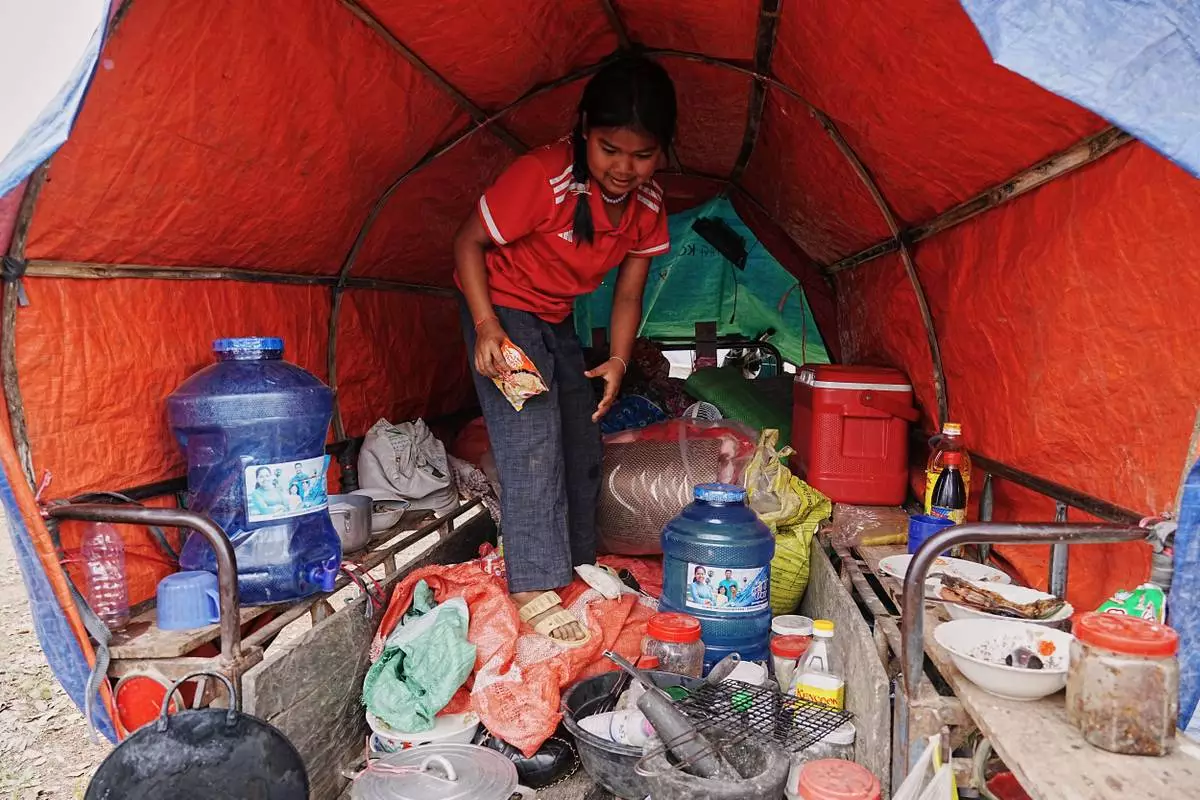
An evacuated young girl collects food in a tent as she takes refuge in Batthkoa primary school in Oddar Meanchey province, Cambodia, Wednesday, Dec. 10, 2025, after fleeing home following a fighting between Thailand and Cambodia over territorial claims. (AP Photo/Heng Sinith)
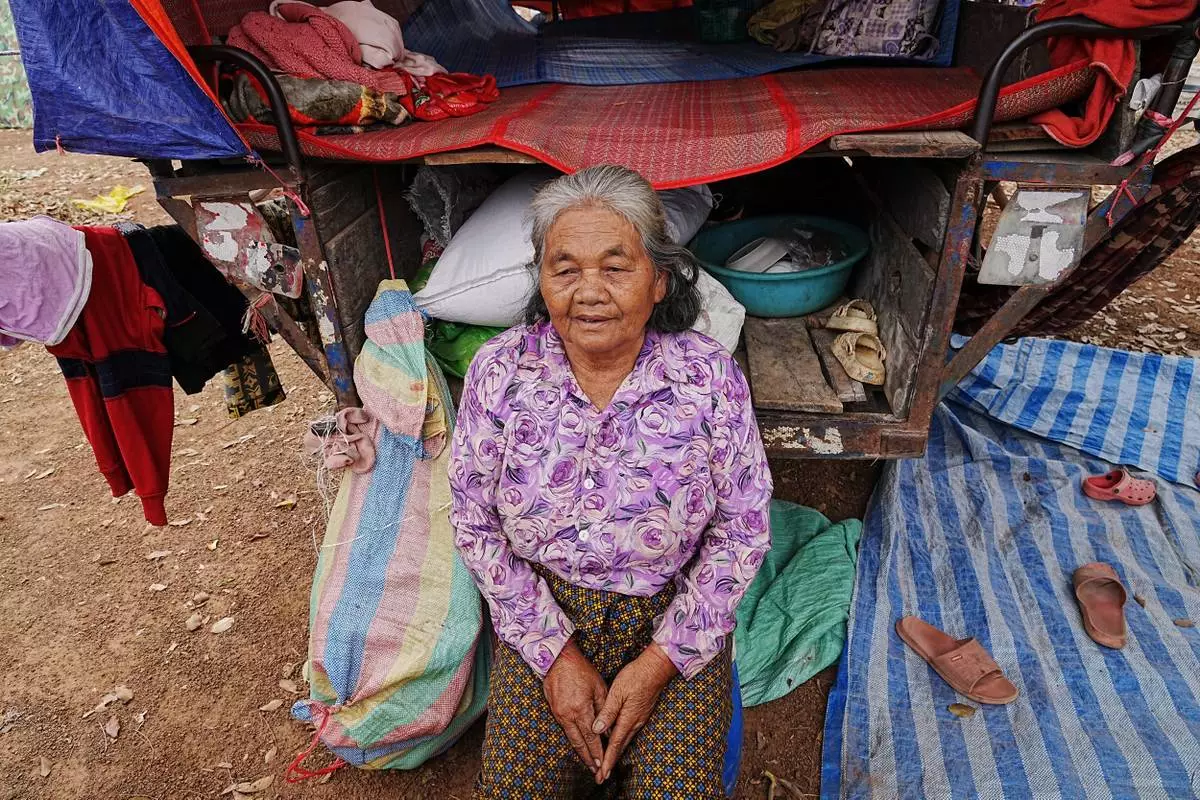
An evacuated elderly woman sits in a tent as she takes refuge in Batthkoa primary school in Oddar Meanchey province, Cambodia, Wednesday, Dec. 10, 2025, after fleeing home following a fighting between Thailand and Cambodia over territorial claims. (AP Photo/Heng Sinith)
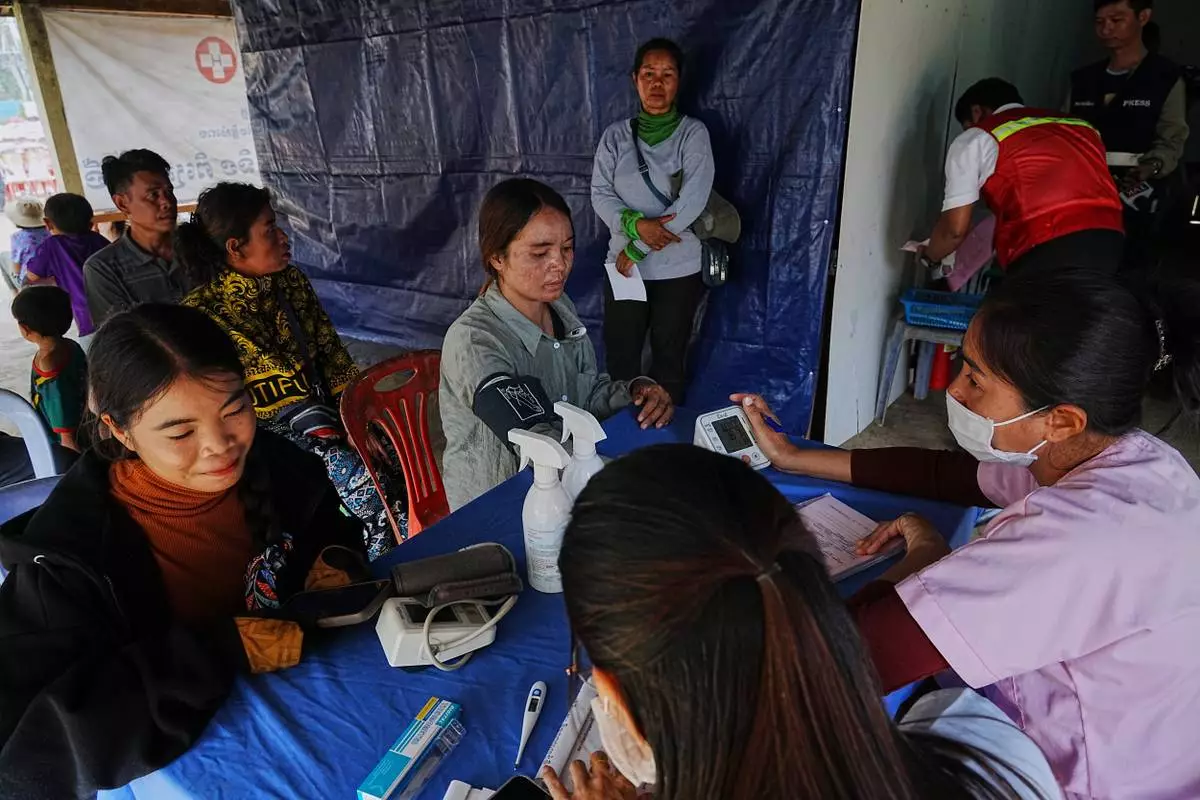
Evacuated people, left, receive medical check up as they take refuge at Batthkoa primary school in Oddar Meanchey province, Cambodia Wednesday, Dec. 10, 2025, after fleeing homes following a fighting between Thailand and Cambodia over territorial claims. (AP Photo/Heng Sinith)
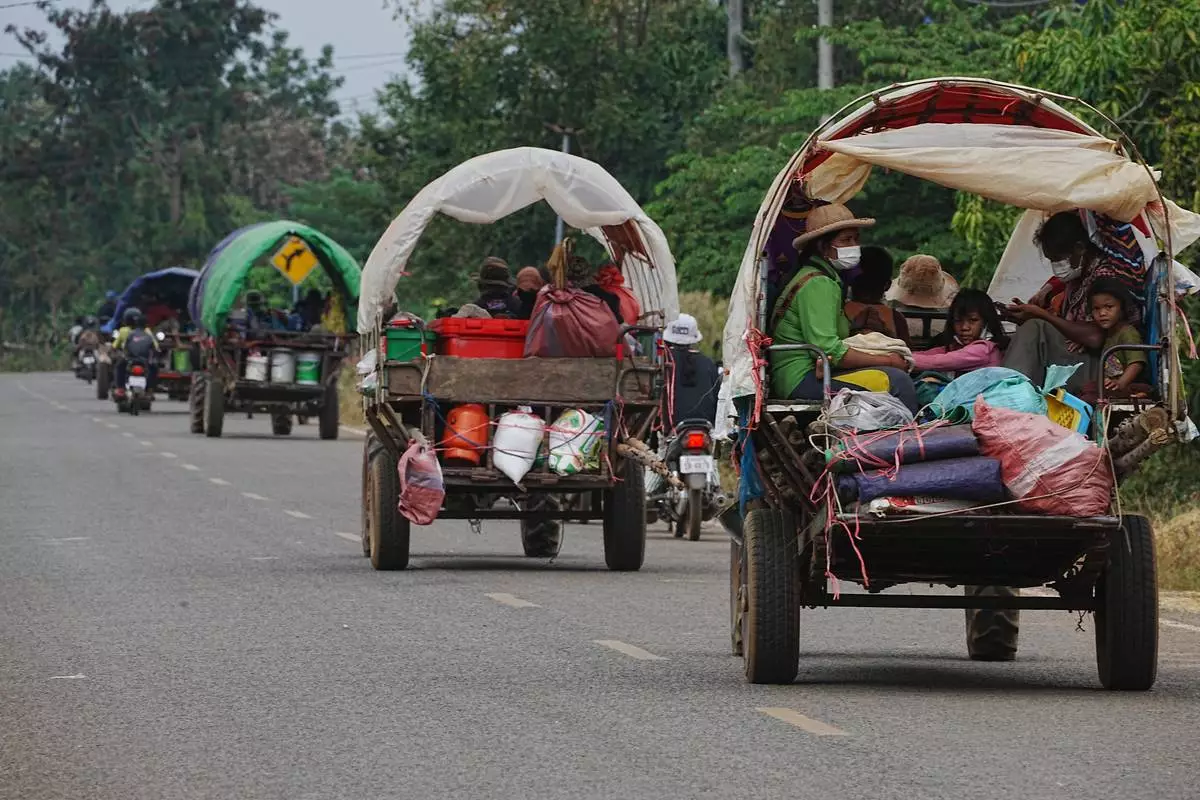
People flee from home following a fighting between Thailand and Cambodia over territorial claims in Oddar Meanchey province, Cambodia Wednesday, Dec. 10, 2025. (AP Photo/Heng Sinith)
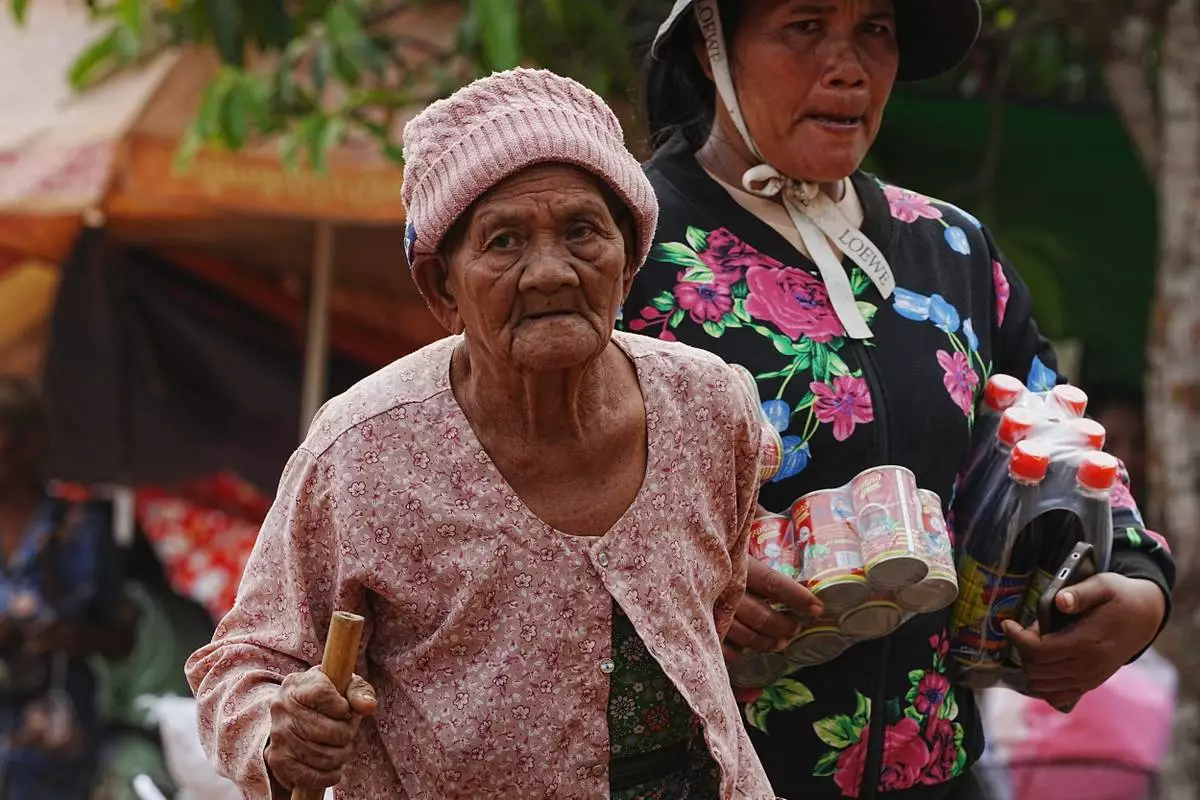
A woman, left, walks as she takes refuge at Batthkoa primary school in Oddar Meanchey province, Cambodia Wednesday, Dec. 10, 2025, after fleeing from home following a fighting between Thailand and Cambodia over territorial claims. (AP Photo/Heng Sinith)