SAN FRANCISCO--(BUSINESS WIRE)--Dec 10, 2025--
Wells Fargo Investment Institute (WFII) today released its “2026 Outlook report: Trendlines over headlines.” Even as headlines may continue to stress uncertainties about policy and the pace of technology spending, WFII expects favorable economic and policy trends already in place will ultimately shape a broad array of potential investment opportunities. Conviction expressed in the report is that growing technology spending, Federal Reserve interest rate cuts, deregulation, and tax incentives collectively will push past headline noise to shape a 2026 investment landscape that should draw investor attention.
This press release features multimedia. View the full release here: https://www.businesswire.com/news/home/20251210647088/en/
These trends may support each other. Business tax cuts for capital spending should promote business expansion and modernization. Lower borrowing costs and deregulation could promote hiring, raise worker productivity, reduce production costs and inflation while raising earnings growth and potentially expanding equity market breadth.
“While market volatility and pullbacks remain possible, the trends outlined in our report provide a strong foundation for long-term growth and portfolio diversification,” said Darrell Cronk, chief investment officer for Wealth & Investment Management. “Rather than reacting to daily headlines, we encourage investors to tune out the noise and focus on the fundamental signals shaping tomorrow’s investment landscape — policy tailwinds, technological transformation, and expanding opportunities across asset classes.”
WFII favors U.S. large- and mid-cap equities, industrial and precious metals, and a complementary full international equity allocation. At the same time, lower short-term rates and a modest expected rise in longer-term yields favor intermediate (3-7 years) maturities in investment-grade securities. Lower interest rates and new tax advantages should reinforce the strong technology and artificial intelligence spending trend. WFII favors staying invested in that trend but focusing on valuations to avoid chasing overextended stocks. Additional diversification and flexibility may come from select hedge fund strategies and private capital strategies — such as private equity secondaries, infrastructure, and small and midcap buyout.
Five investment ideas for 2026:
Highlights of WFII’s forecast:
Join the WFII 2026 Outlook call today, December 10, at 4:15 p.m. Eastern Time. Dial-in: 877-601-6604; Passcode: 71-306-44.
A summary of the WFII 2026 Outlook is available (PDF).
Please see the full report for detailed information.
Risk Disclosure
Forecasts and targets are based on certain assumptions and on our current views of market and economic conditions, which are subject to change.
All investing involves risks, including the possible loss of principal. There can be no assurance that any investment strategy will be successful and meet its investment objectives. Investments fluctuate with changes in market and economic conditions and in different environments due to numerous factors, some of which may be unpredictable. Asset allocation and diversification do not guarantee investment returns or eliminate risk of loss.
Stock markets, especially foreign markets, are volatile. A stock’s value may fluctuate in response to general economic and market conditions, the prospects of individual companies, and industry sectors. International investing has additional risks including those associated with currency fluctuation, political and economic instability, and different accounting standards. This may result in greater share price volatility. These risks are heightened in emerging and frontier markets. Investments in fixed-income securities are subject to market, interest rate, credit, liquidity, inflation, prepayment, extension, and other risks. Bond prices fluctuate inversely to changes in interest rates. Therefore, a general rise in interest rates can result in a decline in the bond’s price.
Alternative investments, such as hedge funds, funds of hedge funds, managed futures, private capital, real assets and real estate funds, are not appropriate for all investors. They are speculative, highly illiquid, and are designed for long-term investment, and not as trading vehicle.
The information contained herein constitutes general information and is not directed to, designed for, or individually tailored to, any particular investor or potential investor. This report is not intended to be a client-specific suitability analysis or recommendation, an offer to participate in any investment, or a recommendation to buy, hold, or sell securities. Do not use this report as the primary basis for investment decisions. Consider all relevant information, including your existing portfolio, investment objectives, risk tolerance, liquidity needs, and investment time horizon.
About Wells Fargo Investment Institute
Wells Fargo Investment Institute, Inc. is a registered investment adviser and wholly owned subsidiary of Wells Fargo Bank, N.A., a bank affiliate of Wells Fargo & Company.
About Wells Fargo
Wells Fargo & Company (NYSE: WFC) is a leading financial services company that has approximately $2.1 trillion in assets. We provide a diversified set of banking, investment and mortgage products and services, as well as consumer and commercial finance, through our four reportable operating segments: Consumer Banking and Lending, Commercial Banking, Corporate and Investment Banking, and Wealth & Investment Management. Wells Fargo ranked No. 33 on Fortune’s 2025 rankings of America’s largest corporations. News, insights, and perspectives from Wells Fargo are also available at Wells Fargo Stories.
Additional information may be found at www.wellsfargo.com
LinkedIn: https://www.linkedin.com/company/wellsfargo
PM-05262027-7408492.1.3
News Release Category: WF-ERS

Wells Fargo Investment Institute's 2026 Outlook report: Trendlines over headlines (Graphic: Wells Fargo)
GOMA, Congo (AP) — In a maternity ward in eastern Congo, Irene Nabudeba rested her hands on her bulging midsection, worried about giving birth in a city under rebel control.
The conflict that flared this year has left many medical supplies stranded beyond the front line. Infrastructure like running water has collapsed, along with the economy in Goma, the region's humanitarian and commercial hub.
And now the one glimmer of hope for mothers — a free maternity care program offered by Congo's government — has ended after it was not renewed in June. It was not clear why, and Congolese and M23 officials did not respond to questions.
Nabudeba has five children and wonders whether the sixth will survive.
“At the hospital, they ask us for money that we don’t have. I’m pushing myself to come to the consultations, but for the delivery ... I don’t know where I’ll find the money,” she said at the Afia Himbi health center.
Several women told The Associated Press they cannot afford maternal care after Congo's program that was aimed at reducing some of the world's highest maternal and neonatal death rates ended earlier this year. The program launched in 2023 offered free consultations and treatment for illnesses and at-risk pregnancies at selected health facilities across the country.
Congo ranked second in maternal deaths globally with 19,000 in 2023, behind Nigeria's 75,000 deaths, according to U.N. statistics.
Health workers said more women in Goma are now giving birth at home without skilled help, sometimes in unsanitary conditions, leaving them vulnerable to hemorrhage, infection or death.
Clinics and hospitals were already struggling after the M23 rebels, backed by neighboring Rwanda, seized Goma in an escalation of fighting in January.
Although clashes have subsided amid U.S.- and Qatar-led peace efforts, fighting continues and the conflict has collapsed public institutions, disrupted essential services and displaced more than 700,000 people, according to the U.N. humanitarian office.
In Goma, the armed rebels are seen everywhere, making a pregnant woman's walk to clinics another source of anxiety.
Freddy Kaniki, deputy coordinator of M23, asserted to the AP that the free maternal care “was not renewed because it was a failure.” Congolese officials did not respond to questions.
Rwanda denies supporting the M23 despite U.N. experts saying they have evidence of it. Rwanda prides itself on health care and recently signed a five-year deal with the U.S. for investment of up to $158 million in its own healthcare sector.
The collapse of essential services in rebel-held areas, combined with mass displacement and insecurity, has left civilians struggling to access even basic care.
An International Committee of the Red Cross assessment in September found that at least 85% of health facilities were experiencing medicine shortages, and nearly 40% have seen an exodus of staff after the conflict surged in the provinces of North Kivu and South Kivu.
The ICRC in October said 200 health facilities in eastern Congo had run out of medicines because of looting and supply disruptions. Doctors Without Borders, or MSF, has reported hospitals attacked, ambulances blocked and medical staff threatened or killed.
Childbirth at a clinic in Goma now costs $5 to $10, out of reach for many families in a region where over 70% of the population lives on less than $2.15 a day, according to the World Bank.
Franck Ndachetere Kandonyi, chief nurse at the Afia Himbi health center, said the number of births there under the free program had jumped from around five a month to more than 20. But the program ended in June.
Facing a table of statistics in his office, Kandonyi said the number of births per month is now down to nine.
“When a parent cannot even pay 10,000 Congolese francs ($4.50) for their wife’s or child’s care, it’s a real problem,” the nurse said.
Meanwhile, banks have closed in Goma, prices have soared and the dollar has depreciated.
Nabudeba's husband, a driver, has been unemployed since January. She said her family is barely surviving.
“When the war broke out, we lost all our resources,” she said. “Lately, the situation has not been favorable, and we are suffering greatly.”
Across town at the Rehema Health Center, Ernestine Baleke waited for help with her ninth pregnancy, with concern on her face. She said she doesn't know where she will get money for the delivery.
Her husband lost a factory job when the place was looted earlier in the conflict, she said. Then their house burned.
“I don’t even have 100 francs (45 cents) in my pocket,” Baleke said.
She walks more than half a mile to the hospital because she cannot afford transportation. Three months remain before her delivery.
“The authorities must restore free healthcare," Baleke said. “We risk dying in our homes while giving birth.”
For more on Africa and development: https://apnews.com/hub/africa-pulse
The Associated Press receives financial support for global health and development coverage in Africa from the Gates Foundation. The AP is solely responsible for all content. Find AP’s standards for working with philanthropies, a list of supporters and funded coverage areas at AP.org.

Ernestine Baleke walks to the Rehema Health Center to receive pre-natal care that used to be free at the Rehema Health Center in Goma, Democratic Republic of Congo, Nov. 14, 2025. (AP Photo/Moses Sawasawa)
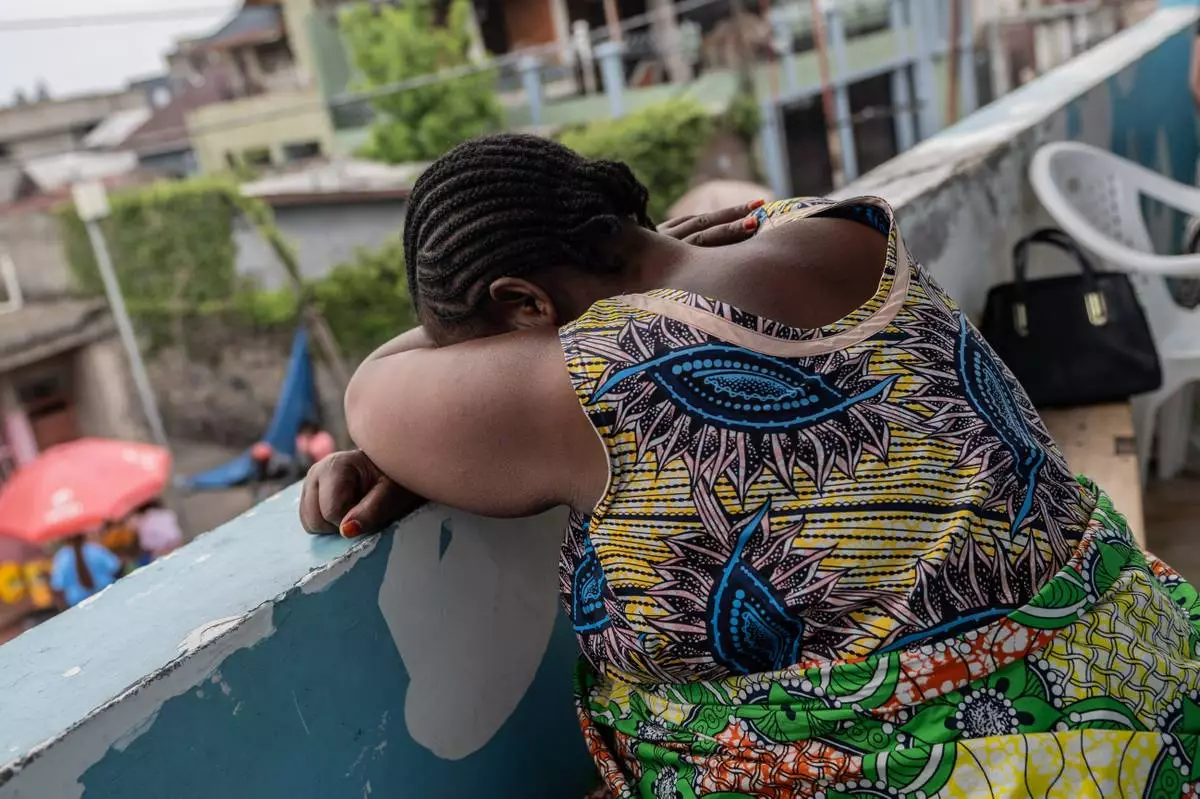
Ernestine Baleke rests on a wall after receiving pre-natal care that used to be free at the Rehema Health Center in Goma, Democratic Republic of Congo, Nov. 14, 2025. (AP Photo/Moses Sawasawa)
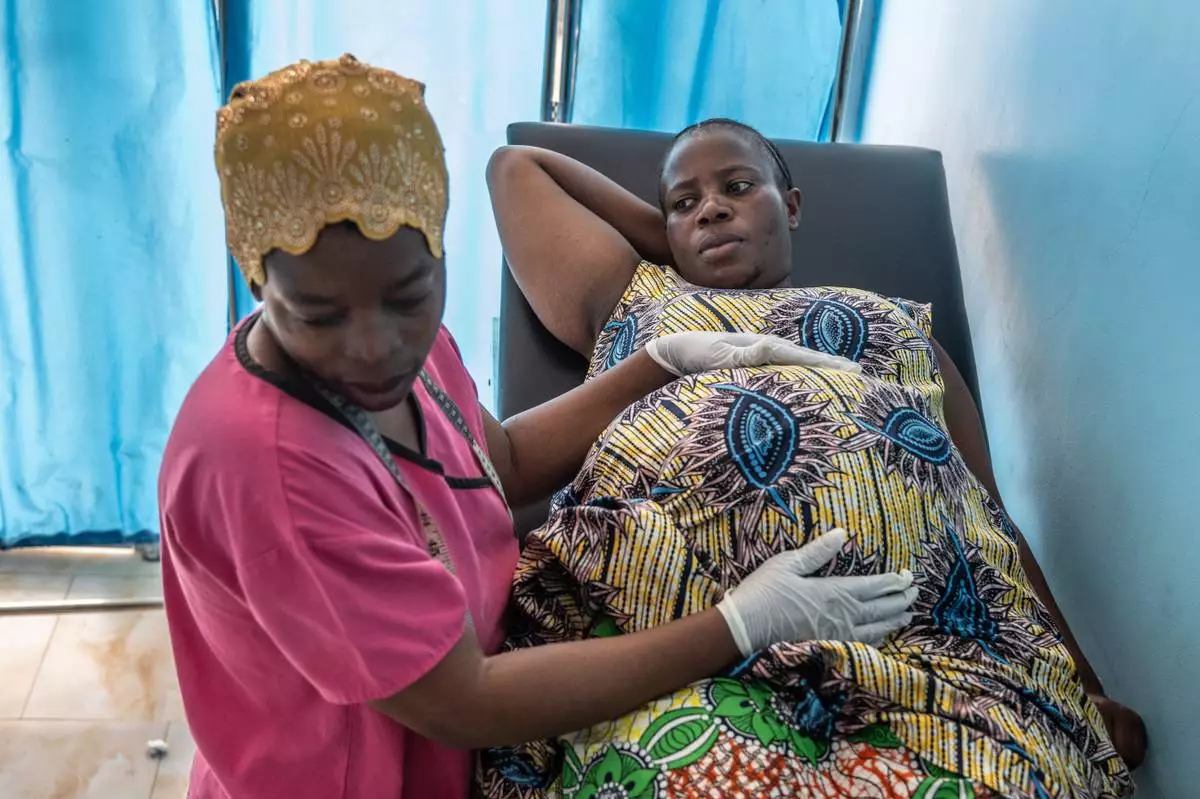
Ernestine Baleke receives pre-natal care that used to be free at the Rehema Health Center in Goma, Democratic Republic of Congo, Nov. 14, 2025. (AP Photo/Moses Sawasawa)
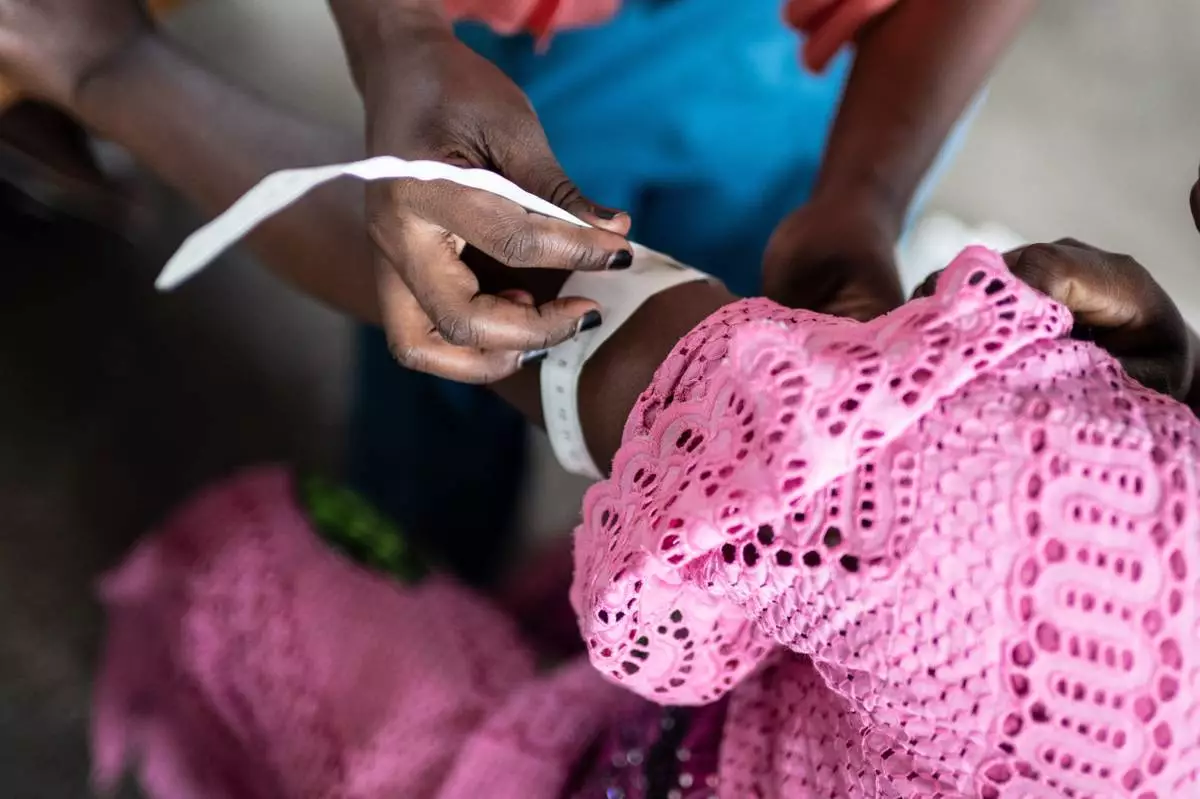
Irene Nabudeba, pregnant, mother of 5, waits for a consultation that used to be free at the Afia Himbi Hospital in Goma, Democratic Republic of Congo, Nov. 11, 2025. (AP Photo/Moses Sawasawa)
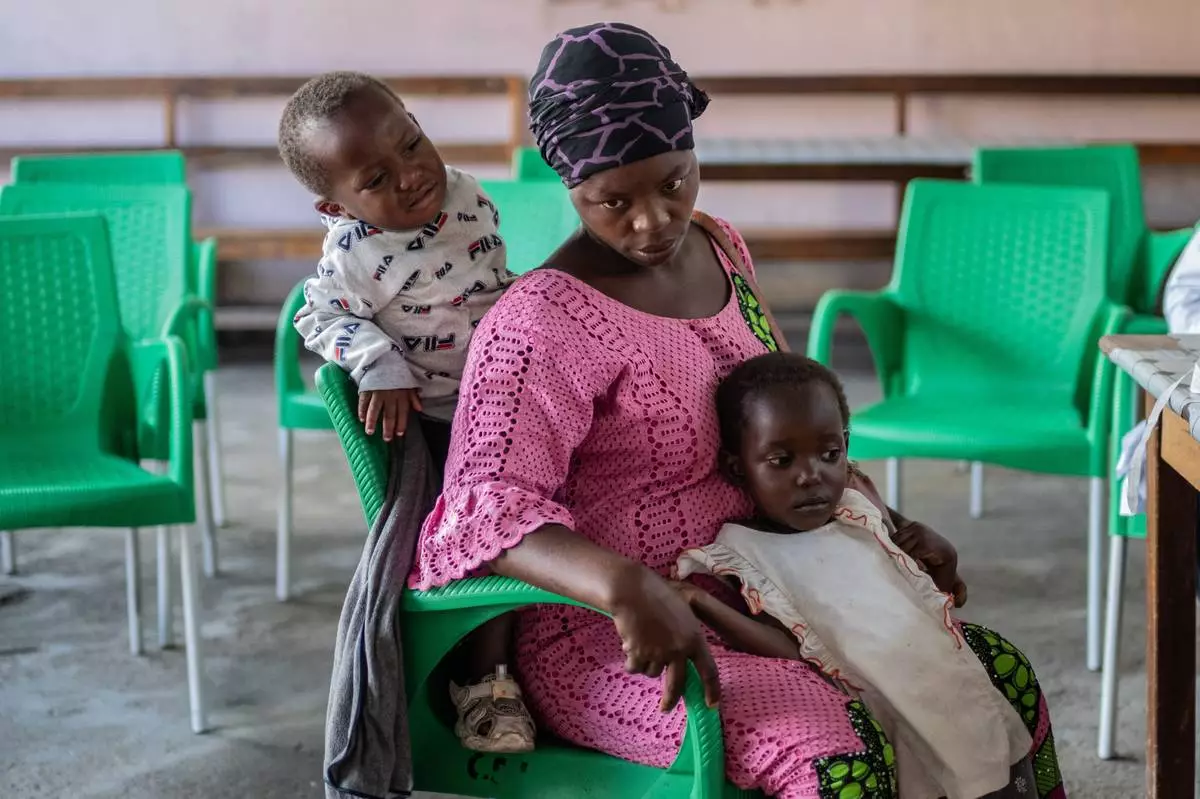
Irene Nabudeba, pregnant, mother of 5, waits for a consultation that used to be free at the Afia Himbi Hospital in Goma, Democratic Republic of Congo, Nov. 11, 2025. (AP Photo/Moses Sawasawa)