ST. MORITZ, Switzerland (AP) — Two-time Olympic champion Michelle Gisin was undergoing surgery on her back Thursday having been airlifted from the course by helicopter after crashing hard in a practice run for a World Cup downhill.
Gisin is the third current Olympic champion in the Switzerland women’s Alpine ski team to be injured crashing in training in the last month, after Lara Gut-Behrami and Corinne Suter, just weeks before the Milan Cortina Winter Games.
Click to Gallery
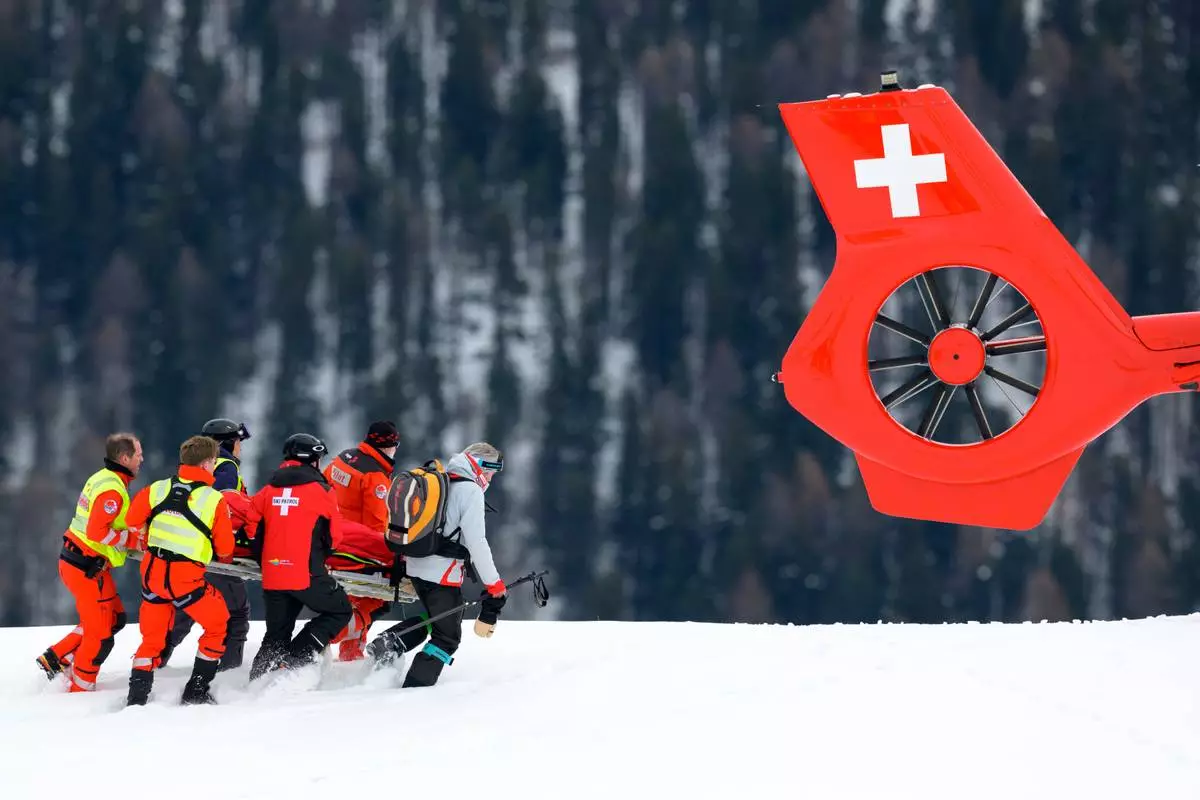
Michelle Gisin of Switzerland is being carried on a stretcher to a helicopter after a fall, during the women's Downhill training race at the Alpine Skiing FIS Ski World Cup, in St. Moritz, Switzerland, Thursday, Dec. 11, 2025. (Jean-Christophe Bott/Keystone via AP)

Switzerland's Michelle Gisin speeds down the course during an alpine ski, women's World Cup downhill training, in St. Moritz, Switzerland, Thursday, Dec. 11, 2025. (AP Photo/Gabriele Facciotti)

Michelle Gisin of Switzerland in action before a fall during the women's Downhill training race at the Alpine Skiing FIS Ski World Cup, in St. Moritz, Switzerland, Thursday, Dec. 11, 2025. (Jean-Christophe Bott/Keystone via AP)

Michelle Gisin of Switzerland is being carried on a stretcher after a fall during an alpine ski, women's World Cup downhill training, in St. Moritz, Switzerland, Thursday, Dec. 11, 2025. (Keystone Via AP)

Michelle Gisin of Switzerland is being carried on a stretcher after a fall during an alpine ski, women's World Cup downhill training, in St. Moritz, Switzerland, Thursday, Dec. 11, 2025. (Keystone Via AP)
The 32-year-old Swiss hit the safety fences racing at more than 110 kph (69 mph) on a cloudy morning at St. Moritz in practice for downhills scheduled Friday and Saturday, then a super-G Sunday.
Gisin “can move her arms and legs normally,” the Swiss ski team said in a statement, but also has injuries to her right wrist and left knee.
She is having surgery in Zurich, where she was taken by an air ambulance service, and is in a stable condition, her team said.
One of Gisin's skis seemed to catch an edge approaching a fast left-hand turn and she lost control going straight on, hitting through the first layer of safety nets until being stopped by the second.
Television pictures showed Gisin conscious lying by the course with scratches and cuts on her face as medics assessed her.
Gisin, who won gold in Alpine combined at the past two Winter Games, is currently the veteran leader of the Swiss women’s speed team because of injuries to her fellow 2022 Beijing Olympics champions.
Gut-Behrami’s Olympic season was ended tearing the ACL in her left knee while crashing in practice last month at Copper Mountain, Colorado.
Suter is off skis for about a month with calf, knee and foot injures from a crash while training at St. Moritz last month.
At the last Winter Games in China, Suter won the downhill, Gut-Behrami won super-G — where Gisin took bronze — and Gisin took the final title in individual combined. The Swiss skiers have seven career Olympic medals.
Gisin crashed Thursday when United States star Lindsey Vonn was already on the course having started her practice run. Vonn was stopped while Gisin got medical help and resumed her run later.
Vonn was fastest in the opening practice Wednesday.
The Milan Cortina Olympics open Feb. 6 with women's Alpine skiing race at the storied Cortina d'Ampezzo hill.
AP Winter Olympics at https://apnews.com/hub/milan-cortina-2026-winter-olympics
Michelle Gisin of Switzerland is being carried on a stretcher to a helicopter after a fall, during the women's Downhill training race at the Alpine Skiing FIS Ski World Cup, in St. Moritz, Switzerland, Thursday, Dec. 11, 2025. (Jean-Christophe Bott/Keystone via AP)

Switzerland's Michelle Gisin speeds down the course during an alpine ski, women's World Cup downhill training, in St. Moritz, Switzerland, Thursday, Dec. 11, 2025. (AP Photo/Gabriele Facciotti)

Michelle Gisin of Switzerland in action before a fall during the women's Downhill training race at the Alpine Skiing FIS Ski World Cup, in St. Moritz, Switzerland, Thursday, Dec. 11, 2025. (Jean-Christophe Bott/Keystone via AP)

Michelle Gisin of Switzerland is being carried on a stretcher after a fall during an alpine ski, women's World Cup downhill training, in St. Moritz, Switzerland, Thursday, Dec. 11, 2025. (Keystone Via AP)

Michelle Gisin of Switzerland is being carried on a stretcher after a fall during an alpine ski, women's World Cup downhill training, in St. Moritz, Switzerland, Thursday, Dec. 11, 2025. (Keystone Via AP)