U.S. stock indices ended mixed on Thursday, after Oracle reported lower-than-expected quarterly revenue and raised its capital spending outlook.
The Dow Jones Industrial Average surged 646.26 points, or 1.34 percent, to an all-time high of 48,704.01. The Standard and Poor's 500 rose 14.32 points, or 0.21 percent, to 6,901, securing its first record close in over a month. The Nasdaq Composite Index fell 60.3 points, or 0.25 percent, to 23,593.86.
Eight of the 11 primary Standard and Poor's 500 sectors advanced, led by materials and financials with gains of 2.23 percent and 1.84 percent, respectively, while communication services and technology declined 1.01 percent and 0.55 percent.
Oracle tumbled nearly 11 percent after reporting fiscal second-quarter revenue below expectations and lifting its annual data-center spending forecast by another 15 billion U.S. dollars.
The development intensified investor concerns over the pace of returns on massive AI investments. Nvidia and Broadcom each dropped more than 1 percent.
The broader market continued to digest Wednesday's Federal Reserve decision to cut the federal funds rate by 25 basis points to 3.5-3.75 percent, while signaling a more cautious easing path ahead and ruling out near-term rate hikes.
After its strong outperformance throughout 2025, the tech-heavy Nasdaq is getting dragged lower as peak-AI fears and elevated valuations lead to a huge shift toward traditional and defensive sectors, noted Elior Manier, market analyst with MarketPulse.
Separately, filings for unemployment benefits in the United States jumped to 236,000, well above forecasts, though analysts attributed the spike largely to seasonal distortions.
Corporate earnings season continues, with Broadcom, Costco and Lululemon scheduled to report results after Thursday's close. Investors anticipate these updates will provide further insights into consumer spending patterns and AI-related capital outlays.
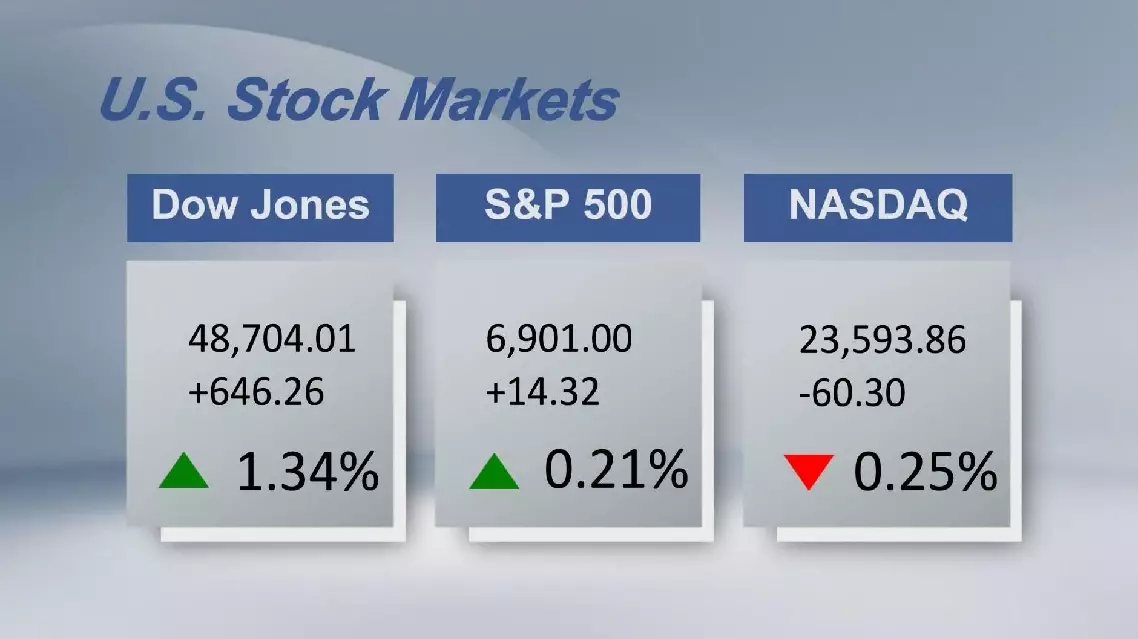
U.S. stocks close mixed as Oracle results weigh on tech sector
China's Minister of Commerce Wang Wentao outlined the key priorities of the 32nd Asia-Pacific Economic Cooperation (APEC) Ministers Responsible for Trade Meeting, which opened on Friday in Suzhou, East China's Jiangsu province.
In an interview with CGTN ahead of the two-day meeting, Wang said free trade, digital cooperation and green economy are high on the agenda of the meeting.
"The key areas include advancing regional economic integration and the Free Trade Area of the Asia-Pacific, supporting the World Trade Organization (WTO) in strengthening digital cooperation and developing green economy. At present, the international situation is marked by intertwined turbulence and chaos, with intensified geopolitical instability. The rise of unilateralism and protectionism poses serious challenges to the international economic and trade order, disrupting global and Asia-Pacific development. Against this backdrop, all parties have higher expectations for this trade ministers' meeting, hoping that it can build consensus and deliver outcomes," Wang said.
This year marks China's third time hosting the APEC meetings and the 35th anniversary of its membership.
By 2025, China had become the largest trading partner of 13 APEC economies. Trade between China and APEC economies reached 3.7 trillion U.S. dollars, accounting for 57.8 percent of China's total foreign trade.
China has signed 24 free trade agreements or economic and trade arrangements with 31 countries and regions, including 15 APEC economies. In recent years, China has also completed upgrades of free trade agreements with APEC economies such as Singapore and Peru.
The minister said that China has always been a firm supporter and an important contributor to APEC.
"We have actively shared our vast market and development opportunities with all parties. China's door to the world will only open wider and wider. Facing the common challenges, China will continue to fulfill its responsibilities as a major country, further deepen reform, expand high-standard opening-up, and continue to provide new opportunities for the Asia-Pacific region and the world with its new achievements in Chinese modernization," the minister said.

China's Commerce Minister outlines priorities for 32nd APEC trade ministers' meeting