Russia and Ukraine on Thursday made conflicting claims over the control of Seversk, a city in Donetsk, as both sides reported advances in battle fields.
At a meeting held by Russian President Vladimir Putin on Thursday at Kremlin, Valery Gerasimov, chief of the General Staff of the Russian Armed Forces, said that Russia had fully controlled Seversk in Donetsk and the two nearby settlements, namely Kucherovka and Kurilovka.
However, an official statement released by Ukraine's Operation Task Force "East" on the same day said Ukraine still controls Seversk with its military thwarting most Russian infiltration operations. It also claimed control of the northern part of Pokrovsk (also known as Krasnoarmeysk).
A report released on Thursday by Russian Defense Ministry said that in the past 24 hours, the Russian military had carried out strikes across 152 areas, targeting energy and fuel facilities supporting Ukrainian army units as well as temporary deployment points of the Ukrainian armed forces and foreign mercenaries.
Additionally, it also announced that Russian forces had taken control of Lyman in Kharkiv region.
A war report released by Ukraine on the same day said since 19:00 Wednesday, the Ukrainian forces had detected and tracked 154 aerial targets and as of 10:00 Thursday, Ukrainian air defense systems had destroyed or suppressed 85 of these targets.
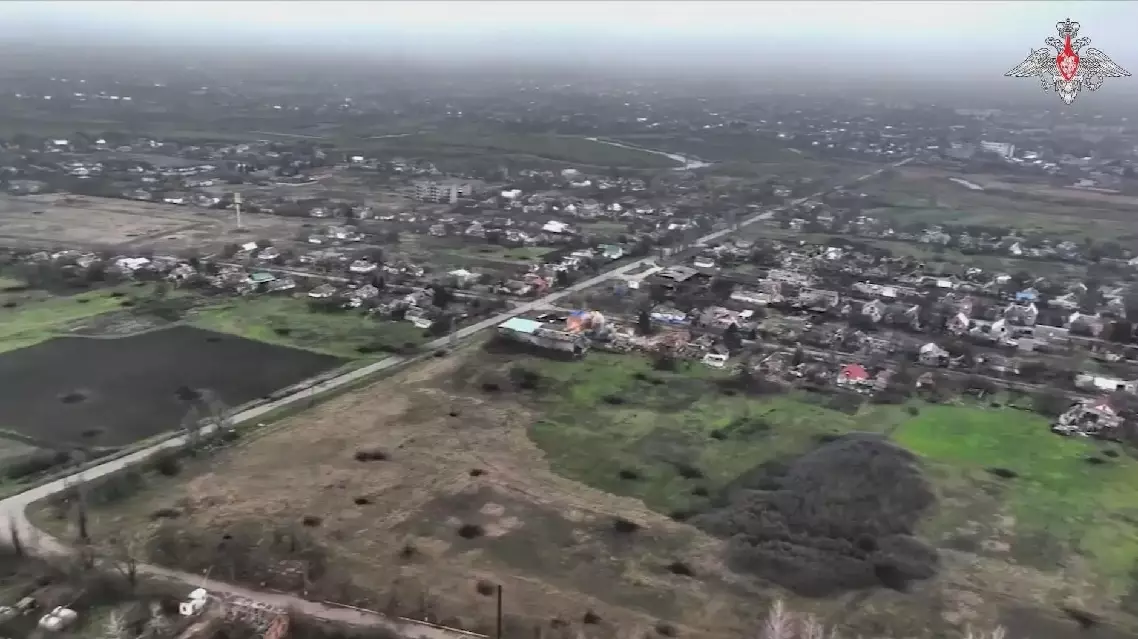
Russia, Ukraine make conflicting claims over control of Seversk
The U.S.-Israeli airstrikes against Iran since February 28 have inflicted irreparable damage on the country's priceless cultural heritage sites, according to Hassan Fartousi, secretary-general of the Iranian National Commission for UNESCO.
Speaking to the press on Tuesday, Fartousi said that 132 cultural heritage items have been attacked in recent strikes, emphasizing that the losses extend far beyond monetary valuation.
"Last night, I was told that 132 pieces [items] of our cultural heritage have been attacked, and it is really impossible to say how much the costs are, and it can be said that these (damaged cultural heritage items) are priceless and irreparable. How can these be defined?" Fartousi said.
Among the most severely affected sites is the Golestan Palace, a UNESCO World Heritage Site inscribed in 2013.
Fartousi said that about 40 percent of the palace's historic mirror works, dating back nearly 220 years to the Qajar period, have been damaged.
"Unfortunately, in Golestan Palace, there are almost 40 percent of the mirror works [that] have been damaged which belong to almost 220 years ago, the Qajar period. The same situation [occurred] in the Saad Abad complex [in] which the Green Palace [was] attacked in a way which the specialists were telling me very sadly that it may not be possible to repair some of the damages," he said.
The Golestan Palace complex, selected as the royal residence and seat of power by the Qajar ruling family in the 19th century, has been described by UNESCO as "a masterpiece of the Qajar era, embodying the successful integration of earlier Persian crafts and architecture with Western influences."
The Saad Abad complex, a sprawling former royal compound in northern Tehran, encompasses an extensive park with multiple buildings now serving as museums dedicated to Iran's cultural history. The official residence of Iran's president is located adjacent to the site.
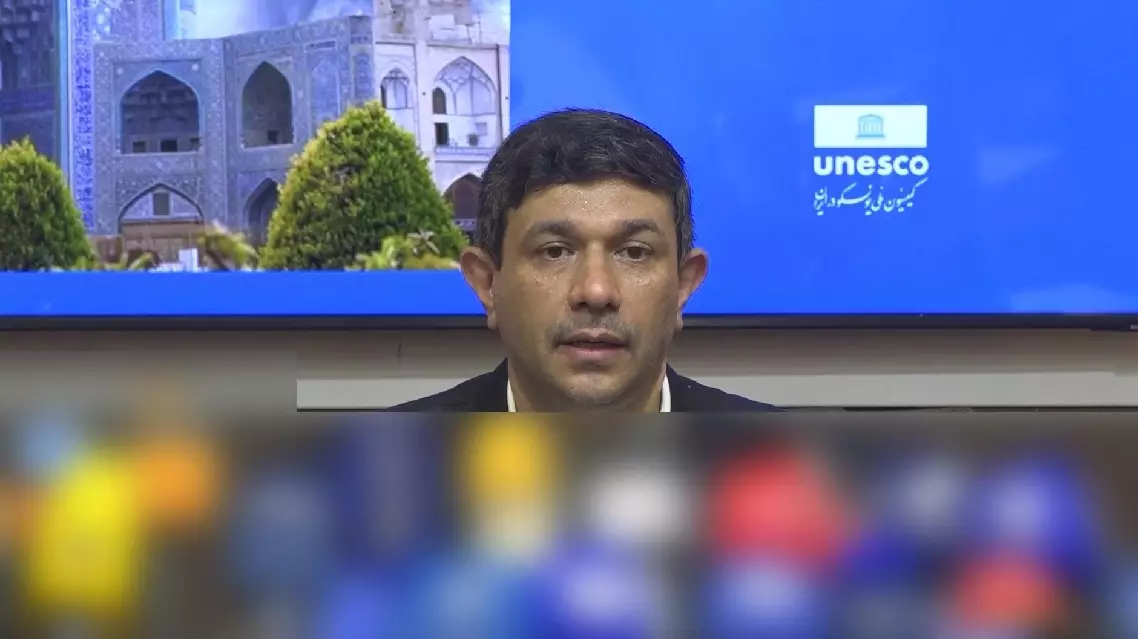
U.S.-Israeli airstrikes cause irreparable damage to Iran's cultural heritage sites: UNESCO official