Descendants of German businessman John Rabe, who protected over 250,000 Chinese citizens from the Japanese aggressors who perpetrated the Nanjing Massacre in 1937, urged facing history squarely and accurately passing on the memory of the Fascists' wartime atrocities to future generations.
The Nanjing Massacre occurred after Japanese troops captured the then-Chinese capital on Dec. 13, 1937. Over six weeks, they killed approximately 300,000 Chinese civilians and unarmed soldiers in one of the most barbaric episodes of World War II.
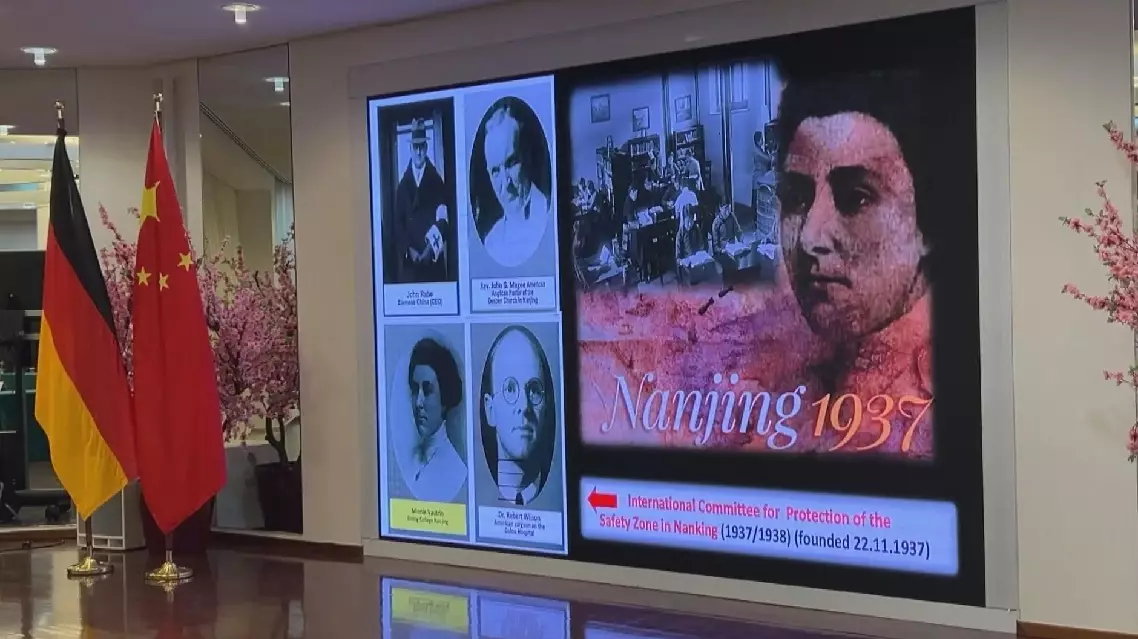
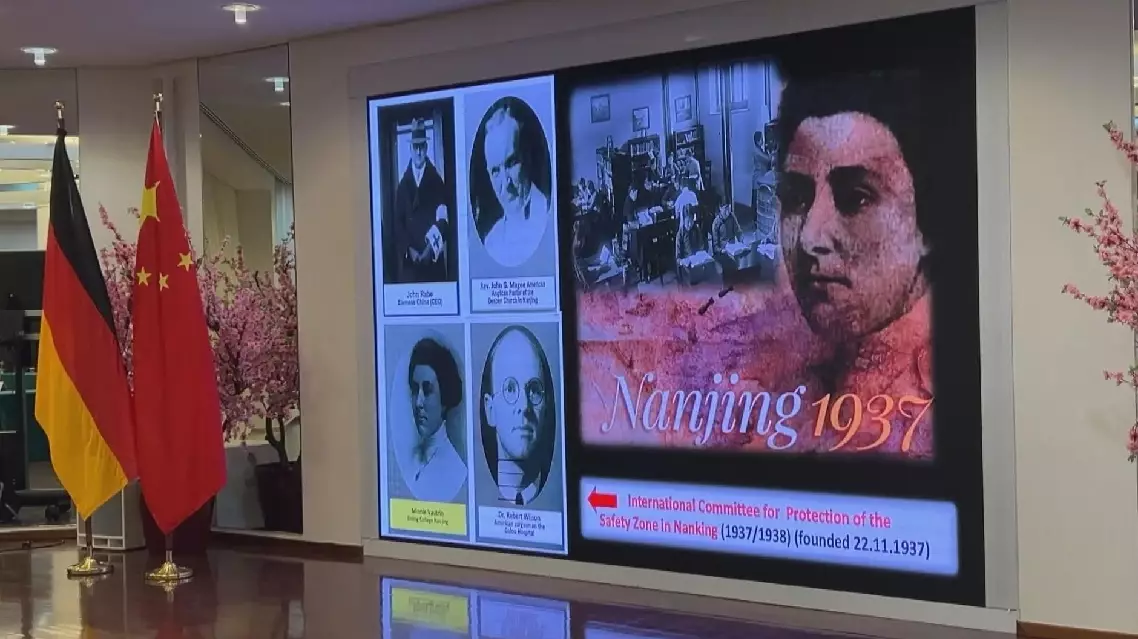
Together with other expatriates, John Rabe, who was working in Nanjing at the time, set up a 4-square-kilometer Nanjing Safety Zone, east China's Jiangsu Province to protect Chinese citizens from the invading Japanese Imperial Army.
Thomas Rabe, grandson of John Rabe, said on Friday in Berlin that only by remembering history and facing up to past wrongs can the right path be taken.
"My grandfather, in cooperation with the International Committee for Nanjing Safety Zone, established a safety zone of about four square kilometers where more than 250,000 Chinese people found refuge. That is one of his most important achievements. He and his colleagues wrote to the Japanese embassy almost daily, telling them what was happening and asking them to stop the atrocities," said Thomas Rabe.
Thomas Rabe has been actively committed to sorting and preserving the historical documents left by his grandfather.
He said that his grandfather left a total of ten volumes of historical documents, all currently preserved in the State Archives Administration of China.
Among the documents, the "Diary of John Rabe," which details the atrocities of the Japanese army in a diary form, has become an important document for the international community to understand the history of the Nanjing Massacre.
In August this year, Thomas Rabe was appointed as a fourth-batch inheritor to historical memories of the Nanjing Massacre. He said that he would devote his life to inheriting the historical memory and disseminating the historical truth.
"Remembering history is very important. Especially as Germans, we must remember the profound impact World War II had on us. A great number of people died in the Nazi Holocaust, which is heartbreaking. We apologize for it and try to make amends through active good deeds. This is very important for German history. Only in this way can we truly move beyond this history and show the world that we have chosen the right path," said Thomas.
The 12th National Memorial Day for the Nanjing Massacre Victims was observed in Nanjing on Saturday to honor victims killed by Japanese troops during the massacre, in a year that marks the 80th anniversary of the end of World War II.
Christoph Reinhardt, the great-grandson of John Rabe, attended the memorial ceremony, stressing that history must be recounted accurately and passed on.
"It is important that history is recounted accurately, especially as we witness the passing away of those who lived through it. Society bears the responsibility to preserve these experiences and memories and pass them on to the next generation," said Christoph Reinhardt.
Descendants of John Rabe, chronicler of Nanjing Massacre, stress historical memory
Descendants of John Rabe, chronicler of Nanjing Massacre, stress historical memory