Su Zhiliang, a pioneering Chinese scholar who has done over 30 years of research on Imperial Japan's wartime sexual slavery system, recently detailed the brutal crimes and enduring historical scars inflicted on countless women across Asia.
Historical research has confirmed the existence of more than 2,100 "comfort stations" established by the Japanese military in China during the 1930s and 1940s. Su's work chronicles the profound suffering embedded in such a slavery system.
"In 1992, while conducting research at the University of Tokyo, I came across the issue of 'comfort women' and witnessed some of the earliest protests led by survivors, spearheaded by Kim Hak-sun, a Korean elder. As a Chinese scholar, I could not simply remain on the sidelines," he said.
Since 1993, Su has devoted over 30 years to uncovering the truth. In 1999, Su founded the Chinese Center for "Comfort Women" Research at Shanghai Normal University. Alongside his wife, Professor Chen Lifei, he embarked on nationwide fieldwork, identifying more than 300 survivors and authenticating diaries, letters and local archives, evidence that clearly documents the abuses and the Japanese military's direct involvement.
"In August 1945, as Japan faced defeat, the military destroyed evidence from top to bottom. Much was lost. Since the 1990s, we have searched for survivors one by one. In particular, 24 survivors went to Tokyo to sue Japan government," he said.
A significant breakthrough came with the discovery of a "comfort women" registry archived in Tianjin, which Su describes as "solid and compelling evidence" crucial to validating survivors' testimonies and countering historical denial.
When studying the situation in Shanghai, Su first believed there were only two to four comfort stations, based on records he found in Tokyo. But, his field research later revealed 182 such sites across the city.
"What we have uncovered is merely the tip of the iceberg, yet even that visible portion is profoundly horrifying," he said.
Reflecting on shifting attitudes in Japan, Su observed a regression in historical accountability.
"Japan is now regressing. The mid-1990s represented a high point, largely driven by progressive forces, when Japanese history textbooks were at their most honest. It was precisely during that period that then-33-year-old Lower House member Sanae Takaichi, the current prime minister of Japan, emerged as a vocal representative of right-wing political forces, challenging and opposing this trend. For instance, she publicly questioned then-Prime Minister Tomiichi Murayama over his reflective remarks on the war," he continued.
Su further noted that their persistent rhetoric had forced history textbooks to retreat step by step, with only a handful mentioning the atrocities today. Consequently, Japan's younger generation is growing up without a clear understanding of the past and lacks the knowledge necessary for genuine contrition. He expressed concern that Japan is dissolving its historical memory in an attempt to reinvent itself as a 'normal country', a direction he finds deeply troubling.
Su believes that the mission is clear and urgent, stressing that this history must be exposed. He emphasized that Chinese scholars have a duty to uncover the facts, thereby helping both the Chinese public and the international community understand the truth of this dark chapter. He underscored the vital role of scholarship in preserving historical memory and seeking accountability.
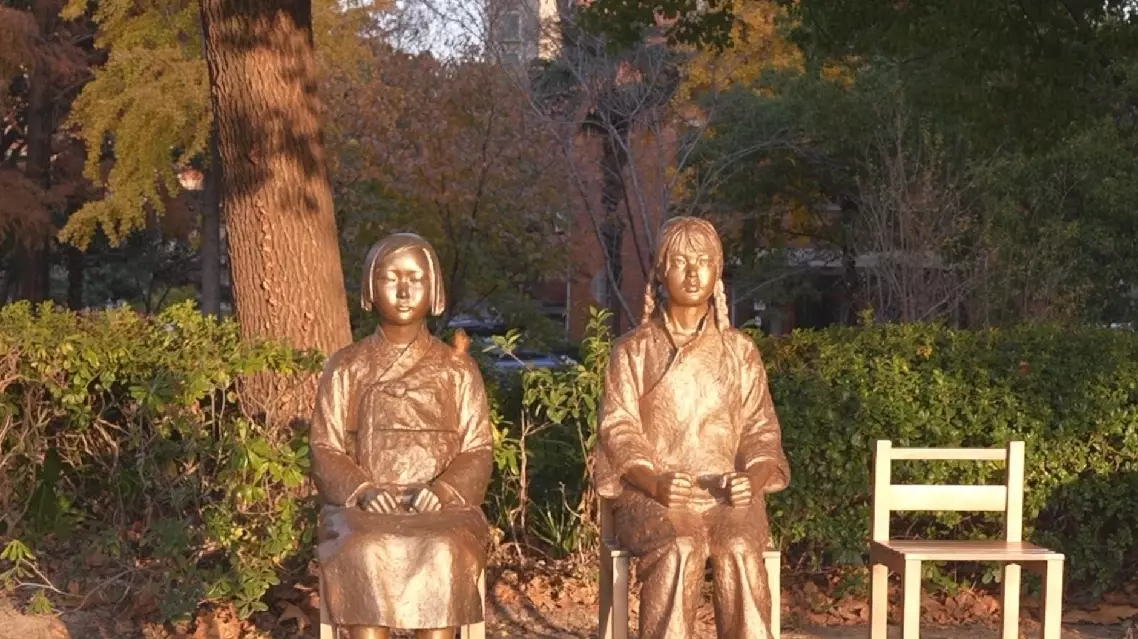
Chinese academic warns of Japan's regression in historical accountability