China's just-concluded annual Central Economic Work Conference gives priority to accelerating and upgrading the country's "AI Plus" strategy in the year ahead, with the aim of widely embedding artificial intelligence in manufacturing, health care and many other sectors to fuel comprehensive high-quality development, said a Chinese expert on Friday.
In an interview with China Central Television to comment on the outcome of the 2025-2026 Central Economic Work Conference, Zhong Xinlong, director of the Artificial Intelligence Research Laboratory of the China Center for Information Industry Development, shed more light on a major aspect of the priorities for 2026's economic work outlined by the agenda-setting economic meeting held in Beijing on Wednesday and Thursday.
The two-day meeting promised more proactive measures to accelerate technological upgrading, strengthen industrial resilience and secure new economic growth drivers, with a focus on expanding the use of AI.
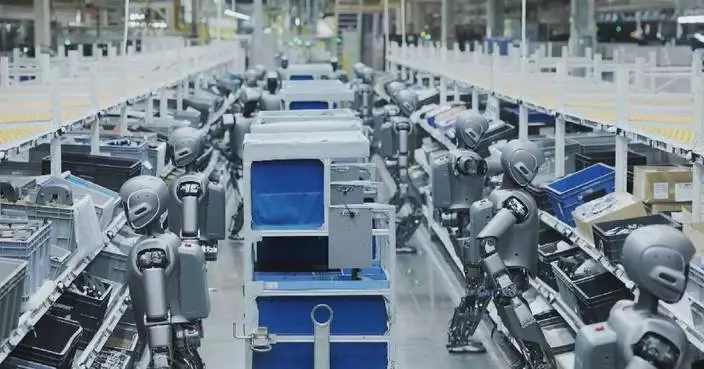
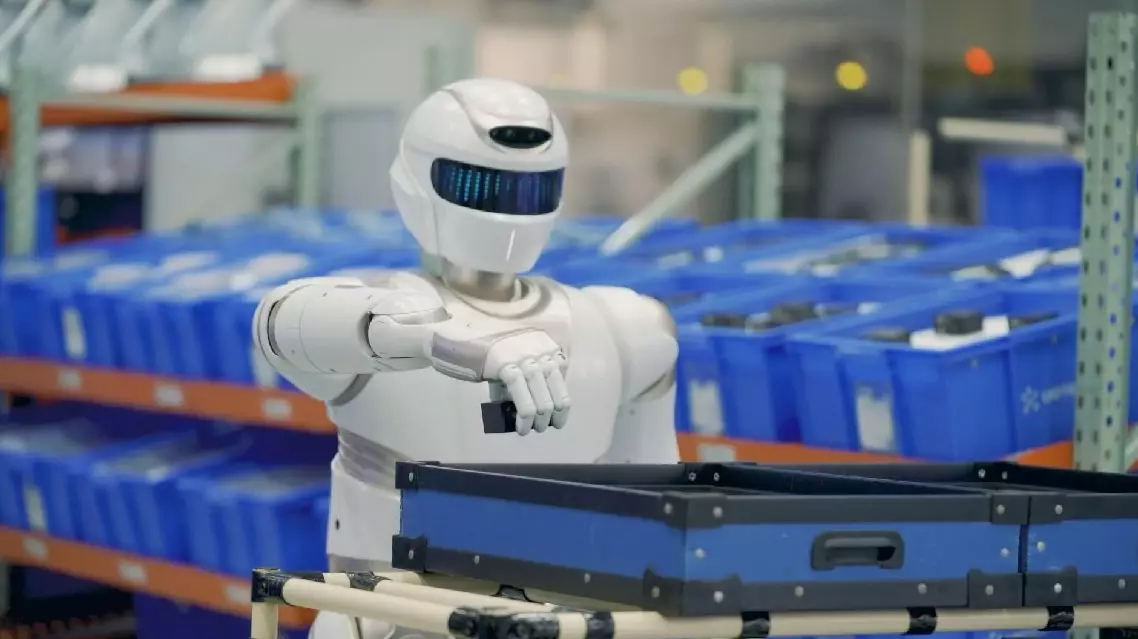
Defining AI broadly, Chinese policies extend beyond content-generating large language models to include industrial robots and automated software, integrated smart city solutions, advanced equipment in emerging fields like the low-altitude economy, consumer products like smart cars, humanoid robots and wearables, as well as service scenarios like e-commerce, elderly care, childcare and transportation.
The country's "AI Plus" initiative seeks to upgrade existing sectors, spur new products and services, and reshape the way its cities are run. It envisions the penetration of AI-powered "intelligent terminals" and AI agents to exceed 70 percent across key sectors by 2027, with a vibrant AI industry that is well integrated across China's economy and society.
According to Zhong, with the policymakers putting AI at the forefront of China's shift to an innovation-driven growth model, the coming year will see the "AI Plus" drive undergo systematic upgrading, with new rules and regulations anticipated to guide the extensive, healthy and secure adoption of AI technologies.
"Artificial intelligence has moved from the phase of initial development to the stage of systematic upgrading, which necessitates higher-level balance between development and security, and between market vitality and regulation. While promoting AI applications, greater emphasis will be placed on making new rules and providing institutional safeguards to forestalling systemic risks arising from a lack of institutional constraints in key areas," Zhong said.
He said that in the year ahead, AI will not only empower high-tech manufacturing, but also penetrate the economy and society on a larger scale.
"In promoting high-quality development of key industrial chains, artificial intelligence will be deeply embedded in crucial links such as high-end manufacturing, new energy, and new-type infrastructure to cultivate globally competitive advanced manufacturing clusters. In advancing campaigns to improve the quality of consumption and the service industry, steps will be taken to leverage application scenarios such as content production, smart logistics, intelligent transportation, and smart health care to ensure supply of high-quality services and new consumption patterns, thereby securing the leading role of domestic demand in pursuing development," he said.
The expert further said that going forward, efforts will be concentrated to deploy major innovation platforms and key generic technology platforms for AI, and improve rules for AI governance and intellectual property protection systems in the emerging fields.
"Artificial intelligence will be incorporated into a unified framework for forestalling risks in key areas and safeguarding the bottom line, ensuring simultaneous strengthening of the innovation driving forces that can be enlivened upon relaxation of rigorous control and the capability of guarding the bottom line that can be well in place on the condition of sound management, thus to boost the formation and enhancement of new quality productive forces through deepening and expansion of AI applications," Zhong noted.
Convened by the CPC Central Committee and the State Council, the Central Economic Work Conference is a significant annual event in China where top leaders review the previous year's economic performance and set priorities for the upcoming year.
China to move toward AI's wide, secure integration across economy, society in 2026: expert