Full-scale production has commenced at the newly expanded operating sections of the Liuhua Oilfield, China's first deepwater oilfield, the China National Offshore Oil Corporation announced.
The milestone marks a major breakthrough in China's ability to develop complex deepwater oil and gas reservoirs, with daily crude oil production reaching a record-high of 3,900 tons.
Click to Gallery
China's first deepwater oilfield sees full operation in expanded sections
China's first deepwater oilfield sees full operation in expanded sections
China's first deepwater oilfield sees full operation in expanded sections
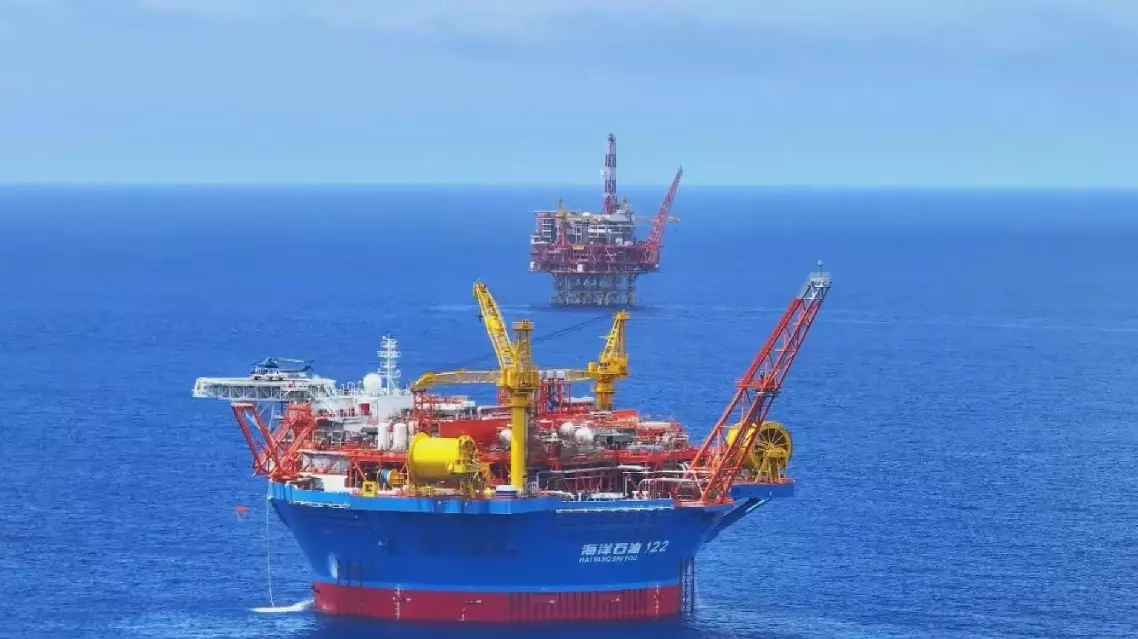
China's first deepwater oilfield sees full operation in expanded sections
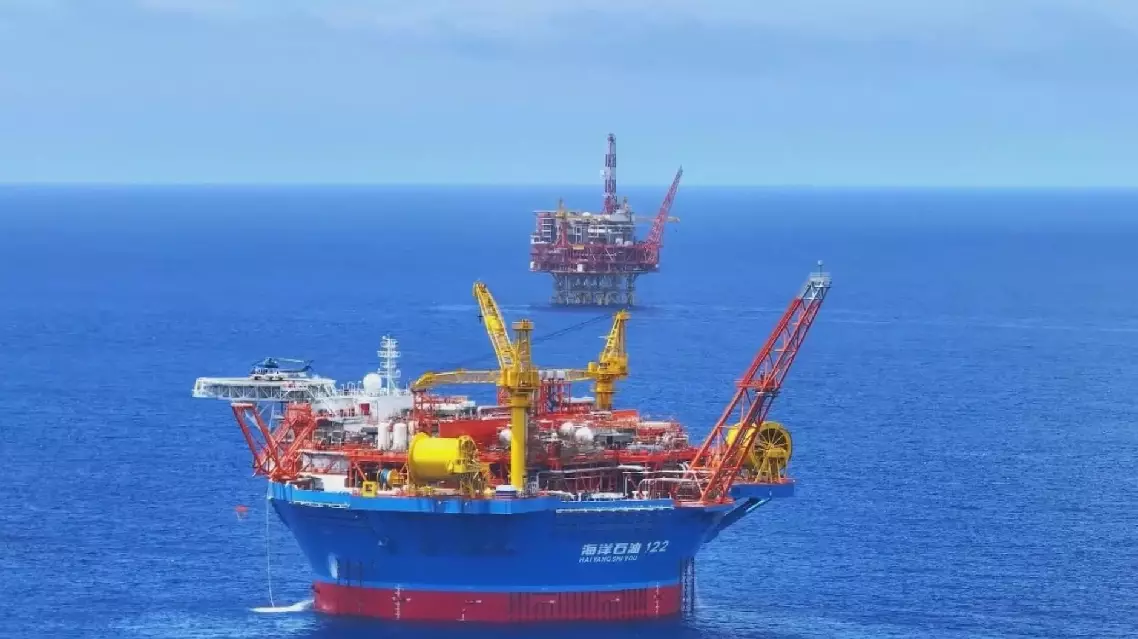
The secondary development project comprises two oilfields, Liuhua 11-1 and Liuhua 4-1, situated in an area with an average water depth of approximately 305 meters and involving 32 production wells.
The main production facilities include deepwater jacket platform Haiji-2, cylindrical floating oil-gas production, storage and offloading (FPSO) facility Haikui No. 1, and a subsea production system.
Since the first batch of production wells went into operation last September, it has produced more than 900,000 tons of crude oil.
"After initial processing at the Haiji-2 platform, the crude oil is transported to the Haikui No. 1 offshore oil and gas processing plant, which is 2.5 kilometers away, for further processing and storage. We have cumulatively delivered 25 shipments of crude oil to onshore refineries. The oilfield development project is now fully operational, and the development results are better than expected," said Xie Xiulong, director of Haiji-2.
Located in the Pearl River Mouth Basin, the Liuhua Oilfield is China's largest offshore reef limestone oilfield in terms of proven geological reserves. Since its initial commissioning in 1996, the oilfield has produced over 20 million tonnes of crude oil.
However, substantial reserves estimated at 140 million tonnes remain in the seabed strata, necessitating secondary development to tap into the potential.
"We innovatively adopted the development model of deepwater jacket platform and cylindrical floating production storage and offloading unit, explored and formed a set of oil stabilization and water control technology system for reef limestone reservoirs, realized the efficient release of production capacity of Liuhua Oilfield, successfully revitalized crude oil reserves of hundreds of millions of tons, and explored a practical 'Chinese solution' for the future large-scale and efficient development of deepwater oilfields in China," said Jiang Junda, general manager of the Liuhua Oilfield.
China's first deepwater oilfield sees full operation in expanded sections
China's first deepwater oilfield sees full operation in expanded sections
China's first deepwater oilfield sees full operation in expanded sections
China's first deepwater oilfield sees full operation in expanded sections