Greater emphasis should be placed on major metropolitan areas and county seats to advance urban-rural integration and development, an official said while interpreting the key messages of the just-concluded Central Economic Work Conference.
The annual Central Economic Work Conference was held in Beijing from Wednesday to Thursday, as Chinese leaders decided on priorities for economic work in 2026.
Coordination in development should be promoted to facilitate integrated urban-rural development and regional synergy, the meeting said.
"This year, the term 'synergy' is explained differently than in the past. It reflects the guiding principle of 'a unified national strategy' and emphasizes building synergy based on each region's resource endowments and environmental carrying capacity to enhance overall competitiveness, requiring greater coordination in both temporal sequencing and spatial planning," said Shang Jing, deputy director of the research center for territorial spatial planning under the Ministry of Natural Resources.
The meeting also highlighted the need to take coordinated steps to advance urbanization with a focus on counties and all-around rural revitalization, promoting high-quality development of county economies.
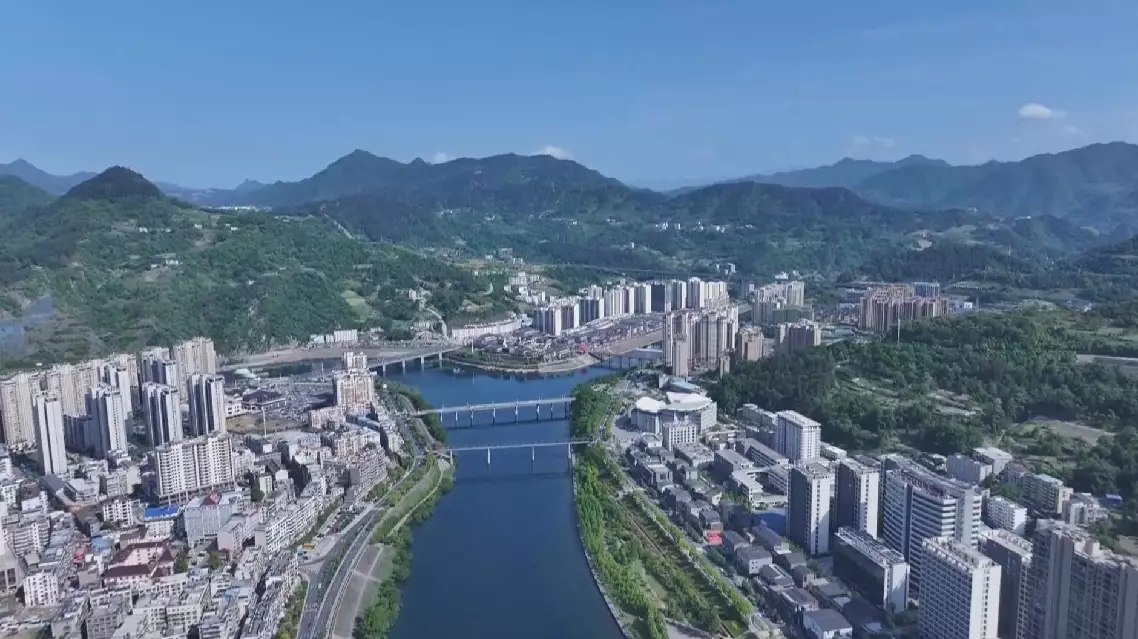
"There are two key tasks to carry out. First, urban-rural integration should be advanced through spatial units such as city clusters and metropolitan circles to drive development in rural areas. Second, greater emphasis must be placed on counties, treating county seats as critical nodes for urban-rural integration and connectivity, thereby facilitating the flow of factors of production and the sharing of infrastructure between urban and rural areas," said Shang.
The meeting also stressed the importance of strengthening coordinated, interconnected development across key city clusters and deepening cross-jurisdictional cooperation.
According to Shang, the recent approval and implementation of national-level spatial plans, such as the territorial spatial planning for the Yangtze River Delta, demonstrate China's systematic progress in optimizing its national spatial development framework.
"Particular focus will be placed on the development of key metropolitan areas. We will study the territorial spatial needs of these regions for launching major projects and support their development through strategic planning and policy empowerment," said Shang.
Focus on major metropolitan areas, county seats key to urban-rural integration: official