Around 133 hectares of giant reeds have been harvested these days on the edge of Taklimakan Desert in Tumxuk, a city in northwest China's Xinjiang Uygur Autonomous Region, marking a significant victory to bring ecological and economic gains to the city.
At the city's Dabanshan industrial park, large harvesters were cutting and crushing the giant reeds. The harvest was transported to the park to be processed into plant fiber pulp and fuel, while the crushed roots and leaves were covered with soil to nourish the land.
"The shredded leaves will rot after being watered in the coming year. And then they could fertilize the plant roots," said Ma Guoqing, head of a local giant reed planting base.
The giant reed is a perennial plant usually suited to warm and wet southern climates. However, the oasis No. 1 variety, developed by the China National Engineering Research Center of Juncao Technology, has been bred to withstand drought and saline-alkali soil.
Following a successful trial in 2024, the plants have achieved a survival rate of nearly 90 percent, with yields exceeding almost 15 tons per hectare, and they can be harvested continuously for 15 to 20 years.
"When we first started reclaiming the land, stepping on the ground made a crunchy sound due to the salt. Now, the salinity has decreased significantly. The soil can be crumbled in hand, whereas it was too hard to break in the past," Ma said.
At present, with the introduction of processing enterprises for giant reed fiber pulp and fuel, Tumxuk is turning this desert greenery into a sustainable industry, achieving a "win-win" for both the environment and the local economy.
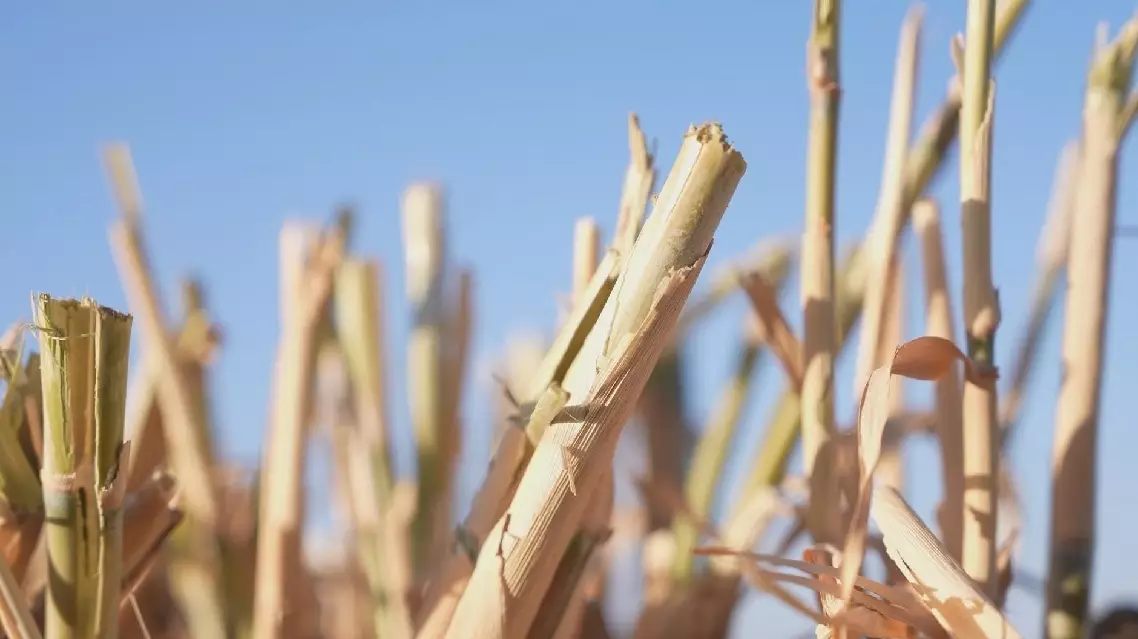
Desert giant reed brings ecological, economic gains in Xinjiang's Tumxuk
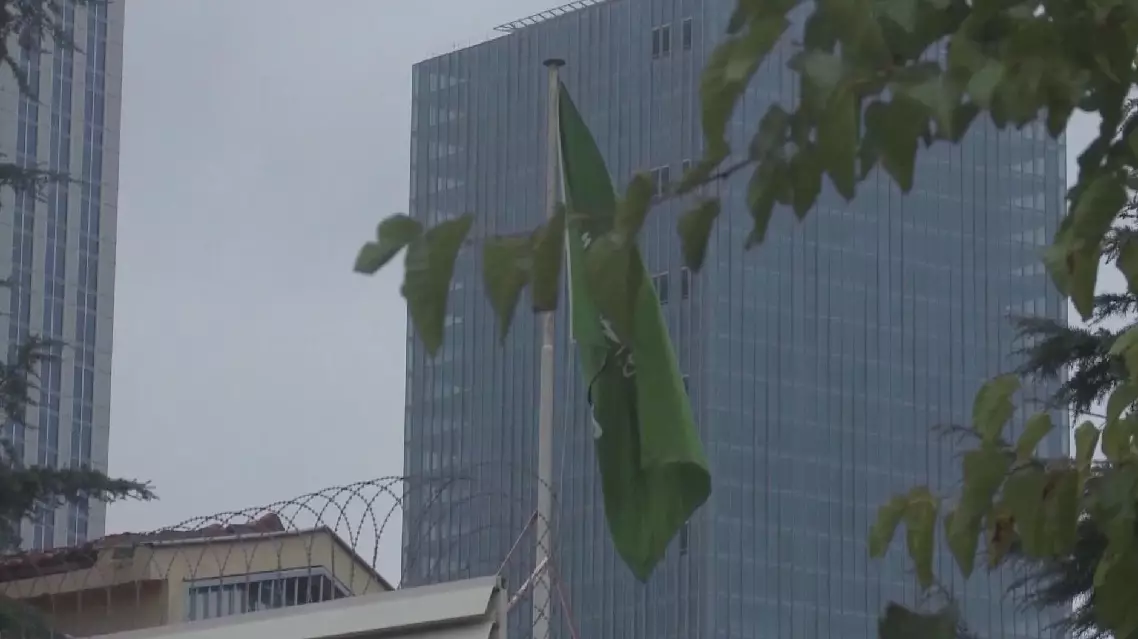
Saudi Arabia and Pakistan have reaffirmed that they will not seek normalization of ties with Israel, rejecting U.S. President Donald Trump's call for the two countries to join the Abraham Accords.
Saudi Arabia's position on the Palestinian issue remains unchanged, a Saudi source told Al Arabiya TV on Monday.
The source affirmed the need for "an irreversible pathway to a Palestinian state".
The remarks came after U.S. President Donald Trump urged Muslim-majority and regional countries to normalize relations with Israel and join the Abraham Accords before the U.S. reaches a peace agreement with Iran.
Saudi Arabia has repeatedly said it would not normalize relations with Israel without the establishment of a Palestinian state.
Pakistani Defense Minister Khawaja Asif said on Tuesday that Pakistan will not join any agreement to normalize ties with Israel, adding that the country will not accept any deal that "conflicts with its fundamental ideologies".
Trump on Monday urged Saudi Arabia, Qatar, Egypt, Jordan, Turkey and Pakistan -- countries involved in mediating U.S.-Iran talks -- to immediately join the Abraham Accords, warning that otherwise they should not participate in the mediation.
He added that if a U.S.-Iran deal is reached, Iran should also join the agreement.
The Abraham Accords, brokered by the United States in 2020 during Trump's first term, were established between the Israeli government and Arab countries including the United Arab Emirates, Bahrain, Sudan and Morocco, aimed at rapidly advancing the normalization of relations between Israel and Arab countries.
Before the outbreak of the latest round of Israeli-Palestinian conflict in October 2023, the United States had been pushing for normalization between Saudi Arabia and Israel.
After the conflict erupted, Saudi Arabia suspended normalization talks with Israel.
Saudi Arabia, Pakistan reject Trump's Abraham Accords demand