A variety of cultural relics, including pottery, stone tools, jade artifacts, were unearthed from the Luojiahe cultural relic site in northwest China's Shaanxi Province, with the number of relics being restored and sorted surpassing 1,000.
The Luojiahe cultural relic site is located in Chunhua County, Xianyang City, where archaeologists from the Xianyang Cultural Heritage Institute conducted excavations between March 2022 and Sept 2025.
By analyzing the features of the unearthed relics and artifacts with scientific methods, the team concluded that the site likely dates back approximately 4,800 to 4,200 years.
Preliminary surveys and explorations confirmed that the site covers a total area of 50,000 square meters, with the excavation area, located at the site's central zone, spanning approximately 14,200 square meters.
"We unearthed roof tiles used in the Longshan Period (about 3,950-4,350 years ago). We've unearthed cylindrical one, and flat one. They can be linked with the cylindrical one in the middle," said Xie Gaowen, research fellow from the Xianyang Cultural Heritage Institute.
The traces left by craftsmen on the handmade tiles are still clear though they have been buried for more than 4,000 years.
"The craftsmanship was very meticulous. There are some traces of pattern on the surface. We'll do further study to make sure whether they were created with a tool or left by hands," said Xie.
According to archaeologists, pottery unearthed at the Luojiahe site was mainly made by the coiling method, and some of the pottery were polished, showing notable level of the craftsmanship then.
"These three holes let the smoke out. User could feed the fire from down below, and cook food like meat on the upper part. The sealed jar body made it easy to gather fire. When the heat wouldn't disperse, the food could be cooked faster," Xie said.
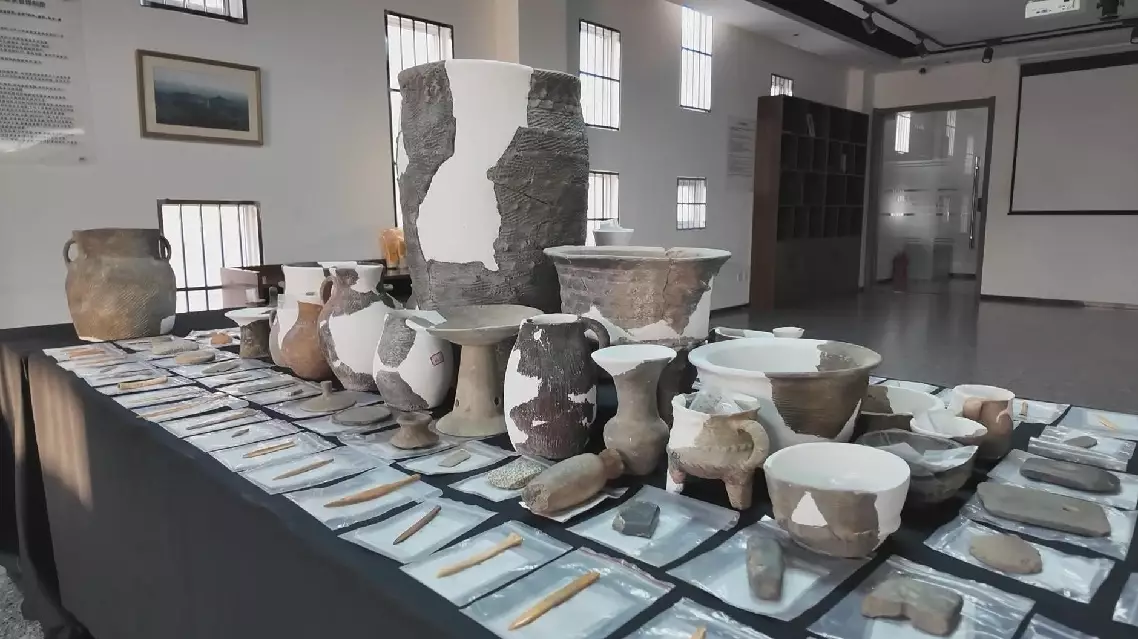
Archaeologists discover wide variety of cultural relics from Luojiahe Site in Shaanxi
China's natural gas production is projected to reach 300 billion cubic meters by 2030, according to a development report released in Beijing.
The report, covering the development of China's oil and gas industry during the country's 14th Five-Year Plan period (2021–2025), said proven geological reserves rose by 7 billion tons of oil and 7 trillion cubic meters of gas, up 43 percent and 40 percent respectively from the previous five-year period. Oil and gas production hit record highs.
"The oil output is likely to reach between 215 and 216 million tons this year. Natural gas has seen major growth during the 14th Five-Year Plan period (2021–2025), with annual domestic output rising by nearly 13 billion cubic meters. In the 15th Five-Year Plan period (2026-2030), we expect annual increases of more than 10 billion cubic meters, reaching 300 billion cubic meters around 2030," said Wu Mouyuan, deputy director of the Economics and Technology Research Institute of China National Petroleum Corporation (CNPC).
The report forecast that China's energy structure will feature less coal, stable oil and gas, and rising non-fossil fuels over the next decade.
By 2060, fossil fuels are expected to account for 23 percent of the energy mix, hydropower and nuclear 19 percent, wind 25 percent, and solar 30 percent, the report said.
"In the next five years, through the integrated development of fossil energy and renewables, we will achieve a heathy, stable, and resilient energy system. Clean energy will continue to grow rapidly. More than 90 percent of renewable energy will be consumed via electricity, so the electrification at end-use sectors is a key direction of transformation in the future," said Wu.
With the rapid growth of artificial intelligence and new high-energy industries, China's power demand will exceed 20 trillion kilowatt hours by 2060, double the 2025 level. Electrification at end-use sectors is expected to reach 62 percent, rising by nearly one percentage point annually, the report projected.
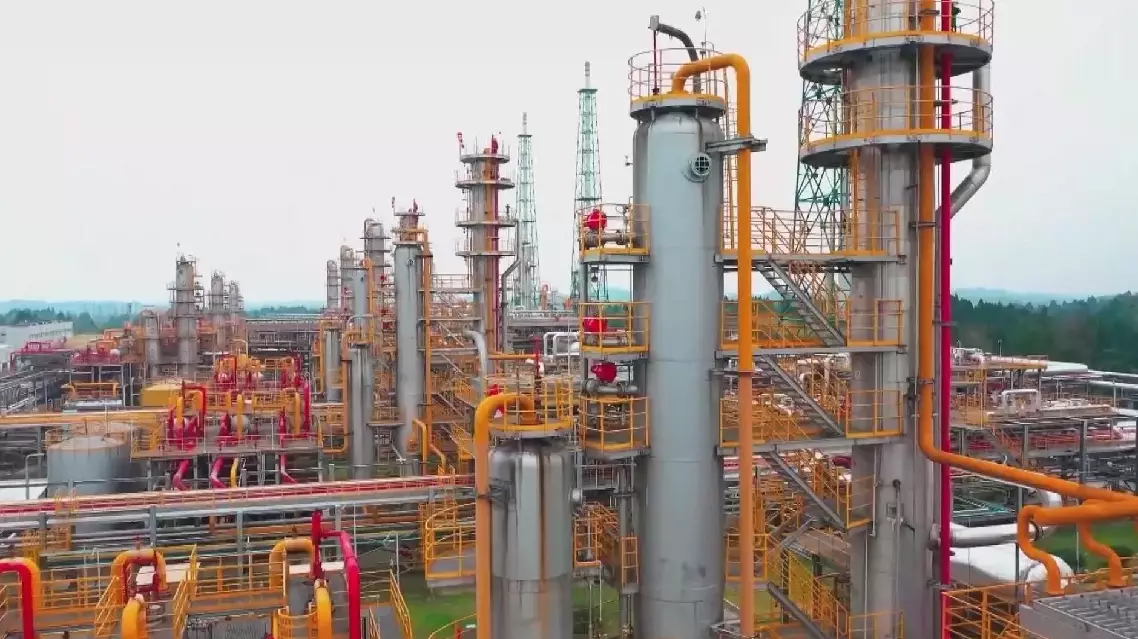
China to see gas output hitting 300 bcm by 2030: report