Chinese Foreign Minister Wang Yi concluded a five-day tour to the United Arab Emirates (UAE), Saudi Arabia and Jordan on Tuesday, seeking to further consolidate ties between China and its friends in the Middle East as China gears up to host the second China-Arab States Summit next year.
Wang began his tour in the UAE where he met with Emirates Deputy Prime Minister and Foreign Minister Sheikh Abdullah bin Zayed Al Nahyan, focusing on elevating economic cooperation in various fields. Discussed issues range from investments in oil and gas, to infrastructure, the Belt and Road Initiative and boosting tech innovation. At the meeting, Wang said China supports the UAE's growing role in regional and international affairs and is planning to elevate relations with the Gulf state.
Next, Wang went to neighboring Saudi Arabia. There, he delivered a letter addressed from Chinese President Xi Jinping to Saudi Crown Prince and Prime Minister Mohammed bin Salman Al Saud. The Chinese diplomat said China is ready to be Saudi Arabia's most trustworthy partner in national development.
During his meeting with Secretary General of the Gulf Cooperation Council (GCC) Jasem Mohamed Albudaiwi, Wang said China stands ready to strengthen strategic communication with the GCC, safeguard common interests, and jointly respond to a turbulent and changing international landscape, so as to make new contributions to the collective self-reliance of the Global South.
China is the largest trading partner of the six Gulf Arab nations - a relationship that was valued at 250 billion U.S. dollars in 2024.
Wang also met with Saudi Foreign Minister Faisal bin Farhan Al Saud, where he said China has always regarded Saudi Arabia as a priority in its Middle East diplomacy and an important partner in its global diplomatic strategy, and is willing to work with Saudi Arabia to elevate bilateral ties to new heights.
"Saudi Arabia has always been an important comprehensive strategic partner of China in the Middle East. Under the strategic guidance of President Xi Jinping, His Majesty Saudi King Salman bin Abdulaziz Al Saud and His Highness Saudi Crown Prince and Prime Minister Mohammed bin Salman Al Saud, the relationship between China and Saudi Arabia has maintained a healthy and stable development momentum in all fields," Wang said.
"Relations between the two countries are an important pillar for the path of economic development and the strengthening of mutual interests. In this context, we commend the 15th Chinese Five-Year Plan from 2026 to 2030 for national economic and social development," said the Saudi foreign minister.
After the meeting, Wang Yi and Faisal bin Farhan Al Saud jointly signed an agreement on mutual visa exemption for holders of diplomatic, service and special passports from both countries.
The final leg took Wang to Jordan where he was welcomed by Jordanian Deputy Prime Minister and Foreign Minister Ayman Safadi. Amman reiterated willingness to strengthen ties, especially so that the two countries see eye to eye on various political and economic matters.
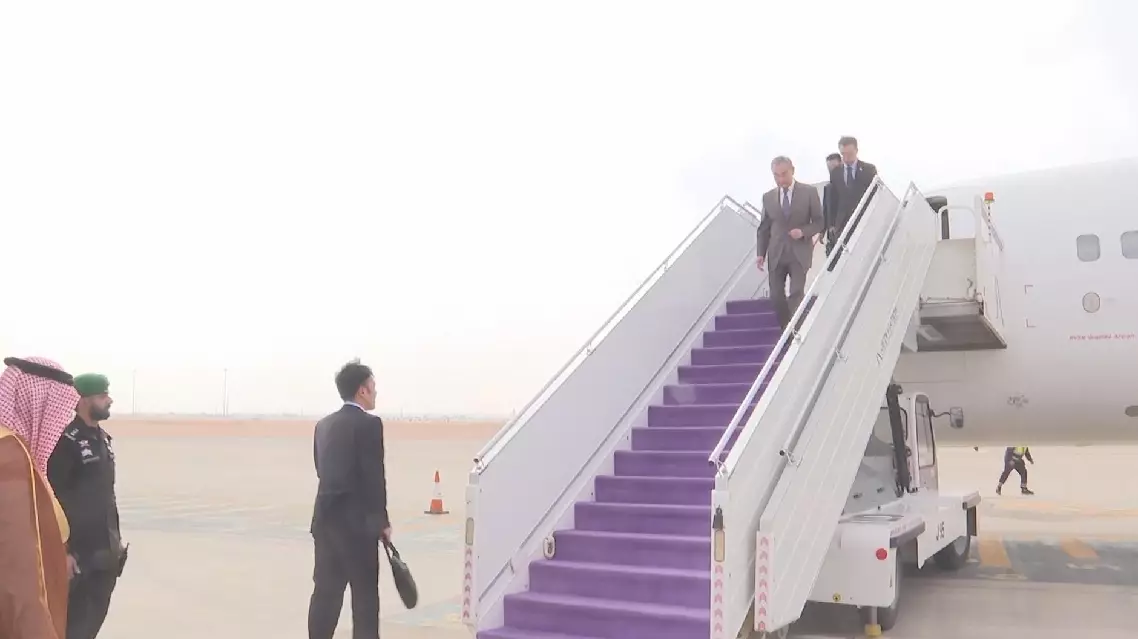
Chinese FM wraps up tour to UAE, Saudi Arabia, Jordan
Chinese FM wraps up tour to UAE, Saudi Arabia, Jordan
The ongoing conflict in the Middle East is seeing UK insurance firms hike up premiums for seaborne traders and shipping companies as a cloud of uncertainty hangs over the region amid the escalating crisis.
While the U.S.-Israel-Iran conflict continues, much attention is focusing on the severe disruption to shipping through the Strait of Hormuz -- a vital passageway which typically carries around one-quarter of global seaborne oil trade.
The economic implications of the war are already being seen in the City of London, the financial hub of the British capital and one of the world's foremost insurance centers, which is also an important trading place for global shipping, energy and war risk insurance.
Everyday, brokers and underwriters from all over the world gather in the financial district which is known simply as 'The City' to assess risks and negotiate premiums.
The London insurance market is often the first to feel the impact of any geopolitical turmoil in the Middle East, as war risk premiums for ships tend to rise rapidly whenever tensions escalate, particularly when shipping risks in the Strait of Hormuz increase to their current levels.
It can be a snowball effect, as these steeper insurance prices will eventually be passed on to other areas of the shipping sector, energy transportation, and even in global trade costs.
Before the United States and Israel launched their joint military operations against Iran on Feb. 28, the general quotations of shipping insurance brokers on the London market were approximately valued at between 0.2 percent to 0.3 percent, which meant the war risk premium for a single passage through the Strait of Hormuz for a container ship worth 150 million U.S. dollars was approximately 375,000 to 450,000 U.S. dollars.
However, since the escalation, insurance premiums for related vessels have skyrocketed, while shipping prices have also soared sharply, hampering shipping operations for vessels which may already be reluctant to travel through the war-torn waterway.
Industry insiders say that while prices will fluctuate depending on individual cases, these insurance hikes may be seen as a barometer of the bigger picture impact of the conflict.
"How much depends on the vessel, it depends on the circumstances. But you can see prices in the press have been given between one and three percent, but it will vary. It's possible, you heard that, and it may be true in some cases. But insurance is only one small part of their operating expenses (opex), so they'll be factoring in the freight rates, which have gone up by a factor of 11 or 12, and obviously, fuel costs and delay," said Neil Roberts, head of Marine and Aviation at the Lloyd's Market Association, a leading insurance and reinsurance firm.
The current crisis along the Strait of Hormuz came as part of Iran's response to U.S.-Israeli operations, which saw it restricting navigation through the strait and targeting any vessels associated with the U.S. or Israel.
As the war drags on, Iran has been leveraging its grip on the Strait of Hormuz, reducing shipping traffic through one of the world's most crucial waterways to historical lows as concerns about the wider global economic impact continue to mount.
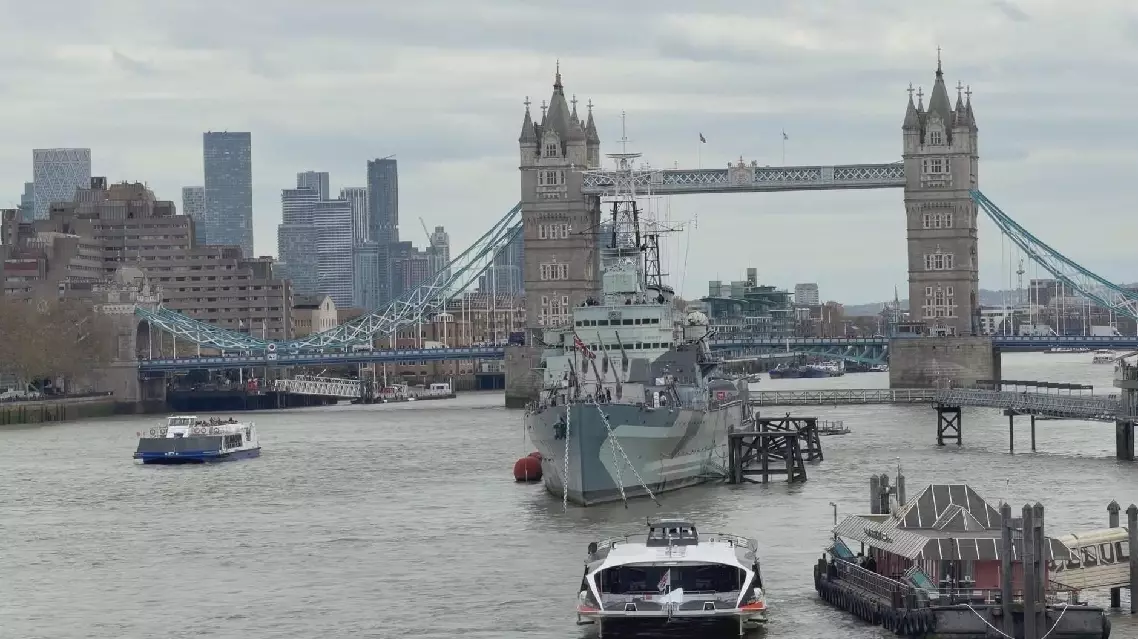
London insurance market sees surging shipping costs amid Mideast tensions