Any actions obstructing the cross-Strait exchanges are bound to be spurned by the people's will, said Zhu Fenglian, spokeswoman for the State Council Taiwan Affairs Office, at a press conference in Beijing on Wednesday.
The DPP (Democratic Progressive Party) regime in Taiwan has announced plans to revise regulations restricting visits by certain government officials to the Chinese mainland. Under the proposed rules, local county and city leaders, as well as some public servants, would only be allowed to apply for mainland travel for immediate family reunions or funerals, excluding collateral relatives.
In addition, most high-ranking public servants, senior supervisors and police officers would be required to submit travel applications at least seven days in advance.
Responding to the move, Zhu said that any actions obstructing the compatriots in Taiwan from visiting the mainland are bound to be condemned.
"This is the DPP regime's yet another malicious move to obstruct and restrict cross-Strait exchanges. It has racked its brains for schemes to hinder and restrict compatriots in Taiwan from coming to the mainland, fabricating charges to suppress and persecute groups and individuals in the island who actively engage in cross-Strait exchanges, in an attempt to prevent compatriots across the Strait from drawing closer and fostering kinship. Such abuse of power and willful misconducts are bound to be spurned by the people's will," she said.
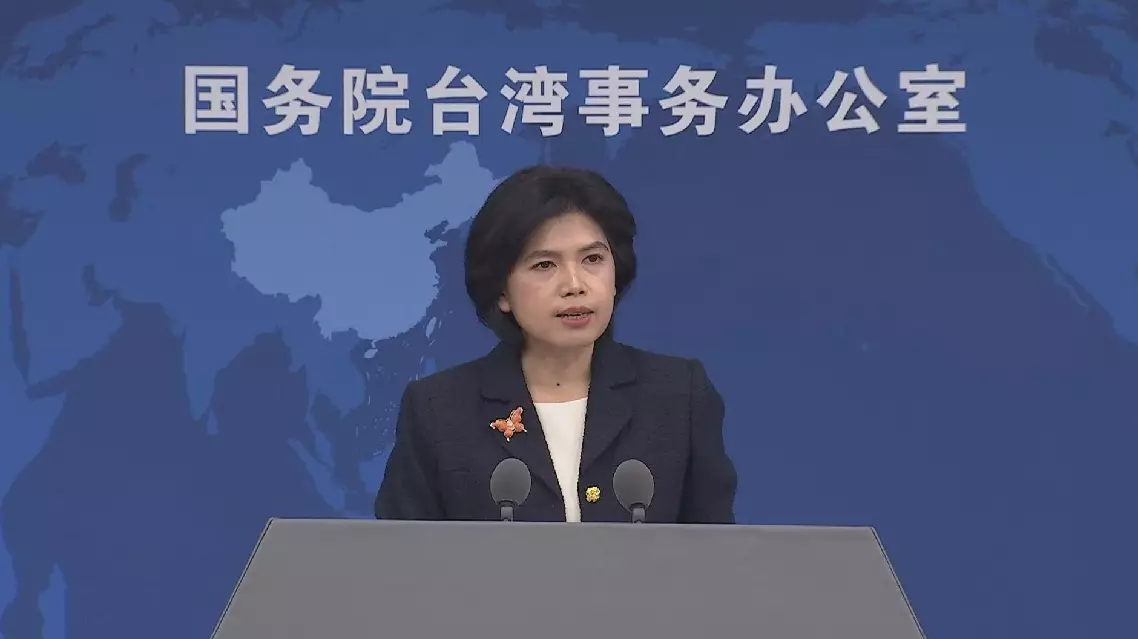
Spokeswoman condemns actions obstructing cross-Strait exchanges
China's Hong Kong Special Administrative Region has reclaimed the top spot in global IPO market rankings for the first time since 2019.
According to global professional services firm KPMG, funds raised from initial public offerings in Hong Kong tripled from a year ago to over 272 billion Hong Kong dollars in 2025.
It noted half of the funds raised were from companies on the Chinese equity markets' A+H listing, referring to dual listings where a mainland Chinese company has its shares traded on both a stock exchange in the Chinese mainland and the Hong Kong's exchange.
A record number of 17 A+H listings were completed in 2025. With a backlog of 92 dual-listing applications, Hong Kong is likely to maintain its IPO momentum into next year.
"The Hong Kong market is always an exciting market, because it only takes perhaps one or two companies to make it the number one market in the world. And it's always been competitive with the U.S. markets. I don't think there's another market out there that could actually compete with the U.S. markets. It's been an exciting year for Hong Kong [market]. They've had a number of listings over there and it's become the alternative right now to the U.S. markets, especially for some of the Asian companies, Chinese [mainland] specifically," said Drew Bernstein, co-chair of advisory firm MarcumAsia.
When asked about next year, Bernstein said artificial intelligence will be in the spotlight.
"I think everybody's got their focus right now on AI. I haven't seen a lot of companies that are actually selling AI and making money. But obviously, the hardware people are making a lot of money right now. And that's where the focus is. Particularly in places like China, you've seen what the government is promoting right now is globalization for these companies. I think that's going to be a big push for the markets right now, because with globalization, you also have to globalize your finance part of the company. And it's going to force a lot of the companies to become more mature. There's also a bunch of them lined up right now for 2026. So I think it's going to be a pretty interesting year for IPOs. When the market is rich with IPOs, it's good for all the markets," he said.
The expert expressed optimism about the Asian economy, predicting that the region will produce many unicorns in the coming years.
"I'm very optimistic about more listings from Asia. I use Asia rather than just China, because probably 40 to 55 percent of our business right now is coming from places like Singapore, Malaysia, Indonesia, Vietnam, the Philippines and Japan. The interesting part about that is, my guess would be 20 to 30 percent of it is still Chinese. I've said for some time right now that I think going forward, at least for the next five or 10 years, the majority of the industry-disruptive unicorns will be coming from Asia," he said.

Hong Kong reclaims top global IPO market ranking