
Skip to Content Facebook Feature Image

WATT Fuel Cell Advances Commercial Rollout with First 2 kW WATT HOME™ Installation in Clarksburg and Initial Shipments to Hope Gas Ahead of 2026 Residential Launch

News

WATT Fuel Cell Advances Commercial Rollout with First 2 kW WATT HOME™ Installation in Clarksburg and Initial Shipments to Hope Gas Ahead of 2026 Residential Launch
News

News

WATT Fuel Cell Advances Commercial Rollout with First 2 kW WATT HOME™ Installation in Clarksburg and Initial Shipments to Hope Gas Ahead of 2026 Residential Launch

2025-12-17 22:30 Last Updated At:22:41

MOUNT PLEASANT, Pa.--(BUSINESS WIRE)--Dec 17, 2025--

WATT Fuel Cell (“WATT”) today announced significant progress in its commercial expansion strategy with the successful installation of the first 2kW WATT HOME™ solid oxide fuel cell (SOFC) system at the Edward M. Smith National Career and Life Skills Development Center, Hope Gas’s new state-of-the-art training facility in Clarksburg, West Virginia , alongside the initiation of early product shipments that will support residential installations beginning in January 2026.

This press release features multimedia. View the full release here: https://www.businesswire.com/news/home/20251217298675/en/

These milestones demonstrate WATT’s continued execution on its commercialization roadmap and underscore growing market demand for natural-gas-enabled backup power solutions that enhance grid resiliency across outage-prone regions.

The WATT HOME system has now achieved certification at a 2 kW power rating, validating its strengthened performance profile. The WATT HOME system incorporates the fuel cell, battery, and inverter fully enabling home backup in grid outages. Additionally, WATT HOME systems qualify for up to a 30% ITC under the One Big Beautiful Bill Act improving long-term market adoption economics for this critical clean power source.

Caine Finnerty, WATT’s CEO and Founder shared, “The WATT HOME system’s new 2 kW certification marks a major technical and commercial milestone for our company. It validates the performance capabilities we’ve engineered for years and strengthens our competitive position as we move into multi-year deployment with Hope Gas. With the ITC benefit, we anticipate accelerated adoption and substantial value for customers, utilities, and investors.”

The December 16 installation represents the first field deployment under WATT’s multi-year agreement with Hope Gas - one of the largest residential fuel cell commitments in the United States. The installation within Hope’s state-of-the-art Clarksburg training center validates both product readiness and utility integration as WATT transitions from pre-commercial demonstration into volume deployment.

In January, Hope Gas will roll out its WATT HOME Ambassador Program, implementing early installations to provide direct feedback on the program. “Hope Gas is committed to innovation that serves our customers and strengthens West Virginia. Our Ambassador Program will ensure that the first homes receiving WATT HOME systems mirror the real-world conditions our customers face every day,” said Morgan O’Brien, Hope Gas CEO. The WATT HOME system gives our customers access to cutting-edge energy technology that supports their homes, their safety, and the state’s long-term energy resilience. By 2026, Hope Gas customers across West Virginia will have access to reliable, gas-supported backup power, an important step in strengthening electric reliability and resiliency statewide.”

WATT’s collaboration with Hope Gas is a pivotal growth driver. The initiative plans to deploy 7,250 WATT HOME units across West Virginia over three years, representing the largest committed volume opportunity in WATT’s history.

West Virginia’s frequent electrical outages and extensive natural gas infrastructure create ideal conditions for rapid adoption of natural gas-powered distributed generation. make it ideal for rapid adoption of natural gas-powered generation. The WATT HOME SOFC system activates automatically during grid disruptions, providing reliable, ultra-quiet power, offering an appealing alternative to traditional generators and a power-limited, battery-only solutions.

“Hope Gas is committed to strengthening West Virginia,” said O’Brien. “Our partnership with WATT and these initial installs are just the beginning of the initiative. This program will benefit West Viginia energy, its residents, and our workforce. Hope is proud to partner with WATT to bring this vision to reality.”

About Hope Gas: Hope Gas ( www.hopegas.com ) is a Local Distribution Company (LDC) that proudly provides gas service to approximately 140,000 residential, industrial, and commercial customers in thirty-eight West Virginia counties. We monitor and maintain over 7000 miles of pipelines that safely deliver West Virginia natural gas to many homes and commercial and industrial sites. We currently employ over 650 employees working right here in our beautiful Mountain State with the sole purpose of staying true to our company’s mission and vision in West Virginia. Learn more at HopeGas.com.

About Hope Utilities: Hope Utilities ( www.hopeutilities.com ) owns natural gas and water distribution utilities across eight states. We provide service to more than 200,000 residential, commercial, and industrial customers in the communities we serve. We currently operate natural gas utilities in West Virginia, Indiana, North Carolina, and Ohio; and water and wastewater utilities in Arizona, Michigan, and Texas. Hope’s growth strategy is built on being a trusted member of the communities we serve, providing our customers with safe, reliable, and cost-effective utility service. Learn more about Hope at HopeUtilities.com.

About WATT Fuel Cell: WATT Fuel Cell ( www.wattfuelcell.com ) is a manufacturer and developer of Solid Oxide Fuel Cell (“SOFC”) stacks and systems that operate on common, readily available fuels such as propane and natural gas. WATT’s proprietary, patented additive manufacturing process (AMP) has allowed it to produce commercially viable SOFC products for small-scale and remote power applications. WATT’s Hybrid Power Management system works in tandem with renewable power sources (solar and wind) and energy storage to provide quiet, efficient, affordable, and environmentally responsible energy solutions prioritizing a return on investment for customers across the globe.
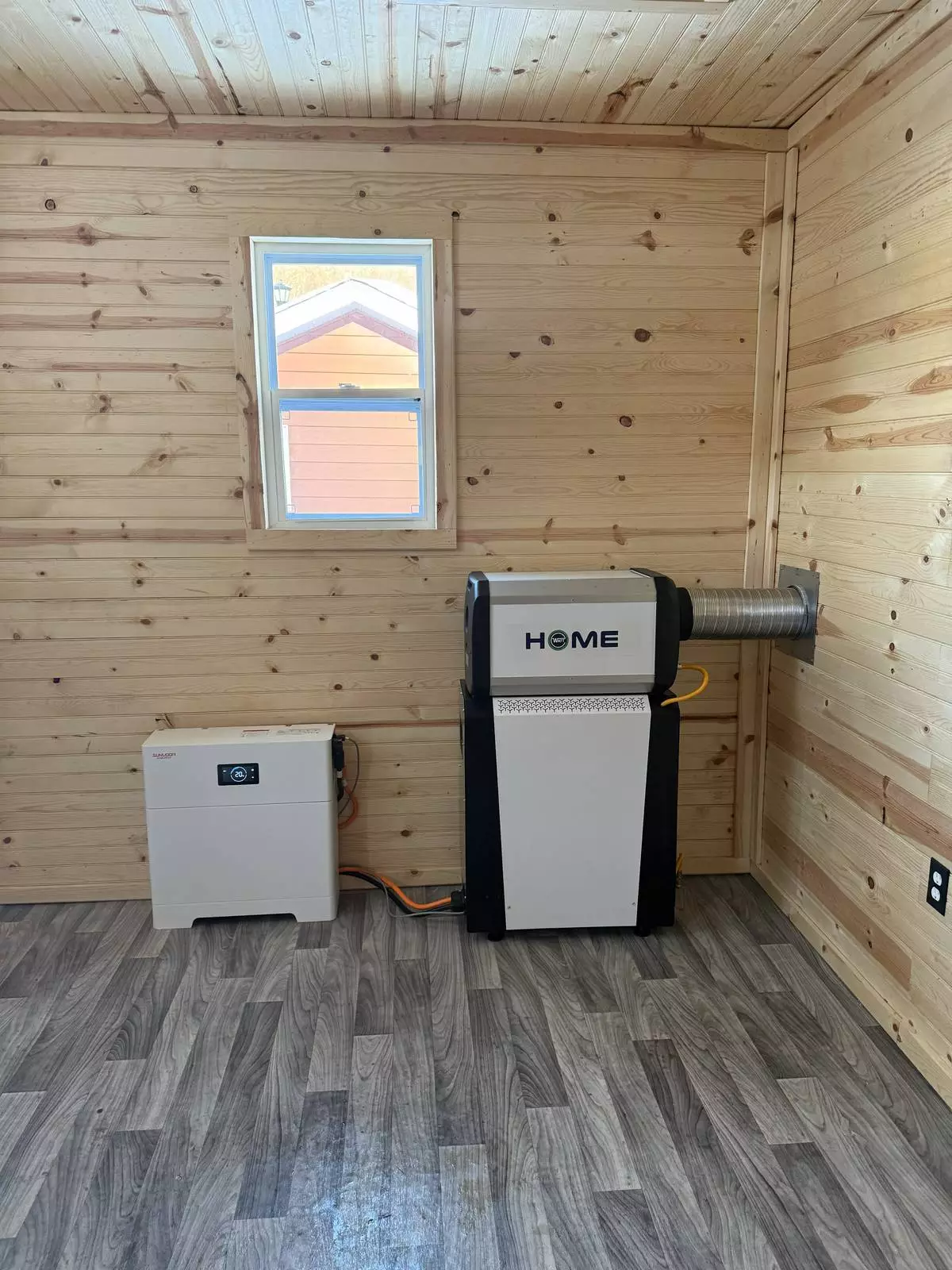
WATT HOME™ solid oxide fuel cell (SOFC) system installed at the Hope Gas Edward M. Smith National Career and Life Skills Development Center, in Clarksburg, WV.


WATT HOME™ solid oxide fuel cell (SOFC) system installed at the Hope Gas Edward M. Smith National Career and Life Skills Development Center, in Clarksburg, WV.

Russian President Vladimir Putin warned Wednesday that Moscow will seek to extend its gains in Ukraine if Kyiv and its Western allies reject the Kremlin's demands in peace talks.

U.S. President Donald Trump has unleashed an extensive diplomatic push to end nearly four years of fighting following Russia’s full-scale invasion of Ukraine in February 2022, but Washington’s efforts have run into sharply conflicting demands by Moscow and Kyiv.

Speaking at an annual meeting with top military officers, Putin said Moscow would prefer to achieve its goals and “eliminate the root causes of the conflict” by diplomatic means, but he added that “if the opposing side and its foreign patrons refuse to engage in substantive dialogue, Russia will achieve the liberation of its historical lands by military means.”

Ukraine and its Western allies regards Russia's actions as a violation of its sovereignty and an unprovoked act of aggression.

Putin claimed that “the Russian army has seized and is firmly holding strategic initiative all along the front line” and warned that Moscow will move to expand a “buffer security zone” alongside the Russian border.

“Our troops are different now, they are battle-hardened and there is no other such army in the world now,” he said.

Putin praised Russia's growing military might and particularly noted the modernization of its atomic arsenal, including the new nuclear-capable intermediate range Oreshnik ballistic missile that he said will officially enter combat duty this month. Russia first tested a conventionally armed version of the Oreshnik to strike a Ukrainian factory in November 2024, and Putin has boasted that it's impossible to intercept.

Putin's tough statements follow several rounds of talks this week between Ukrainian. American and European officials on a U.S.-drafted peace plan. Ukrainian President Volodymyr Zelenskyy said after meeting with U.S. envoys in Berlin that the document could be finalized within days, after which U.S. envoys will present it to the Kremlin.

Putin wants all the areas in four key regions captured by his forces, as well as Crimea, which was illegally annexed in 2014, to be recognized as Russian territory. He also has demanded that Ukraine withdraw from some areas in eastern Ukraine that Moscow's forces have not captured yet.

The Kremlin also insists that Ukraine abandon its bid to join NATO and warns it won’t accept the deployment of any troops from NATO members and will view them as “legitimate target."

Zelenskyy has expressed readiness to drop Ukraine’s bid to join NATO if the U.S. and other Western nations give Kyiv security guarantees similar to those offered to NATO members. But Ukraine’s preference remains NATO membership as the best security guarantee to prevent further Russian aggression.

At the same time, Zelenskyy has rejected Moscow’s demands that it pull back its troops from other areas that Russia has not been able to take by force.

The Ukrainian leader described the draft peace plan discussed with the U.S. during talks in Berlin on Monday as “not perfect” but “very workable,” noting that Kyiv and its allies were very close to a deal on "strong security guarantees.” But he also emphasized that the key issue of control over territory remain unresolved and rejected the U.S. push for Ukraine to cede control over the eastern Donetsk region.

Reporting to Putin at Wednesday's military meeting, Defense Minister Andrei Belousov spelled out plans for further advances, saying the latest Russian advances in Donetsk have set the stage for a quick push into the Ukrainian-controlled part of the region.

Belousov also declared that Russian troops were preparing to drive Ukrainian forces from parts of the Zaporizhzhia region that Moscow also annexed in 2022 but never fully captured, as well as extend gains in neighboring Dnipropetrovsk.

“The key task for the next year is to preserve and accelerate the tempo of the offensive,” he said.

Belousov spelled out plans for expanding Russian military capabilities, focusing on drones, jamming equipment and air defense assets.

As Russia continues its grinding advances in many sectors of the front, it also pummeled Ukraine with daily missile and drone strikes.

At least 26 people were injured by Russian glide bombs in Zaporizhzhia and its vicinity, according to regional administration head Ivan Fedorov. The attack damaged several residential buildings, as well as infrastructure and an educational facility.

At least 69 long-range drones were launched by Russia overnight, the Ukrainian air force said. Air defenses intercepted or jammed 29 drones in the morning, with the assault continuing during the day.

Russia’s Defense Ministry said that air defenses downed 94 Ukrainian drones overnight.

In Russia's southern Krasnodar region, drones injured two people and damaged several private houses, according to regional emergency officials. In the southwestern Voronezh region, Gov. Alexander Gusev said drone fragments damaged a power line serving an infrastructure facility, causing a blaze that was quickly extinguished.

Follow AP’s coverage of the war in Ukraine at https://apnews.com/hub/russia-ukraine

In this photo, taken Tuesday, Dec. 16, 2025 and provided by Ukraine's 93rd Kholodnyi Yar Separate Mechanized Brigade press service, soldiers ride a quad bike near Kostyantynivka, Donetsk region, Ukraine. (Iryna Rybakova/Ukraine's 93rd Mechanized Brigade via AP)

In this photo, taken Tuesday, Dec. 16, 2025 and provided by Ukraine's 93rd Kholodnyi Yar Separate Mechanized Brigade press service, soldiers ride a quad bike near Kostyantynivka, Donetsk region, Ukraine. (Iryna Rybakova/Ukraine's 93rd Mechanized Brigade via AP)

Russian Chief of General Staff Gen. Valery Gerasimov, right, reports to Russian President Vladimir Putin at the annual board meeting of the Russian Defense Ministry and award soldiers in Moscow, Wednesday, Dec. 17, 2025. (Alexander Kazakov/Sputnik, Kremlin Pool Photo via AP)

Russian Chief of General Staff Gen. Valery Gerasimov, right, reports to Russian President Vladimir Putin at the annual board meeting of the Russian Defense Ministry and award soldiers in Moscow, Wednesday, Dec. 17, 2025. (Alexander Kazakov/Sputnik, Kremlin Pool Photo via AP)

Russian President Vladimir Putin, left, and Russian Chief of General Staff Gen. Valery Gerasimov attend the annual board meeting of the country's Defense Ministry and awards soldiers in Moscow, Russia, Wednesday, Dec. 17, 2025. (Alexander Kazakov/Sputnik, Kremlin Pool Photo via AP)

Russian President Vladimir Putin, left, and Russian Chief of General Staff Gen. Valery Gerasimov attend the annual board meeting of the country's Defense Ministry and awards soldiers in Moscow, Russia, Wednesday, Dec. 17, 2025. (Alexander Kazakov/Sputnik, Kremlin Pool Photo via AP)

Recommended Articles