GREEN BAY, Wis. (AP) — Green Bay Packers defensive coordinator Jeff Hafley offered a bold prediction regarding Micah Parsons’ eventual return from the torn anterior cruciate ligament that ended the superstar pass rusher’s season prematurely.
“If I were a betting man, I would bet that he comes back even better and probably breaks the sack record next year,” Hafley said Wednesday.
Hafley also is bullish about the Packers’ chances of continuing to play quality defense even without Parsons, who injured his left knee in the third quarter of the Packers’ 34-26 loss at Denver on Sunday.
The Packers (9-4-1) play their first full game without Parsons this season on Saturday when they visit the Chicago Bears (10-4) with the NFC North lead at stake.
“We’ve got really good players, we’ve played good defense and we’re going to continue to play good defense,” Hafley said. “Our guys understand that, and I think it’s important for everyone to understand that these guys have a lot of pride, and they’re going to get even closer because of this. And they’re going to play well.”
Statistics suggest Green Bay’s defense could struggle without Parsons, who had a team-high 12 ½ sacks.
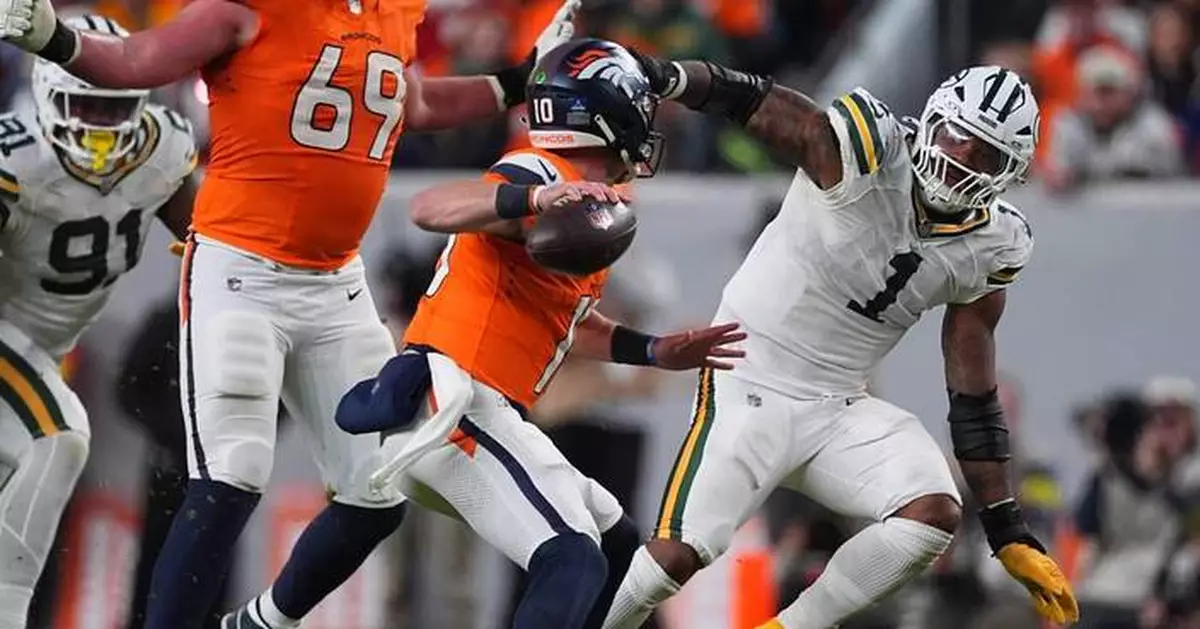
Although the Packers have allowed the sixth-fewest yards per game (294.6) and eighth-fewest points per game (20.1) of any NFL team, their game at Denver exposed their vulnerability when they’re not applying a consistent pass rush. Denver’s Bo Nix wasn’t sacked as he threw for 302 yards and four touchdowns.
Parsons’ league-high 83 quarterback pressures according to NFL Next Gen Stats were nearly twice the total of any other Packer. Green Bay will need former first-round picks Rashan Gary and Lukas Van Ness to recapture the form they showed early in the season when they capitalized on all the attention offenses were giving to Parsons.
Gary ranks second on the team with 42 pressures, but all 7 ½ of his sacks this season came in Green Bay’s first seven games.
Van Ness had 1 ½ sacks in Green Bay’s first five games, then missed seven of the Packers’ next eight games with a foot injury. Van Ness returned to play 22 snaps and post two tackles against Denver.
Gary said the Packers plan to play the rest of the season in a way that would impress Parsons.
“The No. 1 thing is, he wants us to turn the page and continue to play ball and get wins,” Gary said.
Green Bay still has many of the key players from a defense that ranked fifth in yards allowed and sixth in points allowed last season. That gives the Packers confidence they can still contain offenses even without Parsons chasing quarterbacks.
The Packers did send three-time Pro Bowl defensive lineman Kenny Clark to Dallas in the trade that got them Parsons. They also lost Devonte Wyatt, whose four sacks rank third on the team, to a season-ending ankle injury.
Yet they still have confidence they can continue to thrive without Parsons.
“We’ve still got the pen in our hand,” Gary said. “We can still write our story.”
If the Packers can pick up the slack and make a deep postseason run after losing Parsons, they should feel even better about themselves next year, whenever they get him back. Hafley said he expects the 26-year-old to come back better than ever.
After Hafley talked about the possibility of Parsons breaking the single-season sack record next year, he was asked if he specifically meant the league record. Michael Strahan set that record with 22 ½ in 2001 and T.J. Watt tied that mark 20 years later, though Cleveland’s Myles Garrett currently has 21 ½ with three games left in his season.
Hafley didn’t back down from his faith in Parsons or the rest of his players.
“He’s the type of guy – give Micah adversity and watch what happens,” Hafley said. “Give our defense and give our team adversity, and watch what happens. We’ll find out.”
NOTES: WR Christian Watson practiced on a limited basis Wednesday and expressed confidence he’d be able to play Saturday. Watson left the Broncos game with injuries to his chest and shoulder. “Obviously I’ve got to make sure that they clear me in the medical room and everything and make sure everything’s good,” Watson said. “But I mean, yeah, my goal is just to have a couple good days leading up to the game and hopefully it feels a little bit better each and every day and we’re at the point in the season where you’ve got to fight through some stuff, so should be good.” … RB Josh Jacobs (knee), RT Zach Tom (back/knee), TE Josh Whyle (concussion) and S Evan Williams (knee) didn’t practice. WR Jayden Reed also didn’t practice, due to a personal matter. … Parsons was officially placed on injured reserve.
AP NFL: https://apnews.com/hub/nfl
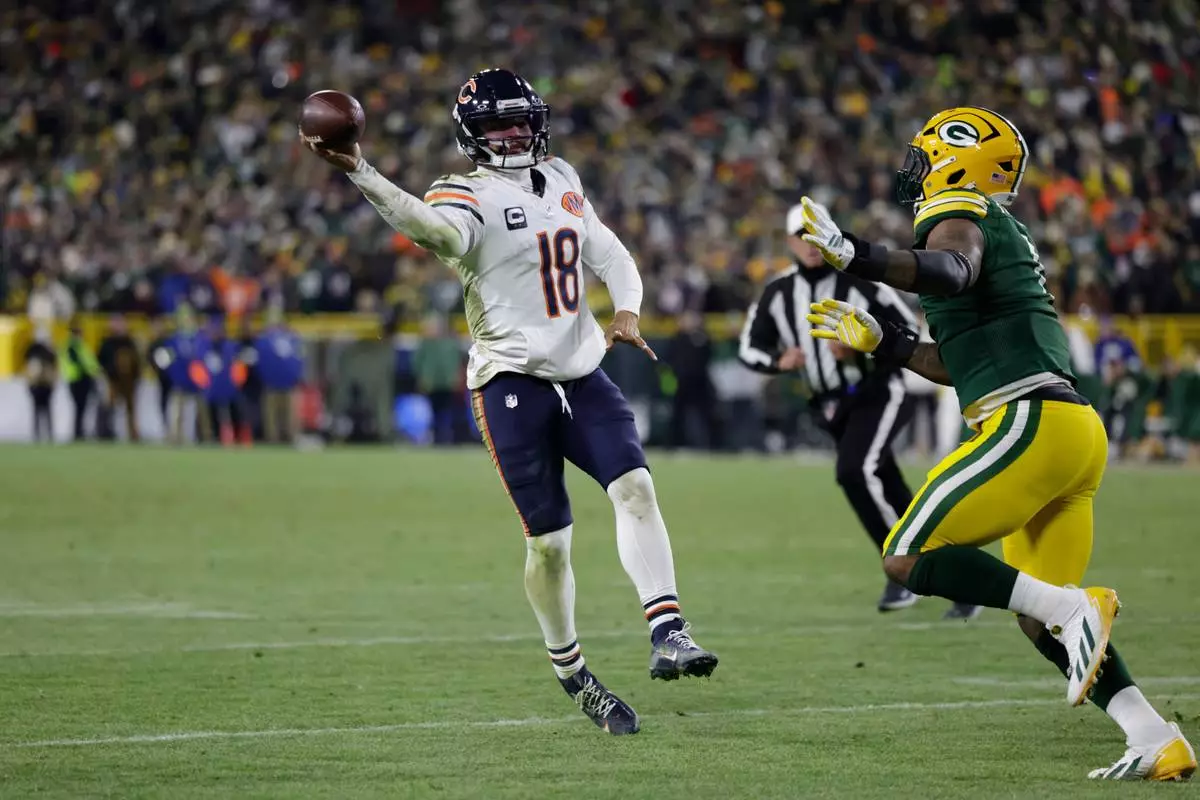
Chicago Bears quarterback Caleb Williams (18) throws a pass for a touchdown against Green Bay Packers defensive end Micah Parsons, right, during the second half of an NFL football game Sunday, Dec. 7, 2025, in Green Bay, Wis. (AP Photo/Matt Ludtke)
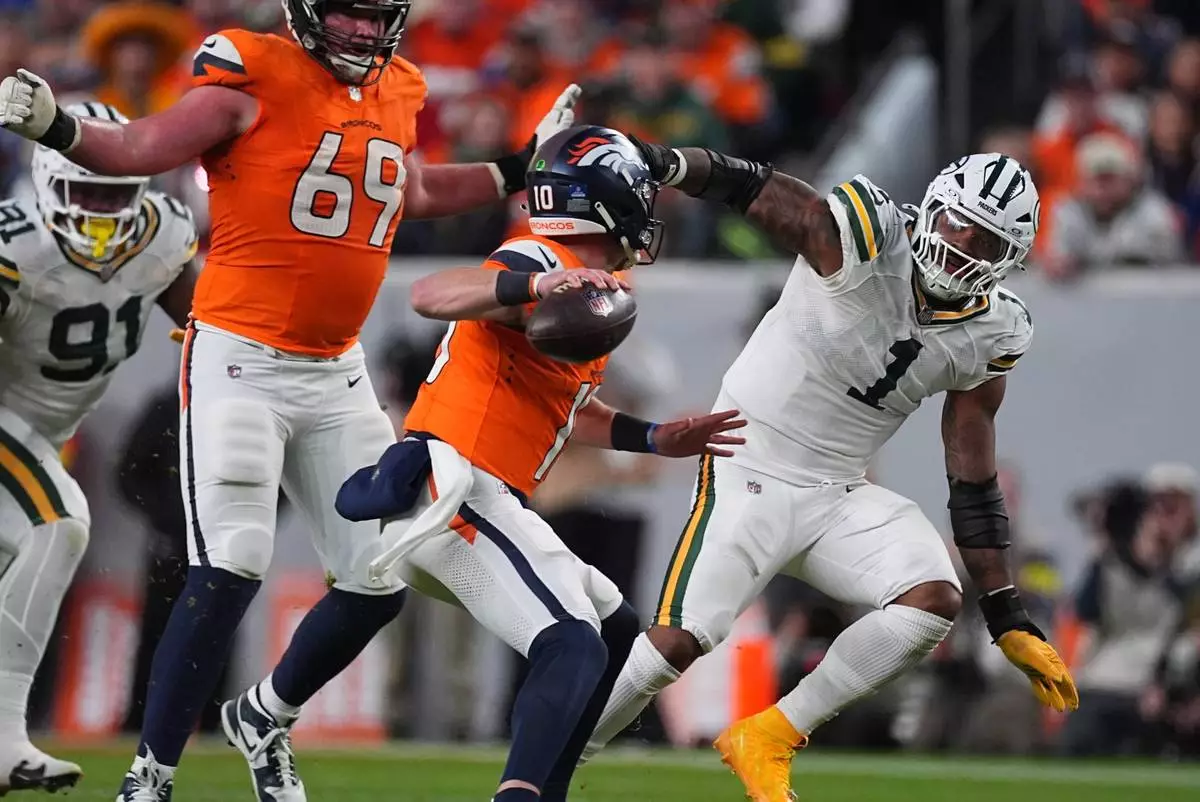
Green Bay Packers' Micah Parsons tries to stop Denver Broncos' Bo Nix during the second half of an NFL football game Sunday, Dec. 14, 2025, in Denver. (AP Photo/David Zalubowski)
DUBAI, United Arab Emirates (AP) — Iran responded to U.S. President Donald Trump’s address to Americans on the war with new missile attacks targeting Israel and the Gulf Arab states Thursday, underlining Tehran’s insistence that it rejected Washington’s outreach for a ceasefire while maintaining its grip on the Strait of Hormuz.
Britain planned to hold a call Thursday with nearly three dozen countries about how to reopen the strait, through which 20% of all oil and natural gas traded passes in peacetime. The 35 countries, including all G7 industrialized democracies except the U.S., as well as the United Arab Emirates and Bahrain, signed a declaration last month demanding Iran stop blocking the strait. The call will discuss “diplomatic and political measures” that could restore shipping once the fighting is over.
Washington has insisted that Iran allow ships to freely transit the strait, but Trump this week has said it is not up to the U.S. to force it, and in his address encouraged countries that receive oil through Hormuz to “build some delayed courage” and go “take it.”
In his address, Trump said the U.S. would hit Iran “extremely hard over the next two to three weeks,” while also insisting American “core strategic objectives are nearing completion.”
Iran's military said defiantly on Thursday that its armament facilities are hidden and will never be reached by Israeli or American attacks.
“The centers you think you have targeted are insignificant,” said Lt. Col. Ebrahim Zolfaghari, a spokesman for the Iranian military’s Khatam Al-Anbiya Central Headquarters.
Just before Trump began his nearly 20-minute address on Wednesday, explosions were heard in Dubai as air defenses worked to intercept an Iranian missile barrage. Less than a half hour after the president was done, Israel said its military was working to intercept incoming missiles.
Sirens sounded in Bahrain, home to the U.S. Navy's 5th Fleet, immediately after the speech.
Following a joint statement in March condemning Iranian attacks on unarmed commercial vessels that called upon Iran to “cease immediately its threats, laying of mines, drone and missile attacks and other attempts to block the strait,” the 35 signatories were to hold a virtual meeting Thursday hosted by British Foreign Secretary Yvette Cooper.
Though the oil and gas that typically transits the Strait of Hormuz primarily is sold to Asian nations, Japan and South Korea were the only two countries from the region that were joining.
“Trump’s message was that the United States can sustain its own economic and energy ecosystem, while countries dependent on regional exports will either have to buy from the United States or manage the Strait themselves,” the New York-based Soufan Center think tank wrote after the address.
“While Trump explicitly thanked U.S. allies in the Persian Gulf for their cooperation and allyship, an expedited U.S. withdrawal without securing the strait will leave many of these countries, whose economies are dependent on energy exports, in the lurch.”
No country appears willing to try and open the strait by force while the war is raging. British Prime Minister Keir Starmer said the group “will assess all viable diplomatic and political measures we can take to restore freedom of navigation, guarantee the safety of trapped ships and seafarers and to resume the movement of vital commodities.”
Bahrain, which now holds the presidency of the United Nations Security Council, has been working to get the world body to address the crisis as well.
Though Iran has allowed a trickle of ships through the strait, it remains largely closed. Iran has also been repeatedly attacking Gulf Arab energy infrastructure, sending oil prices skyrocketing and giving rise to broader economic problems worldwide.
Following Trump's speech, Brent crude, the international standard, rose again and was at $108 in early spot trading, up nearly 50% from Feb. 28 when Israel and the U.S. started the war with their attacks on Iran.
The rising energy prices and stock market jitters have been putting increasing domestic pressure on Trump, who used his address to offer a defense of the war while also suggesting it was close to winding down.
He acknowledged American service members who had been killed and said: “We are going to finish the job, and we’re going to finish it very fast. We’re getting very close.”
The U.S. has presented Iran with a 15-point plan for a ceasefire, but Trump didn’t say anything about the diplomatic efforts or bring up his April 6 deadline for Iran to reopen the Strait of Hormuz or face severe retaliation from the U.S.
More than 1,900 people have been killed in Iran during the war, while 19 have been reported dead in Israel. More than two dozen people have died in Gulf states and the occupied West Bank, while 13 U.S. service members have been killed.
More than 1,200 people have been killed in Lebanon and more than 1 million displaced, according to authorities. Ten Israeli soldiers have also died there.
Weissert reported from Washington and Rising reported from Bangkok.
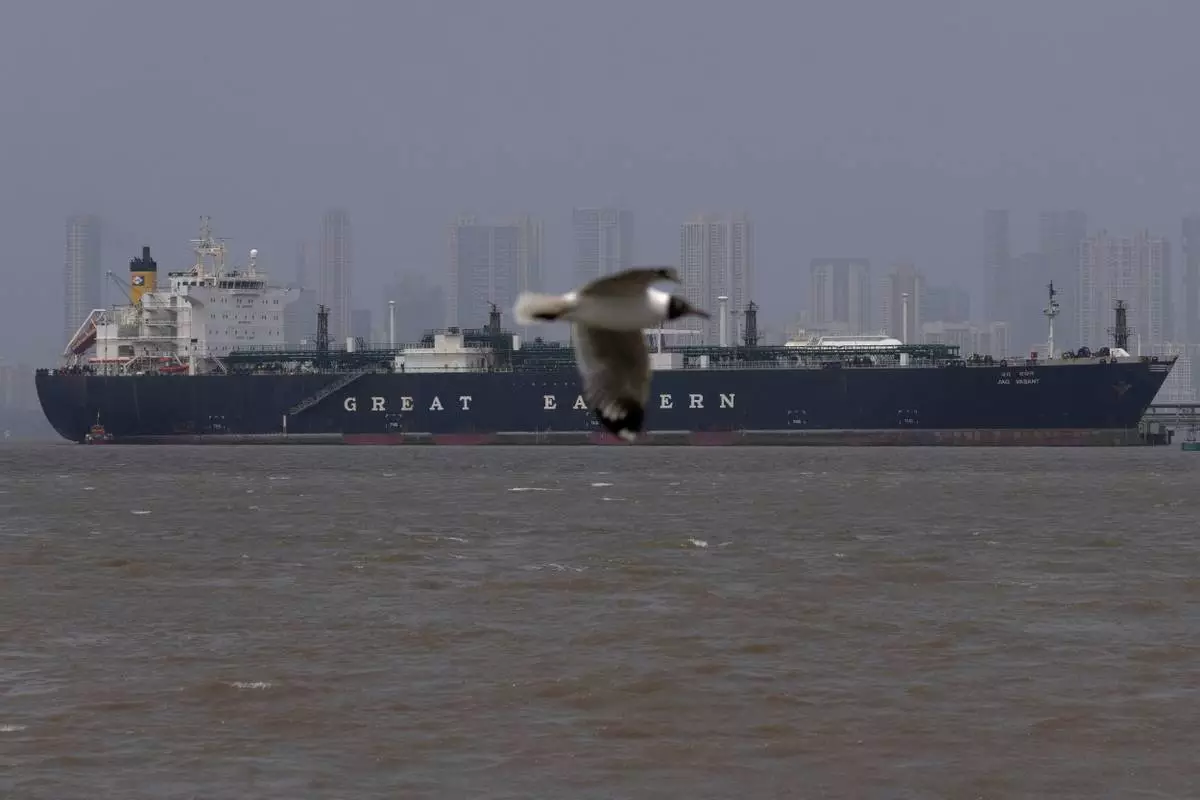
The Indian flagged LPG carrier Jag Vasant transporting liquefied petroleum gas, is seen at the Mumbai Port in Mumbai, India, after it arrived clearing the Strait of Hormuz, Wednesday, April 1, 2026. (AP Photo/Rafiq Maqbool)
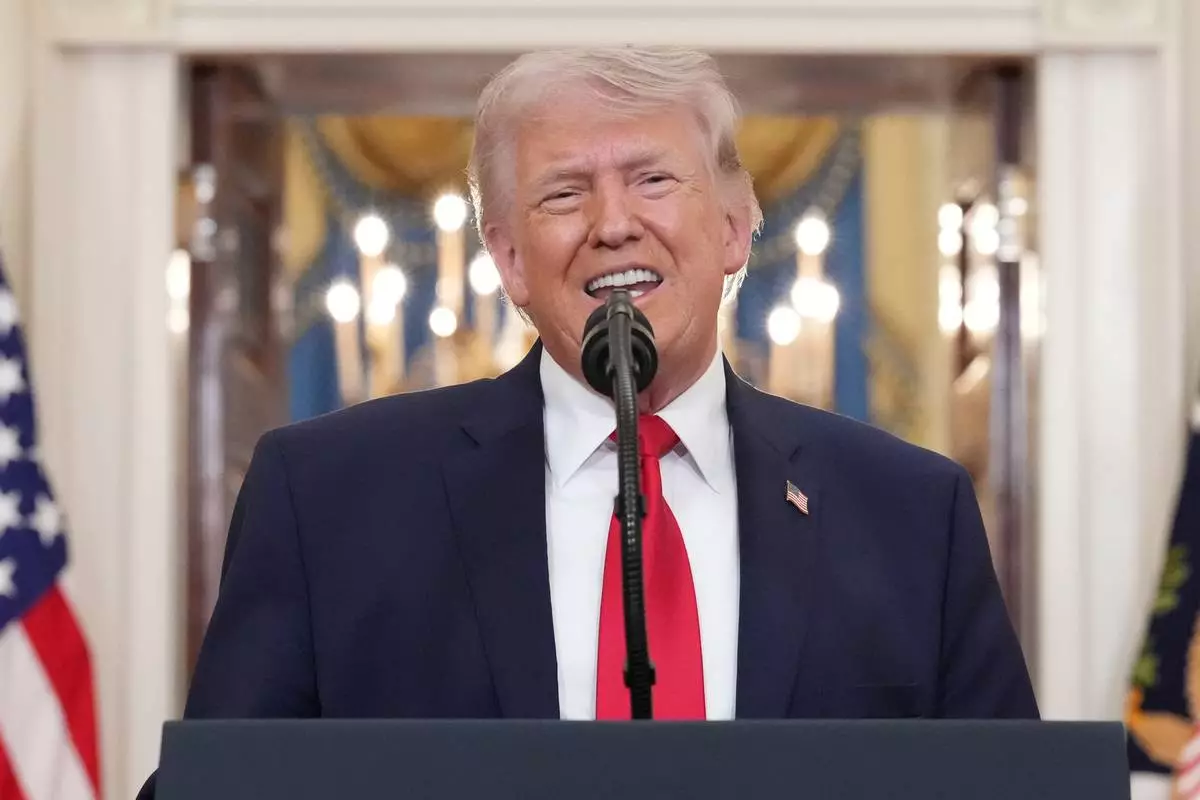
President Donald Trump speaks about the Iran war from the Cross Hall of the White House on Wednesday, April 1, 2026, in Washington. (AP Photo/Alex Brandon, Pool)
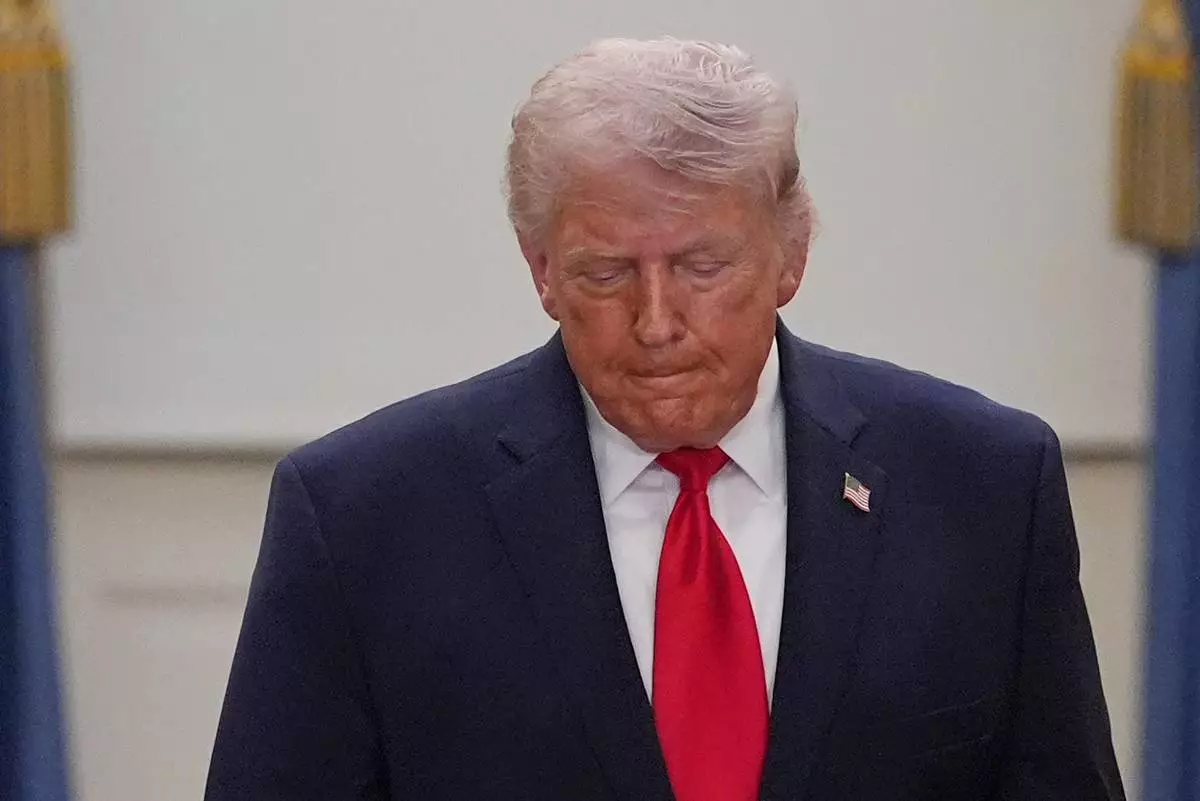
President Donald Trump walks from the Blue Room to speak about the Iran war from the Cross Hall of the White House on Wednesday, April 1, 2026, in Washington. (AP Photo/Alex Brandon, Pool)
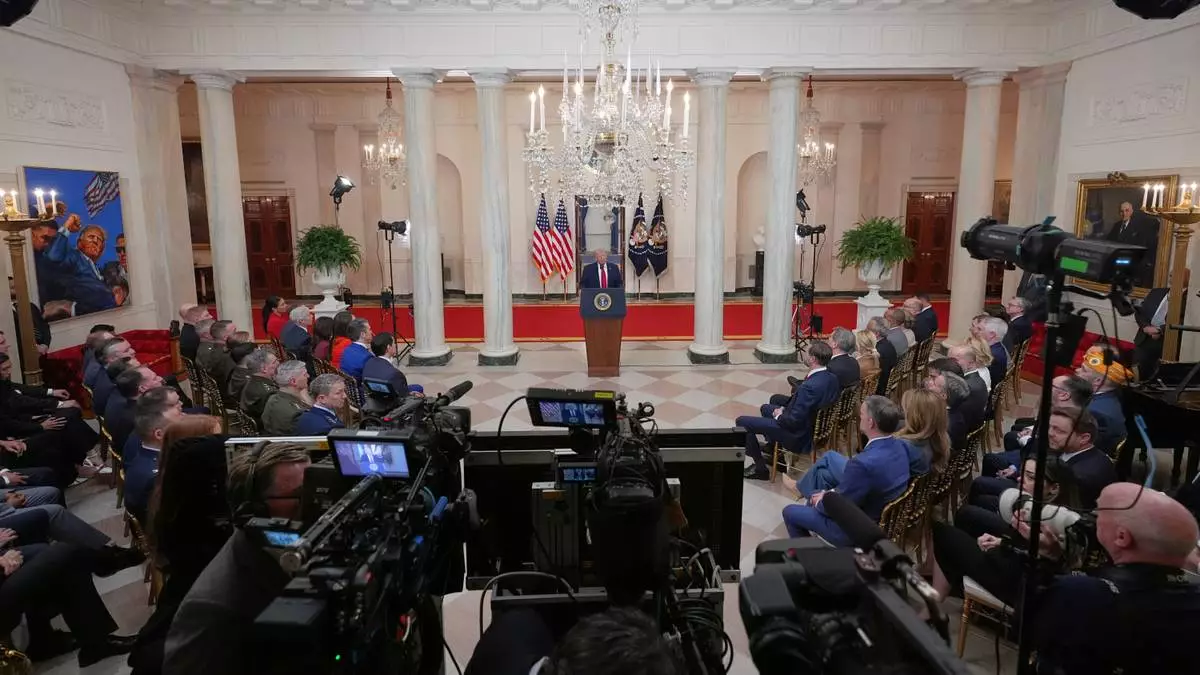
President Donald Trump speaks about the Iran war from the Cross Hall of the White House on Wednesday, April 1, 2026, in Washington. (AP Photo/Alex Brandon, Pool)
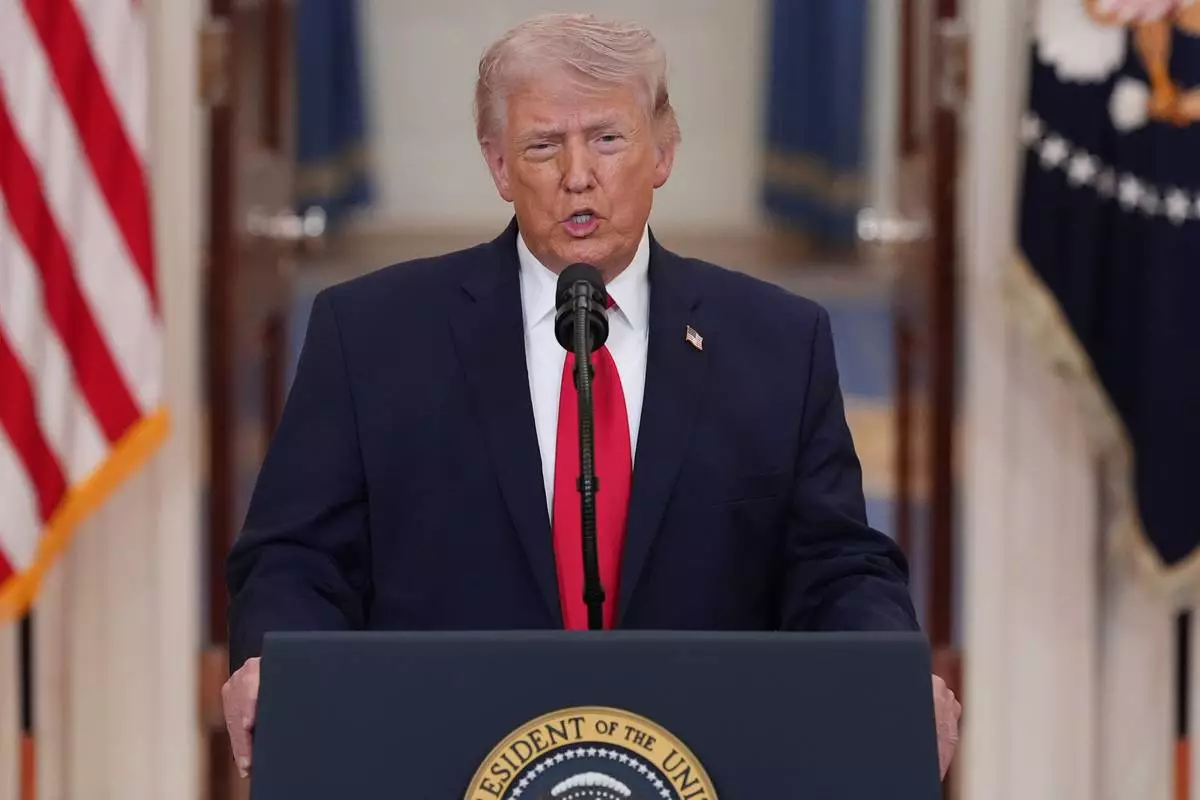
President Donald Trump speaks about the Iran war from the Cross Hall of the White House on Wednesday, April 1, 2026, in Washington. (AP Photo/Alex Brandon, Pool)