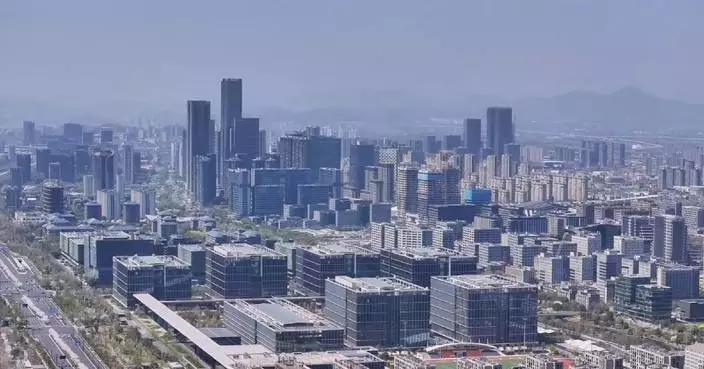
Heavy fog blanketed several cities in north China's Hebei Province and Beijing from Wednesday to Thursday, disrupting local traffic and forcing the closure of several expressway sections and airports.
In Hebei, the provincial meteorological bureau issued an orange alert for heavy fog, with visibility in areas such as Baoding and Langfang dropping below 50 meters. The dense fog prompted the temporary closure of expressway sections in central and southern Hebei, including key routes like the Beijing-Hong Kong-Macao, Beijing-Kunming, and Daguang Expressways. By midday Thursday, affected expressway toll stations gradually resumed operations as conditions improved.
Shijiazhuang, the provincial capital, also saw persistent fog from Wednesday evening through Thursday morning, while Anguo City reported severely limited visibility, forcing vehicles to reduce speed. Local traffic police increased patrols to ensure an orderly flow of traffic.
Air travel was also impacted. At Shijiazhuang Zhengding International Airport, fog caused some flight delays, but operations were gradually restored.
In Beijing, visibility at Daxing International Airport fell to 100 meters on Thursday morning, affecting takeoffs and landings. The airport activated an emergency response at 06:30, and outbound flights resumed from 10:30, as visibility improved. The fog has since cleared, and flight operations have returned to normal.
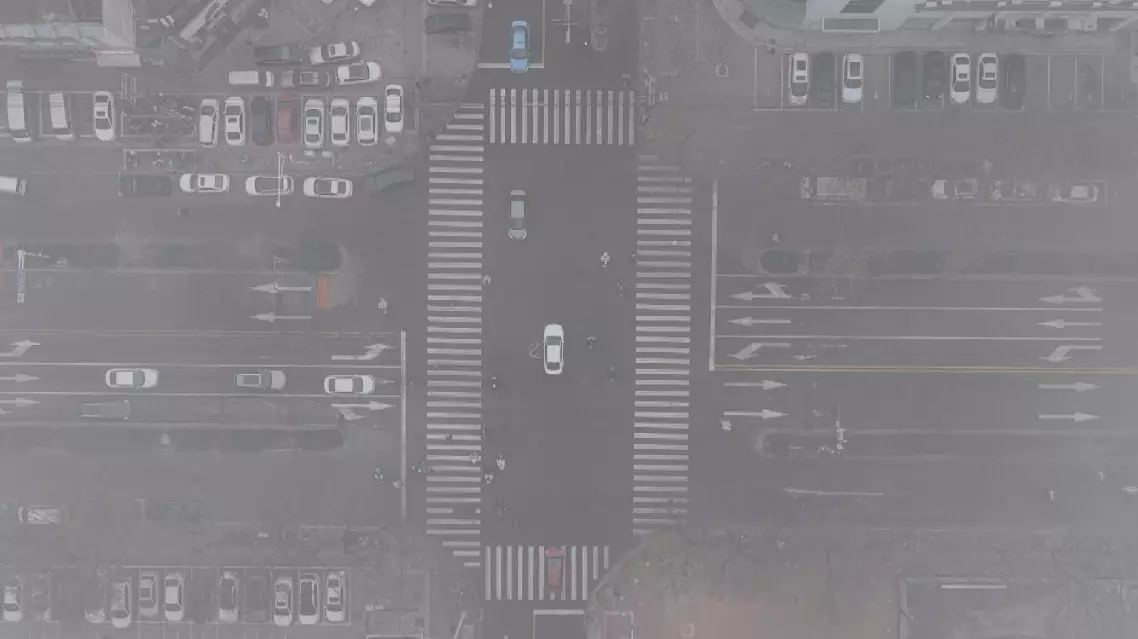
Dense fog hits parts of northern China, disrupts traffic

Iraq's semi-autonomous Kurdistan region has suspended in-person classes at all schools and universities following Iran's threats to target U.S.-linked universities in the country.
Local authorities have moved classes online, citing growing security threats from Iran.
The decision came after Iran warned that U.S.-linked universities could be attacked, in response to a recent airstrike on a university in Tehran, which Israel says was involved in ballistic missile development.
"Iran is seriously threatening the Kurdistan region, and we must take this seriously. The lives of people -- and especially our students -- are more valuable than anything," said Mohammad Qadir, Minister of Higher Education and Scientific Research for the Kurdistan Region.
The sudden move to online learning has been challenging, with many students struggling to stay connected.
"Some students couldn't join the live sessions. Others had electricity problems, internet issues, or other technical difficulties on the first day. Despite all that, in my opinion, online teaching -- with all its shortcomings -- is better than doing nothing and staying at home," said Dana Mohammed Abdullah, an assistant lecturer at Salahaddin University.
Abdullah added that the impact is especially severe on programs that rely on hands-on instructions.
"Many of our courses are practical rather than theoretical and need to be taught face to face. Now that everything is online, it's only a temporary solution -- better than pausing entirely -- but for a fine arts college, it won't be very effective," he said.
For many students, fear is now part of their daily life.
"We don't feel safe. Drones are coming from the sky and can explode at any moment. We don't know where they will hit -- so we can't be fully confident about going back to campus and studying in class," said Zana Amin, a university student.
With no clear end to the conflict, officials say it is too soon to say when classrooms will reopen.
"We can't give a timeline. We are in a war situation, and it has affected Kurdistan and Iraq deeply. Even politicians don't know when things will return to normal. In-person classes will resume when the war ends," said Qadir.
Iraq's Kurdistan region suspends in-person university classes over security concerns