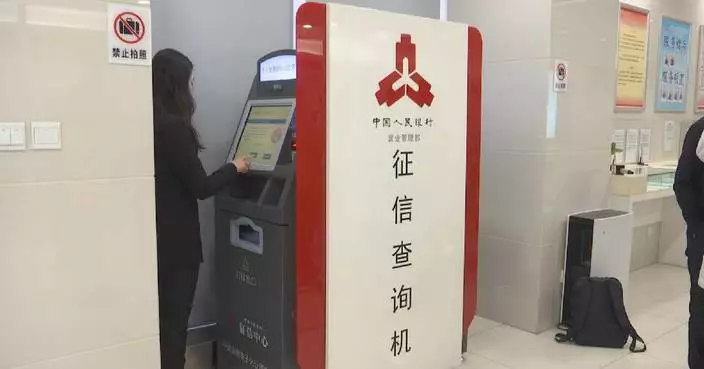
The recent erroneous remarks made by Japanese Prime Minister Sanae Takaichi regarding China's Taiwan region have taken a heavy toll on the country's tourism sector with mass cancellations of trips from Chinese tourists.
During a recent parliamentary hearing, Takaichi cited the so-called "survival-threatening situation" -- a trigger designed by the controversial 2015 law -- and linked it to the Taiwan question, suggesting Tokyo might treat the Taiwan question as grounds for military involvement under the legislation.
Osaka, a city heavily reliant on inbound tourism, has experienced a sharp drop in the number of Chinese tourists following Takaichi's provocative remarks, with travel agencies and service-sector workers reporting a dramatic surge in cancellations by Chinese tour groups.
One company specializing in inbound tourism said their business had taken a direct hit.
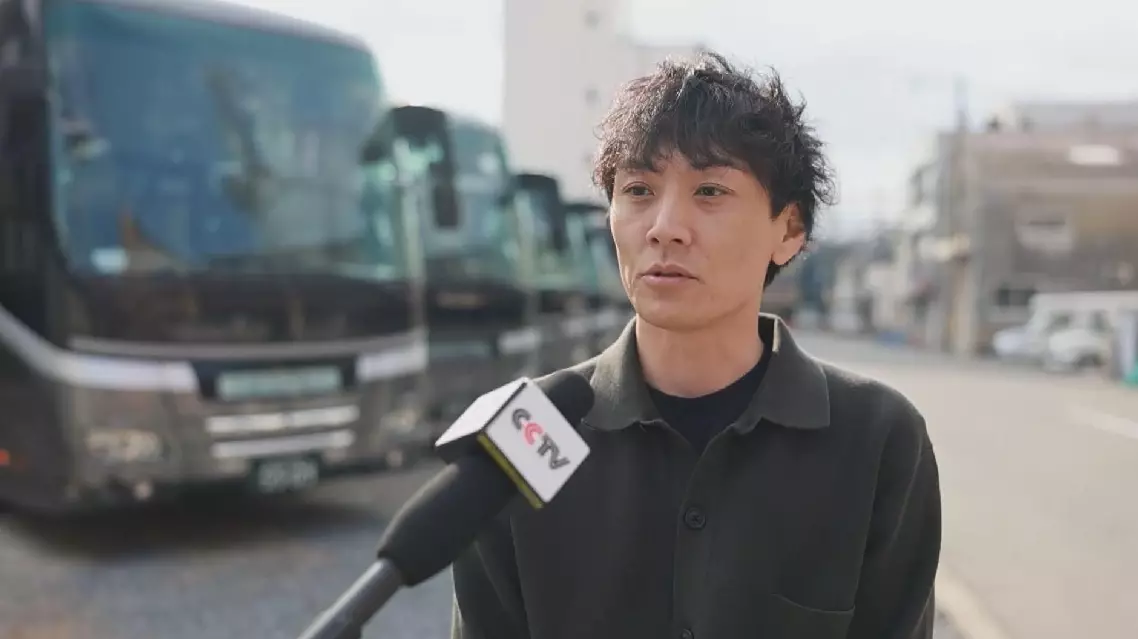
"We have no Chinese tourists coming now. Almost all Chinese group bookings have been canceled. Chinese tourists usually make up about 30 to 40 percent of our clientele. Because of this situation, our sales have dropped by around 30 percent," said Hashimoto Tsuyoshi, head of CONER Co., Ltd., a bus and travel company based in Osaka.
At the company's parking lot, rows of idle tour buses painted a stark picture of the downturn.
Tsuyoshi said roughly 30 percent of the vehicles have been taken off the road, but operating costs remain high.
"Even parked buses need maintenance. Whether it's parking fees, staffing costs, or taxes, it all adds up. Buses have to keep running to bring in profits," he said.
Signs of a similar tourism slump remain across Kyoto, where local businesses are also heavily dependent on Chinese tourists.
A well-known restaurant in the city center described the sharp decline in the number of Chinese tourists as alarming.
"Of our foreign customers, around 80 percent were Chinese. About 60 percent of them have now canceled their reservations. More than half of our revenue came from Chinese tourists. If this situation continues, honestly, we're very worried," said Shino Mieko, manager of a local restaurant.
She also noted the spillover effects on Kyoto's broader tourism chain, including retail and accommodation sectors.
"Kyoto's economy depends on tourism. Hotels are also struggling too, and they have seen a big drop in guests. It's so unfortunate. Chinese tourists used to come and buy lots of local products. Now that number has plunged. We all feel the same, regretful and saddened," said Mieko.
Japanese PM's erroneous remarks on China's Taiwan take heavy toll on tourism
Japanese PM's erroneous remarks on China's Taiwan take heavy toll on tourism