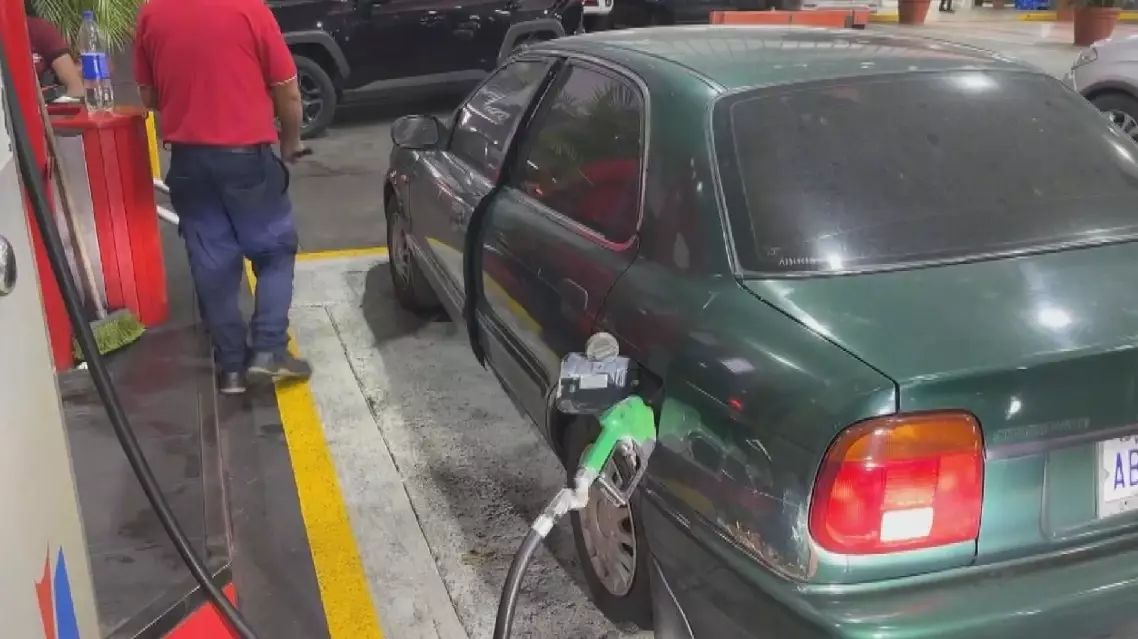
The supply and price of oil in Venezuela's domestic market have not shown significant fluctuations amid the tightening oil blockade imposed by the United States.
In less than two weeks, the United States has stepped up its oil blockade of Venezuela by intercepting multiple tankers in international waters near the Latin American country.
However, the intense situation doesn't cause much waves within Venezuela. At petrol stations in Caracas, there has not been panic buying or long queues.
"We are used to such sanctions from other countries like the United States. We are Venezuelans, we always make through. At least for me, I'm not afraid, really. Even if it's a naval blockade, no matter what we encounter, we will find a way to make it through," said Jose Villarroel, a local resident.
"For now, the price is quite stable, without many fluctuations. The United States is trying to control the market, but they cannot do it. So, they want to make it happen in underhand means. In my opinion, all these are provocations. I hope the situation will not escalate," said Raul Fuente, another local resident.
Some Venezuelan experts believed that the blockade imposed by the United States on Venezuelan oil may instead cause a greater impact on the U.S. energy system, as its energy balance has long relied on Venezuela's oil supply, and the two sides have formed a highly integrated industrial chain structure.
"The current situation shows a key point which is the United States itself is now in a serious financial and economic crisis. Venezuela has diplomatic relations, friends, deals and experiences. The pressure Venezuela is facing doesn't happen just now. It has lasted for over a decade, but the country is still going forward," said Miguel Jaimes, a Venezuelan petroleum expert.
On Dec. 16, U.S. President Donald Trump ordered a "total and complete blockade" of sanctioned tankers entering or leaving Venezuela, announcing Venezuelan President Nicolás Maduro's government had been designated as a "foreign terrorist organization."
Venezuela has accused the U.S. of seeking regime change and military expansion in Latin America, condemning the interception of oil tankers as "piracy."
Venezuela oil market shows no significant fluctuations despite US blockade
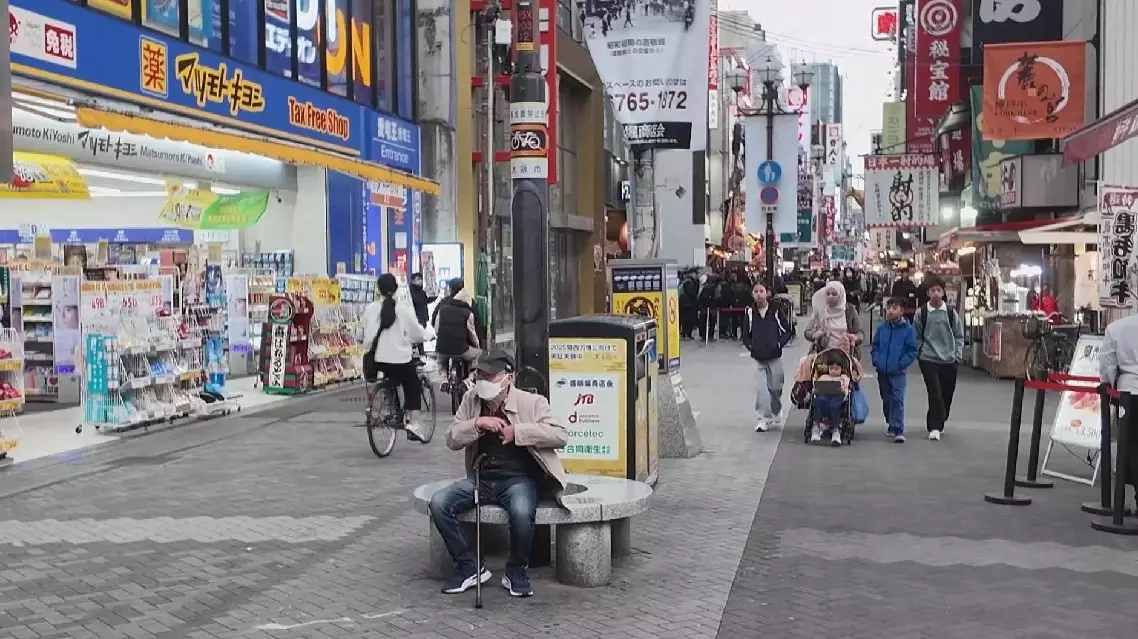
The erroneous remarks made by Japanese Prime Minister Sanae Takaichi regarding China's Taiwan region have cast a shadow over Japan's tourism and economy, particularly in the Kansai region where businesses rely heavily on Chinese visitors and trade with China, said a Japanese professor.
During a recent parliamentary hearing, Takaichi cited the so-called "survival-threatening situation" -- a trigger designed by the controversial 2015 law -- and linked it to the Taiwan question, suggesting Japan might treat the Taiwan question as grounds for military involvement under the legislation.
Tadashi Horiguchi, a professor at the Osaka Metropolitan University, said that the number of Chinese tourists coming to visit Japan has fallen since November, and the prolonged decline could hit hotels, transport and local businesses in the Kansai region.
"Following Takaichi's remarks, I've noticed that the number of tourists coming from China has been declining since November. Osaka nowadays is a place that mainly focuses on developing its tourism industry. If this situation persists, it will have a big impact on tourism-related industries in the Kansai region, such as accommodation, transportation, local specialty products, and home appliances. If the decline continues for a long time, I believe it will have a very significant impact on economy in the Kansai region," said Horiguchi.
Horiguchi warned that the impact could extend to other industries in the Kansai region, given the region's close trade ties with China.
"Trade relations with China are of great importance to Osaka's economy, and the region has maintained close exchanges with China in fields such as IT and electronic components. If the issue continues, the impact on the economy in the Kansai region may grow," said Horiguchi.
The professor also said that Takaichi's erroneous remarks could affect the willingness to study in Japan among Chinese students, an important group in Japanese universities, and bring negative impacts to Japan's higher education and people-to-people exchanges between the two countries.
"At present, the number of Chinese students studying in Japan exceeds 100,000 each year, accounting for about 30 to 40 percent of all foreign students in Japan. If political relations between Japan and China worsen, the willingness of Chinese students to study in Japan will decline, which could even affect the long-term development of Japan-China friendship," said Horiguchi.
"I hope that Takaichi will show respect for Japan-China friendship. By showing such an attitude, it would not only help improve relations between the two countries, but also contribute to peace in East Asia and the wider world," Horiguchi added.
Japanese PM's erroneous remarks on China's Taiwan weigh on Kansia's economy