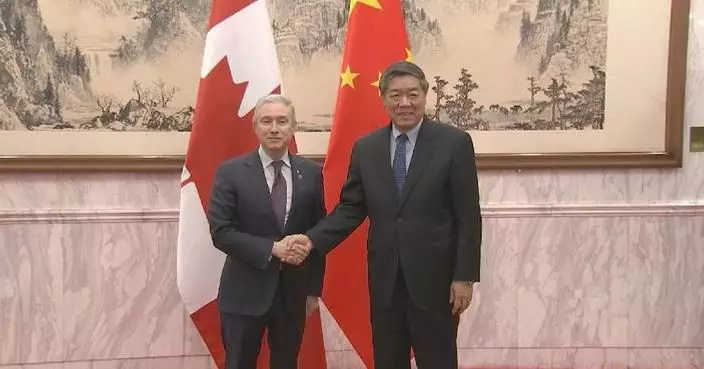
The Chinese government hopes that relevant parties can reach a solution regarding TikTok that complies with Chinese laws and regulations and achieves a balance of interests, He Yongqian, spokeswoman for the Ministry of Commerce, said at a press conference in Beijing on Thursday.
He made the comments in response to a query regarding reports that TikTok has signed agreements with three investors to establish a new joint venture in the United States to ensure its continued operations there.
"To implement the important consensus reached by the heads of states of China and the United States on their phone conversation, the economic and trade teams of both sides previously reached a basic framework consensus on properly resolving TikTok and other issues through cooperation based on mutual respect and equal consultation," she said.
"We hope that the U.S. side will work with China in the same direction and earnestly fulfill their relevant commitments, providing a fair, open, transparent, and non-discriminatory business environment for Chinese enterprises' continuous and stable operation in the United States, so as to promote the stable, healthy, and sustainable development of China-U.S. economic and trade relations," He said.

China expects Chinese law-compliant, interest-balanced solution on TikTok
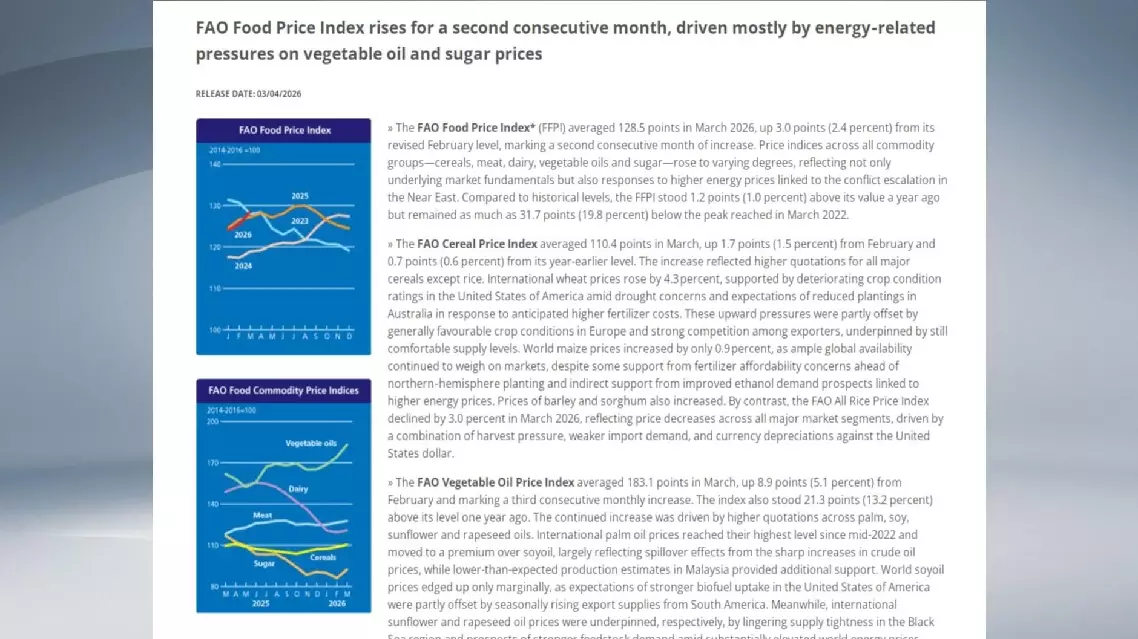
Global food commodity prices climbed for a second consecutive month in March, driven mainly by higher energy costs linked to escalating conflict in the Middle East, the Food and Agriculture Organization of the United Nations (FAO) said in report released on Friday.
The FAO Food Price Index, which tracks monthly changes in the international prices of a basket of globally traded food commodities, averaged 128.5 points in March, up 2.4 percent from February and 1.0 percent above its level a year ago.
According to the report, the FAO Vegetable Oil Index and Sugar Price Index showed the largest increases, up 5.1 percent and 7.2 percent, respectively.
The FAO Cereal Price Index increased by 1.5 percent from the previous month, driven primarily by higher world wheat prices, which rose 4.3 percent.
The FAO Meat Price Index rose by 1.0 percent from the previous month, and the FAO All-Rice Price Index declined by 3.0 percent in March, according to the report.
FAO stated that rising energy and fertilizer prices have been driving up agricultural input costs.
If the conflict stretches beyond 40 days, farmers will have to choose to farm the same with fewer inputs, plant less, or switch to less intensive fertilizer crops, according to FAO Chief Economist Maximo Torero.
These choices will hit future yields and shape food supply and commodity prices for the rest of this year and beyond, Torero said.
Global food prices rise for 2nd consecutive month in March amid Middle East conflict: FAO