Chinese engineers on Wednesday started loading fuel into two nuclear reactors located in south China's Guangdong Province and east China's Zhejiang Province respectively. China General Nuclear Power Corporation (CGN), the operator of the facilities, announced that the Taipingling Nuclear Power Station in Huizhou, Guangdong, the first "Hualong One" project within the Guangdong-Hong Kong-Macao Greater Bay Area, began loading the initial batch of nuclear fuel into its Unit 1 reactor at 17:48 on Wednesday. Shortly after, at 18:28, similar operations commenced at the Unit 1 reactor of the San'ao Nuclear Power Plant in Cangnan County, Zhejiang Province, the first such project in the Yangtze River Delta region. Initial fuel loading, which involves inserting fresh fuel assemblies into the reactor pressure vessel, is one of the most critical milestones prior to a nuclear power plant achieving grid connection and commercial operation.
Both projects employ China's independently developed third-generation nuclear technology, "Hualong One". Each site is planned to house pressurized water reactor units with a total installed capacity of around 6 million kilowatts. The two Unit 1 reactors are scheduled to enter commercial operation in the first half of 2026. Upon commissioning, each unit is expected to generate nearly 10 billion kilowatt-hours of clean electricity annually, sufficient to meet the annual electricity demand of about 1 million residents. That will result in the annual reduction of standard coal consumption by more than 3 million tons and of carbon dioxide emissions by 9.24 million tons per unit, equivalent to afforestation over an area of 22,500 hectares.
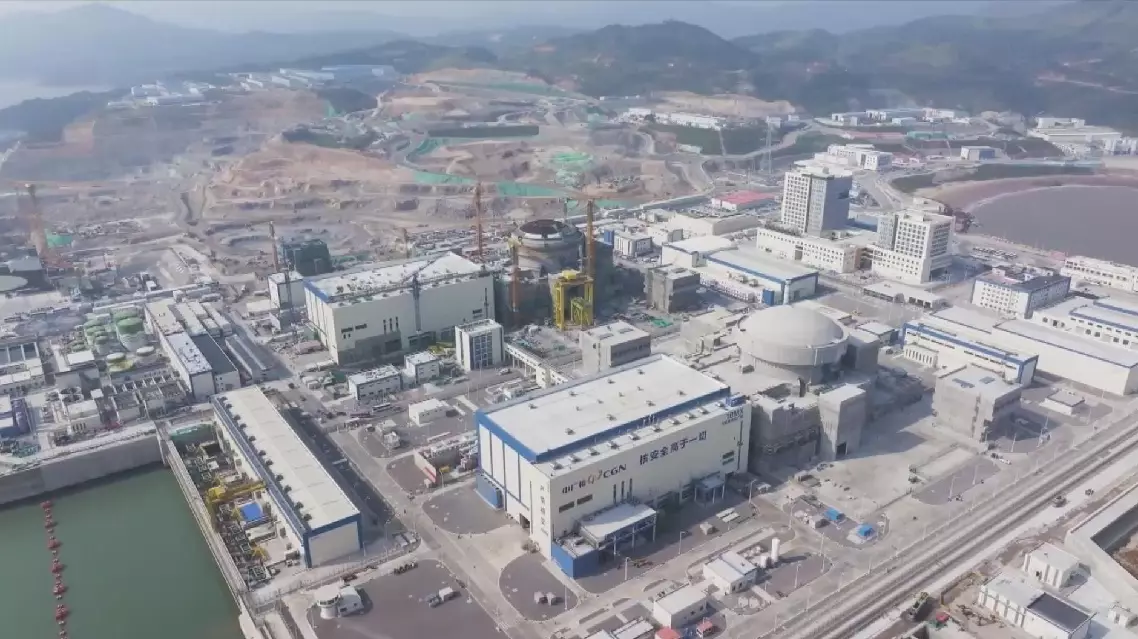
Fuel loading starts for 2 new nuclear reactors in Guangdong, Zhejiang
The recent 2026 Zhongguancun Forum (ZGC Forum) Annual Conference in Beijing has impressed international guests with its focus on deeper integration of technological and industrial innovation, highlighting how China's innovative advances are reshaping daily life.
The five-day forum, themed "Full Integration Between Technological and Industrial Innovation," wrapped up in Chinese capital on Sunday after bringing together more than 1,000 participants from over 100 countries and regions around the world.
More than 560 cutting-edge achievements were unveiled at the event, ranging from embodied intelligent robots and brain-computer interfaces to breakthroughs in quantum applications and 6G research and development.
The venue for the forum also showcased a number of these innovative creations to visitors, who were able to enjoy a fresh cup of coffee prepared by a humanoid barista, as well as be throughly entertained by robots performing dances or even playing piano.
Given the presence of these advanced humanoid robots, international participants shared the common view that innovation is no longer confined to laboratories but is now permeating every aspect of daily life.
"The deepest impression is actually to see how much AI is across everywhere," said Anders Karlsson, vice president of Elsevier, a global leader providing advanced information and decision support to accelerate progress in science and healthcare worldwide.
"The Zhongguancun Forum has become a very international window on innovation. We can find out annually how innovation is driving [and a key] component of growth of this wonderful country," said Vincenzo Lipardi, president and co-founder of SPICI, an Italian company assisting businesses and startups with strategic consulting services.
"As a scientist and as a worker of the United Nations system, I'm really pleased to see integration of science, technology and sustainability," said Shahbaz Khan, director of the UNESCO Regional Office for East Asia.
One of the forum's key themes was around opening up and striving for greater cooperation, which demonstrated to the wider world that China's innovation aims to break down barriers and share opportunities, so as to enable the global community to advance together.
"It's my first time attending the forum. And I'm very surprised that you have a very high level of innovation. China is open to ideas. Openness is the way to make innovations," said Prof. Hussein Sherief, a member of the International Committee for Scientific and Technical Data (CODATA).
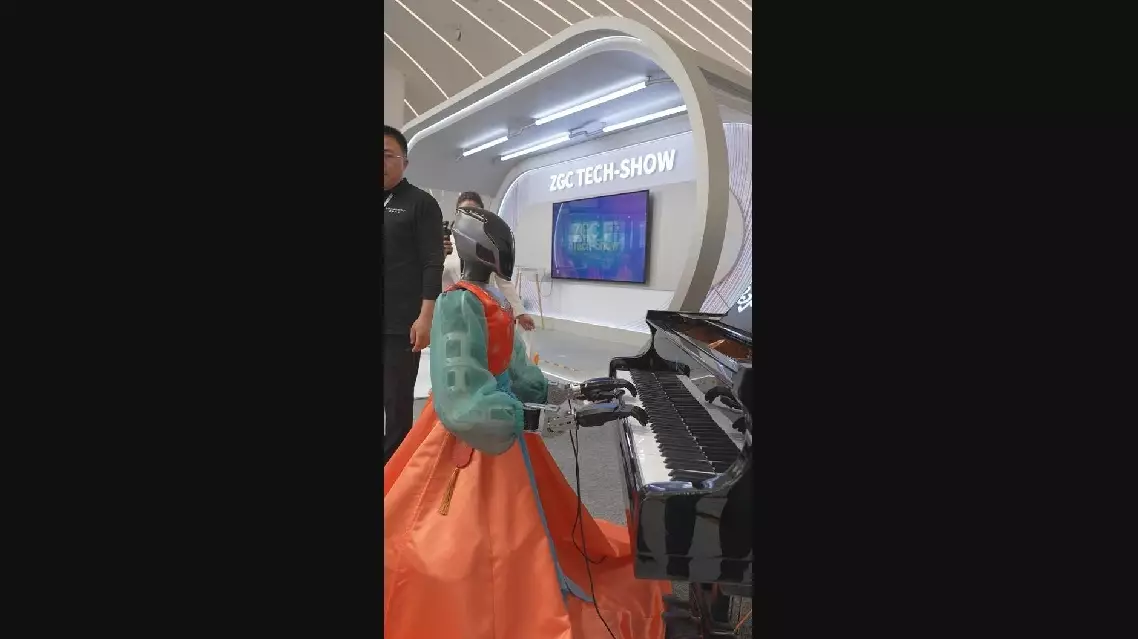
Int'l guests hail integration of technology, innovation at Beijing forum