The China Media Group (CMG) on Sunday unveiled the four sub-venue locations for the 2026 Spring Festival Gala.
Heilongjiang Province's Harbin, Zhejiang Province's Yiwu, Anhui Province's Hefei, and Sichuan Province's Yibin have been selected to stage parts of the world's most-watched TV program.
Along with the main venue in Beijing, the selected locations are expected to stage a vibrant and diverse cultural feast for audiences during one of the most important traditional Chinese festivals.
The Chinese lunar year for 2026 is the Year of the Horse, one of the most dynamic and spirited in the 12-animal Chinese zodiac cycle, representing strength, perseverance and unstoppable momentum.
The Spring Festival Gala hosted by CMG has been an essential part of the Chinese New Year celebrations since 1983. The gala includes songs, dances, comic sketches, traditional Chinese operas and folk arts.
The annual spectacle is broadcast on the eve of the Chinese New Year.
In 2026, the Chinese New Year's Eve falls on Feb 16.
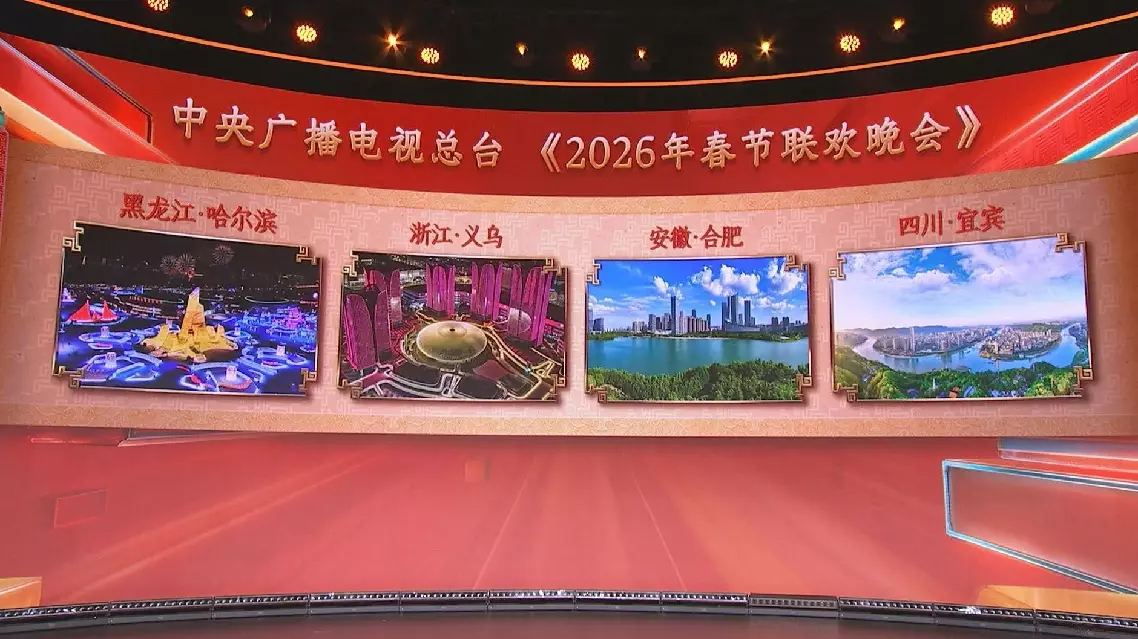
CMG unveils 4 sub-venues for 2026 Spring Festival Gala
CMG unveils 4 sub-venues for 2026 Spring Festival Gala
Chinese Foreign Minister Wang Yi said on Thursday that the issue of navigation through the Strait of Hormuz is a spillover effect of the current conflicts, noting the Strait of Hormuz remains unstable if the war doesn't end.
Wang, also a member of the Political Bureau of the Communist Party of China Central Committee, made the remarks in a phone conversation with Saudi Arabian Foreign Minister Faisal bin Farhan Al Saud.
The Saudi Arabian foreign minister briefed Wang on the latest developments of the Middle East situation, saying the war in Iran has caused severe impacts on countries in the region and the world at large.
Saudi Arabia attaches importance to China's important role in international affairs, and values high-level strategic cooperation with China, he said, adding that the kingdom is ready to further enhance consultation and coordination with China on platforms including the United Nations, to jointly push for the de-escalation of the situation and an end to the conflict.
Wang noted that the prolonged war in Iran, which has lasted for over a month, has caused enormous casualties and losses, and undermined the security and stability of Saudi Arabia and other Gulf countries, over which China expressed concerns.
Wang said China and Pakistan recently jointly issued a five-point initiative for restoring peace and stability in the Gulf and Middle East region, which includes safeguarding the sovereignty and security of the Gulf states, stopping attacks on civilians and non-military targets, and ensuring the security of shipping lanes.
Wang said the top priority is to focus on cessation of hostilities. Actions by the UN Security Council should avoid escalating confrontations and should not legitimize unauthorized military operations; otherwise, it will lead to endless trouble, with small and medium-sized countries being the first to bear the brunt, he added.
Wang noted that China appreciates Saudi Arabia's commitment to promoting peace and ceasefire, and stands ready to work with Saudi Arabia to make efforts for the early restoration of regional peace.
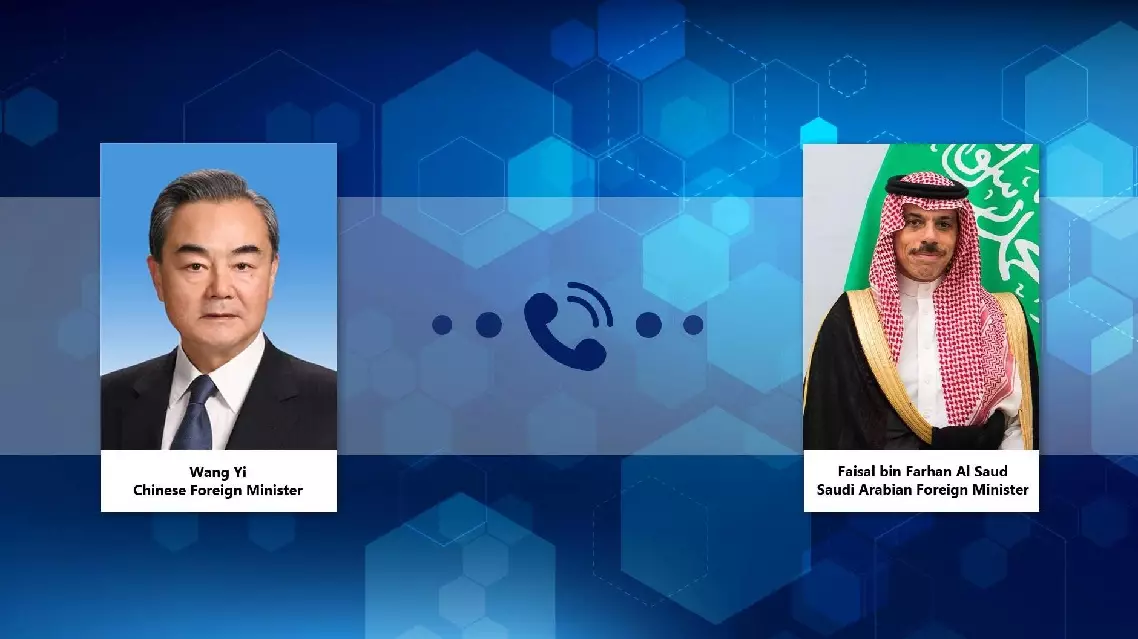
Chinese FM says Strait of Hormuz remains unstable if war doesn't end